
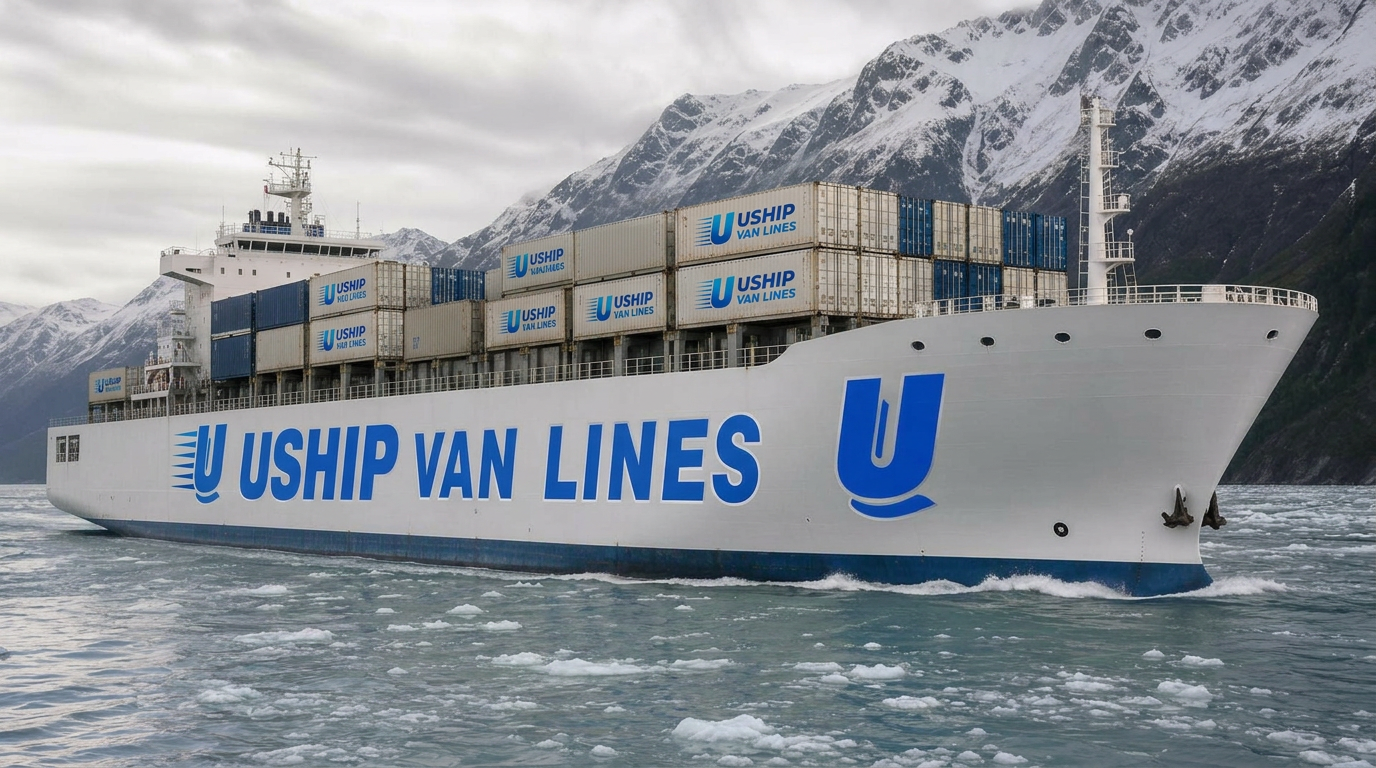
Moving from Alaska to North Carolina
Moving from Alaska to North Carolina replaces ice scrapers and midnight sun with mild winters, four distinct seasons, and thriving metros like Charlotte and Raleigh. Whether you're relocating for a job in the Research Triangle, military orders to Fort Liberty (formerly Bragg), or simply craving Appalachian trails and Atlantic beaches, this move crosses more than 3,500 miles and involves barge transport, cross-country trucking, and careful logistics planning.
Best Alaska & Hawaii Movers, powered by UShip Van Lines, specializes in Alaska-origin relocations. We coordinate every step—from loading your household goods in Anchorage, Fairbanks, or the Mat-Su Valley onto a barge at the Port of Anchorage, through consolidation in Tacoma, to final delivery at your North Carolina doorstep. Ready to simplify your cross-continent move? Request your free, no-obligation quote today.
Route overview
Route Overview: Alaska to North Carolina
This route begins at your Alaska residence—whether in Anchorage, Fairbanks, the Matanuska-Susitna Borough, Kenai Peninsula, or even bush communities accessible by ferry or winter road. Your belongings travel by truck to the Port of Anchorage, load onto a weekly or bi-weekly barge bound for the Port of Tacoma (Washington), then transfer to over-the-road semi-trucks for the approximately 2,800-mile drive across I-90, I-80, and I-40/I-85 corridors into North Carolina.
North Carolina offers diverse landing zones: the Blue Ridge Mountains in Asheville, the Piedmont metros of Charlotte, Raleigh-Durham, and Greensboro, or coastal communities in Wilmington and the Outer Banks. Each destination may require slightly different final-mile routing, but all share the same foundational logistics—barge departure schedules from Anchorage, weather windows, and coordination between marine and ground carriers.
This is a true multi-modal move. Success depends on synchronized timing: missing a barge sailing can delay your shipment by a week or more, and winter weather in both Alaska and the Rockies can add buffer days. Expect door-to-door transit in the 14–28 day range under normal conditions, with costs shaped by volume, season, and accessorial services like packing or vehicle shipping.
How the moving process works
The Moving Process: Alaska to North Carolina
-
Request a Quote and Book Early
Contact Best Alaska & Hawaii Movers at least 4–6 weeks before your desired move date. We'll survey your inventory (virtual or in-home), explain barge schedules, and lock in pricing. Early booking secures space on the next available sailing and gives you time to declutter or sell items that aren't worth shipping across the continent. -
Pre-Move Planning and Documentation
Confirm your North Carolina delivery address, coordinate lease or closing dates, and arrange temporary housing if needed. If shipping a vehicle separately, gather title, registration, and proof of insurance. Purge hazardous materials (propane, ammunition, paint) and perishables that can't travel by barge or truck. -
Packing and Loading in Alaska
Our crew arrives at your home to pack fragile items, disassemble furniture, and load your belongings into a dedicated container or shared consolidation. In remote areas (Mat-Su, Kenai, bush locations), we factor in extra time for gravel roads, winter conditions, or barge-accessible ports. Everything is inventoried and wrapped for the long journey. -
Barge Transport: Anchorage to Tacoma
Your container rides a marine barge from the Port of Anchorage to Tacoma, typically 5–7 days on the water. Sailings run year-round but are most frequent May–September. Winter sailings may face occasional delays due to storms in the Gulf of Alaska. Your shipment is sealed and protected from salt air and weather. -
Truck Relay: Tacoma to North Carolina
At Tacoma, your goods transfer to a long-haul semi for the cross-country drive. The route typically follows I-90 through Montana and South Dakota, then I-80 or I-70 east, dropping south via I-77, I-85, or I-40 into North Carolina. Transit takes 5–8 days depending on weather, driver hours-of-service, and any required stops for inspections or rest. -
Final Delivery and Unpacking
Our North Carolina delivery partner contacts you 24–48 hours out to schedule your delivery window. Crew unloads, places furniture in rooms, and reassembles what was disassembled. You inspect each item against the inventory, note any damage, and sign the bill of lading. If you purchased unpacking service, we'll also remove boxes and debris. -
Post-Move Support
File any claims for loss or damage within the timeframe outlined in your contract (typically 9 months). Our customer service team remains available to resolve issues, coordinate vehicle delivery if separate, or assist with forwarding any straggling mail or shipments.
Estimated moving costs
Cost Estimate: What to Expect
A typical 2–3 bedroom household moving from Alaska to North Carolina runs $6,500–$12,000 for full-service, door-to-door transport. Studio or 1-bedroom moves may fall in the $3,500–$6,000 range, while 4+ bedroom homes with garages, workshops, or large volumes can exceed $15,000.
Key cost drivers include:
- Volume and Weight: Charged by cubic feet or pounds. The average 3-bedroom home is 1,000–1,500 cubic feet or 8,000–12,000 pounds.
- Barge Freight: Marine leg from Anchorage to Tacoma is a fixed cost per container or per hundred-weight. Shared consolidation is cheaper than exclusive-use containers.
- Truck Mileage: The 2,800+ overland miles from Tacoma to North Carolina represent the bulk of your ground cost.
- Season: May–September sees premium pricing due to high demand and favorable weather. October–April often brings 10–20% discounts but comes with weather risk.
- Packing Services: Full-pack (materials + labor) adds $800–$2,000. Fragile-only or partial packing is mid-range.
- Access and Shuttle: Remote Alaska pickups (gravel roads, winter-only access) or North Carolina mountain deliveries may require smaller shuttle trucks, adding $300–$800.
- Vehicle Shipping: Cars, trucks, ATVs, or boats shipped separately add $1,200–$2,500 per vehicle Alaska-to-Lower 48.
- Storage: If your North Carolina home isn't ready, warehousing in Tacoma or North Carolina costs $100–$300/month.
We never guarantee prices sight-unseen. Every quote is customized after a detailed inventory review. Request your free estimate to get an accurate, transparent breakdown for your specific move.
Estimated transit times
Transit Time: Door-to-Door Timeline
Plan for 14–28 days total door-to-door transit from Alaska to North Carolina under normal conditions. Here's the breakdown:
- Alaska Pickup to Port of Anchorage: 1–2 days (same-day in Anchorage; up to 2 days from Mat-Su, Kenai, or Fairbanks if winter road conditions require staging).
- Barge Sailing (Anchorage–Tacoma): 5–7 days on the water. Barges depart weekly in peak season, every 10–14 days in winter. Missing a sailing adds that wait time.
- Tacoma Port Offload and Truck Loading: 1–3 days for container to clear port, customs (if applicable), and load onto truck.
- Cross-Country Truck (Tacoma–North Carolina): 5–8 days, averaging 500–600 miles per day per DOT hours-of-service rules. Weather in Montana, Wyoming, or the Appalachians can add 1–2 buffer days in winter.
- Final Delivery Scheduling: 1–2 days buffer for coordinating your North Carolina delivery window.
Expedited options are limited due to barge schedules, but booking the earliest available sailing and choosing direct (non-consolidated) trucking can trim 3–5 days off the upper range. Conversely, winter moves, holiday weeks (Thanksgiving, Christmas), or remote North Carolina mountain/coastal addresses may extend timelines.
We provide tracking updates at each milestone: barge departure, Tacoma arrival, truck dispatch, and delivery scheduling. Transparency is our standard.
Regional logistics
Alaska-Specific Logistics: Barge, Ports, and Last-Mile
Port of Anchorage:
Alaska's primary deep-water port and your shipment's starting point. Located just minutes from downtown Anchorage, it handles weekly barge sailings to Tacoma operated by carriers like Span Alaska and Northland Services. Containers are loaded, sealed, and secured for the 1,200-nautical-mile voyage.
Remote Pickups:
If you're in the Mat-Su Valley (Wasilla, Palmer), Kenai Peninsula (Soldotna, Homer), Fairbanks, or bush communities (Kodiak, Bethel, Nome accessible by smaller barge or ferry), we coordinate staging and truck relay to Anchorage. Winter-only ice roads or ferry schedules may require advance planning and flexible timing.
Vehicle Shipping:
Vehicles often ship separately via roll-on/roll-off (RoRo) barge or open-deck container. Your car must be operable, cleaned (Alaska soil/seed regulations), and have less than a quarter tank of fuel. Expect 10–16 days Alaska-to-North Carolina for vehicles, often arriving slightly after or before household goods.
Customs and Agriculture:
Alaska-to-Lower 48 moves are domestic and don't require customs clearance. However, USDA may inspect shipments for restricted plant material, firewood, or animal products if traveling through certain checkpoints. Declare any hunting trophies, furs, or preserved fish.
Partial Loads and Consolidation:
Most Alaska moves consolidate multiple customers' shipments in a single barge container and truck trailer to reduce cost. If you need exclusive use (faster, more control), dedicated containers and direct trucking are available at premium rates.
North Carolina Delivery Access:
North Carolina's terrain varies—flat coastal plains, rolling Piedmont, and steep mountain roads in Asheville and Boone. If your new home is on a narrow, winding Appalachian road or a beach community with weight-restricted bridges, we'll dispatch a smaller shuttle truck from a nearby staging area. Urban Charlotte, Raleigh, Durham, and Greensboro metros present no special challenges.
Packing and Crating:
Full-service packing is recommended for Alaska moves due to the multi-modal journey (barge swell, truck vibration). We use double-walled boxes, bubble wrap, and custom crates for antiques, artwork, or electronics. DIY packing is allowed but must meet carrier standards to ensure insurance coverage.
Seasonal considerations
Seasonal Considerations: Timing Your Alaska-to-North Carolina Move
Spring (March–May):
Barge schedules ramp up frequency as ice clears from Cook Inlet and Gulf of Alaska. March can still see late-winter storms delaying sailings by 1–2 days. April and May are ideal—weather improves in both Alaska and the Lower 48, and summer peak pricing hasn't kicked in yet. North Carolina springs are mild and beautiful, perfect for settling in before humid summer heat.
Summer (June–August):
Peak moving season. Barge sailings are most frequent (weekly from Anchorage), and roads are clear. Expect premium pricing—10–20% above shoulder season—due to high demand. Book 6–8 weeks ahead. North Carolina summers are hot and humid (80s–90s°F), so plan for air conditioning at your destination and hydrate your moving crew. Afternoon thunderstorms are common but brief.
Fall (September–November):
Excellent window. September still enjoys frequent barge sailings and stable Alaska weather. October–November may see occasional early snow in Alaska and the Rockies, but costs drop 10–15% as demand tapers. North Carolina fall is stunning—crisp air, fall foliage in the mountains, and comfortable temperatures. Book 4–6 weeks out.
Winter (December–February):
Lowest prices (up to 20% off summer rates), but higher logistical risk. Barge sailings are less frequent (every 10–14 days), and Gulf of Alaska storms can delay departures. Alaska roads may require winter tires, chains, or delayed pickups after blizzards. I-90 and I-80 across Montana and Wyoming close periodically for snow. North Carolina winters are mild (40s–50s°F) with occasional ice/snow in the mountains. If you're flexible and can absorb a 3–5 day delay buffer, winter offers great savings. Not recommended if you're on a tight closing or lease date.
Why choose Best Alaska & Hawaii Movers
Why Choose Best Alaska & Hawaii Movers
- Alaska-Specialist Expertise: We move Alaskans every week, year-round. We know barge schedules, Port of Anchorage operations, bush logistics, and winter contingencies intimately—not as an occasional novelty but as our core business.
- Powered by UShip Van Lines: Our partner network ensures your shipment transitions seamlessly from barge to truck to North Carolina doorstep. Licensed, insured carriers at every leg, with real-time tracking and dedicated coordinators.
- Transparent, No-Surprise Pricing: Every quote is customized after a detailed inventory. We disclose all fees—barge freight, fuel surcharges, accessorials—upfront. No hidden charges on delivery day.
- Comprehensive Service Menu: Full-pack, fragile-only pack, vehicle shipping, short- and long-term storage, and specialized handling for pianos, gun safes, artwork, and motorcycles. One call covers your entire move.
- Responsive Customer Service: From your first quote request to final box placement in North Carolina, you'll have a dedicated move coordinator who answers questions, provides milestone updates, and troubleshoots any hiccups in real time.
- Flexible Scheduling: We work around barge sailing calendars, your North Carolina closing date, and seasonal considerations to find the optimal move window—even if that means winter savings or last-minute summer bookings.