
Moving from Alaska to Greenville, SC
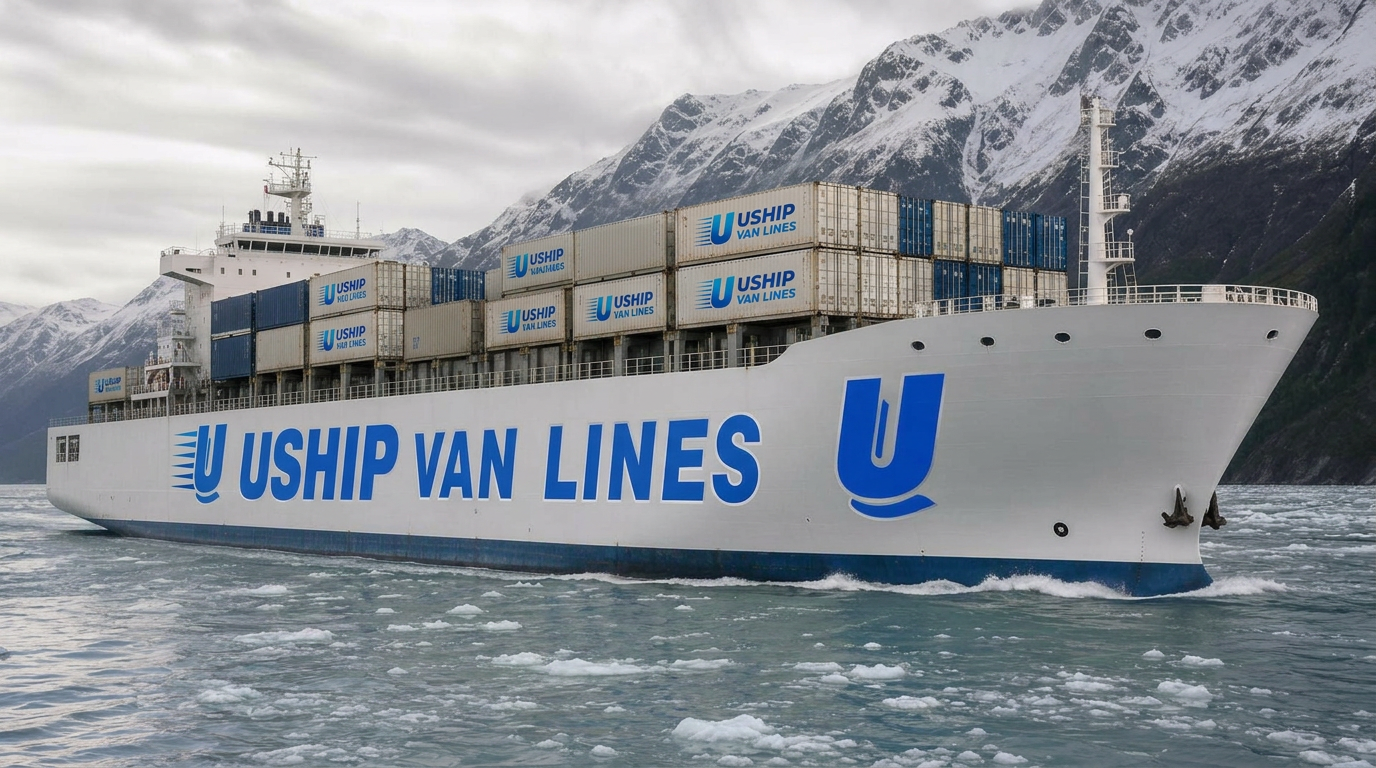
Relocating from Alaska to Greenville, South Carolina, means trading the Last Frontier for the thriving Upstate economy and mild Southern climate. This 3,800-mile journey combines maritime freight with long-haul trucking, requiring specialized logistics that most national van lines don't handle.
Best Alaska & Hawaii Movers, powered by UShip Van Lines, coordinates every leg—barge service from Alaska ports to Tacoma, overland transport through the Pacific Northwest and across the continental U.S., and final delivery to your Greenville-area residence. Request your free customized quote to get started.
Route overview
The Alaska–Greenville Route: Two-Mode Transport
Your household goods travel by barge from Alaska's Port of Anchorage, Whittier, or other coastal terminals to the Port of Tacoma, Washington. After customs clearance and offloading, freight transfers to secure overland carriers for the cross-country haul—eastbound through Idaho, Montana or Wyoming, then southeast via interstate corridors to South Carolina's Upstate region.
Greenville sits along the I-85 corridor between Charlotte and Atlanta, making final-mile delivery straightforward once your shipment reaches the Southeast. Unlike direct highway moves, Alaska departures depend on barge sailing schedules, which run weekly to bi-weekly during peak season and less frequently in winter. Coordinating the maritime and overland legs is critical to avoiding delays and storage fees.
This lane serves families, military personnel on PCS orders, retirees seeking warmer winters, and professionals relocating to Greenville's automotive, aerospace, and tech hubs. Understanding barge schedules, customs procedures, and seasonal weather windows will help you plan a smooth transition.
How the moving process works
How the Alaska to Greenville Move Works: Step-by-Step
-
Pre-Move Survey & Quote
Our coordinator conducts a virtual or in-person inventory assessment. We calculate cubic feet, weight, special-handling items (firearms, vehicles, fragile art), and confirm your Alaska pickup location—whether Anchorage, Fairbanks, Mat-Su Valley, Kenai Peninsula, or a bush community requiring additional logistics. -
Barge Booking & Packing
We reserve space on the next available southbound barge sailing from your nearest Alaska port. Professional packers arrive at your residence 1–3 days before the cutoff, wrapping furniture, crating fragile items, and loading a specialized Alaska freight container or LCL (less-than-container-load) pallet. -
Alaska Port Delivery & Customs Documentation
Your shipment transfers to the barge terminal in Anchorage, Whittier, or Kodiak. We prepare all required paperwork: bill of lading, high-value inventory declarations, and any needed USDA agricultural clearances if you're shipping plants (generally discouraged). -
Ocean Transit to Tacoma
The barge crosses the Gulf of Alaska and travels down the Inside Passage or open Pacific routes to the Port of Tacoma. Transit typically takes 5–10 days, weather permitting. Container tracking updates keep you informed. -
Offload, Customs Clearance & Transfer to Overland Carrier
At Tacoma, longshoremen offload your container. U.S. Customs inspects high-value or flagged items. Once cleared, freight transfers to a climate-controlled semi-trailer for the cross-country leg. -
Overland Transit: Tacoma → Greenville
The truck travels eastbound via I-90 or I-84, crossing the Rockies and Great Plains, then southeastward through the Midwest and into South Carolina. Expect 4–7 days of highway time, depending on route optimization and driver hours-of-service regulations. -
Final Delivery in Greenville
Our delivery crew contacts you 24–48 hours out to schedule a convenient window. They unload, place furniture in designated rooms, and perform a walkthrough inventory check. You inspect for damage, sign the bill of lading, and unpack at your own pace.
Total door-to-door timeline: 14–28 days, heavily influenced by barge schedules and season.
Estimated moving costs
What Does an Alaska to Greenville Move Cost?
For a typical 2–3 bedroom household (7,000–10,000 lbs, 800–1,200 cu ft), expect $8,500–$14,500 door-to-door. Studio or 1-bedroom moves may run $5,000–$7,500; large 4+ bedroom estates can exceed $18,000.
Primary cost drivers:
- Cubic footage and weight: Barge freight is priced per cubic foot; overland by weight and mileage.
- Barge sailing availability: Peak-season (May–September) rates are higher due to demand. Off-season sailings may offer discounts but run less frequently.
- Pickup/delivery access: Remote Alaska addresses (bush communities, island locations) require barge-to-barge transfers, float planes, or winter ice-road transport, adding $1,500–$5,000. Greenville metro delivery is standard; rural Upstate SC addresses may incur $200–$500 extra.
- Packing services: Full-service packing (materials + labor) adds $800–$2,200. DIY packing saves money but increases your liability for fragile-item claims.
- Vehicle shipping: Cars, trucks, and ATVs ship separately via RORO barge or enclosed transport, typically $1,800–$3,500 per vehicle Alaska–Tacoma, then $800–$1,400 Tacoma–Greenville overland.
- Insurance valuation: Basic carrier liability (60¢/lb) is included. Full-value replacement coverage costs 1–2% of declared inventory value.
- Storage: If you need temporary warehousing in Tacoma or Greenville (common during barge schedule gaps), expect $100–$250/month for a small load.
We do not publish guaranteed flat rates. Every Alaska move is custom-quoted based on your inventory, timing, and access requirements. Request a detailed written estimate to lock in pricing before booking.
Estimated transit times
How Long Does the Alaska to Greenville Move Take?
Typical door-to-door window: 14–28 days.
Breakdown by leg:
- Alaska pickup to barge departure: 1–5 days (depends on packing timeline and port cutoff)
- Barge transit (Alaska port → Tacoma): 5–10 days (weather and routing dependent)
- Tacoma offload, customs, and transfer: 1–3 days
- Overland truck transit (Tacoma → Greenville): 4–7 days
- Final delivery scheduling: 1–2 days buffer
Variables that extend timelines:
- Infrequent winter barge sailings: November–March departures may run every 2–3 weeks instead of weekly, adding 7–14 days of wait time.
- Weather delays: Gulf of Alaska storms, Rocky Mountain winter road closures, or ice storms in the Midwest/Southeast can pause transit.
- Customs inspections: Random or flagged inspections in Tacoma add 1–3 days.
- Remote Alaska pickup: Bush locations requiring connecting barge, plane, or ice-road service add 3–7 days on the front end.
Expedited options: Priority barge bookings and dedicated overland trucks can compress timelines to 12–16 days but cost 20–35% more. Most customers find standard scheduling adequate with proper planning.
Regional logistics
Alaska-Specific Moving Logistics You Must Know
Barge Ports & Terminals:
Most shipments depart the Port of Anchorage (closest to Anchorage, Eagle River, Wasilla, Palmer). Whittier serves as an alternative for faster Gulf access. Kodiak, Seward, and Homer handle regional freight. Bush communities (Bethel, Nome, Kotzebue, Juneau, Ketchikan) require connecting barge or air freight to a main terminal.
Customs & Inspections:
Alaska to Lower 48 moves are domestic, so no international customs. However, USDA may inspect for invasive species if you're shipping plants, soil, or untreated wood. Firearms and ammunition require proper ATF documentation and locked, declared packing. High-value items ($10,000+ single pieces) should be photographed and itemized.
Vehicle Shipping:
Cars and trucks ship separately via RORO (roll-on/roll-off) barge Alaska–Tacoma, then overland auto transport to Greenville. Vehicles must be clean (no mud, minimal personal items), operable, and under 1/4 tank fuel. Expect 14–21 days vehicle-only transit. Enclosed transport available for classics or luxury models.
Access Challenges:
Anchorage and Fairbanks metro areas are straightforward. Mat-Su Valley, Kenai Peninsula, and small highway towns accessible via standard semi-trucks. Bush villages require float planes, hovercraft, winter ice roads, or barge-to-barge transfer—adding $1,500–$5,000 and 3–10 days. Greenville metro delivery is easy; rural Upstate addresses on narrow mountain roads may need shuttle trucks.
Restricted Items:
No hazardous materials (propane, gasoline, paint, lithium batteries in bulk). No perishable food. Plants generally discouraged due to USDA phytosanitary rules. Ammunition must be factory-packed and declared.
Insurance & Liability:
Barge freight and overland carriers provide basic liability (60¢/lb per item). For full replacement value, purchase additional moving insurance. Declared-value coverage costs 1–2% of total inventory worth. Alaska's extreme weather and long transit justify the investment.
Storage Options:
If barge schedules don't align with your Greenville lease start, we offer secure warehousing in Tacoma or Greenville. Climate-controlled units protect furniture and electronics from humidity swings.
Seasonal considerations
Best (and Worst) Times to Move from Alaska to Greenville
Spring (April–May): Barge schedules ramp up to weekly sailings. Alaska snowmelt can create muddy access issues in rural areas, but highway conditions improve. Greenville enjoys mild, blooming weather—ideal for settling in. Moderate pricing as peak season hasn't fully hit.
Summer (June–August): Peak moving season. Maximum barge frequency and overland carrier availability. Alaska enjoys 20+ hour daylight and dry conditions. Greenville gets hot and humid, but delivery crews are accustomed. Expect top-tier pricing and 3–4 week booking lead times.
Fall (September–October): Excellent window. Barge schedules still robust through September, tapering in October. Alaska weather remains stable before heavy snow. Greenville offers pleasant autumn temperatures. Slightly lower rates than summer; good availability if you book by mid-August.
Winter (November–March): Challenging. Barge sailings drop to bi-weekly or monthly. Alaska experiences extreme cold, short daylight, and road closures. Ice fog in Fairbanks, heavy snow in Mat-Su, and coastal storms can delay pickups. Overland trucks face Rocky Mountain passes and Midwest blizzards. Greenville winters are mild but occasional ice storms disrupt I-85. Lowest pricing, but expect 21–35 day timelines and flexibility requirements. Best for customers with off-season flexibility or military orders.
Pro tip: Book summer moves by April. Book fall moves by July. Winter moves require 6–8 week lead time and backup date flexibility.
Why choose Best Alaska & Hawaii Movers
Why Best Alaska & Hawaii Movers for Your Alaska–Greenville Relocation
-
Alaska barge logistics expertise: We coordinate sailings from Anchorage, Whittier, Kodiak, and bush terminals daily. Our Tacoma partners handle offload, customs, and overland transfer seamlessly—no handoff delays or surprise fees.
-
Single-source accountability: One contract, one point of contact, one bill of lading from Alaska pickup to Greenville delivery. You're not juggling separate barge brokers, trucking companies, and customs agents.
-
Transparent, itemized quotes: We break down barge costs, overland mileage, packing labor, insurance options, and accessorial fees upfront. No hidden surcharges at delivery.
-
Flexible scheduling & storage: Miss a barge cutoff or need your Greenville apartment to be ready? We offer short-term warehousing in Tacoma and Greenville at competitive rates, with easy redelivery when you're set.
-
Powered by UShip Van Lines' trusted network: Access to vetted, licensed carriers across all 50 states and Alaska marine freight specialists. Real-time tracking, claims support, and customer service throughout your move.
Get your free, no-obligation quote today and experience the difference of working with Alaska moving specialists who understand both the Last Frontier and the Southeast.