
Moving from Alaska to Freeport, NY
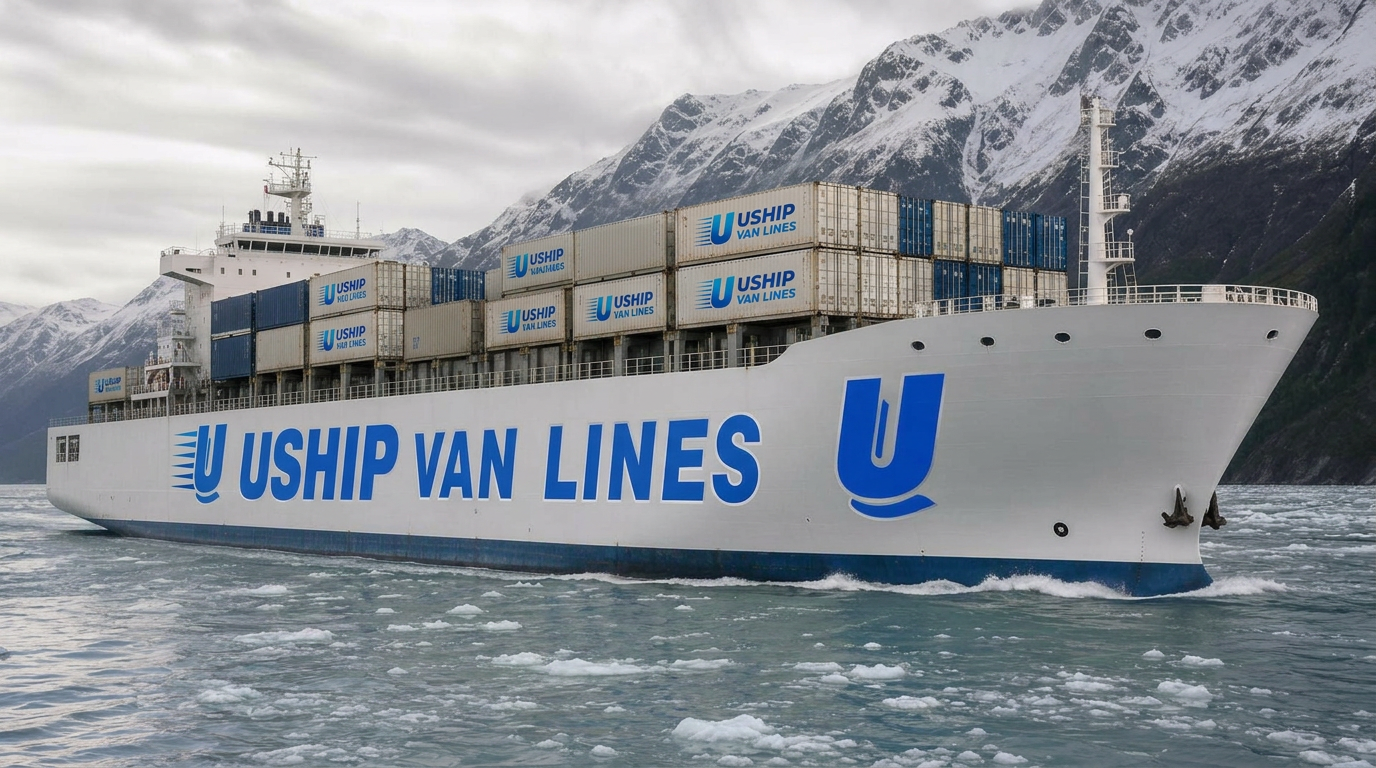
Moving from Alaska to Freeport, NY requires specialized logistics that few carriers understand. Your household goods will travel by ocean barge from Alaska ports to Tacoma or Seattle, then cross-country by truck to Long Island's South Shore—a journey spanning roughly 3,500 miles and combining maritime and highway transport.
Best Alaska & Hawaii Movers, powered by UShip Van Lines, coordinates every segment of this unique route. Whether you're relocating from Anchorage, Fairbanks, the Mat-Su Valley, or remote communities, we manage the port transfers, customs documentation, and final delivery to your Freeport address. Request a free quote to see how we turn this complex move into a seamless experience.
Route overview
Alaska to Freeport, NY: A Cross-Continental Journey
Freeport sits on Long Island's barrier island system, roughly 35 miles east of Manhattan along the Atlantic coastline. This Nassau County village offers waterfront living, Metro-North and LIRR access, and proximity to New York City employment hubs. Moving here from Alaska means transitioning from frontier life to suburban density, from extreme seasonal swings to moderate coastal winters, and from off-grid logistics to next-day delivery convenience.
The physical route combines ocean barge service from Alaska's port network (Anchorage, Whittier, or Kodiak depending on your origin) to Pacific Northwest terminals, overland trucking across the northern tier or central corridors, and final delivery navigating Long Island's parkway system and local road restrictions. Total door-to-door distance exceeds 3,500 miles, with the ocean leg accounting for roughly 1,500 nautical miles and 5–10 days of that transit window.
Freeport's coastal location means tight street grids, parking restrictions, and occasional delivery challenges for 53-foot tractor-trailers. Coordinating arrival windows, securing parking permits from the Village of Freeport, and planning unload logistics becomes critical—experience with New York metro deliveries separates novice carriers from specialists who understand Long Island's unique demands.
How the moving process works
Step-by-Step: How Your Alaska to Freeport Move Works
-
Origin survey and inventory — We assess your Alaska home (Anchorage apartment, Fairbanks cabin, Mat-Su property) in person or via video. Cube sheets capture every item, from standard furniture to seasonal gear, fishing equipment, cold-weather clothing, and outdoor equipment that defines Alaska living.
-
Barge booking and port delivery — Your goods move to the nearest Alaska port (Port of Anchorage for most Southcentral origins, Whittier for rail-accessible loads). We coordinate barge schedules—typically weekly sailings during peak season (May–September), less frequent in winter—and ensure proper containerization or trailer loading to protect belongings during the ocean crossing.
-
Ocean transit to Pacific Northwest — The Alaska Marine Highway or commercial freight barges transport your shipment to Tacoma, Seattle, or occasionally Prince Rupert, BC. This leg takes 5–10 days depending on route, weather, and port call schedules. Goods remain sealed in containers or trailers throughout the voyage.
-
Customs clearance and transfer — If using certain barge routes or mixed conveyances, brief customs inspections occur at the receiving port. Our logistics team handles all paperwork, ensures USDA compliance for any restricted items, and transfers your load to a long-haul truck for the cross-country segment.
-
Cross-country trucking — The overland journey from Tacoma/Seattle to Freeport typically follows I-90 east through Montana and South Dakota, transitioning to I-80 or I-76 through Nebraska and Pennsylvania, then I-80/I-95/Southern State Parkway corridors into Long Island. Drivers monitor weather, road construction, and delivery appointment windows.
-
Long Island delivery coordination — We contact you 48–72 hours before arrival to confirm the Freeport delivery window. If your residence has parking restrictions, narrow streets, or condo association rules, we arrange shuttle trucks or request village parking permits. Some Freeport neighborhoods require coordination with the Department of Public Works for temporary loading zone access.
-
Unload, placement, and final walkthrough — Crew members unload, place furniture in designated rooms, and reassemble items disassembled for transport. You inspect the inventory sheet, note any exceptions, and sign the final bill of lading. Unpacking services, debris removal, and storage options are available if your Freeport home isn't move-in ready.
Estimated moving costs
What Does an Alaska to Freeport Move Cost?
A typical 2-bedroom move (approximately 5,000–7,000 lbs) from Anchorage to Freeport generally ranges between $6,800 and $11,500, while a 3-bedroom household (8,000–12,000 lbs) often runs $10,500 to $16,500. Larger homes, 4+ bedrooms with full basements and garages, can exceed $18,000–$24,000 depending on total weight and service level.
Key cost drivers include:
- Origin location within Alaska — Anchorage and Wasilla enjoy direct port access; Fairbanks adds 350+ miles of trucking to reach tidewater; Kenai Peninsula, Kodiak, or bush communities require additional barge legs or air freight for initial pickup.
- Barge scheduling and seasonality — Peak summer sailings (May–August) cost more but offer weekly frequency; off-season (October–March) may require consolidation delays and premium winter handling fees.
- Total weight and cubic footage — Barge freight prices by weight; trucking adds dimensional factors. Heavy shop equipment, snowmachines, ATVs, or extensive outdoor gear increases costs significantly.
- Packing and specialty items — Full-service packing (recommended for fragile Alaska keepsakes, fishing tackle, artwork) adds $800–$2,200. Pianos, gun safes, large freezers, or heirloom furniture may require custom crating.
- Delivery access in Freeport — Standard residential delivery is included; narrow streets requiring shuttle trucks, elevator buildings, or long-carry situations (no truck access within 75 feet) incur additional labor fees, typically $150–$400.
- Insurance and valuation — Basic carrier liability covers $0.60/lb; full-value protection (recommended for cross-continental moves) runs 1.5–3% of the declared value.
We never guarantee prices without a formal survey. Every Alaska move is unique, and accurate quotes require detailed inventory and origin/destination specifics. Request a free, no-obligation estimate to see your personalized cost breakdown.
Estimated transit times
How Long Does the Alaska to Freeport Move Take?
Door-to-door transit typically spans 14 to 28 days, depending on barge schedules, weather, and consolidation factors.
Breakdown by leg:
- Alaska pickup to port delivery: 1–3 days for Anchorage/Mat-Su origins; 3–5 days if trucking from Fairbanks or Kenai Peninsula to the Port of Anchorage or Whittier.
- Ocean barge transit: 5–10 days from Alaska ports to Tacoma or Seattle, depending on the specific barge line, intermediate stops (Kodiak, Cordova, Juneau), and weather delays in the Gulf of Alaska.
- Port offload and truck dispatch: 1–3 days for customs processing (if applicable), container devanning, and loading onto a long-haul tractor-trailer.
- Cross-country trucking: 5–8 days from Pacific Northwest to Freeport, NY, covering approximately 3,000 highway miles. Drivers work within Hours of Service regulations and may encounter weather delays in mountain passes or Midwest winter storms.
- Final delivery scheduling: 1–2 days of buffer to coordinate delivery windows, secure parking permits, and accommodate your availability.
Summer moves (May–September) benefit from frequent barge sailings and predictable road conditions, often hitting the shorter end of this range. Winter relocations (November–March) face reduced barge frequency, potential weather holds in Alaska or the northern tier states, and may extend to 25–30+ days in extreme cases.
Expedited service is rarely practical for Alaska moves—the barge leg cannot be rushed. Plan your move with a 3–4 week buffer beyond your ideal arrival date, especially if you have firm work start dates or lease obligations in Freeport.
Regional logistics
Alaska-Specific Logistics for Your Freeport Move
Port access and container handling: Most Alaska moves funnel through the Port of Anchorage or Whittier. If you're in Southcentral Alaska (Anchorage, Eagle River, Wasilla, Palmer), your goods truck directly to the port. Fairbanks residents face a 350-mile haul down the Parks Highway to reach tidewater—this adds 1–2 days and $600–$1,200 to the total cost. Kenai Peninsula, Kodiak, and Southeast Alaska (Juneau, Ketchikan, Sitka) may require additional barge legs to reach the main Tacoma-bound routes, extending timelines and costs.
Vehicle shipping on the same route: Many Alaska-to-Lower-48 relocations include a vehicle. The same barge lines that carry household goods offer roll-on/roll-off vehicle transport. Shipping a sedan or pickup from Anchorage to Tacoma typically costs $1,200–$1,800; from there, auto transport to Freeport adds $900–$1,400. Total vehicle shipping (Alaska to New York) runs $2,100–$3,200. We coordinate combined shipments to streamline logistics and often secure bundled pricing.
Restricted and prohibited items: Alaska moves often include items uncommon elsewhere—fishing rods, camping gear, bear spray, ammunition, marine equipment. Barge lines and trucking companies prohibit hazardous materials: fuel, propane, aerosols, ammunition, and lithium batteries over certain watt-hours. Perishable foods and plants face USDA and New York State agriculture inspections. We provide a detailed prohibited-items list during your survey and help you plan for these specialty belongings.
Bush Alaska and remote origins: If you're in a community off the road system (Bethel, Kotzebue, Nome, Dillingham, island villages), your move begins with air freight to Anchorage or barge service to a hub port. This pre-leg can add $2,000–$8,000 depending on volume and location. We partner with Alaska bush freight specialists to coordinate these first-mile pickups, ensuring seamless handoffs to the southbound barge.
Customs and documentation: Moves from Alaska to the contiguous U.S. do not cross international borders, so customs is generally not a factor—unless your barge route transits Canadian waters (some Alaska Marine Highway sailings) or you're shipping through Prince Rupert, BC. In those cases, brief inspections and paperwork occur, but we handle all documentation. If you're a military member or federal employee with government-shipped goods (HHG), coordinate with your transportation office; we support partial DITY moves and can work alongside your official shipment.
Final delivery on Long Island: Freeport's street grid includes narrow lanes, parking restrictions, and co-op/condo delivery rules. We confirm your exact address during booking and assess whether a full-size tractor-trailer can access your street or if a smaller shuttle truck is required. Village of Freeport parking permits for moving trucks are available through the Department of Public Works; we assist with applications if needed. Long-carry fees apply if movers must hand-carry items more than 75 feet from the truck—common in dense neighborhoods or gated communities.
Seasonal considerations
Timing Your Alaska to Freeport Move: Seasonal Factors
Spring (April–May): Barge schedules ramp up as ice clears from Alaska ports. April sees limited sailings; May offers weekly departures on most routes. Roads transition from winter conditions—watch for frost heaves and spring breakup limiting heavy truck access in rural Alaska. Freeport weather is mild, ideal for unloading. Book early, as May is peak military and school-year relocation season.
Summer (June–August): Peak moving season for Alaska. Barge capacity is abundant, road conditions are optimal, and weather is predictable. Demand drives higher prices (10–20% premiums common), and booking windows tighten—reserve 4–6 weeks ahead. Long daylight hours in Alaska make packing and loading efficient. Freeport enjoys warm weather but higher humidity; climate-controlled storage may be worth considering if there's a gap between your Alaska departure and Freeport home readiness.
Fall (September–October): Shoulder season offers a sweet spot. Barge sailings remain frequent through September, tapering in October. Prices drop 10–15% from summer peaks, and availability improves. Alaska weather grows unpredictable—early snow in Fairbanks or Mat-Su can complicate access roads. Cross-country trucking faces minimal delays. Freeport's fall is pleasant for moving in, and school-year leases have settled, easing housing pressure.
Winter (November–March): Off-season for Alaska barge shipping. Sailings drop to bi-weekly or monthly; some routes (especially to smaller ports) suspend entirely. Consolidation delays are common—your shipment may wait for a full container or trailer load. Winter trucking from Alaska requires winterized equipment; blizzards in Montana, Wyoming, or the Midwest can add 3–7 days. Costs sometimes drop 15–25%, but timeline uncertainty increases. If moving in winter, build a 30–35 day transit window and arrange temporary housing or storage flexibility at both ends.
Pro tip: If your move is discretionary, target late May or September for the best balance of price, availability, and predictable transit.
Why choose Best Alaska & Hawaii Movers
Why Best Alaska & Hawaii Movers for Your Alaska to Freeport Relocation
- Alaska barge and port expertise — We coordinate daily with Port of Anchorage, Whittier, and Alaska Marine Highway operators, understanding sailing schedules, container specs, and seasonal quirks that catch generalist movers off guard.
- Single-source accountability — One contract, one point of contact from your Alaska door to your Freeport address. No handoffs to unknown subcontractors; we manage the barge line, the trucker, and the delivery crew, ensuring nothing falls through the cracks.
- Transparent, survey-based pricing — We never quote sight-unseen. Every estimate follows a detailed inventory (virtual or in-home), and we explain cost drivers clearly. No surprise fees, no bait-and-switch, no hidden fuel surcharges discovered on delivery day.
- New York metro delivery experience — Long Island's parkways, village parking rules, and co-op building regulations require local knowledge. Our delivery partners understand LIRR overpasses, Southern State Parkway restrictions, and Nassau County permitting, ensuring smooth final-mile execution.
- Flexible storage and timing solutions — If your Freeport home isn't ready when your shipment arrives, we offer secure storage at our New York-area partner facilities. Short-term (7–30 days) and long-term options available, with climate control for sensitive items.
- Powered by UShip Van Lines — Our technology platform connects you with vetted, licensed carriers specializing in Alaska and Hawaii routes, while our logistics team vets every partner for insurance, safety records, and customer feedback. You get competitive pricing with concierge-level service.