
Moving from Alaska to Rhode Island
Relocating from the Last Frontier to the Ocean State involves crossing 3,500+ miles and coordinating barge, truck, and sometimes rail logistics. Whether you're moving from Anchorage to Providence, Fairbanks to Warwick, or the Mat-Su Valley to Newport, your household goods will travel by freight barge from Alaska to the Port of Tacoma, then overland across the continental U.S. to your new Rhode Island address.
Best Alaska & Hawaii Movers, powered by UShip Van Lines, specializes in these complex Alaska-to-Lower 48 relocations. We handle port coordination, customs paperwork, containerized shipping, and last-mile delivery so you can focus on settling into Rhode Island's coastal communities. Request your free, no-obligation moving quote to start planning your cross-country journey.
Route overview
Alaska to Rhode Island Route Overview
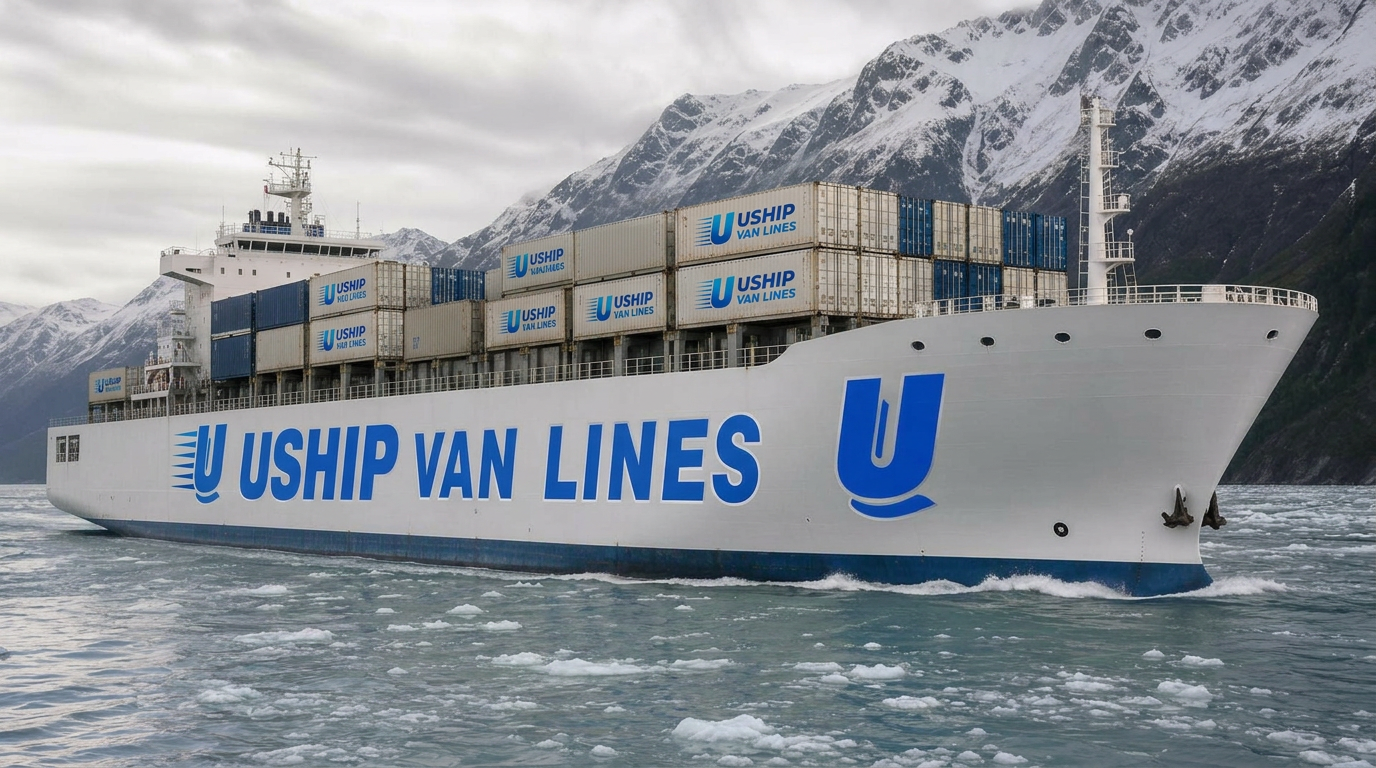
The Alaska-to-Rhode Island corridor requires multimodal transportation due to the lack of continuous road access. Your belongings are loaded into weatherproof containers or secured on flatbed trailers in Alaska (typically Anchorage, Fairbanks, Wasilla, or Kenai), then trucked to the Port of Anchorage or Whittier for barge loading. Freight barges operated by carriers like TOTE Maritime or Alaska Marine Lines sail to the Port of Tacoma, Washington—a journey of 1,400+ nautical miles taking 3–5 days.
Once your container clears Tacoma customs and port inspection, long-haul trucks transport it eastward across I-90, I-84, and I-95 into Rhode Island. Final delivery reaches Providence, Cranston, Warwick, Pawtucket, East Providence, Woonsocket, and coastal towns like Newport and Narragansett. Total distance exceeds 3,500 road miles after the ocean leg.
Rhode Island's compact geography means most destinations are within 30 miles of Providence, but narrow colonial-era streets in historic neighborhoods like College Hill and Federal Hill may require shuttle trucks for final delivery. Movers familiar with both Alaska port logistics and New England urban access ensure smooth transitions at both ends of this transcontinental route.
How the moving process works
How the Alaska to Rhode Island Moving Process Works
-
Free In-Home or Virtual Survey – A moving coordinator assesses your inventory (typically 2–4 bedroom homes average 6,000–10,000 lbs) and provides a detailed quote covering barge, truck, and handling fees.
-
Packing and Loading in Alaska – Professional crews pack fragile items, disassemble furniture, and load your belongings into 20' or 40' ocean-rated containers or secure them on flatbed trailers, usually at your Alaska residence or a nearby staging facility.
-
Ground Transport to Alaska Port – Your container is trucked from interior cities (Fairbanks, Wasilla) or picked up directly in Anchorage/Whittier, then delivered to the barge terminal for maritime shipping.
-
Barge Voyage to Tacoma – TOTE Maritime or Alaska Marine Lines transports your container south through the Inside Passage and Gulf of Alaska to the Port of Tacoma, with voyages departing 1–2 times weekly during peak season, less frequently in winter.
-
Port Clearance and Inspection – Once docked in Tacoma, your shipment clears customs (for household goods this is routine but requires proper documentation), undergoes safety inspection, and transfers to the trucking network.
-
Cross-Country Truck Relay – Long-haul carriers move your container eastward via I-90 through Montana, South Dakota, and into the Midwest, then southeast on I-84/I-90 through New York and Massachusetts into Rhode Island—approximately 3,000 road miles.
-
Final Delivery in Rhode Island – Your shipment arrives at your Providence-area address, where crews unload, reassemble furniture, and remove packing materials, completing your coast-to-coast relocation.
Estimated moving costs
What Does an Alaska to Rhode Island Move Cost?
For a typical 2–3 bedroom household (7,000–9,000 lbs), expect total moving costs between $7,500 and $13,500 depending on volume, services, and timing. Studio or 1-bedroom moves (3,000–4,000 lbs) often range from $4,200 to $6,800, while larger 4-bedroom homes (12,000+ lbs) can exceed $16,000.
Key cost drivers include:
- Barge freight rates – Calculated per linear foot of container or trailer space; 20' containers cost $2,500–$4,000, 40' containers $4,500–$7,000 from Alaska ports to Tacoma
- Ground transport in Alaska – Interior pickups from Fairbanks, Wasilla, or Kenai add $400–$1,200 for trucking to Anchorage/Whittier ports
- Cross-country trucking – The 3,000-mile Tacoma-to-Rhode Island leg adds $2,500–$4,500 depending on fuel surcharges and route efficiency
- Packing and labor – Full-service packing costs $800–$1,800; fragile-only or partial packing reduces this by 40–60%
- Access fees – Providence's College Hill, Federal Hill, and Newport's historic waterfront may require shuttle trucks ($150–$400) if 53' semis cannot navigate narrow streets
- Seasonality – Winter moves (November–March) can cost 10–20% more due to limited barge schedules and weather delays
- Insurance – Full-value protection typically adds 1–2% of declared shipment value; basic liability (60¢/lb) is included
We provide transparent, itemized quotes with no hidden fees. Request your custom estimate to see exact costs for your Alaska-to-Rhode Island move.
Estimated transit times
How Long Does an Alaska to Rhode Island Move Take?
Door-to-door transit typically requires 14–28 days, broken down by leg:
- Alaska pickup to port delivery: 1–3 days (same-day for Anchorage pickups; 2–3 days from Fairbanks, Mat-Su, or Kenai)
- Barge sailing Anchorage/Whittier to Tacoma: 3–5 days for the 1,400-nautical-mile voyage
- Port clearance and truck dispatch in Tacoma: 1–3 days for customs, inspection, and loading onto cross-country trucks
- Tacoma to Rhode Island overland: 5–8 days for the 3,000-mile truck relay (drivers average 500–600 miles daily with mandatory rest periods)
- Final delivery window: 1–2 days (you'll receive 24–48 hour advance notice)
Winter moves (November–March) can extend timelines to 21–35 days due to reduced barge frequency (sometimes weekly vs. twice-weekly in summer), weather delays in Alaska ports, and snow conditions on mountain passes along I-90.
Summer and early fall (May–September) offer the fastest transits with optimal barge schedules and clear highways. Spring breakup (late March–April) can slow Alaska ground transport due to frost heave and road damage.
Expedited service is rarely available for Alaska routes due to fixed barge schedules, but booking 4–6 weeks in advance ensures priority loading on your preferred sailing.
Regional logistics
Alaska-Specific Moving Logistics to Rhode Island
Port Operations: Most Alaska shipments route through the Port of Anchorage (primary container terminal) or Whittier (secondary; rail-served). Your mover coordinates container delivery 24–48 hours before sailing, ensuring proper sealing, customs documentation, and manifest filing. TOTE Maritime and Alaska Marine Lines dominate southbound freight.
Vehicle Shipping: If you're relocating a car or truck, it can travel on the same barge (roll-on/roll-off service) for $1,200–$2,200 Alaska-to-Tacoma, then drive-away or truck to Rhode Island (adds $800–$1,400). Alternatively, ship vehicles separately via auto transport carriers; total Alaska-to-Rhode Island vehicle shipping runs $2,400–$3,800.
Alaska Customs & Agriculture: Household goods moving from Alaska to the Lower 48 do not require customs clearance (domestic shipment), but USDA may inspect for plant/soil materials. Avoid packing houseplants (prohibited on barges due to agriculture regs), firewood, or perishable foods.
Last-Mile Interior Alaska: Pickups from Fairbanks (358 miles from Anchorage) or Kenai Peninsula (120–150 miles) require dedicated trucking over the Parks or Seward Highways. Mat-Su Valley locations (Wasilla, Palmer) are 40–50 miles from Anchorage port, adding modest ground fees.
Rhode Island Delivery Access: Providence, Warwick, and Cranston have good highway access via I-95, but historic districts (Benefit Street, Thayer Street) and coastal areas (Ocean Drive in Newport, Narragansett Pier) may have narrow roads, low-clearance bridges, or parking restrictions requiring 26' trucks instead of 53' semis.
Storage Options: If your Rhode Island home isn't ready, we offer climate-controlled storage in the Providence area or short-term warehousing in Tacoma. Typical costs: $150–$350/month for a 2-bedroom household volume.
Insurance & Liability: Full-value protection covers repair, replacement, or cash settlement at current value; mandatory basic coverage (60¢/lb) provides minimal protection. For high-value items (antiques, electronics, art), declare them on the inventory and consider additional coverage.
Seasonal considerations
Best Times to Move from Alaska to Rhode Island
Summer (May–September): Peak moving season with twice-weekly barge departures, stable weather, and fastest overall transits (14–21 days typical). Expect highest demand and rates 10–15% above winter baseline. Ideal for families relocating before the school year or avoiding harsh New England winters upon arrival. Book 6–8 weeks ahead.
Fall (October–November): Shoulder season with moderate pricing and reliable schedules. Early October still enjoys good weather; late November sees increasing Alaska storms and the start of reduced barge frequency. Total transit 16–24 days. Good balance of cost and speed.
Winter (December–March): Off-peak period with lowest rates (10–20% discounts) but longest transits (21–35 days) due to weekly or biweekly barge sailings, port weather delays, and potential I-90 closures for blizzards. Whittier's road access (Anton Anderson Memorial Tunnel) has restricted winter hours. Best for flexible schedules and budget-conscious movers.
Spring (April–early May): Shoulder season with increasing barge frequency as breakup ends. Watch for frost heave damage on Alaska highways (especially Parks Highway to Fairbanks) causing slower ground transport. Rates begin climbing toward summer peaks. Transit averages 18–26 days.
Hurricane season considerations: While Rhode Island sees occasional late-summer hurricanes, these rarely affect overland delivery schedules; the ocean leg is completed in Alaska/Pacific Northwest waters well outside Atlantic storm tracks.
Why choose Best Alaska & Hawaii Movers
Why Choose Best Alaska & Hawaii Movers for Your Alaska to Rhode Island Relocation
-
Alaska Specialists: We handle 500+ Alaska moves annually, with deep expertise in Port of Anchorage barge logistics, interior pickups from Fairbanks and Mat-Su, and coordinating TOTE Maritime/Alaska Marine Lines sailings—experience most national van lines lack.
-
Transparent Pricing: Itemized quotes break down barge fees, ground transport, labor, and accessorial charges with no hidden costs. You'll know exactly what you're paying for the 3,500+ mile journey from the Last Frontier to the Ocean State.
-
UShip Van Lines Network: Powered by UShip's nationwide carrier platform, we match your shipment with vetted, licensed long-haul truckers for the Tacoma-to-Rhode Island leg, ensuring reliable cross-country delivery with real-time tracking.
-
Single-Point Coordination: One move coordinator manages your entire journey—Alaska packing, port documentation, barge booking, cross-country trucking, and Rhode Island delivery. No handoffs, no confusion, just seamless service.
-
Flexible Storage Solutions: Need temporary warehousing while closing on your Providence home or waiting for a lease start date? We offer short- and long-term storage in climate-controlled facilities at competitive rates.