
Moving from Alaska to Oklahoma
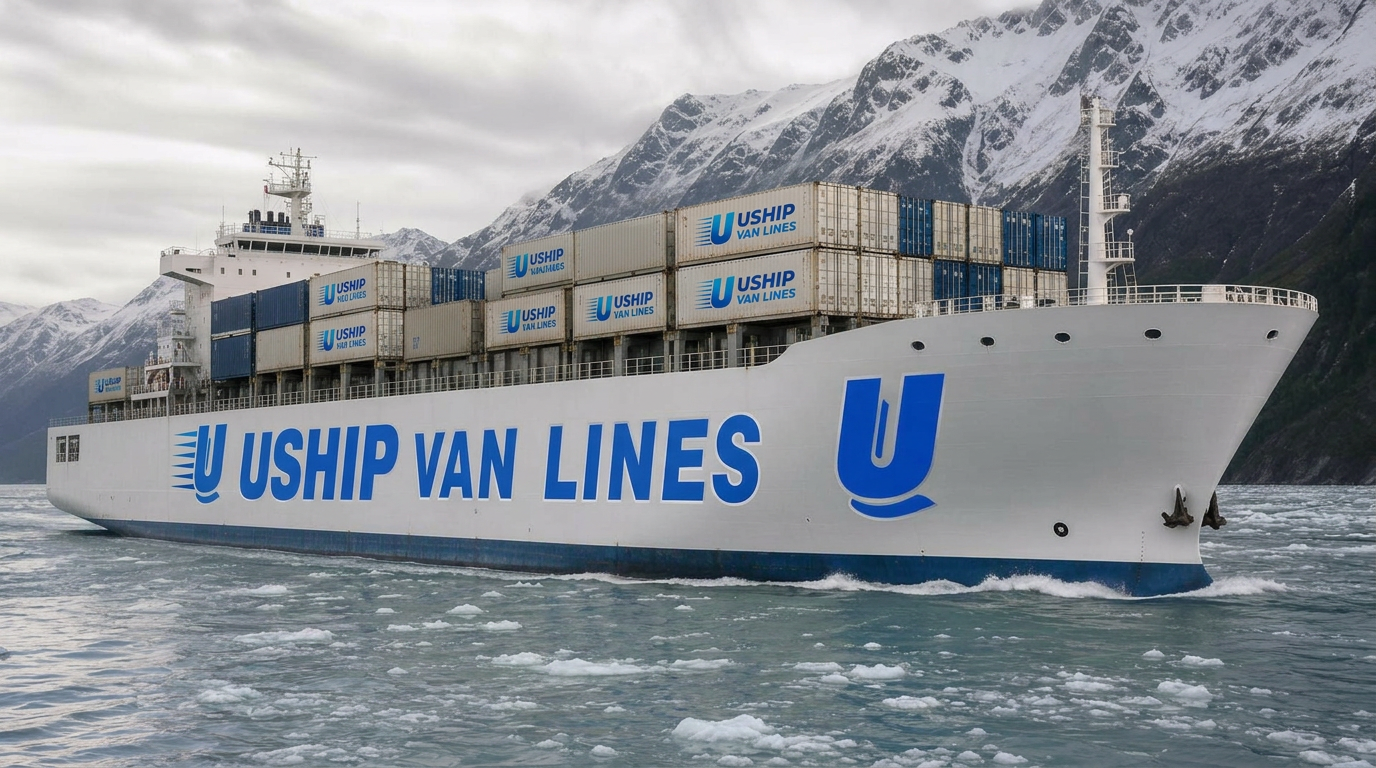
Moving from Alaska to Oklahoma means coordinating a complex multi-modal journey that begins with barge shipping from your Alaska location to the Port of Tacoma, followed by overland trucking across 2,000+ miles to the Sooner State. Whether you're relocating from Anchorage to Oklahoma City, Fairbanks to Tulsa, or the Mat-Su Valley to Norman, this move combines Alaska's unique maritime logistics with a long-haul interstate route through the Pacific Northwest and Great Plains.
Best Alaska & Hawaii Movers, powered by UShip Van Lines, specializes in these Alaska-to-Lower 48 relocations. We handle the entire chain—barge scheduling, port coordination, secure cross-country transport, and final delivery to your Oklahoma home. Ready to start planning your move with experienced Alaska specialists? Request a free quote today to get a detailed timeline and cost estimate tailored to your specific route and household size.
Route overview
Alaska to Oklahoma: A Cross-Continental Maritime and Overland Move
The Alaska-to-Oklahoma corridor is a low-volume but logistically rich moving lane that serves families and professionals relocating from America's largest state to the heartland. Oklahoma offers dramatic cost-of-living savings, milder winters, and thriving metros like Oklahoma City and Tulsa, making it an attractive destination for Alaskans seeking career opportunities in energy, aerospace, or education.
This move requires maritime shipping from Alaska ports (Anchorage, Whittier, or Seward for most customers; occasionally Fairbanks via highway to port) to Tacoma, Washington, followed by trucking through Idaho, Montana or Wyoming, South Dakota, Nebraska, Kansas, and into Oklahoma. Total distances typically range from 3,200 to 3,600 miles depending on your exact origin and destination. Because Alaska moves use barge shipping on weekly or biweekly schedules, advance planning is critical to ensure smooth transitions and avoid costly storage fees at either port.
Oklahoma's flat terrain and excellent highway infrastructure (I-35, I-40, I-44) make the overland portion straightforward, but winter weather across the northern plains can affect truck scheduling from November through March. Most customers moving to Oklahoma settle in the Oklahoma City metro, Tulsa metro, or college towns like Norman and Stillwater.
How the moving process works
How Your Alaska-to-Oklahoma Move Works: Step by Step
-
Initial survey and barge scheduling – We assess your household inventory via video or in-home walkthrough (Anchorage/Mat-Su) and reserve space on the next available barge from Alaska to Tacoma. Barge schedules typically run weekly in summer, biweekly in winter.
-
Packing and port delivery in Alaska – Professional crews pack your belongings into a weatherproof container or load a dedicated trailer. Your shipment is transported to the Port of Anchorage, Whittier, or Seward (depending on barge line and season) for maritime departure.
-
Barge transit to Tacoma – Your goods sail the Inside Passage and coastal Pacific routes, arriving at the Port of Tacoma in 3–5 days under normal conditions. Container is offloaded and cleared through port systems.
-
Transfer to long-haul truck – At our Tacoma transfer facility, your container or goods are loaded onto a highway tractor-trailer for the 2,000+ mile overland journey to Oklahoma.
-
Cross-country trucking – The truck travels I-90 east through Idaho and Montana (or I-84/I-80 through southern Idaho), then south through Wyoming or South Dakota into Nebraska, Kansas, and finally Oklahoma via I-35 or I-40.
-
Delivery and unloading in Oklahoma – Upon arrival at your Oklahoma home, our crew unloads and places items in designated rooms. You inspect the shipment and sign off on delivery paperwork.
-
Post-move support – We follow up to ensure satisfaction and handle any claims or issues promptly through our carrier partners and UShip Van Lines protocols.
Estimated moving costs
What Does an Alaska-to-Oklahoma Move Cost?
A typical 2-bedroom household (approximately 7,000–9,000 lbs) moving from Alaska to Oklahoma generally costs $6,800–$10,500 for full-service door-to-door transport. A 3-bedroom home (10,000–14,000 lbs) typically ranges $9,500–$14,800. These figures include Alaska barge shipping, port handling, long-haul trucking, and standard delivery in Oklahoma.
Key cost drivers include your specific Alaska origin (Anchorage and Mat-Su are less expensive than Fairbanks or remote areas requiring additional ground transport to port), shipment weight and cube, time of year (summer peak season commands higher rates), packing services (professional full-pack adds $1,200–$2,500), vehicle shipping (cars and trucks are often barged separately, adding $1,800–$3,200 per vehicle), and any storage needed if barge and truck schedules don't align perfectly.
Because Oklahoma is a mid-volume destination from Alaska, pricing is generally more competitive than moves to remote Western states but higher than California or Washington due to longer overland distance. We never guarantee prices without a detailed inventory and route assessment—accurate quotes require understanding your exact household goods, origin/destination addresses, preferred dates, and any special handling requirements. Request a personalized quote to receive a binding estimate based on your specific move parameters.
Estimated transit times
Realistic Door-to-Door Timelines for Alaska to Oklahoma
Total transit time from your Alaska home to your Oklahoma residence typically spans 12–21 days, broken into these phases:
- Alaska pickup to port departure: 1–4 days (same-day in Anchorage/Mat-Su; up to 3–4 days from Fairbanks or Kenai Peninsula with ground transport to port)
- Barge sailing time Tacoma: 3–5 days under normal sea conditions
- Port processing and truck loading in Tacoma: 1–3 days (customs clearance is not required for domestic Alaska shipments, but port logistics and truck availability affect timing)
- Overland trucking Tacoma to Oklahoma: 4–6 days for the 2,000+ mile haul (drivers must comply with DOT hours-of-service rules; winter weather can add 1–2 days)
- Final delivery window: Most carriers offer 1–3 day delivery windows upon truck arrival in Oklahoma
Summer moves (May–September) typically hit the faster end of this range due to favorable weather and peak barge frequency. Winter moves (November–March) should plan for the longer timeline due to reduced barge schedules, potential weather delays in mountain passes and plains states, and holiday slowdowns. Booking 4–6 weeks ahead for summer moves and 6–8 weeks for winter moves ensures you get preferred barge and truck slots without rush fees.
Regional logistics
Alaska-Specific Moving Logistics: What You Must Know
Port operations: Most Alaska household goods ship through the Port of Anchorage (year-round service) or Whittier (seasonal, primarily May–September). Barge lines like Alaska Marine Lines, Lynden Transport, and TOTE operate on published schedules—missing your slot can mean a week+ delay. Your mover coordinates container delivery, but you must ensure your household is ready on pack day.
Vehicle shipping: Cars and trucks are typically shipped separately via Roll-on/Roll-off (RoRo) barge service or in containers. Vehicles must be nearly empty (less than 1/4 tank fuel, minimal personal items) and operable (or declared inoperable with advance notice and extra fees). Plan $1,800–$3,200 per vehicle Alaska-to-Oklahoma, with 10–18 day transit times similar to household goods.
Restricted and prohibited items: Alaska moves prohibit hazardous materials (fuel, propane, ammunition beyond small personal amounts, certain chemicals), perishable foods, and plants subject to USDA restrictions. Frozen foods and game meat require special arrangement with reefer containers (expensive). Most movers won't transport marijuana products even if legal in Alaska and Oklahoma medical contexts—federal transport laws apply.
Paperwork: Domestic Alaska-to-Lower 48 moves do not require customs forms, but you'll complete inventory lists, valuation declarations, and bill of lading documents. If you're military or government-sponsored, additional DPS or agency forms may apply.
Last-mile Alaska access: If you're outside Anchorage/Mat-Su (e.g., Fairbanks, Kenai, Soldotna, remote bush communities), ground transport to port is arranged via truck or, in rare cases, air cargo for small high-value shipments. Winter road conditions (Parks Highway, Glenn Highway, Seward Highway) can affect pickup scheduling—maintain flexibility and communicate road closures or weather with your move coordinator.
Seasonal considerations
Best Times to Move from Alaska to Oklahoma
Summer (May–September): Peak moving season offers the most frequent barge sailings (often weekly), driest weather for both maritime and overland legs, and maximum crew availability. Roads across Montana, Wyoming, and the plains are clear and fast. Expect premium pricing due to high demand, but also the most scheduling flexibility and fastest transits. Book 5–8 weeks ahead.
Fall (October–November): Shoulder season with good weather still prevailing in most areas, though early winter storms can begin affecting northern routes by late November. Barge schedules start transitioning to biweekly frequencies. Pricing moderates slightly from summer peaks. Good balance of cost and speed if you can avoid Thanksgiving week.
Winter (December–March): Lowest demand period means better pricing leverage, but barge schedules are least frequent (often every 10–14 days or longer), and winter weather across the northern tier states can add delays. I-90 through Montana and Wyoming, and I-80 through Nebraska, experience closures during severe storms. Plan extra buffer time and consider weather-related storage contingencies. Alaska winter darkness and cold also make packing/loading more challenging in Fairbanks and northern areas.
Spring (April–early May): Transition period as barge schedules ramp back up and weather improves. Breakup season in Alaska can make rural road access difficult, but highways are generally passable. Overland routes may still see occasional late-season snow in mountain passes. Pricing begins climbing toward summer peaks. Good option if you're flexible and can work around variable spring weather.
Why choose Best Alaska & Hawaii Movers
Why Best Alaska & Hawaii Movers for Your Alaska-to-Oklahoma Relocation
-
Alaska specialists with deep maritime and overland expertise – We've coordinated hundreds of Alaska moves and understand barge schedules, port operations, and the unique challenges of starting a long-haul move from America's northern frontier.
-
Powered by UShip Van Lines' nationwide carrier network – Your move benefits from vetted, licensed motor carriers and established partnerships with Alaska barge lines, ensuring accountability and competitive pricing across the entire 3,200+ mile journey.
-
Single-point coordination for complex multi-modal moves – You work with one move coordinator who manages barge booking, port transfers, trucking dispatch, and delivery scheduling—no hand-offs between disconnected vendors.
-
Transparent pricing and realistic timelines – We provide detailed written estimates that break out barge, trucking, and service costs, plus candid transit timelines that account for Alaska's seasonal and logistical realities.
-
Customized solutions for every household size and budget – Whether you're moving a studio apartment to Tulsa, a 4-bedroom family home to Oklahoma City, or need vehicle shipping and temporary storage, we tailor services to your specific needs and coordinate every piece of the puzzle.