
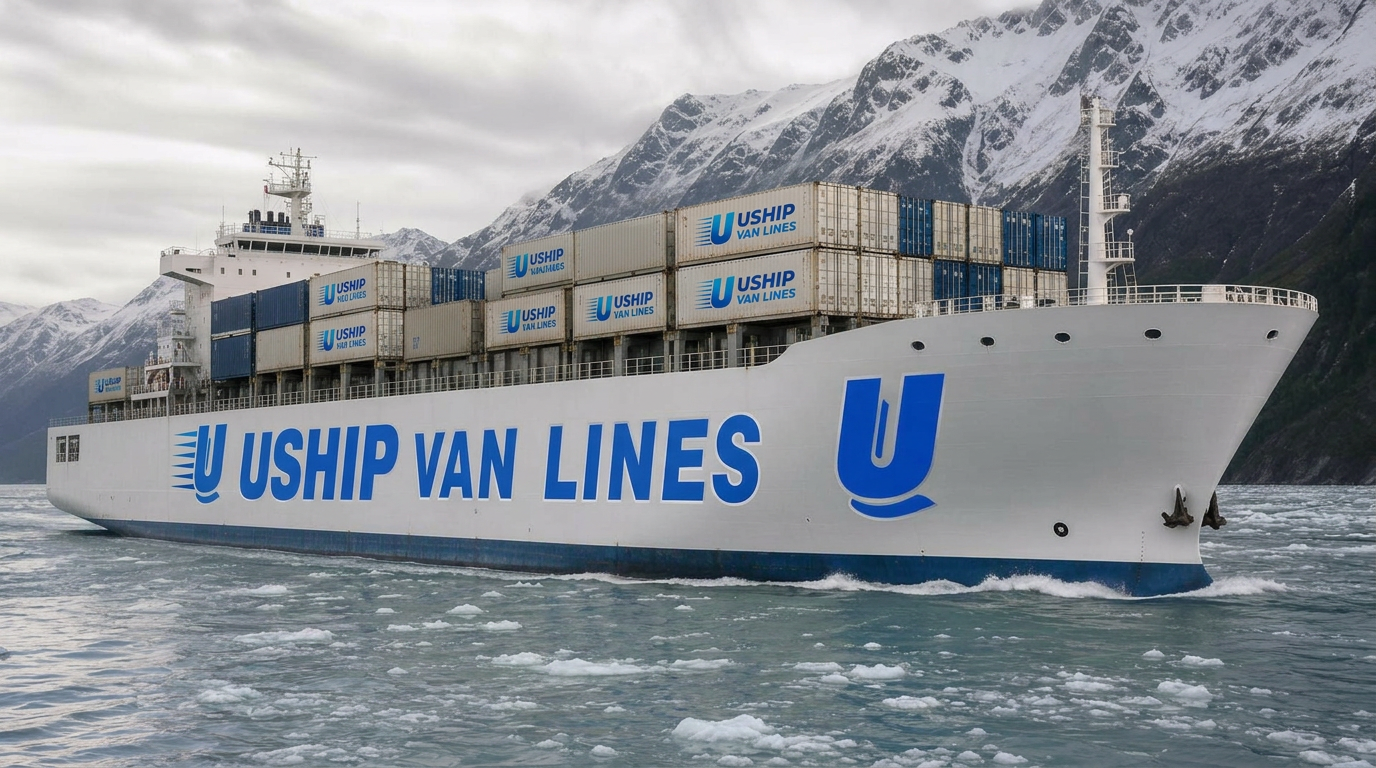
Moving from Alaska to Columbus, GA
Relocating from Alaska to Columbus, Georgia requires careful coordination across multiple transportation modes—barge shipping from Anchorage or Fairbanks through the Port of Tacoma, cross-country trucking through the Pacific Northwest and Southern states, and final delivery to Fort Benning's hometown. Best Alaska & Hawaii Movers, powered by UShip Van Lines, manages every leg of this complex 3,500+ mile journey with transparent pricing and clear timelines.
Whether you're leaving Alaska for a military reassignment to Fort Benning, cost-of-living relief, or Georgia's milder climate, your household goods face unique challenges: limited weekly barge sailings, weather-dependent port operations, and the sheer distance from the Last Frontier to the Chattahoochee Valley. Request your free quote today to secure accurate costs and realistic delivery windows for your Alaska-to-Columbus move.
Route overview
The Alaska to Columbus, GA Moving Route
Your household goods travel approximately 3,600 miles from Alaska to Columbus, Georgia through a multi-modal shipping corridor. Moves originating in Anchorage, Fairbanks, Mat-Su Valley, the Kenai Peninsula, or bush communities first consolidate at the Port of Anchorage for weekly or bi-weekly barge sailings to the Port of Tacoma, Washington—a 4–7 day ocean transit covering roughly 1,450 nautical miles through the Inside Passage and coastal Pacific.
From Tacoma's container terminal, your shipment transfers to over-the-road freight for the 2,850-mile cross-country haul: Interstate 5 south through Washington and Oregon, I-84 east across Idaho, I-80 through Wyoming and Nebraska, then southeast via I-76, I-70, I-65, and I-185 into Columbus and the Muscogee County area. This southern Georgia city sits just across the Chattahoochee River from Alabama, making it a major destination for military families heading to Fort Benning (now Fort Moore) and civilians seeking warmer climates and lower costs.
The route requires precise scheduling to align barge departures with over-the-road capacity, ensuring your belongings avoid costly storage delays at the Tacoma transfer point. Bush Alaska pickups add another layer of complexity, often requiring small-plane or seasonal ice-road transport to reach the Anchorage barge terminal.
How the moving process works
How Your Alaska to Columbus Move Works: Step-by-Step
-
Free Quote & Survey – Contact Best Alaska & Hawaii Movers for a binding or binding-not-to-exceed estimate. For accurate pricing, provide your exact Alaska origin (Anchorage metro, Fairbanks, Mat-Su, Kenai, or remote community), complete household inventory, and any vehicles, boats, or oversized items. We'll explain barge schedules, Tacoma transfer timelines, and Columbus delivery windows.
-
Alaska Packing & Pickup – Professional crews pack and load your belongings in Alaska, securing fragile items for barge motion and long-haul truck vibration. Pickups from bush communities may require advance scheduling around air-taxi availability or seasonal road access. Your goods are containerized or palletized for barge transport, with detailed inventory documentation for customs and insurance.
-
Barge to Tacoma – Your shipment sails from the Port of Anchorage to Tacoma, Washington on a scheduled cargo barge (typically Totem Ocean Trailer Express/TOTE or similar carriers). Transit takes 4–7 days depending on weather, with limited sailings—often one departure per week in summer, less frequent in winter. Monitor barge schedules closely; delays ripple through the entire timeline.
-
Tacoma Transfer & Cross-Country Trucking – At Tacoma's port, your container or pallets transfer to a long-haul truck for the 2,850-mile drive to Georgia. This leg takes 5–8 days of active driving, covering Interstate corridors through the Mountain West, Great Plains, and Deep South. Experienced drivers navigate seasonal weather (winter snow in Wyoming, summer heat in the South) and DOT hours-of-service limits.
-
Columbus Delivery & Unpacking – Your driver contacts you 24–48 hours before arrival to schedule delivery at your Columbus address (Midtown, Downtown, North Columbus, or outlying Muscogee County). The crew unloads, places furniture, and can provide unpacking services if requested. Inspect all items before signing the Bill of Lading; note any damage for insurance claims.
-
Vehicle & Specialty Item Shipping – Cars, trucks, ATVs, and boats ship separately via roll-on/roll-off (RoRo) barge or enclosed transport. Alaska requires specific preparation (fluid levels, battery disconnects, customs paperwork). Coordinate vehicle pickup in Columbus to avoid port storage fees.
-
Post-Move Support – Best Alaska & Hawaii Movers provides claim assistance if damage occurs, coordination with storage facilities if your Columbus home isn't ready, and guidance on Georgia vehicle registration (you'll surrender Alaska plates and pass emissions testing in Muscogee County within 30 days of establishing residency).
Estimated moving costs
What Does an Alaska to Columbus Move Cost?
Budget $8,500–$16,000 for a typical 2–3 bedroom household moving from Alaska to Columbus, GA (approximately 8,000–12,000 pounds). Studio or 1-bedroom moves may start around $5,500–$7,500, while 4+ bedroom homes or moves exceeding 15,000 pounds can reach $20,000–$28,000. These figures reflect door-to-door service including barge, trucking, and standard liability coverage; actual costs depend on precise weight, origin accessibility, barge schedule, and service level.
Key Cost Drivers:
- Origin location – Anchorage and Fairbanks metro pickups cost less than Mat-Su Valley, Kenai Peninsula, or bush Alaska addresses requiring air-taxi, ice-road, or seasonal barge connections (add $1,500–$5,000+ for remote pickups).
- Barge fees – Port of Anchorage to Tacoma ocean freight is the largest single expense, averaging $3,500–$6,500 for a 20-foot container or equivalent palletized freight. Fuel surcharges and seasonal demand (summer peak) affect pricing.
- Cross-country trucking – The 2,850-mile Tacoma-to-Columbus haul costs $0.70–$1.20 per pound depending on fuel prices, route complexity, and carrier availability. Expedited service (dedicated truck, no storage) adds 15–25%.
- Packing & crating – Full-service packing in Alaska averages $800–$2,200; fragile-only or partial packing reduces costs. Custom crating for artwork, antiques, or electronics adds $150–$600 per item.
- Vehicle shipping – Cars and trucks ship via RoRo barge ($1,800–$3,200 Anchorage to Seattle/Tacoma, then $800–$1,400 overland to Columbus). Enclosed transport for classic or luxury vehicles costs 40–60% more.
- Insurance – Basic liability (60¢/lb.) is included; full-value protection costs 1–2.5% of declared goods value (recommended for high-value homes).
- Storage – If the barge arrives early or your Columbus home isn't ready, warehouse storage in Tacoma or Columbus runs $100–$350/month for typical loads.
- Seasonality – May–September peak moving season and limited winter barge schedules can increase costs 10–20%. Off-season (October–March) offers modest savings but longer transit windows.
Never pay the full balance upfront. Legitimate movers collect deposits (typically 10–25%) and final payment upon delivery. Request a binding or binding-not-to-exceed estimate to avoid surprise charges.
Estimated transit times
How Long Does Alaska to Columbus Moving Take?
Expect 18–35 days door-to-door from pickup in Alaska to delivery in Columbus, GA, with the timeline heavily influenced by barge schedules and weather. Faster moves (18–24 days) occur during summer peak with weekly Anchorage sailings and ideal road conditions; winter moves or bush Alaska origins often extend to 28–35 days or longer.
Transit Breakdown:
- Alaska pickup & port delivery: 1–5 days (Anchorage/Fairbanks metro: 1–2 days; Mat-Su/Kenai: 2–3 days; bush Alaska: 3–7+ days depending on air-taxi weather and ice-road access).
- Barge Anchorage to Tacoma: 4–7 days ocean transit, departing weekly or bi-weekly depending on season (TOTE and similar carriers publish schedules months ahead; winter sailings are less frequent).
- Tacoma port processing & truck loading: 1–3 days for container unloading, customs clearance, and transfer to over-the-road carrier.
- Cross-country trucking Tacoma to Columbus: 5–8 days active driving covering 2,850 miles via I-5, I-84, I-80, I-70, I-65, and I-185, subject to weather (winter storms in Wyoming/Nebraska, summer heat delays) and DOT driver hours limits.
- Columbus delivery window: Final delivery scheduled within a 2–3 day window; your driver contacts you 24–48 hours prior.
Plan for Delays: Winter storms closing I-80 in Wyoming, rare Port of Anchorage ice, or summer barge overbooking can add 3–10 days. Bush Alaska pickups wait-listed behind cargo priority may delay initial consolidation. Build buffer time—especially if you have Columbus lease start dates or Fort Benning report deadlines.
Regional logistics
Alaska-Specific Moving Logistics for Columbus, GA
Port of Anchorage & Barge Operations
All Alaska moves funnel through the Port of Anchorage, Alaska's primary deep-water cargo terminal. Household goods ship via container barge (TOTE, Matson, or regional carriers) on published schedules—verify sailing dates at booking, as missed cutoffs delay your move by 7–14 days. Bush Alaska origins (Bethel, Nome, Kotzebue, Southeast communities) require small-plane or seasonal barge connections to reach Anchorage; factor extra time and cost ($1,500–$5,000+). Fairbanks and Mat-Su Valley goods truck to Anchorage port in 1–2 days.
Customs, Paperwork & Inspections
Alaska-to-Lower 48 moves are domestic (no customs), but carriers require detailed household-goods inventories for barge manifests and insurance. USDA restricts certain agricultural products and firewood; declare all food, plants, and soil-containing items. If shipping vehicles separately, complete Alaska DMV paperwork and ensure VIN matches Bill of Lading.
Vehicle Shipping
Cars, trucks, and ATVs ship via RoRo barge (drive-on/drive-off) from Anchorage to Tacoma or Seattle, then overland to Columbus. Prepare vehicles: ¼ tank fuel, disconnect batteries, remove personal items, document existing damage. Boats and RVs often require custom cradles or flatbed transport (quote separately). Coordinate Columbus vehicle delivery to avoid Georgia port storage fees; register with Georgia DDS within 30 days of residency (emissions testing required in Muscogee County).
Storage Solutions
If the barge arrives before your Columbus home is ready, request warehouse storage in Tacoma (climate-controlled, 24/7 security, $100–$300/month) or Columbus (local facilities near Fort Benning). First 7–14 days often included free with long-distance contracts; extended storage billed monthly. Avoid
Seasonal considerations
Best Time to Move from Alaska to Columbus, GA
Summer (May–September): Peak Season, Most Reliable Schedules
Weekly Anchorage barge sailings, dry roads across the Continental U.S., and predictable delivery windows make summer the easiest (but most expensive) time to move. The Port of Anchorage operates 24/7, and Tacoma transfer times shrink to 1–2 days. Drawback: 10–20% higher costs due to demand from military PCS moves (Fort Benning summer rotations), college relocations, and tourism industry turnover. Book 8–12 weeks ahead to secure preferred dates and avoid storage delays.
Fall (October–November): Shoulder Season, Moderate Weather
Barge frequency drops to every 10–14 days, but costs decline 5–10%. Interstate 80 and I-70 remain mostly clear through October; early November snow in Wyoming and Nebraska can cause minor trucking delays. Columbus enjoys mild fall weather, ideal for unloading and settling in. Good compromise for cost-conscious movers with flexible timelines.
Winter (December–March): Off-Season, Longest Timelines
Barge sailings become bi-weekly or tri-weekly; severe weather can delay Port of Anchorage operations or close I-80 for days at a time. Cross-country trucking slows 15–25%, and Tacoma transfer storage may be necessary if roads are impassable. Offset: 10–15% cost savings and easy booking (movers have open capacity). Recommended only if you can tolerate 28–35+ day windows and potential holiday-week shutdowns (late December).
Spring (April–early May): Transition, Unpredictable Weather
Barge schedules ramp back to weekly by late April; Alaska thaw creates muddy road conditions for bush pickups. I-80 spring snowstorms (
Why choose Best Alaska & Hawaii Movers
Why Choose Best Alaska & Hawaii Movers for Your Alaska to Columbus Move
-
Alaska Barge Expertise – We navigate Port of Anchorage sailing schedules, Tacoma transfer logistics, and bush Alaska last-mile challenges daily, ensuring your goods move on the fastest available barge and avoid costly storage delays.
-
Transparent, All-Inclusive Pricing – Binding or binding-not-to-exceed estimates include barge fees, cross-country trucking, standard insurance, and Columbus delivery—no hidden fuel surcharges or