
Moving from Columbus, GA to Alaska
Relocating from Columbus, Georgia to Alaska is one of the most logistically complex moves in North America. Your household goods will travel over 3,500 miles, crossing the continental U.S. by truck before transferring to ocean barge for the final leg to Alaska. Whether you're heading to Anchorage, Fairbanks, the Mat-Su Valley, or a remote community, understanding the multimodal shipping process is essential for a smooth transition.
Best Alaska & Hawaii Movers, powered by UShip Van Lines, specializes in these challenging long-haul routes. Our network of vetted carriers handles the entire journey—from pickup in Columbus through Tacoma consolidation, barge transport to Alaska ports, and final delivery to your new home. Request your free, no-obligation quote today to start planning your Alaska adventure.
Route overview
The Columbus, GA to Alaska Moving Route
Your move begins with ground transportation from Columbus across the southern and western United States to the Port of Tacoma, Washington—the primary embarkation point for Alaska-bound cargo. This overland leg covers approximately 2,800 miles and typically takes 5–7 days depending on routing and consolidation schedules.
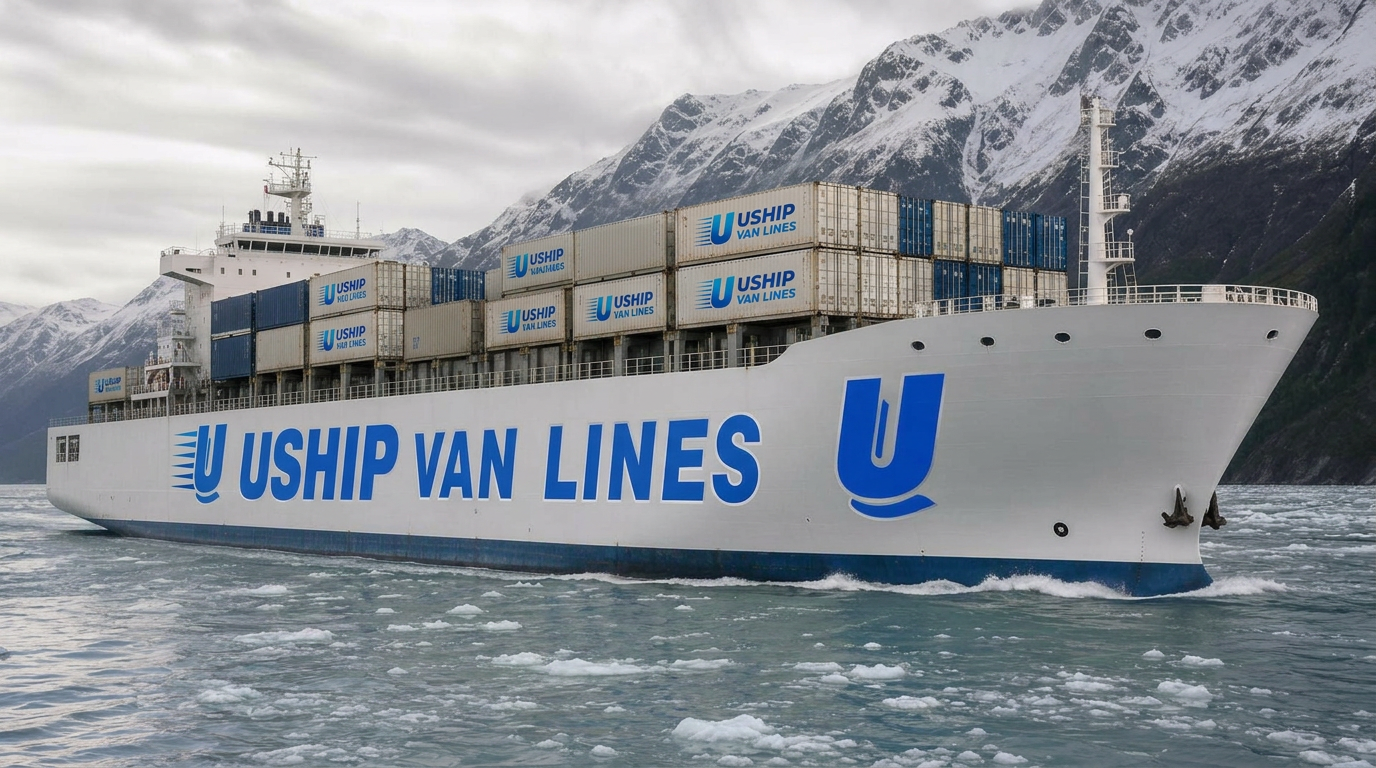
From Tacoma, your belongings board ocean barges operated by carriers serving Alaska Marine Highway routes. These barges sail through the Inside Passage or open Pacific waters to Alaska ports—most commonly the Port of Anchorage, though cargo also reaches Whittier, Seward, and other terminals. The marine voyage adds another 4–7 days depending on weather, routing, and port schedules.
Once in Alaska, your shipment clears customs (if applicable) and transfers to local carriers for last-mile delivery. Anchorage and Mat-Su Valley deliveries are most straightforward, while Fairbanks requires additional overland transport up the Parks Highway, and bush communities may need small aircraft or seasonal ice-road access. Total door-to-door transit typically ranges 14–28 days, with seasonal and weather variables playing significant roles.
How the moving process works
How Your Columbus to Alaska Move Works
-
Initial Consultation & Survey — We assess your inventory via video walkthrough or in-home visit. Alaska moves require detailed itemization for barge manifests, and we'll flag items restricted by Alaska regulations (certain plants, soils, firearms require special documentation).
-
Packing & Loading in Columbus — Professional movers pack and load your belongings into a dedicated truck or shared container. Climate-controlled options are recommended for electronics and valuables, as your shipment will experience significant temperature variation from Georgia heat to Alaska conditions.
-
Overland Transport to Tacoma — Your goods travel cross-country to the Port of Tacoma consolidation facility. Shipments are inspected, re-manifested for marine transport, and staged for the next available barge sailing. This leg typically takes 5–7 days but can extend during peak summer moving season.
-
Barge Loading & Ocean Transit — Containers or palletized goods are loaded onto Alaska-bound barges. Sailing schedules vary by season (weekly in summer, less frequent in winter). The ocean voyage to Anchorage takes 4–7 days depending on weather and whether the barge makes intermediate stops at Whittier or Seward.
-
Alaska Port Operations — Upon arrival, cargo clears port inspections. Alaska has strict biosecurity rules for invasive species, so certain items may require agricultural inspection. Delays at this stage are rare but possible, especially for shipments containing plant material or used outdoor equipment.
-
Last-Mile Delivery — Local Alaska carriers transport your goods from the port to your final address. Anchorage and Eagle River deliveries often occur within 1–3 days. Fairbanks requires an additional 6–8 hours of driving. Remote locations may involve small-plane cargo flights or seasonal access restrictions.
-
Unpacking & Setup — Upon delivery, inspect all items before signing off. Document any damage immediately for insurance claims. Many customers opt for full unpacking services, especially valuable for those unfamiliar with Alaska's unique storage and climate considerations (moisture control, foundation settling, etc.).
Estimated moving costs
What a Columbus, GA to Alaska Move Costs
A typical 2–3 bedroom household move from Columbus to Alaska ranges $7,500–$14,000 for door-to-door service. Studio or 1-bedroom moves start around $4,500–$6,500, while larger homes (4+ bedrooms) can exceed $18,000. These are estimated ranges based on current market conditions; actual quotes depend on your specific inventory, services, and timing.
Key cost drivers include:
- Volume and weight — Alaska barge shipping is priced by cubic feet and/or weight. A 1,200 sq ft home typically fills 600–900 cubic feet.
- Packing services — Full professional packing adds $1,200–$2,500 but ensures proper protection for the multimodal journey and helps meet barge manifest requirements.
- Seasonal timing — Summer (May–September) is peak season with higher demand and premium pricing. Winter moves (October–April) may see 15–25% lower rates but face longer transit times and weather delays.
- Final destination — Anchorage and Mat-Su Valley are the most economical endpoints. Fairbanks adds $800–$1,500 for the additional overland leg. Bush communities requiring air or ice-road delivery can add $2,000–$5,000+.
- Vehicle shipping — If you're shipping a car or truck separately, expect $2,500–$4,000 via the same barge route. Many customers drive the Alaska Highway (ALCAN) instead, which takes 7–10 days and costs $1,500–$2,500 in fuel, lodging, and meals.
- Storage — If your Alaska housing isn't ready, temporary storage in Tacoma or Anchorage runs $150–$400/month depending on volume.
- Insurance — Full-value protection is strongly recommended for Alaska moves due to the multiple transfers. Add 2–4% of declared value for comprehensive coverage.
We never guarantee prices without a detailed inventory review. Request a personalized quote to receive accurate estimates based on your specific needs and timeline.
Estimated transit times
How Long Does Columbus to Alaska Moving Take?
Expect 14–28 days door-to-door for most Columbus, GA to Alaska moves, broken down as follows:
- Columbus to Tacoma (overland): 5–7 days. May extend to 10 days during peak season if your shipment waits for consolidation.
- Tacoma port staging: 2–7 days. Depends on the next available barge sailing. Summer sailings are more frequent (weekly); winter sailings may be every 10–14 days.
- Ocean transit (Tacoma to Anchorage): 4–7 days. Direct sailings are faster; barges stopping at Whittier or Seward add time. Severe weather can delay sailings by 1–3 days.
- Alaska port clearance & last-mile: 1–5 days. Anchorage deliveries are quickest. Fairbanks adds 1–2 days. Remote locations may add a week or more, especially if weather grounds small aircraft.
Winter considerations (October–April): Transit can extend to 21–35 days due to reduced barge frequency, winter road conditions, and holiday slowdowns (Thanksgiving, Christmas/New Year).
Summer considerations (May–September): Faster schedules but higher volume. Book 6–8 weeks in advance to secure optimal sailing dates.
Flexibility is essential. Build a 5–7 day buffer before you absolutely need your belongings in Alaska, and plan temporary lodging and essentials accordingly.
Regional logistics
Alaska Moving Logistics: What Columbus Residents Need to Know
Port operations: The Port of Tacoma is the primary gateway. Your shipment will be consolidated with other Alaska-bound cargo, inspected for marine transport compliance, and staged for loading. Barge lines include TOTE Maritime Alaska and others serving Southcentral routes.
Alaska ports of entry: Most shipments arrive at the Port of Anchorage (major container terminal). Whittier serves as an alternative, especially for Southcentral destinations. Seward and other ports handle specialty cargo. Your specific port depends on carrier routing and final destination.
Customs & biosecurity: While Alaska is part of the U.S., it has strict agricultural inspection protocols to prevent invasive species. Soil, seeds, certain plants, used outdoor gear, and agricultural products face inspection. Declare everything accurately on your manifest to avoid delays.
Vehicle shipping: Cars and trucks ship via the same barge system as household goods. Expect $2,500–$4,000 from Tacoma to Anchorage. Vehicles must be clean (no soil, no quarter-tank+ of fuel). Many Columbus residents drive the ALCAN Highway instead—roughly 3,800 miles from Columbus through Canada to Alaska, taking 7–10 days.
Restricted items: Alaska prohibits or restricts fireworks, certain firearms without proper permits, invasive plant species, and some chemicals. We'll review your inventory for compliance during the consultation.
Last-mile challenges: Anchorage, Eagle River, Wasilla, and Palmer have straightforward truck access. Fairbanks requires 6–8 hours of overland transport from Anchorage via the Parks Highway. Bush communities (Bethel, Nome, Barrow, Kodiak) may require small aircraft, seasonal barge service, or ice-road access (winter only). Discuss your exact address early in the planning process.
Storage options: If your Alaska residence isn't ready, we can arrange storage in Tacoma (before barge) or Anchorage (after arrival). Typical costs: $150–$400/month. Climate-controlled units are recommended for valuables.
Documentation: Keep digital and physical copies of your inventory manifest, bill of lading, and insurance certificate. Alaska employers (especially military and state government) often reimburse moving expenses—proper documentation is essential for reimbursement.
Seasonal considerations
Best Time to Move from Columbus, GA to Alaska
Spring (April–May): Shoulder season offers moderate pricing and improving weather. Barge schedules increase in frequency as ice clears from Alaska ports. Excellent compromise between cost and speed. Book 4–6 weeks ahead.
Summer (June–August): Peak moving season with weekly barge sailings and fastest overall transit. Demand is highest—especially from military families on PCS orders—driving prices up 20–30%. Alaska weather is ideal, and road conditions for last-mile delivery are optimal. Book 8–10 weeks in advance. Expect premium pricing but maximum reliability.
Fall (September–October): Another shoulder season. Barge frequency begins to decline, but prices drop. Early October is still reliable; late October can see first winter storms affecting sailings. Good choice for budget-conscious movers who can tolerate slight delays. Book 4–5 weeks ahead.
Winter (November–March): Lowest prices, but significantly longer and less predictable transit. Barge sailings may be every 10–14 days. Severe weather can delay ocean crossings. Alaska road conditions complicate last-mile delivery, especially to Fairbanks and rural areas. Not recommended if you have hard deadlines, but viable for flexible movers seeking 15–25% savings. Holiday periods (Thanksgiving, Christmas) add further delays.
Alaska-specific weather notes: Columbus has mild winters, but your belongings will experience extreme temperature swings. Ensure electronics, musical instruments, and sensitive items receive climate-controlled handling. Alaska's summer daylight (20+ hours in Anchorage, 24 in Fairbanks) facilitates delivery logistics, while winter darkness (4–6 hours of daylight) complicates unloading and navigation in remote areas.
Why choose Best Alaska & Hawaii Movers
Why Choose Best Alaska & Hawaii Movers for Your Columbus to Alaska Move
-
Alaska Specialists, Not Generalists — We focus exclusively on moves to and from Alaska and Hawaii. Our carrier network knows Tacoma barge protocols, Alaska port procedures, and last-mile logistics in Mat-Su, Fairbanks, and beyond—experience that generic long-distance movers simply don't have.
-
Transparent Pricing, No Hidden Fees — Alaska moves involve multiple legs and handoffs. We provide itemized quotes covering every stage: ground transport, barge fees, port handling, last-mile delivery, and optional services. You'll know exactly what you're paying for.
-
Vetted Carrier Network via UShip Van Lines — Every carrier in our network undergoes verification for licensing, insurance, and Alaska route experience. We match your shipment to carriers with proven track records on this specific lane.
-
Single Point of Contact — Despite the multimodal complexity, you work with one dedicated coordinator from quote to delivery. We track your shipment across every leg and proactively communicate any schedule changes.
-
Flexible Service Levels — Choose full-service packing and white-glove delivery, or save with partial packing and self-unload options. We tailor service to your budget and timeline, not a one-size-fits-all package.