
Moving from Sumter, SC to Alaska
Moving from Sumter, South Carolina to Alaska represents one of the most logistically complex relocations in the United States. Your household goods will travel over 4,000 miles, crossing multiple time zones and climate regions before boarding a barge in Tacoma, Washington for the final voyage to Anchorage. Understanding the unique requirements of this route—from southern humidity to Arctic conditions—is essential for a successful move.
Best Alaska & Hawaii Movers, powered by UShip Van Lines, specializes in cross-continental Alaska relocations. We coordinate the entire journey from your Sumter doorstep through overland transport, barge consolidation, and final delivery to Anchorage, Fairbanks, the Mat-Su Valley, or beyond. Ready to start planning? Request a detailed quote tailored to your specific Alaska destination and timeline.
Route overview
Sumter to Alaska: Understanding the Journey
The Sumter, SC to Alaska moving route combines long-haul overland trucking with marine barge transport. Your belongings first travel approximately 2,900 miles west from Sumter through the southern or northern tier states to Tacoma, Washington—the primary consolidation hub for Alaska-bound cargo. This cross-country leg typically takes 5–7 days of dedicated transit time.
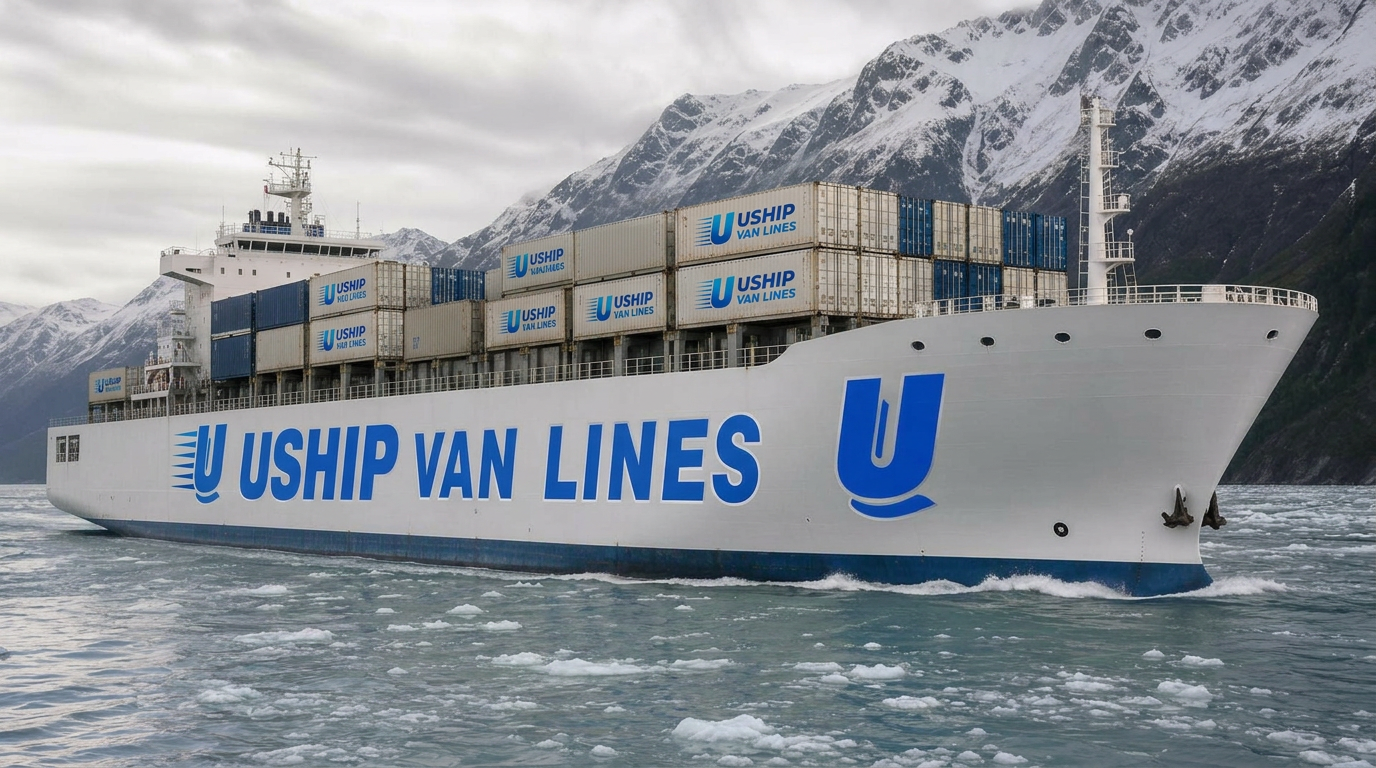
In Tacoma, your household goods transfer to a sea-land container and board a scheduled barge service to the Port of Anchorage. Alaska Marine Lines and Totem Ocean Trailer Express operate weekly sailings during peak season (May–September) and bi-weekly during winter months. The maritime leg adds 7–10 days of transit, weather permitting.
Final delivery depends on your Alaska destination. Anchorage and Mat-Su Valley addresses receive direct delivery within 1–3 days after port clearance. Fairbanks deliveries add another 350 miles overland. Remote communities accessible only by smaller barge, air, or ice road require additional coordination and can extend timelines by weeks, particularly in shoulder seasons when weather impacts access.
How the moving process works
How Your Sumter to Alaska Move Works
-
Initial survey and quote — We assess your inventory via video walkthrough or in-person visit in Sumter, identify items requiring special handling (firearms, refrigerated goods, hazardous materials cannot ship to Alaska), and provide a detailed estimate including all legs of the journey.
-
Packing and loading in Sumter — Professional crews pack and load your belongings into a dedicated truck or consolidated container, using climate-appropriate materials and moisture barriers essential for the humidity-to-Arctic transition.
-
Overland transport to Tacoma — Your shipment travels west via I-20, I-40, or northern routes depending on season and traffic conditions, with GPS tracking available throughout the cross-country leg.
-
Tacoma consolidation and containerization — At our Tacoma hub, goods transfer into marine-grade containers meeting Alaska barge specifications, with additional weatherproofing and securing for ocean transit.
-
Barge departure and ocean transit — Your container loads onto the next available Alaska-bound barge, with typical sailing schedules departing Tuesday or Friday during peak season (verify current schedules as they vary).
-
Port of Anchorage arrival and customs clearance — While no international customs apply, agricultural inspections may occur; the port processes containers within 24–48 hours of vessel arrival.
-
Final delivery to your Alaska address — Local Alaska drivers complete the last mile, navigating seasonal road conditions and coordinating specific delivery windows with you directly.
Estimated moving costs
What to Budget for Your Sumter to Alaska Move
A typical 2-bedroom household (approximately 7,000–9,000 lbs) moving from Sumter, SC to Anchorage generally costs $8,500–$14,000. A 3-bedroom home (10,000–13,000 lbs) typically ranges $12,000–$18,500. These estimates reflect full-service packing, loading, overland transport, barge shipping, and delivery in the Anchorage area.
Key cost drivers include:
- Total weight and volume — Alaska barge pricing operates on cubic footage and weight; oversized furniture or large appliance loads increase costs significantly
- Packing services — Full professional packing adds $1,200–$2,800 but provides proper moisture protection and insurance coverage
- Destination beyond Anchorage — Fairbanks delivery adds $800–$1,500; Kenai Peninsula $400–$800; remote bush communities require custom quotes
- Vehicle shipping — Cars ship separately via RORO (roll-on/roll-off) barge for $1,400–$2,200 per vehicle from Seattle/Tacoma
- Seasonal timing — Peak summer moves (June–August) command premium rates due to high demand and favorable barge schedules
- Storage — If barge schedules don't align with your move-out date, Tacoma warehouse storage runs $150–$350 per month
We never guarantee fixed prices without a detailed inventory assessment, but our quotes include all legs of the journey with no hidden barge fees or surprise port charges. Payment typically structures as a deposit at booking (25–30%), balance due before Tacoma barge loading, with final delivery requiring no additional cash payment.
Estimated transit times
Realistic Timeline: Sumter to Alaska
Door-to-door delivery from Sumter, SC to Anchorage typically requires 21–35 days total transit time, broken down as follows:
Sumter to Tacoma overland: 5–7 days of driving time, though this leg may extend to 7–10 days during winter storms affecting mountain passes or if your shipment consolidates with other households for cost efficiency.
Tacoma warehouse and barge loading: 3–7 days for container loading, warehouse processing, and coordination with the next available barge sailing. During peak season (May–September), faster turnaround is possible; winter schedules may require waiting for the next bi-weekly departure.
Barge transit to Anchorage: 7–10 days on the water, depending on weather conditions and whether the vessel makes intermediate stops at Kodiak, Whittier, or other Alaska ports before reaching Anchorage.
Port clearance and final delivery: 2–4 days for container unloading at the Port of Anchorage, local trucking to your address, and coordinating delivery windows.
Delivery to Fairbanks adds 2–3 days after Anchorage port clearance. Kenai Peninsula destinations add 1–2 days. Remote communities require custom timelines—villages accessible only during summer barge windows or winter ice road seasons may wait weeks or months for the next available transport.
We recommend booking 6–8 weeks before your desired delivery window during summer moves, 4–6 weeks for winter relocations when demand drops. Last-minute moves are possible but reduce barge schedule flexibility.
Regional logistics
Alaska-Specific Moving Logistics
Barge operations: Your shipment travels via container barge, not passenger ferry. Container dimensions (typically 20' or 40' units) and weight limits follow maritime standards. Proper containerization prevents moisture damage—critical when moving from South Carolina's humid climate to Alaska's extreme temperature swings.
Port of Anchorage procedures: All shipments clear through the Port of Anchorage dock system. USDA agricultural inspections may examine containers for prohibited plants, soil, or biological materials. Processing typically completes within 24–48 hours, though delays can occur during high-volume weeks. Port fees are included in professional moving quotes but verify this in your contract.
Vehicle shipping: Cars, trucks, and motorcycles ship separately via RORO (roll-on/roll-off) barge service, typically requiring delivery to Seattle or Tacoma 5–7 days before sailing. Vehicles must be clean (no mud or plant material), operable, and contain less than ¼ tank of fuel. Consider driving to Alaska via the Alaska Highway (ALCAN) if you have time—the 2,250-mile route from the Canadian border offers adventure but requires vehicle preparation for remote driving.
Prohibited and restricted items: Alaska regulations prohibit certain plant species, soil, untreated wood, and agricultural products. Firearms are legal but require proper declaration. Propane tanks, paint, aerosols, and hazardous materials cannot ship via barge. Refrigerated and frozen foods should be consumed before moving—the multi-week timeline makes perishables impractical.
Delivery access: Confirm your Alaska address accessibility. Anchorage, Fairbanks, Mat-Su Valley (Wasilla/Palmer), and highway-connected communities accommodate standard moving trucks. Remote areas may require transfer to smaller vehicles, barge to island or coastal communities, or air freight to bush villages. Narrow roads, low-clearance bridges, or winter conditions can necessitate shuttle trucks for the final mile.
Insurance considerations: Marine cargo insurance is essential for barge transit. Verify your moving quote includes at least basic valuation coverage; consider full replacement value coverage for high-value belongings. Homeowners or renters insurance may not cover goods in maritime transit.
Seasonal considerations
Alaska Barge Schedules and Seasonal Factors
Summer (May–September): Peak moving season offers the most favorable conditions. Weekly barge sailings from Tacoma provide maximum flexibility. Warm weather simplifies delivery logistics in Alaska, with all roads accessible and extended daylight hours. Book early—demand from military families, seasonal workers, and residents relocating drives premium pricing and tighter schedules. Expect 15–20% higher costs than winter but the most reliable timelines.
Fall (October–November): Shoulder season brings reduced demand and better pricing (10–15% below summer rates). Barge frequency drops to bi-weekly sailings, requiring tighter coordination. Early snow in Alaska high country can complicate deliveries beyond Anchorage. This is often the best value period for flexible timelines.
Winter (December–March): Off-season moving offers the lowest rates—sometimes 20–25% below peak summer pricing. Barge schedules run bi-weekly or less frequently. Overland transport from Sumter may face weather delays crossing the Rockies or through Montana/Wyoming passes. Alaska deliveries contend with ice, extreme cold, and shorter daylight windows. Allow extra buffer time (add 5–7 days to standard estimates). Some remote communities become inaccessible until spring thaw or require expensive air freight.
Spring (April–early May): Transitional season as barge operators ramp up to summer schedules. Pricing begins rising as military PCS season approaches. Breakup season in Alaska can create muddy, difficult road conditions for final delivery, particularly affecting rural routes off the main highway system. Ice road closures cut off winter-accessible bush communities before summer barge access opens.
Why choose Best Alaska & Hawaii Movers
Why Best Alaska & Hawaii Movers for Your Sumter to Alaska Relocation
-
Dedicated Alaska expertise — We specialize exclusively in Alaska and Hawaii relocations, managing the unique barge logistics, seasonal scheduling, and last-mile challenges that generic long-distance movers often underestimate or mishandle.
-
Transparent, all-inclusive pricing — Our quotes include every leg: Sumter pickup, overland transport, Tacoma handling, barge freight, port fees, and Alaska delivery—no surprise "barge surcharges" or hidden port costs at delivery time.
-
End-to-end shipment tracking — GPS tracking during overland transit, container tracking during barge sailing, and direct coordination with Alaska delivery teams keep you informed throughout the 3–5 week journey.
-
Climate-appropriate handling — We use moisture barriers, climate-controlled packing materials, and proper containerization techniques essential when moving from South Carolina humidity through desert states to Alaska's extreme cold and dry conditions.
-
Flexible scheduling coordination — We work with Alaska barge sailing schedules, your move-out timeline, and delivery window needs to optimize logistics—including Tacoma storage options when dates don't perfectly align.