
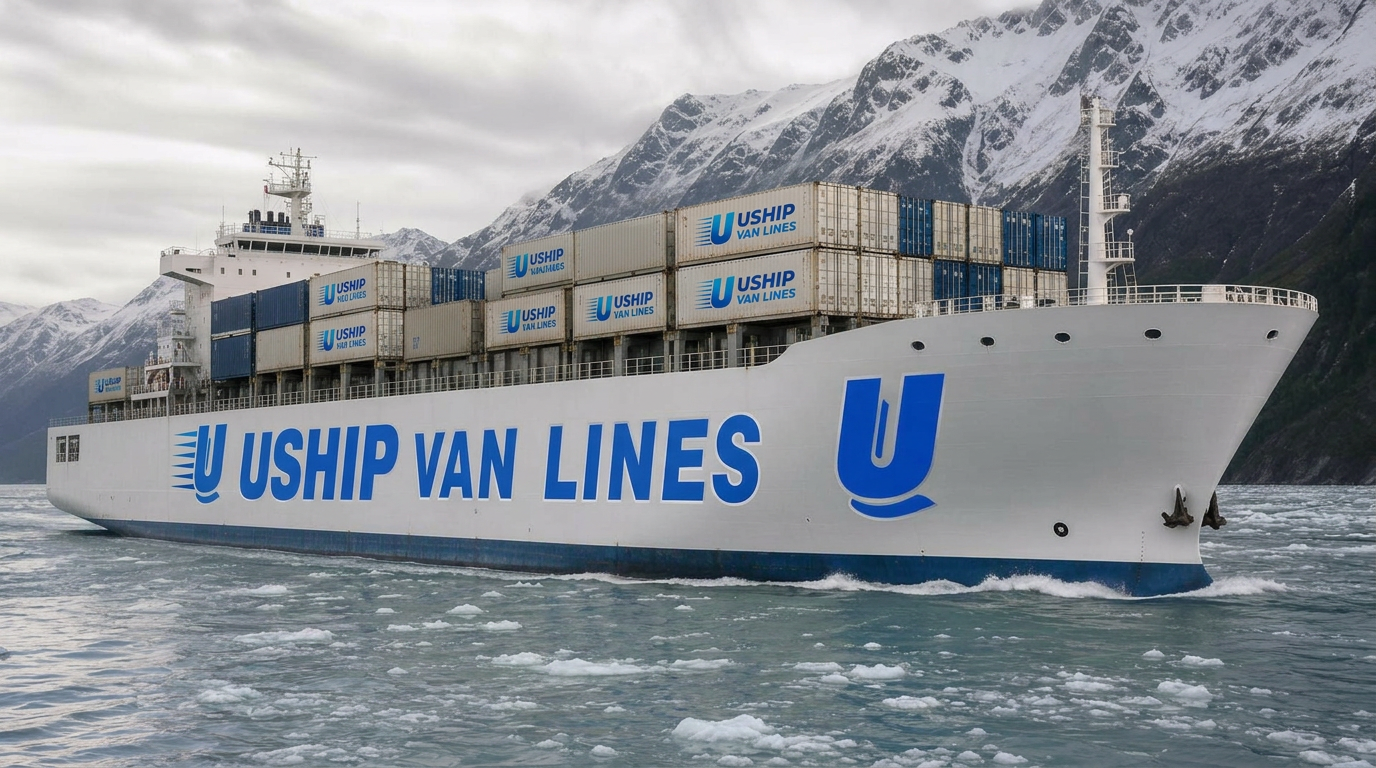
Moving from Macon, GA to Alaska
Moving from Macon's peach-tree-lined streets to Alaska's frontier demands more than a standard moving truck. This route requires coordinated ground transport across the Lower 48, ocean barge service through the Pacific Northwest, and final delivery across Alaska's unique terrain—from Anchorage suburbs to remote communities accessible only by seasonal roads.
Best Alaska & Hawaii Movers, powered by UShip Van Lines, specializes in these complex multi-modal moves. We handle the logistics from pickup in Middle Georgia through Tacoma consolidation, barge transit, and last-mile delivery to your new Alaska home. Request a detailed quote today to see transparent pricing and realistic timelines for your specific move.
Route overview
The Macon to Alaska Moving Route
Your household goods travel approximately 3,800 road miles from Macon to the Seattle-Tacoma port complex, where they're consolidated with other Alaska-bound shipments. The journey continues via ocean barge to the Port of Anchorage, covering roughly 1,450 nautical miles through the Inside Passage and Gulf of Alaska. From Anchorage, items are distributed to final destinations throughout South Central Alaska, Interior communities like Fairbanks, or coastal towns along established freight routes.
This route requires careful timing coordination between ground carriers, port operations, and barge schedules. Macon sits at the junction of I-75 and I-16, providing efficient access to western interstate corridors. The Tacoma port serves as the primary Alaska freight gateway, with weekly or bi-weekly sailings depending on season. Understanding each leg's timing is essential for accurate planning.
Unlike direct truck routes, Alaska moves involve multiple handoffs, customs-style documentation (even though Alaska is a U.S. state), and weather-dependent ocean transit. Households moving from Georgia's humid subtropical climate to Alaska's subarctic zones also need to consider what items will survive the journey and function in extreme cold.
How the moving process works
How Your Macon to Alaska Move Works
-
Free Virtual or In-Home Survey – A moving consultant evaluates your household volume, documents specialty items (pianos, gun safes, family heirlooms), and reviews what should ship versus what to sell in Macon's milder climate. Expect a detailed inventory and transparent cost breakdown.
-
Packing and Macon Pickup – Professional crews pack your belongings using marine-grade materials designed for multi-modal transport. Items are loaded into a 53-foot trailer, with special attention to weight distribution and securing fragile goods for cross-country vibration and ocean sway.
-
Cross-Country Transit to Tacoma – Your shipment travels I-75 north to I-90 west, covering approximately 3,800 miles over 5–7 days. The trailer arrives at our Tacoma consolidation facility, where shipments are staged for the next available Alaska barge.
-
Port Consolidation and Documentation – Your goods are transferred to marine-certified containers, typically 20- or 40-foot units shared with other households (LCL service) or dedicated to your move (FCL for large households). Required documentation includes detailed inventories, declared values, and release authorizations for Alaska port handling.
-
Ocean Barge Transit – Containers board scheduled barges to Anchorage, sailing through Puget Sound, the Inside Passage, and across the Gulf of Alaska. Transit takes 6–10 days depending on weather, sea conditions, and whether the vessel makes intermediate stops at Southeast Alaska ports.
-
Port of Anchorage Clearance and Unloading – Upon arrival, containers are offloaded, inspected, and released for ground distribution. Port dwell time typically adds 1–3 days, longer during peak summer season when freight volume surges.
-
Alaska Last-Mile Delivery – Local Alaska carriers complete final delivery to your Anchorage apartment, Wasilla home, Fairbanks residence, or other destination. Bush communities may require additional logistics such as air freight or seasonal road access, discussed during your initial quote.
Estimated moving costs
What a Macon to Alaska Move Costs
A typical 2-bedroom household (approximately 7,500–10,000 lbs) from Macon to Anchorage generally ranges $6,500–$11,000, while a 3-bedroom home (12,000–15,000 lbs) typically costs $10,000–$16,000. These estimates reflect door-to-door service including ground transport, barge freight, basic insurance, and standard delivery.
Key cost drivers:
- Volume and weight – Alaska barge pricing is heavily weight-based. A studio apartment might cost $4,000–$5,500, while a 4-bedroom home can exceed $18,000.
- Final destination – Anchorage and Wasilla see the most competitive rates. Fairbanks adds $800–$1,500 for the additional 360-mile haul. Communities off the road system (Kodiak, Homer, Seward) require marine or air transfer, significantly increasing cost.
- Season – Peak summer months (May–August) command premium rates due to high demand and Alaska's construction/tourism economy. Winter moves can save 15–25% but face weather delays.
- Packing services – Full professional packing adds $1,200–$2,800 depending on household size. Partial packing (fragiles and kitchen only) runs $600–$1,200.
- Vehicles – Shipping a car from Macon to Anchorage costs approximately $2,200–$3,200 via ocean RORO (roll-on/roll-off) service, typically sailing from Seattle or Tacoma.
- Storage – If your Alaska housing isn't ready, warehousing in Tacoma or Anchorage runs $150–$350/month for a typical household.
We provide itemized quotes with no hidden fees. Actual costs depend on your specific inventory, services requested, and move timing.
Estimated transit times
How Long the Move Takes
Door-to-door transit from Macon to Alaska typically requires 18–32 days, broken down as follows:
- Macon pickup to Tacoma arrival: 5–9 days (approximately 3,800 miles; timing depends on routing, driver hours-of-service, and whether the truck makes other pickups en route)
- Tacoma port staging: 2–7 days (waiting for the next scheduled barge; more predictable in summer with weekly sailings, less frequent in winter)
- Ocean barge transit to Anchorage: 6–10 days (typical sailing time; weather in the Gulf of Alaska can add 1–3 days during storm season)
- Port clearance and final delivery: 2–6 days (Anchorage port processing, local carrier dispatch, and delivery scheduling)
Express options may reduce total time to 16–20 days by using dedicated containers and priority barge space, typically adding 20–30% to base cost. Remote Alaska destinations add time: Fairbanks deliveries add 2–4 days; communities requiring seasonal road access or air freight can add weeks depending on weather windows.
Flexibility is critical. Unlike Interstate 10 truck routes, Alaska moves involve ocean vessels that cannot simply speed up. Build buffer time into your relocation plans, especially if you're coordinating with job start dates or housing lease terms.
Regional logistics
Alaska-Specific Moving Logistics
Port and Barge Operations: Your shipment consolidates at the Port of Tacoma, one of two primary Alaska freight gateways (Seattle is the other). Goods are loaded into marine containers meeting Coast Guard standards for ocean transport. While Alaska is a U.S. state, freight still requires detailed manifests similar to international shipments due to the Jones Act, which mandates U.S.-flagged vessels for domestic ocean cargo.
Vehicle Shipping: Most Macon residents drive one vehicle north as part of their relocation adventure (approximately 4,200 miles via the Alaska Highway through Canada—budget 7–10 days). Additional vehicles ship via RORO barge service from Tacoma to Anchorage, typically sailing weekly in summer. Vehicle transport costs $2,200–$3,200 and takes 10–18 days port-to-port. Vehicles must be clean (no soil due to agricultural inspection), under ¼ tank fuel, and contain no personal items.
Restricted and Regulated Items: Alaska has strict rules on plants, soil, and certain foods due to agricultural protections. Firearms and ammunition can be shipped but require special declaration and compliance with both federal and Alaska laws. Hazardous materials (propane tanks, paint, solvents, aerosols) cannot travel via ocean barge. Prescription medications and important documents should travel with you, not in the shipment.
Last-Mile Delivery Challenges: Anchorage, Mat-Su Valley (Wasilla/Palmer), Fairbanks, and Kenai Peninsula communities have regular truck access. Communities like Kodiak, Dutch Harbor, or Southeast Alaska towns may require additional barge or air freight. True bush Alaska destinations accessible only by plane or seasonal ice roads require specialized logistics arranged well in advance—discuss these during your quote consultation.
Climate Preparation: Moving from Macon's USDA Zone 8a (mild winters, hot summers) to Alaska's Zone 1–7 means some household items may not be suitable. Window AC units are unnecessary; block heaters for vehicles are essential. Ensure appliances are drained of water to prevent freeze damage during winter deliveries. Discuss winterization with your move coordinator.
Seasonal considerations
Timing Your Move from Macon to Alaska
Summer (May–August): Peak moving season coincides with Alaska's brief construction and tourism window. Barge schedules run weekly, transit times are most predictable, and road access to remote communities is optimal. Expect premium pricing (15–25% above winter rates) and earlier booking requirements (6–8 weeks recommended). Macon's heat and humidity mean items should be climate-controlled during the ground leg to prevent mold in upholstered furniture.
Fall (September–October): Shoulder season offers moderate pricing and reliable schedules before winter storms begin. Barge frequency starts decreasing to bi-weekly by late October. This is an excellent window for cost-conscious moves, though weather in the Gulf of Alaska becomes less predictable. Your Macon departure can happen in pleasant fall weather while Alaska arrival occurs before deep winter sets in.
Winter (November–March): Off-peak rates can save $1,500–$3,000 on a typical household, but barge schedules become sparse (sometimes monthly) and weather delays are common. Gulf of Alaska storms can add 3–7 days to ocean transit. Some bush Alaska roads close entirely. If you're flexible on delivery dates and want the best price, winter works—just don't plan tight timelines. Macon's mild winters make pickup straightforward year-round.
Spring (April): Transition season as barge schedules ramp up and rates begin climbing. Ice breakup makes some Alaska roads impassable in April, but coastal access improves. Good compromise between cost and reliability if you can time your Macon departure for mid-to-late April arrival in Alaska.
Why choose Best Alaska & Hawaii Movers
Why Choose Best Alaska & Hawaii Movers
-
Alaska Specialists, Not General Movers – We focus exclusively on Alaska and Hawaii logistics. Our team understands Tacoma port operations, Alaska Marine Lines barge schedules, Anchorage freight handling, and last-mile delivery across all Alaska regions—expertise general moving companies simply don't have.
-
Transparent Multi-Modal Pricing – You'll receive itemized quotes breaking down ground transport, barge freight, port fees, and delivery costs. No surprise charges when your shipment reaches Anchorage. We explain what you're paying for at each stage.
-
UShip Van Lines Network – As part of the UShip Van Lines platform, we connect you with properly insured, safety-rated carriers for the ground leg while maintaining direct relationships with Alaska freight operators. This hybrid model delivers competitive pricing with accountability.
-
Realistic Timelines – We won't promise 14-day delivery when ocean and weather realities make that impossible. You'll get honest timeframes with buffer built in, so you can plan housing, travel, and job logistics accurately.
-
Dedicated Move Coordination – One point of contact manages your move from Macon pickup through Alaska delivery, tracking your shipment across all three legs (ground, ocean, last-mile) and proactively communicating any weather delays or schedule changes.