
Moving from Goose Creek, SC to Alaska
Relocating from Goose Creek, SC to Alaska represents one of the most logistically complex moves in North America—spanning over 4,000 miles and requiring coordinated ocean freight, continental trucking, and Alaska-specific last-mile delivery. Whether you're headed to Anchorage for a career opportunity, Fairbanks for military orders, or the Mat-Su Valley for a lifestyle change, this move demands specialized expertise in Pacific Northwest barge scheduling, Alaska customs paperwork, and seasonal logistics planning.
Best Alaska & Hawaii Movers, powered by UShip Van Lines, coordinates the entire journey from your Goose Creek doorstep through Tacoma port consolidation to your final Alaska destination. Our team handles the intricate details—containerized ocean freight, vehicle shipping, military move coordination, and bush community access—so you can focus on your transition. Ready to start planning? Request your free, customized quote today.
Route overview
Moving from Goose Creek to Alaska: Route Overview
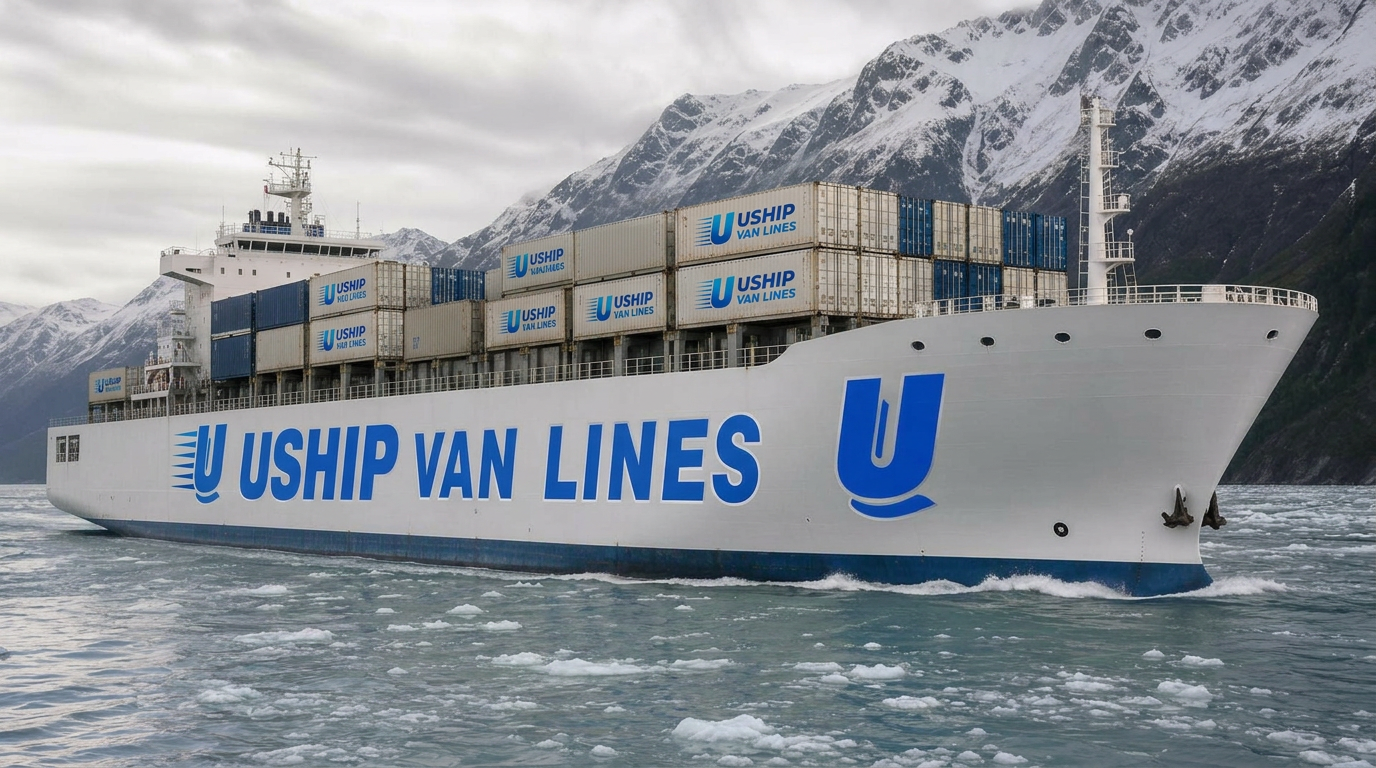
Your household goods travel approximately 3,500 miles overland from Goose Creek through the southeastern states to the Pacific Northwest consolidation hub in Tacoma, Washington. From there, belongings are loaded into weather-sealed marine containers and shipped via weekly barge service across the Gulf of Alaska to the Port of Anchorage—a 5–7 day ocean voyage depending on weather and sailing schedules.
Once cargo clears Anchorage customs and port operations, items move to Alaska-based carriers for final delivery. Urban destinations like Anchorage, Wasilla, and Palmer typically receive direct truck delivery. Fairbanks-bound shipments travel the Parks Highway corridor (358 miles north), while Kenai Peninsula locations require additional ferry coordination or highway transport. Bush communities beyond the road system involve air freight or seasonal barge service, adding 1–3 weeks to total transit.
Goose Creek's coastal lowcountry location provides excellent interstate access via I-26 and I-95, but the 4,000+ mile distance means timing is everything. Summer moves (May–September) benefit from optimal barge frequency and road conditions, while winter relocations face ice road challenges, reduced sailing schedules, and weather delays that can extend timelines by 7–14 days.
How the moving process works
Step-by-Step Moving Process: Goose Creek, SC to Alaska
-
Initial Survey & Quote (6–8 Weeks Before): Schedule an in-home or virtual assessment to inventory your belongings. Our team provides a detailed estimate covering continental trucking, Tacoma port handling, barge freight, Alaska customs clearance, and final delivery. We'll discuss vehicle shipping options, restricted items (firearms, ammunition, alcohol require special Alaska paperwork), and insurance coverage.
-
Booking & Barge Scheduling (4–6 Weeks Out): Confirm your move date and reserve space on the next available Alaska barge sailing from Tacoma. Summer sailings (June–August) book 4–6 weeks in advance; shoulder seasons offer more flexibility. We coordinate pickup timing in Goose Creek to align with your sailing window, allowing 10–14 days for cross-country transit to Tacoma.
-
Packing & South Carolina Pickup (3–5 Days): Professional movers arrive at your Goose Creek residence to pack, inventory, and load belongings into a climate-controlled truck. All items are documented with detailed inventory sheets. Fragile items receive extra padding for the long journey. The truck departs for the 2,600-mile drive to Tacoma, traveling I-26 West → I-40 West → I-84 West → I-90 West.
-
Tacoma Consolidation & Marine Loading (2–3 Days): Your shipment reaches our Tacoma consolidation facility, where belongings transfer into 20' or 40' marine containers designed for Alaska barge service. Containers are sealed, documented for customs, and delivered to the Tacoma dock for loading. Vehicle shipping (if applicable) follows similar containerization or roll-on/roll-off procedures.
-
Ocean Transit to Alaska (5–10 Days): The container ship departs Tacoma, traveling through Puget Sound, the Strait of Juan de Fuca, and up the Inside Passage or offshore route to Anchorage. Sailing time averages 5–7 days in good weather; winter storms can add 2–3 days. Vessels typically call at the Port of Anchorage's Alaska Marine Lines terminal.
-
Anchorage Port Clearance (1–3 Days): Upon arrival, containers undergo customs inspection and port processing. Alaska requires documentation for certain items (plants, food, hunting equipment). Once cleared, containers move to local delivery carriers. Urban deliveries often begin within 24–48 hours; remote areas require additional coordination.
-
Final Alaska Delivery: For Anchorage and Mat-Su Valley destinations, expect delivery 1–2 days after port clearance. Fairbanks deliveries add 1–2 days for the northbound highway run. Kenai Peninsula locations may involve ferry scheduling. Our Alaska delivery team contacts you 24 hours before arrival, unloads all items, and conducts a final inventory check. Off-road or bush locations require advance planning for air freight, seasonal barge, or winter ice road access.
Estimated moving costs
Cost Estimates: Goose Creek, SC to Alaska Move
A typical 2–3 bedroom household move from Goose Creek to Alaska ranges from $7,800 to $14,500 depending on shipment weight, final destination, season, and service level. This estimate covers door-to-door service including continental trucking, Tacoma port handling, ocean barge freight, Alaska customs clearance, and final delivery within the Anchorage road system.
Key cost drivers include:
-
Shipment Volume & Weight: A 2-bedroom apartment (6,000–8,000 lbs) typically costs $7,800–$10,200, while a 3-bedroom home (10,000–14,000 lbs) ranges $11,500–$14,500. Alaska shipping is priced by cubic footage and weight due to barge capacity constraints.
-
Final Destination: Anchorage, Eagle River, and Wasilla deliveries fall within standard rates. Fairbanks adds $800–$1,400 for the 358-mile northbound haul. Kenai Peninsula locations (Soldotna, Homer) add $600–$1,200. Bush communities requiring air freight can add $2,000–$8,000+ depending on accessibility.
-
Vehicle Shipping: Transporting one vehicle from Goose Creek to Anchorage costs $2,400–$3,600 via containerized ocean freight. Open-deck barge service (when available) runs $1,800–$2,800 but exposes vehicles to salt spray. Fairbanks vehicle delivery adds $400–$600.
-
Seasonal Pricing: Peak summer season (June–August) commands 15–25% premiums due to high demand and optimal sailing schedules. Off-peak moves (October–March) offer savings but face weather-related delays and reduced barge frequency.
-
Packing & Insurance: Full-service packing adds $800–$1,800 for a 3-bedroom home. Basic carrier liability covers $0.60/lb; full-value protection typically costs 1–2% of declared value (recommended for Alaska moves due to complexity).
These figures represent typical market rates and are provided for planning purposes only. Your actual cost depends on specific inventory, services, timing, and current barge capacity. Request a detailed quote for accurate pricing tailored to your move.
Estimated transit times
Transit Time: Goose Creek to Alaska
Door-to-door delivery from Goose Creek, SC to Alaska typically requires 18–32 days depending on final destination, season, and barge schedules. This timeline breaks down into distinct legs:
Continental Transit (Goose Creek to Tacoma): 5–8 days. The 2,600-mile overland journey takes 4–6 days of driving time, plus 1–2 days at the Tacoma consolidation facility for marine container loading and customs documentation. Weather delays crossing mountain passes (Snoqualmie, Stevens) can add 1–2 days in winter.
Tacoma Port & Sailing Schedule: 2–7 days. Containers typically wait 1–3 days for the next scheduled Alaska barge departure. Summer season offers 2–3 sailings per week; winter reduces to 1–2 weekly departures. Missed sailing windows can delay departure by 3–7 days.
Ocean Transit (Tacoma to Anchorage): 5–10 days. Direct sailings average 5–7 days in good weather. Winter storms, ice conditions, or routing through Dutch Harbor can extend voyage to 8–10 days. Vessels travel approximately 1,450 nautical miles via Inside Passage or offshore routes.
Alaska Port Clearance & Delivery: 2–7 days. Anchorage port processing takes 1–2 days for customs and container unloading. Anchorage-area delivery occurs 1–2 days after clearance. Fairbanks adds 2–3 days for northbound trucking. Kenai Peninsula deliveries add 1–3 days for ferry scheduling or highway transport.
Seasonal variations significantly impact timing: Summer moves (May–September) optimize every leg with frequent sailings, clear roads, and extended daylight for Alaska deliveries—expect 18–24 days total. Winter relocations (November–March) face reduced barge frequency, weather delays, and challenging road conditions—plan for 24–32 days minimum. Shoulder seasons (April, October) offer moderate schedules with 20–28 day windows. Bush and off-road destinations add 7–21 days for specialized air freight or seasonal barge access.
Regional logistics
Alaska-Specific Logistics for Your Goose Creek Move
Port Operations & Barge Service: Your shipment routes through the Port of Tacoma (Washington) for consolidation with other Alaska-bound freight. Tacoma serves as the primary Lower 48 gateway for Alaska Marine Lines and TOTE Maritime, operating weekly barge service to Anchorage year-round. Marine containers (20' or 40') are sealed against salt spray and loaded aboard roll-on/roll-off vessels or container ships designed for North Pacific conditions. The Port of Anchorage receives cargo at dedicated Alaska freight terminals, where customs inspection and unloading occur within 24–48 hours of vessel arrival.
Alaska Customs & Documentation: While Alaska is a U.S. state, ocean freight from the Lower 48 requires maritime cargo documentation similar to international shipments. You'll need detailed inventory lists, proof of residence for both origin and destination, and special permits for restricted items. Firearms and ammunition require Alaska-compliant documentation and cannot be packed with household goods. Plants need USDA inspection certificates (many species are prohibited). Alcohol quantities exceeding personal-use limits face taxation. Hunting trophies, furs, and wildlife products require legal harvest documentation. Our team prepares all required paperwork to prevent customs delays.
Vehicle Shipping Considerations: Most customers ship one or two vehicles alongside household goods. Vehicles travel in enclosed marine containers (protecting against salt exposure) or via open-deck roll-on/roll-off service (lower cost, weather exposure). Interior Alaska destinations require winterization regardless of season—antifreeze, battery conditioning, and fuel stabilization. Alaska DMV registration requires vehicles to pass emissions testing (Anchorage/Fairbanks only) and safety inspection within 30 days of arrival. Military members receive deadline extensions. We coordinate vehicle pickup in Goose Creek and delivery to your Alaska address, handling all port paperwork.
Last-Mile Delivery Challenges: Alaska's limited road system creates unique delivery considerations. The road-accessible network serves Anchorage, Mat-Su Valley, Fairbanks, Kenai Peninsula, and communities along the Parks, Glenn, Richardson, and Seward highways. Sterling Highway serves Kenai/Soldotna/Homer. Dalton Highway (haul road) reaches Prudhoe Bay but requires special permitting for commercial moves. Bush communities (Bethel, Nome, Kotzebue, Barrow/Utqiaġvik, Dillingham, Kodiak, Sitka, Juneau, Ketchikan) require air freight or seasonal barge service—adding 1–4 weeks and $2,000–$8,000+ to costs. Winter ice roads provide seasonal access to some villages. Southeast Alaska's Inside Passage communities rely on Alaska Marine Highway ferries for vehicle/freight transport.
Storage & Flexibility: Given the complexity of Alaska moves, temporary storage is common. Tacoma-area storage accommodates delays in barge schedules or Alaska housing availability ($150–$300/month for typical household). Anchorage storage facilities ($200–$400/month) handle overflow if your residence isn't ready upon delivery. Bush community deliveries often require Anchorage staging until weather permits final air freight or barge transport.
Seasonal considerations
Seasonal Considerations for Goose Creek to Alaska Moves
Summer Peak Season (June–August): Optimal weather, maximum barge frequency (2–3 weekly sailings from Tacoma), and ideal Alaska road conditions create the most reliable transit windows. Expect 18–24 day delivery timelines and straightforward bush community access via seasonal barge routes. Trade-off: highest demand drives 15–25% price premiums and requires 6–8 week advance booking. Fairbanks benefits from 20+ hour daylight for extended delivery windows. Wildfire smoke occasionally affects interior Alaska visibility and air quality.
Fall Shoulder Season (September–October): Cooling temperatures and reduced tourism traffic offer good value with moderate barge schedules (1–2 weekly sailings). Costs drop 10–15% from summer peaks. Alaska's autumn weather is unpredictable—early snow can hit interior regions by late September, and winter storms affect Gulf of Alaska crossings by mid-October. Plan 22–28 days for delivery. Bush community access becomes limited as seasonal water routes freeze.
Winter Off-Season (November–March): Lowest prices (20–30% below summer rates) and reduced competition for barge space. However, winter brings significant challenges: reduced sailing frequency (1 weekly or biweekly), Gulf of Alaska storm delays (adding 3–7 days to ocean transit), and difficult Alaska road conditions. Fairbanks deliveries face sub-zero temperatures and ice fog. Parks Highway occasionally closes for avalanche control or whiteout conditions. Total transit extends to 26–35 days. Some bush communities become accessible only via ice roads (January–March), while others remain cutoff until spring breakup. Vehicle shipping requires winterization (antifreeze, battery maintenance). Benefit: fewer weather-related booking conflicts and negotiable rates.
Spring Transition (April–May): Warming temperatures and increasing daylight improve Alaska delivery conditions. Barge schedules ramp up from winter minimums to summer frequency. April moves face "breakup" season—melting snow and ice create muddy, challenging road conditions throughout Alaska, and some rural routes become temporarily impassable. May offers excellent value with near-summer reliability at 10–15% lower costs. Plan 20–26 days for delivery. Bush community access remains limited until rivers and coastal waters fully thaw (late May–early June).
Why choose Best Alaska & Hawaii Movers
Why Choose Best Alaska & Hawaii Movers for Your Goose Creek to Alaska Relocation
-
Alaska Logistics Specialists: We exclusively handle Alaska and Hawaii moves, providing expertise that general moving companies can't match. Our team understands Tacoma port operations, Alaska Marine Lines sailing schedules, bush community access challenges, and seasonal weather patterns that impact every stage of your move from Goose Creek to Alaska.
-
Transparent, Realistic Pricing: No surprise fees or unrealistic low-ball quotes. We provide detailed estimates covering every leg—continental trucking, port handling, ocean barge freight, customs clearance, and Alaska final delivery—so you understand exactly what you're paying for and can budget confidently.
-
Seamless Coordination Powered by UShip Van Lines: Our partnership with UShip Van Lines combines our Alaska specialization with a nationwide carrier network, ensuring reliable pickup in Goose Creek and smooth handoffs through every transition point. You get a single point of contact managing the entire journey, not a chain of disconnected vendors.
-
Military Move Experience: We coordinate DITY/PPM moves for service members relocating to Joint Base Elmendorf-Richardson (JBER), Eielson AFB, Fort Wainwright, and Coast Guard stations. We provide weight tickets, documentation support, and timing coordination to maximize your reimbursement and minimize stress during PCS transitions.
-
Comprehensive Vehicle & Specialty Shipping: Beyond household goods, we arrange vehicle transport (cars, trucks, motorcycles, RVs), boat shipping, and specialty items like ATVs and snowmachines—essential equipment for Alaska living. Everything travels together in coordinated containers, simplifying logistics and reducing costs compared to booking separate carriers.