
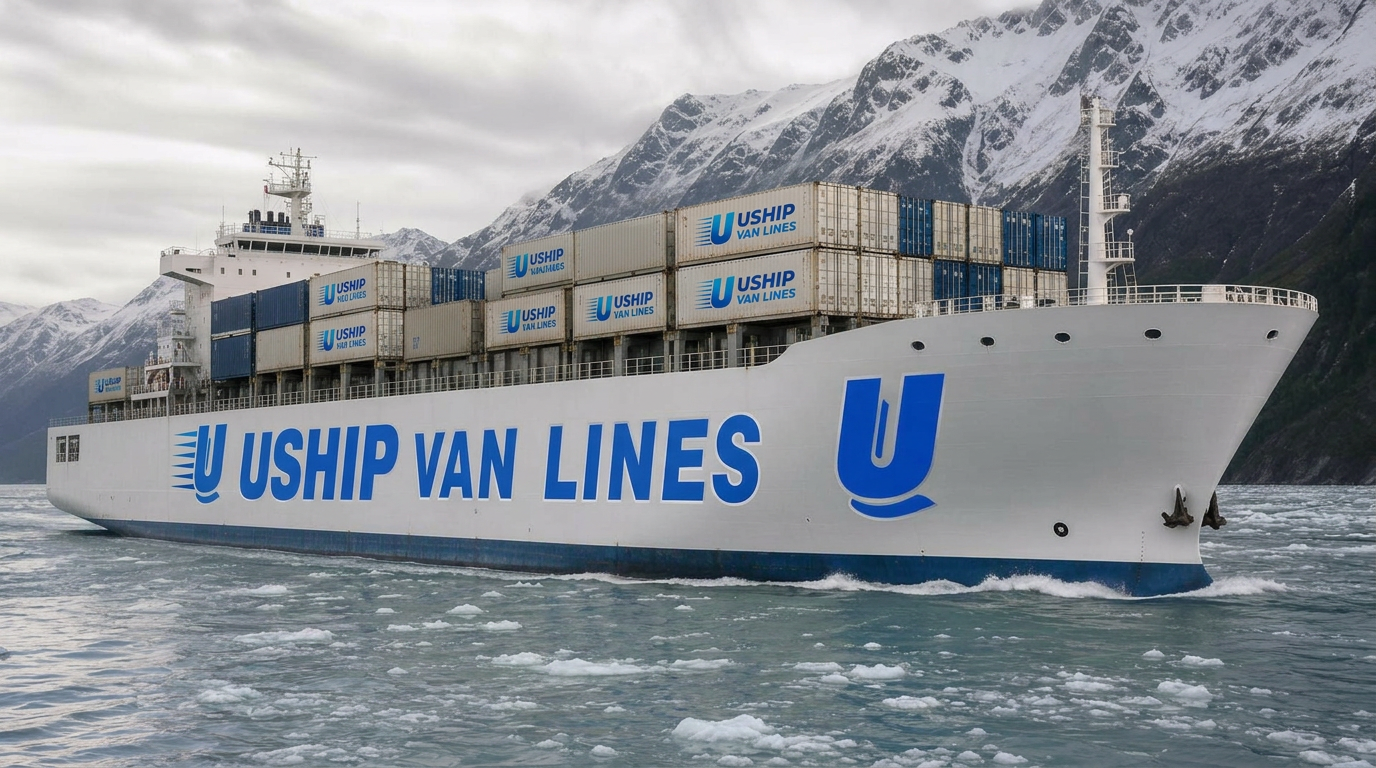
Moving from Alaska to Macon, GA
Relocating from Alaska to Macon, Georgia means trading the Last Frontier for the Heart of Georgia—a move that combines maritime shipping, cross-country trucking, and careful coordination across 3,500+ miles. Whether you're leaving Anchorage, Fairbanks, or a smaller Alaska community for Macon's mild climate and Southern charm, this unique route requires specialized logistics and a mover who understands barge schedules, port handling, and long-haul coordination.
Best Alaska & Hawaii Movers, powered by UShip Van Lines, manages every phase of your Alaska-to-Macon relocation—from last-mile pickup in Alaska through barge transport to Tacoma, overland transit through the Lower 48, and final delivery to your Macon address. Request your free quote today to lock in scheduling and transparent pricing for this complex interstate move.
Route overview
Alaska to Macon, GA: The Route
Moving from Alaska to Macon requires a multi-modal journey that begins with ground transport from your Alaska residence to a port facility (typically Anchorage or Whittier), followed by barge shipping to the Port of Tacoma in Washington state. From Tacoma, your household goods transfer to a long-haul truck for the 2,800-mile overland journey through Idaho, Utah, Wyoming or Montana, across the Great Plains, and into the Southeast, culminating in Macon's central Georgia location.
This route is particularly popular among military families relocating from Joint Base Elmendorf-Richardson to Robins Air Force Base, retirees seeking milder winters and lower cost of living, and professionals transitioning from Alaska's resource industries to Macon's healthcare, logistics, and manufacturing sectors. The combination of barge reliability and experienced overland carriers ensures your belongings arrive safely despite the distance and modal transitions.
Timing is critical: Alaska barge schedules operate year-round but with reduced frequency in winter months, and Southeast Georgia's summer heat and humidity require climate considerations for sensitive items during the final delivery phase.
How the moving process works
How the Alaska-to-Macon Move Works
-
Initial Survey & Quote — Your moving consultant evaluates your inventory (typically via video walkthrough for Alaska locations), provides a detailed estimate covering barge fees, overland transport, and any special handling, and confirms your preferred moving dates against available barge sailings.
-
Alaska Pickup & Port Delivery — Professional movers load your household goods at your Alaska residence, transport them to the designated port facility (Anchorage for most Southcentral locations; Whittier for some Mat-Su and Kenai Peninsula origins), and prepare your shipment for containerized barge loading with proper documentation.
-
Barge Transit to Tacoma — Your container sails from Alaska to the Port of Tacoma, typically a 4–7 day ocean voyage depending on weather, vessel schedule, and port call sequences; containers remain sealed and protected throughout the maritime leg.
-
Port Processing & Truck Transfer — At Tacoma, your shipment clears the port facility, undergoes customs and agriculture inspection if required, and transfers to a long-haul truck for the cross-country portion of your move.
-
Overland Transit — Your truck travels approximately 2,800 miles from Tacoma through the interior West and South, typically via I-84, I-80, I-70, or I-40 corridors before connecting to I-75 South into Georgia—a journey of 4–6 days of road time depending on routing and driver rest requirements.
-
Georgia Delivery Coordination — As your shipment approaches Macon, your move coordinator confirms your delivery window (typically a 1–2 day range), arranges any necessary shuttle truck for residential access, and schedules your unloading.
-
Final Delivery & Inspection — Movers unload at your Macon residence, place furniture and boxes according to your floor plan, and complete a final inventory check; you inspect for any damage and sign off on delivery documents, triggering the claims window if needed.
Estimated moving costs
What an Alaska-to-Macon Move Costs
For a typical 2–3 bedroom household (7,000–10,000 lbs), expect total costs between $6,800–$11,500 for full-service door-to-door moving from Alaska to Macon. Studio and one-bedroom moves (3,000–5,000 lbs) generally range $4,200–$6,900, while larger 4-bedroom homes (12,000–15,000+ lbs) can reach $13,000–$18,500 or more.
Key cost drivers include:
- Barge fees — Alaska-to-Tacoma ocean freight is priced per container or by cubic footage; a 20-foot container runs $2,200–$3,800 depending on season and carrier
- Alaska last-mile pickup — Ground transport from your residence to the port facility, especially for locations outside Anchorage or requiring ferry connections (Mat-Su, Kenai, Southeast communities)
- Overland distance — The 2,800-mile Tacoma-to-Macon truck haul is a significant portion of your total cost, typically $0.50–$0.85 per pound for the Lower 48 segment
- Timing and seasonality — Summer moves (May–August) command premium pricing due to high demand; winter sailings may offer modest savings but face weather delays
- Packing and special items — Full-service packing adds $800–$1,800; vehicles, boats, ATVs, pianos, gun safes, and fragile antiques incur additional handling and crating fees
- Storage and flexibility — If your Macon residence isn't ready, short-term storage in Tacoma or Georgia adds $150–$400/month depending on volume
These are typical ranges based on industry data and route characteristics. Your actual quote will reflect your specific inventory, services, origin/destination details, and current market conditions. Best Alaska & Hawaii Movers provides transparent, itemized estimates with no hidden fees—request your personalized quote to see exact pricing for your move.
Estimated transit times
How Long Your Move Takes
Door-to-door transit from Alaska to Macon typically requires 14–24 days from pickup at your Alaska residence to delivery in Georgia. This extended timeline reflects the multi-modal nature of the route and built-in buffers for weather, port operations, and cross-country trucking schedules.
Transit breakdown by leg:
- Alaska pickup to port: 1–3 days (same-day for Anchorage metro; up to 3 days for Fairbanks, Kenai Peninsula, or locations requiring ferry connections)
- Port staging and barge loading: 1–4 days (depending on your arrival relative to the next scheduled sailing and container consolidation)
- Barge transit to Tacoma: 4–7 days (direct sailings average 4–5 days; vessels with intermediate port calls may take 6–7 days)
- Tacoma port processing and truck loading: 1–3 days (customs/agriculture clearance, container devanning, truck assignment)
- Overland trucking to Macon: 5–7 days (approximately 2,800 miles at regulated driver hours; includes mandatory rest stops)
- Delivery window coordination: 1–2 days (final scheduling and any local shuttle requirements)
Winter moves (November–March) may add 2–5 days due to reduced barge frequency, weather delays in Alaska or along interior truck routes (mountain passes in Montana/Wyoming, ice storms in the Midwest), and port congestion during holiday periods. Summer moves benefit from more frequent sailings and predictable road conditions but face higher demand and tighter scheduling.
Expedited service is rarely available for Alaska routes due to barge schedule constraints, but flexible delivery windows (5–7 day ranges rather than guaranteed dates) can reduce costs by 10–15%.
Regional logistics
Alaska-Specific Moving Logistics
Port and routing considerations: Most Alaska-to-Lower 48 moves utilize the Port of Anchorage or the Port of Whittier for barge departure, with Tacoma as the primary mainland receiving port. Your Alaska pickup location determines the port: Anchorage basin and Mat-Su Valley typically use Anchorage; Kenai Peninsula may route through Whittier; Fairbanks and Interior require trucking to Anchorage (adding 2–3 days and $800–$1,400 to costs). Southeast Alaska communities (Juneau, Ketchikan, Sitka) require Alaska Marine Highway ferry coordination before barge loading, extending timelines by 3–7 days.
Vehicles and oversized items: Shipping a vehicle from Alaska to Macon costs $1,400–$2,600 depending on vehicle size and whether it shares container space with household goods. ATVs, snowmachines, boats, and trailers follow similar pricing. Vehicles must be clean (agriculture inspection requirement), under ¼ tank fuel, and free of personal items. Pianos, gun safes, large shop equipment, and other 500+ lb items require specialized crating and may need dedicated container space.
Required documentation: Alaska moves don't require customs (domestic transit), but USDA regulations prohibit transport of soil, plants, certain food items, and firewood due to invasive species concerns. Your mover provides inventory lists and port documentation; you're responsible for separating prohibited items and ensuring proper disposal before pickup.
Military and government moves: Joint Base Elmendorf-Richardson (JBER) to Robins AFB relocations follow standard military moving protocols with government bill of lading, weight tickets, and approved carrier requirements. Best Alaska & Hawaii Movers coordinates with Transportation Management Office (TMO) and handles all military-specific documentation.
Remote Alaska pickups: Bush communities, off-road-system locations, and fly-in areas require barge or air freight to a hub city (Anchorage, Fairbanks) before containerized shipping begins—adding significant cost ($2,500–$8,000+) and time (1–3 weeks). Consult with your move coordinator early for remote origin logistics.
Seasonal considerations
Best Times to Move from Alaska to Macon
Spring (April–May): Ideal moving season with increasing barge frequency as Alaska thaws, moderate weather across the Lower 48 trucking corridor, and pleasant conditions for Macon delivery. Book 6–8 weeks ahead as demand rises but before peak summer rates.
Summer (June–August): Peak season for Alaska departures—most frequent barge sailings, predictable weather, and easiest road access for Alaska pickups, but highest pricing (15–25% above off-peak) and tight scheduling. Macon deliveries face heat and humidity; climate-controlled transport recommended for electronics, artwork, and antiques. Reserve 8–12 weeks in advance.
Fall (September–October): Excellent shoulder season with good barge availability, cooling temperatures in Georgia, and beautiful truck routing through the Rockies and Plains. Pricing moderates 10–15% below summer peaks. Watch for early snow in Alaska (late September onward) and book 5–7 weeks out.
Winter (November–March): Off-peak pricing (potentially 20–30% below summer) but reduced barge frequency (sometimes only 1–2 sailings per month), higher risk of weather delays in Alaska and along northern trucking routes (I-90, I-80 closures), and extended timelines. Best for flexible schedules and cost-conscious moves; allow 20–28 days total transit and book 4–6 weeks ahead.
Alaska-specific notes: Barge schedules from Anchorage/Whittier run year-round but weekly summer sailings may drop to twice-monthly in January–February. Southcentral Alaska road conditions (Glenn Highway, Seward Highway, Parks Highway) can close or restrict truck traffic November–March, requiring alternate scheduling. Southeast Alaska routes (via Alaska Marine Highway System ferries) face their own seasonal limitations and require earlier coordination.
Why choose Best Alaska & Hawaii Movers
Why Choose Best Alaska & Hawaii Movers for Your Alaska-to-Macon Move
-
Alaska specialists, not generalists — We focus exclusively on Alaska and Hawaii routes, with established relationships with barge lines, Tacoma port facilities, and carriers experienced in the unique challenges of Last Frontier logistics and long-haul coordination to the Southeast.
-
Single-point accountability — One move coordinator manages your entire journey from Alaska pickup through barge transit, truck transfer, cross-country haul, and Macon delivery—no handoffs to disconnected vendors or confusion over which company handles which leg.
-
Transparent pricing and scheduling — Your quote includes all fees (barge, trucking, port handling, fuel, insurance) itemized clearly; we explain barge sailing schedules, realistic transit windows, and seasonal considerations upfront so you can plan with confidence.
-
Powered by UShip Van Lines' carrier network — We leverage UShip's vetted, licensed interstate carriers for your Lower 48 trucking segment, ensuring competitive pricing, modern equipment, and professional drivers for the Tacoma-to-Macon leg.
-
Flexible service levels — Choose full-service packing and white-glove delivery, cost-saving partial packing and self-unpack, or hybrid options that balance budget and convenience for your specific needs and timeline.
-
Real support for complex moves — Military relocations, remote Alaska pickups, vehicle shipping, storage coordination, and special item handling are routine for our team—we solve the logistics puzzles that generic movers avoid.