
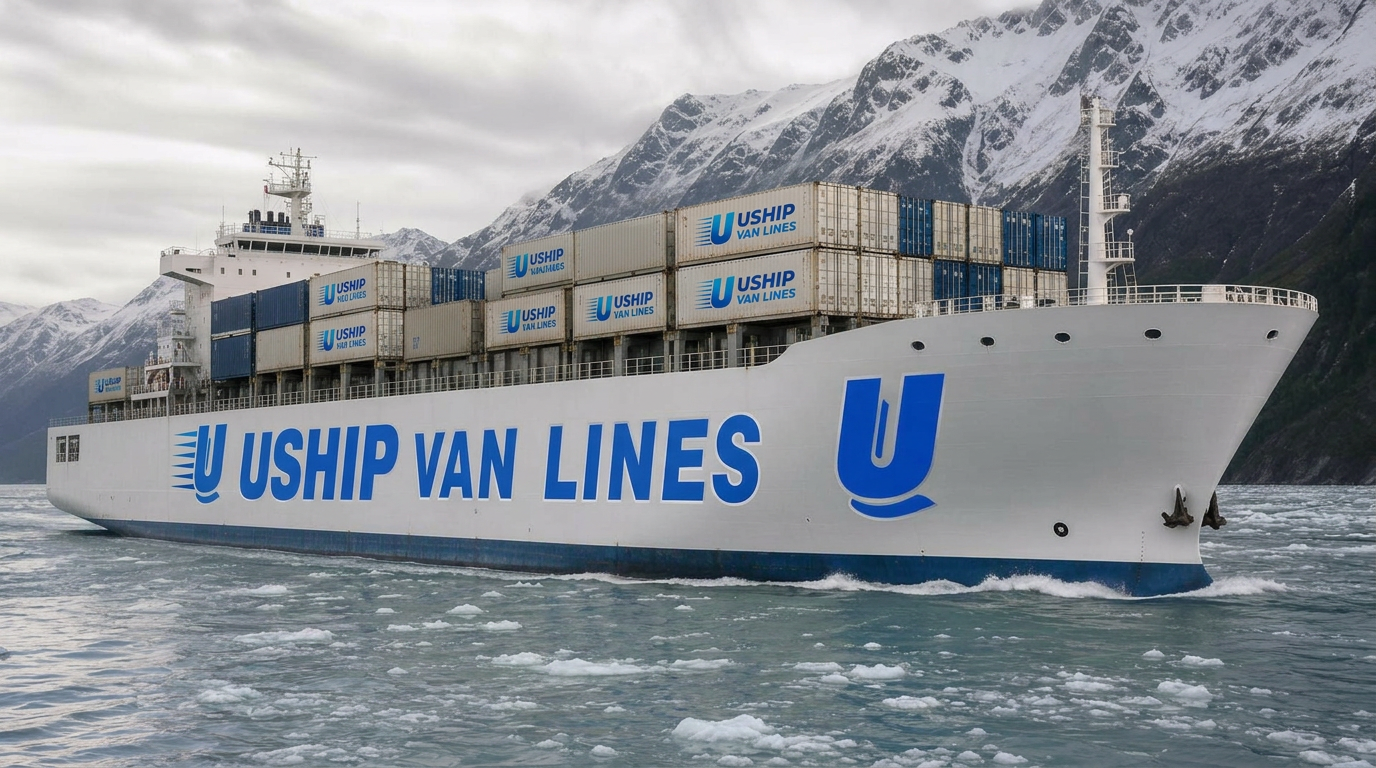
Moving from Alaska to Florence, SC
Relocating from Alaska to Florence, SC involves a multi-stage journey combining ocean barge transport, cross-country trucking, and careful coordination across 4,000+ miles. Whether you're leaving Anchorage, Fairbanks, or the Mat-Su Valley for Florence's growing manufacturing sector and Southern charm, this move requires specialized expertise in Alaska logistics and long-haul planning.
Best Alaska & Hawaii Movers, powered by UShip Van Lines, manages the entire process—from loading your household goods in Alaska through barge shipping via Tacoma or Seattle, then overland to the Pee Dee region of South Carolina. Request a free quote to start planning your Alaska-to-Florence move with confidence.
Route overview
Understanding the Alaska to Florence, SC Moving Route
The journey from Alaska to Florence, South Carolina follows a carefully coordinated path involving maritime and ground transportation. Your belongings travel by truck or container to the Port of Anchorage, Whittier, or other Alaska departure points, then board a commercial barge to Tacoma or Seattle. Once your shipment clears the Pacific Northwest port, it's loaded onto long-haul trucks for the 2,800-mile overland journey through the Northern Plains, Midwest, and Southeast to Florence.
Florence sits at the intersection of I-95 and I-20 in South Carolina's Pee Dee region, making it accessible for final delivery but requiring precise scheduling to align barge arrivals with trucking capacity. The total distance exceeds 4,000 miles when accounting for Alaska's inland routes, and the logistics window spans multiple carriers, weather-dependent barge schedules, and cross-country trucking realities.
This route sees steady traffic from military families stationed at Joint Base Elmendorf-Richardson relocating to Shaw Air Force Base (40 miles from Florence), retirees seeking milder climates, and professionals moving to Florence's healthcare and manufacturing employers like McLeod Health and Honda.
How the moving process works
How Your Alaska to Florence Move Works: Step by Step
-
Initial Survey and Inventory (Week 1): A moving coordinator conducts a virtual or in-person walkthrough of your Alaska home to document your household goods, note oversized items (furniture, ATVs, snowmobiles), and provide a detailed cost estimate. You'll discuss timelines, vehicle shipping options, and any storage needs.
-
Booking and Barge Scheduling (Weeks 2–3): Once you confirm, your move is booked on the next available barge sailing from Alaska to Tacoma/Seattle. Alaska Marine Lines and TOTE Maritime operate regular schedules, but winter weather and summer demand affect availability. Your coordinator locks in trucking partners for the Southeast leg.
-
Packing and Alaska Pickup (Weeks 4–5): Professional movers arrive at your Alaska home to pack and load your belongings into a dedicated container or shared truck. Items travel by road to the departure port (Anchorage, Whittier, or other hubs). If you're in a remote community, this may involve staging in a hub city first.
-
Barge Transit to Pacific Northwest (5–7 Days at Sea): Your container boards a commercial barge for the ocean voyage to Tacoma or Seattle. Barges run weekly or biweekly depending on season. This leg is weather-dependent; winter storms can add 1–2 days.
-
Port Clearance and Cross-Country Trucking (1–2 Days + 4–6 Days Road): After the barge docks, your shipment clears customs and port logistics, then transfers to a long-haul truck. The drive from the Pacific Northwest to Florence typically takes 4–6 days, routing through Idaho, Wyoming, Nebraska, Missouri, Tennessee, and into South Carolina.
-
Final Delivery in Florence (Day 18–24 Total): Your truck arrives in Florence on the scheduled delivery window. Movers unload, place furniture, and remove packing materials. You inspect your belongings and sign off on the move.
-
Vehicle Shipping (Parallel or Sequential): If shipping a car, it can travel on the same barge or via separate auto transport. Most Alaska-to-Lower 48 vehicle shipments route through Tacoma, then overland to Florence, adding 10–18 days total.
Estimated moving costs
What Does It Cost to Move from Alaska to Florence, SC?
A typical 2–3 bedroom household move from Alaska to Florence ranges between $6,800 and $12,500 for full-service door-to-door transport. Studio or 1-bedroom moves may fall in the $4,200–$6,500 range, while 4+ bedroom homes or moves with vehicles can exceed $14,000.
Key cost drivers include:
- Volume and weight: Alaska barge pricing is based on cubic footage or container size (20-ft or 40-ft). Overland trucking from the Pacific Northwest to Florence adds per-mile and weight charges.
- Barge vs. truck origin: Moving from Anchorage is more straightforward than remote bush communities, which require small-plane or barge feeder service to a hub.
- Packing services: Full-pack service adds $800–$2,000 but protects fragile items and saves time. Self-pack options lower costs but shift liability.
- Vehicle shipping: Adding a car to your barge shipment typically costs $1,200–$2,200 Alaska-to-Tacoma, plus $800–$1,400 Tacoma-to-Florence.
- Season: Summer (May–September) is peak Alaska moving season; expect 10–20% higher rates and tighter barge space. Winter moves offer lower pricing but longer weather delays.
- Storage: If your Florence home isn't ready, short-term storage in Tacoma or Florence costs $150–$400/month.
- Insurance: Full-value protection adds 1–3% of declared value but covers replacement cost, not just per-pound liability.
These are estimates based on typical moves; your actual cost depends on your specific inventory, timing, and service level. Request a free quote for a binding estimate tailored to your household.
Estimated transit times
How Long Does an Alaska to Florence Move Take?
Door-to-door transit from Alaska to Florence typically requires 18 to 28 days, broken down as follows:
- Alaska pickup and port delivery (2–5 days): Local moving crew loads your belongings and transports them to the Port of Anchorage or Whittier. Remote locations may add 2–4 days for staging.
- Barge sailing to Tacoma/Seattle (5–7 days): Ocean transit is weather-dependent. Summer sailings are faster; winter storms can extend this to 8–9 days.
- Port processing and truck loading (1–3 days): After the barge docks, your container clears port logistics and transfers to a long-haul truck.
- Cross-country trucking (4–6 days): The 2,800-mile drive from the Pacific Northwest to Florence takes 4–6 days with mandated driver rest stops.
- Final delivery window (1–2 days): Delivery is scheduled within a window; you'll receive 24-hour notice.
Total realistic range: 18 days for a smooth summer move with ideal connections; up to 28 days if you encounter weather delays, peak-season barge queues, or storage holds. Winter moves (November–March) and holiday periods (Thanksgiving, Christmas) often push timelines to the longer end. Build in buffer time—don't schedule your Florence lease or job start date on day 19.
Regional logistics
Alaska-Specific Moving Logistics You Need to Know
Ports and Barge Schedules: Most Alaska-to-Lower 48 household moves use the Port of Anchorage or Whittier for container loading. Alaska Marine Lines, TOTE Maritime, and other carriers operate weekly or biweekly sailings to Tacoma and Seattle. Barge space books up fast in summer; reserve your spot 6–8 weeks early during peak season.
Container vs. Truck Options: Full-container service (20-ft or 40-ft) offers exclusive space and better protection but costs more. Consolidated/shared container service mixes your goods with other shipments, lowering cost but requiring precise packing and coordination. Door-to-door truck service (less common for Alaska) skips the barge but involves a grueling 4,000+ mile drive and higher fuel costs.
Vehicle Shipping: Cars, trucks, ATVs, and snowmobiles can ship on the same barge as your household goods or separately via roll-on/roll-off (RoRo) auto carriers. Drain fuel to 1/4 tank, remove personal items, and secure or remove accessories. Auto transport Tacoma-to-Florence typically takes 7–12 days after barge arrival.
Restricted and Prohibited Items: Alaska moves prohibit hazardous materials (fuel, propane, ammunition, paint), perishables, and plants (USDA restrictions). Check South Carolina's plant and pet import rules. Firearms must be declared, unloaded, and packed per federal regulations.
Paperwork and Documentation: You'll need a detailed inventory list (high-value items photographed), proof of residence, and insurance declarations. Military moves (PCS orders) have separate regulations and reimbursement processes.
Last-Mile Challenges in Alaska: If you're moving from remote or bush Alaska, your goods may require small-plane or coastal barge transport to Anchorage or another hub before the main barge leg. This adds cost and time—plan accordingly.
Florence Delivery Considerations: Florence's I-95/I-20 location makes final delivery straightforward, but narrow streets in older neighborhoods or gated communities may require shuttle trucks. Confirm access with your moving coordinator.
Seasonal considerations
Best Times to Move from Alaska to Florence, SC
Spring (April–May): Barge schedules ramp up after winter ice clears from some Alaska ports. Weather is improving but still unpredictable. Moderate pricing and decent availability. Florence weather is pleasant (60s–70s°F) for moving in.
Summer (June–August): Peak Alaska moving season. Barge space is tight due to high demand from military PCS moves and seasonal relocations. Expect premium pricing (10–20% higher) and book 6–8 weeks in advance. Florence summers are hot and humid (85–95°F), so plan for early-morning or late-afternoon deliveries. Upside: fastest, most reliable transit with minimal weather delays.
Fall (September–October): Post-peak "sweet spot" with lower rates, better availability, and still-reliable weather. Barges run frequently, and overland trucking faces fewer summer bottlenecks. Florence autumn is ideal moving weather. Book 4–6 weeks out.
Winter (November–March): Off-peak season offers the lowest pricing but highest weather risk. Barge schedules reduce frequency, and Pacific storms can delay sailings by days. Overland trucking through the Rockies and Plains may face snow/ice delays. Florence winters are mild (40s–50s°F), so delivery conditions are fine. Best for flexible timelines and budget-conscious movers willing to accept 25–35 day windows.
Alaska-specific notes: Barges to/from bush Alaska communities (Kodiak, Dutch Harbor, Nome) operate less frequently and are highly weather-dependent year-round. Anchorage and Mat-Su Valley have the most consistent schedules.
Why choose Best Alaska & Hawaii Movers
Why Choose Best Alaska & Hawaii Movers (Powered by UShip Van Lines)
-
Alaska Logistics Expertise: We specialize in Alaska's unique moving challenges—barge scheduling, port coordination, last-mile delivery from remote areas, and vehicle shipping. Our team navigates the complexities so you don't have to.
-
Single-Point Coordination: One contact manages your entire move from Alaska pickup through barge transit, cross-country trucking, and Florence delivery. No handoffs between multiple vendors—we own the process end-to-end.
-
Transparent Pricing, No Surprises: Detailed estimates include barge fees, trucking, packing, insurance, and any Alaska-specific surcharges. You'll know your costs upfront, with binding quotes available for qualified moves.
-
Flexible Scheduling and Storage: We work around barge sailings, peak-season constraints, and your personal timeline. Need short-term storage in Tacoma or Florence while you finalize your home? We've got you covered.
-
Dedicated Customer Support: From your first quote request through final delivery, our team provides proactive updates, answers questions, and resolves issues quickly. We understand Alaska moves require extra communication and patience.