
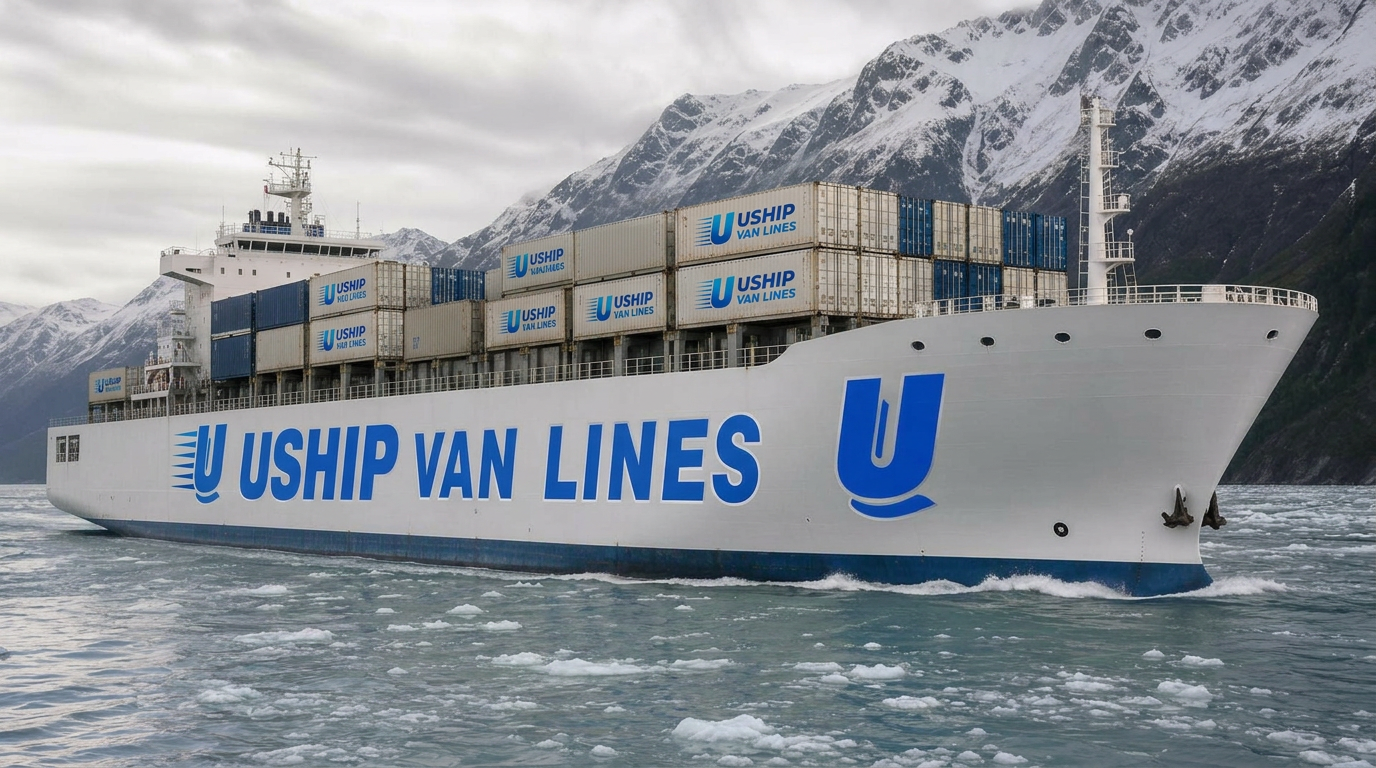
Moving from North Carolina to Alaska
Moving from North Carolina to Alaska represents one of the most ambitious domestic relocations—trading the Blue Ridge Mountains and Atlantic coastline for America's Last Frontier. This isn't a typical interstate move: your household goods will travel thousands of miles by truck and barge, navigating complex logistics that few moving companies truly understand.
Best Alaska & Hawaii Movers, powered by UShip Van Lines, specializes exclusively in Alaska and Hawaii relocations. We coordinate the entire journey from pickup in Charlotte, Raleigh, Greensboro, or anywhere in North Carolina through barge transit via Tacoma and final delivery to Anchorage, Fairbanks, the Mat-Su Valley, or beyond. Request your free Alaska moving quote to get started with realistic pricing and timelines.
Route overview
Understanding the North Carolina to Alaska Route
Your belongings will travel approximately 4,000–4,500 miles depending on your specific origin and destination. The journey begins with ground transportation from your North Carolina home to the Port of Tacoma, Washington—typically a 7–10 day continental crossing through the Midwest and Pacific Northwest. From Tacoma, your shipment boards a commercial barge for the 1,500-nautical-mile voyage to Alaska, usually arriving at the Port of Anchorage.
Once in Alaska, the final delivery leg varies dramatically by destination. Anchorage and Mat-Su Valley deliveries may add just 1–2 days. Fairbanks requires an additional 350-mile highway haul. Southeast Alaska communities like Juneau or Ketchikan need separate barge connections, while bush destinations accessible only by air or seasonal ice road require specialized arrangements and significantly higher costs.
This route demands expertise in multimodal logistics, customs-like documentation (though Alaska is a U.S. state, it has unique shipping requirements), and coordination with barge sailing schedules that operate weekly during peak season but may run only twice monthly in winter.
How the moving process works
How Your North Carolina to Alaska Move Works
-
Initial consultation and survey – We assess your inventory via virtual or in-home walkthrough from your North Carolina location, discuss Alaska delivery specifics, and provide a detailed quote covering all transportation modes and potential surcharges.
-
Pre-move preparation and documentation – You'll complete Alaska-specific paperwork including detailed inventory lists and shipment declarations. We help you understand what items face restrictions (propane, ammunition, certain chemicals) and coordinate timing around barge sailing schedules.
-
Pickup and continental transport – Professional movers load your household goods in North Carolina and begin the cross-country journey to Tacoma. Your shipment travels via dedicated long-haul truck, typically reaching the West Coast in 7–10 days depending on routing and weather.
-
Port staging and barge loading – At the Port of Tacoma, your shipment transfers to a marine-rated container (typically 20' or 40' steel containers). Our logistics team coordinates with shipping lines to secure space on the next available Alaska barge, accounting for seasonal sailing frequencies.
-
Ocean transit to Alaska – The barge voyage from Tacoma to Anchorage takes 5–7 days in good conditions, though weather delays can add 1–3 days. Your goods travel on commercial cargo vessels operated by carriers like TOTE Maritime or Alaska Marine Lines.
-
Port clearance and unloading – Upon arrival at the Port of Anchorage, containers are offloaded and cleared through port operations. This process typically takes 1–2 business days, occasionally longer during peak summer moving season when ports handle maximum volume.
-
Final delivery in Alaska – We arrange ground transportation from the port to your new Alaska home. For Anchorage-area deliveries, this is straightforward. Remote destinations require additional planning, potentially including ferry connections, smaller trucks for narrow roads, or even air freight for the most isolated communities.
Estimated moving costs
What a North Carolina to Alaska Move Costs
Expect to invest $6,800–$14,500 for a typical 2–3 bedroom household moving from North Carolina to Alaska. This wide range reflects the significant variables in Alaska moving: your specific destination, total shipment weight, seasonal timing, and required services.
Primary cost drivers include:
- Distance and volume – Continental mileage from your North Carolina origin, plus shipment weight/cubic footage determines base transportation rates
- Barge freight charges – Ocean shipping rates fluctuate based on fuel costs, seasonal demand, and container availability; peak summer rates run 20–35% higher than winter
- Alaska destination – Anchorage delivery costs significantly less than Fairbanks; Southeast Alaska or bush locations may double the price
- Access and delivery conditions – Remote properties, winter road conditions, or locations requiring ferry access add surcharges
- Packing and special handling – Full-service packing, custom crating for valuables, and climate-sensitive items increase costs but protect belongings during the multi-week journey
- Storage needs – If barge timing doesn't align with your move dates, short-term storage at either end may be necessary
- Vehicle shipping – Adding a car or truck to your shipment typically costs $1,800–$3,500 from the Lower 48 to Alaska
We provide itemized quotes with no hidden fees, though we cannot guarantee final prices until we confirm your complete inventory and finalize barge booking. Costs can shift if fuel surcharges change or if your shipment volume differs significantly from estimates.
Estimated transit times
Realistic Timelines for North Carolina to Alaska Moves
Plan for 18–28 days door-to-door from pickup in North Carolina to delivery in Alaska. This assumes normal conditions, weekly barge service, and a Southcentral Alaska destination.
Timeline breakdown by leg:
- North Carolina to Tacoma: 7–10 days of ground transportation across the continental U.S.
- Port staging: 2–5 days waiting for the next scheduled barge departure (less during peak season with more frequent sailings)
- Barge transit: 5–7 days from Tacoma to Anchorage under normal weather conditions
- Port clearance: 1–2 days for offloading and documentation processing
- Final Alaska delivery: 1–5 days depending on destination (Anchorage is quickest; Fairbanks, Kenai Peninsula, or Southeast Alaska take longer)
Factors that extend timelines:
Winter moves may add 3–7 days due to weather delays affecting both highway and ocean travel. Remote destinations beyond the road system can add 1–2 weeks. Barge schedule gaps in shoulder seasons (March–April, October–November) may force you to wait for the next sailing. Summer peak season (June–August) brings the most frequent service but also the highest port congestion.
Book your move with at least 6–8 weeks of lead time to secure optimal barge space and avoid rush charges. Last-minute bookings during peak season may face delays of several weeks waiting for available container space.
Regional logistics
Alaska-Specific Moving Logistics from North Carolina
Barge operations and scheduling: Your shipment routes through the Port of Tacoma, the primary gateway for Alaska freight. Unlike Lower 48 moves, you're constrained by fixed sailing schedules. During peak season, major carriers like TOTE Maritime and Alaska Marine Lines offer multiple weekly departures; winter service drops to 1–2 sailings per week or less. We coordinate your pickup timing to align with barge schedules, minimizing storage time and costs.
Documentation requirements: While Alaska is a U.S. state (no customs), you'll complete detailed shipping documents including comprehensive inventory lists, shipment declarations, and sometimes agricultural inspection forms. Certain items face restrictions: propane tanks must be purged, ammunition requires special handling, and some chemicals are prohibited on barges. We guide you through all paperwork to prevent clearance delays.
Vehicle shipping considerations: If you're shipping a car or truck alongside household goods, it typically travels on the same barge in a separate secured area. Vehicles must be cleaned (Alaska has strict regulations preventing invasive species), operable for loading/unloading, and contain no personal belongings. The Alaska Highway remains an alternative for those who prefer to drive, though the 2,300+ mile journey from the Lower 48 presents its own challenges, especially in winter.
Port delivery vs. final destination: Most shipments arrive at the Port of Anchorage, Alaska's primary freight hub. From there, we arrange ground delivery throughout the state. The Alaska highway system connects Anchorage, Mat-Su Valley, Kenai Peninsula, and Fairbanks. Southeast Alaska communities (Juneau, Sitka, Ketchikan) require additional barge connections since they're not on the road system. Bush Alaska locations accessible only by air or seasonal ice road need specialized logistics and command premium pricing—sometimes triple standard rates.
Last-mile delivery challenges: Alaska's unique conditions affect final delivery. Remote properties may require smaller trucks or even multiple trips if roads can't accommodate full-size moving vehicles. Winter deliveries face extreme cold that can damage sensitive items during unloading. Some communities have limited delivery windows based on ferry schedules or ice road seasons. We assess these factors during quoting to ensure realistic expectations and appropriate pricing.
Storage options: If barge timing doesn't align with your move dates or your Alaska home isn't ready, we offer climate-controlled storage at either end. Tacoma-area storage is common for shipments waiting for the next sailing. Alaska storage helps if you arrive before your goods or need temporary housing while finding permanent residence.
Seasonal considerations
Best Times to Move from North Carolina to Alaska
Summer (June–August): Peak moving season offers maximum barge frequency—often 2–3 sailings per week—and the most predictable weather for ocean transit. However, demand drives prices 25–35% higher, and port congestion can cause delays. Book 8–12 weeks ahead. Best for families moving with school-age children who want to settle before the academic year.
Fall (September–November): The sweet spot for Alaska moves. Barge service remains regular through September, weather is generally stable, and rates drop as peak season ends. October–November sees reduced sailing frequency (often weekly or bi-weekly), and early winter storms can cause delays. Excellent value if your timeline is flexible and you can handle potential weather disruptions.
Winter (December–February): Off-season rates offer the best pricing—potentially 20–30% below summer peaks—but barge schedules are least frequent (sometimes just 1–2 sailings monthly). Severe winter weather affects both North Carolina pickup (ice storms, mountain passes) and Alaska delivery (extreme cold, limited daylight for unloading). Ground conditions in Alaska can make rural deliveries impossible until spring thaw. Best for experienced Alaska residents with flexible timelines and minimal household goods.
Spring (March–May): Transitional season with increasing barge frequency as carriers prepare for summer. March can still face winter conditions; May approaches summer pricing. Breakup season (April–May) makes some Alaska roads temporarily impassable due to melting ice and mud. Good option for budget-conscious movers willing to work around weather and road condition variables.
Regardless of season, North Carolina's temperate climate and Alaska's extreme environment create significant temperature differentials that can affect certain items. Electronics, musical instruments, and wood furniture need proper climate protection during the journey.
Why choose Best Alaska & Hawaii Movers
Why Best Alaska & Hawaii Movers for Your North Carolina to Alaska Move
-
Exclusive Alaska & Hawaii specialization – We don't handle all 50 states; we focus solely on the complex logistics of Alaska and Hawaii moves, giving us unmatched expertise in barge coordination, port operations, and Last Frontier delivery challenges that general movers simply don't understand.
-
Transparent, itemized pricing – We provide detailed quotes breaking down ground transport, barge freight, Alaska delivery, and any surcharges, so you know exactly where your money goes with no surprise fees at delivery.
-
Direct coordination across all legs – As your single point of contact from North Carolina pickup through final Alaska delivery, we manage the truck-to-barge-to-truck handoffs, eliminating the communication gaps that plague multi-carrier moves.
-
Powered by UShip Van Lines infrastructure – Our backing by UShip Van Lines provides access to extensive carrier networks, competitive freight rates, and the logistical support to handle the 4,000+ mile journey with reliability.
-
Alaska-specific knowledge and relationships – We maintain direct relationships with Alaska barge carriers, Anchorage port services, and delivery operators throughout the state, enabling us to navigate seasonal challenges, secure priority bookings during peak times, and solve problems that would stall inexperienced movers.