
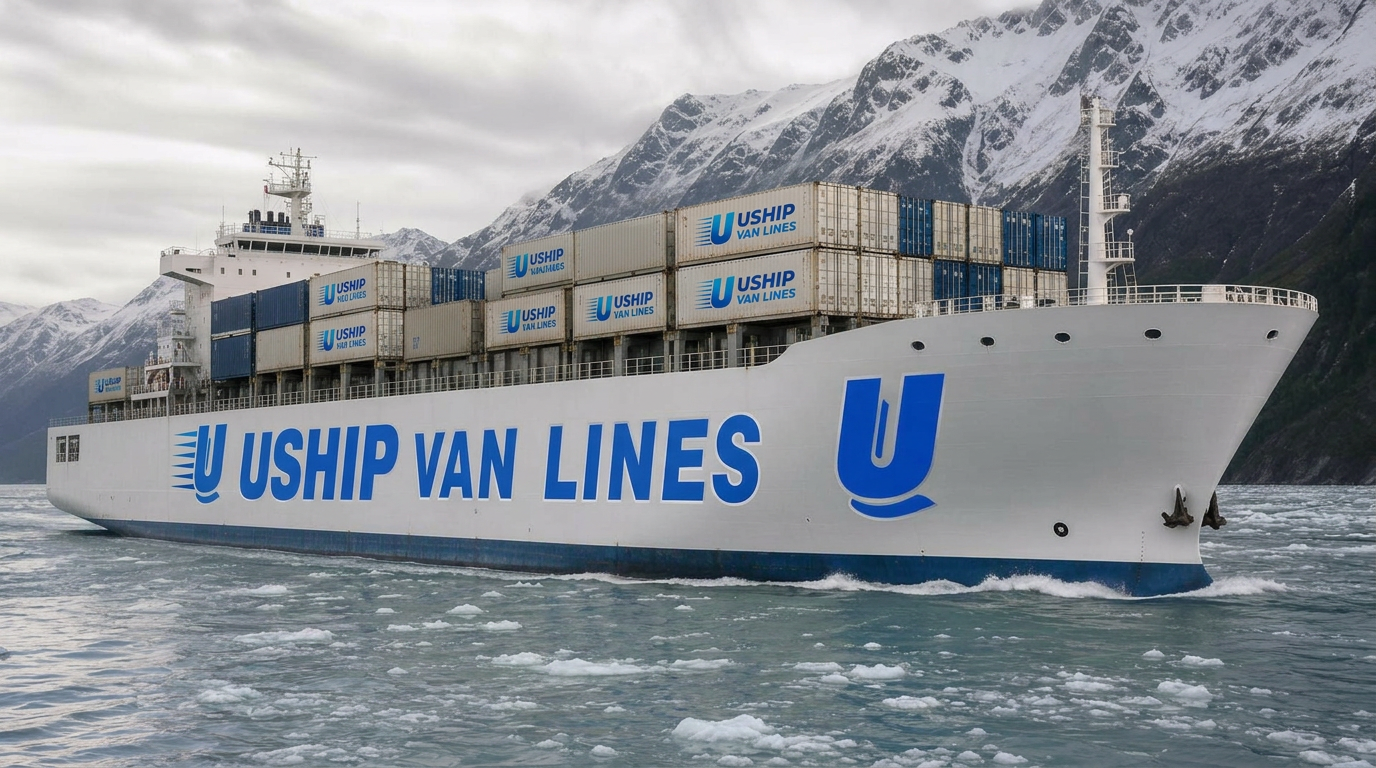
Moving from Alaska to Ann Arbor, MI
Moving from Alaska to Ann Arbor, Michigan combines the logistical complexity of long-distance barge transport with the precision planning required for a cross-country household goods move. Whether you're relocating from Anchorage, Fairbanks, the Mat-Su Valley, or remote Alaskan communities, this 3,500+ mile journey requires coordination between marine freight, ground transportation, and delivery teams familiar with both Alaska's unique shipping requirements and Michigan's seasonal weather patterns.
Best Alaska & Hawaii Movers, powered by UShip Van Lines, specializes in these Alaska-to-Lower 48 relocations, managing every step from initial barge booking through final delivery to your Ann Arbor doorstep. Request a detailed quote today to see how our integrated logistics network turns this multi-stage move into a streamlined experience.
Route overview
Alaska to Ann Arbor: A Multi-Modal Journey
The Alaska-to-Ann Arbor moving route spans approximately 3,500–3,800 miles depending on your origin city and requires careful orchestration of barge and ground transport. Most household goods travel from Anchorage or other Alaska ports via barge to the Port of Tacoma or Seattle, then transfer to long-haul trucks for the cross-country drive through Washington, Idaho, Montana, North Dakota, Minnesota, Wisconsin, and into Michigan. Alaska's geographic isolation means there are no direct road connections for commercial moving trucks—marine freight is essential.
Ann Arbor sits in southeastern Michigan's Washtenaw County, home to the University of Michigan and a thriving professional community. The city experiences cold, snowy winters and warm summers, a stark contrast to Alaska's subarctic and arctic climates. Deliveries into Ann Arbor require coordination around academic calendar moves (August–September and May–June see heavy apartment turnover) and Michigan winter road conditions from November through March. Timing your move to avoid both Alaska's barge schedule constraints and Michigan's peak moving seasons can significantly improve flexibility and sometimes reduce costs.
From remote communities like Kenai, Soldotna, or bush villages, your goods first travel by smaller truck or air freight to a major port like Anchorage before joining the southbound barge schedule. This adds 1–3 days and additional handling but is routine for Alaska movers familiar with last-mile logistics across the state.
How the moving process works
Step-by-Step: Your Alaska to Ann Arbor Move
-
Request and compare quotes (4–8 weeks before moving date): Contact Best Alaska & Hawaii Movers for a detailed inventory assessment. We'll evaluate your household size, any oversized items, vehicle transport needs, and preferred timeline. Alaska moves require longer lead times than typical Lower 48 relocations due to barge scheduling.
-
Confirm barge and ground schedule (3–6 weeks out): We coordinate your shipment with Alaska Marine Lines, TOTE Maritime, or other barge carriers operating the Alaska–Tacoma route. Barges typically depart weekly, but schedule windows tighten in winter and during peak summer season. Your goods are containerized for weather protection and secure handling.
-
Pre-move preparation and packing (1–2 weeks before pickup): Our crew arrives at your Alaska location to professionally pack fragile items, disassemble furniture, and load your belongings into the container. We provide detailed inventory lists and document item condition. If you're packing yourself, we supply guidance on marine-worthy packing standards to prevent moisture damage during barge transit.
-
Ground transport to port and barge loading (pickup day through day 3–5): Your container travels by truck from your home to the port (Anchorage, Whittier, or other departure point), then loads onto the barge. Sailing time from Alaska to Tacoma typically takes 3–5 days depending on route and weather. Containers remain sealed throughout the voyage.
-
Port discharge and over-the-road transfer (days 4–7): At the Port of Tacoma or Seattle, your container offloads, clears any inspections, and transfers to a long-haul semi-truck. The driver begins the cross-country journey, typically traveling 500–600 miles per day with required rest breaks.
-
Cross-country transit (days 8–14): The truck crosses Washington, Idaho, Montana, North Dakota, and Minnesota before entering Wisconsin and Michigan. Real-time GPS tracking keeps you informed of progress. Weather delays (especially winter storms in Montana or Michigan) can add 1–3 days.
-
Final delivery in Ann Arbor (days 12–18): Upon arrival, our delivery team unloads, places furniture in designated rooms, reassembles beds and tables, and removes packing materials. You conduct a final walkthrough to ensure everything arrived as expected. We address any concerns immediately and complete all delivery paperwork.
Estimated moving costs
What Does an Alaska to Ann Arbor Move Cost?
For a typical 2–3 bedroom household (approximately 7,000–10,000 pounds), expect to invest between $8,500 and $16,000 for full-service moving from Alaska to Ann Arbor. Studio and 1-bedroom moves generally range $5,500–$8,500, while larger 4–5 bedroom homes can reach $18,000–$28,000 or more.
Key cost drivers include:
- Distance and fuel: The 3,500+ mile journey plus barge fuel surcharges significantly impact pricing.
- Barge fees: Marine freight between Alaska and the Lower 48 is the single largest cost component, typically $3,000–$6,000 depending on container size and season.
- Weight and volume: Charges are based on actual weight or cubic footage, whichever yields higher cost. Heavy items like pianos, safes, or extensive book collections add expense.
- Alaska last-mile transport: If you're outside Anchorage or Fairbanks (e.g., Kenai Peninsula, Mat-Su, or bush communities), expect additional charges for the initial leg to the port.
- Packing services: Full professional packing adds $800–$2,200 depending on home size; fragile-only or partial packing costs less.
- Seasonal demand: Summer (May–September) is peak Alaska moving season with higher rates and tighter schedules. Winter moves (November–March) may offer modest discounts but face weather risks.
- Vehicle shipping: Adding a car costs roughly $1,800–$3,200 Anchorage to Michigan; oversized vehicles (trucks, RVs) cost more.
- Specialty items: Gun safes, hot tubs, antiques, and other high-value or awkward items require custom crating and handling.
- Storage: If your Ann Arbor residence isn't ready, short-term storage in Washington state or Michigan runs $150–$400/month for typical household volumes.
We provide binding estimates after a detailed inventory review—never vague ranges that balloon at delivery. Request your personalized quote to see exactly what your move will cost with no hidden fees.
Estimated transit times
How Long Does Alaska to Ann Arbor Moving Take?
Door-to-door transit from Alaska to Ann Arbor typically requires 12–18 business days under normal conditions. This breaks down approximately as follows:
- Pickup to port delivery: 1–2 days (longer if you're in remote areas like Kenai, Homer, or bush communities)
- Barge transit Alaska to Tacoma/Seattle: 3–5 days depending on route, weather, and port schedules
- Port offloading and truck transfer: 1–2 days for customs clearance (if applicable), container unloading, and transfer to over-the-road carrier
- Cross-country truck transit: 6–9 days covering approximately 2,200 miles from Tacoma to Ann Arbor at typical commercial moving speeds
- Final delivery window: We typically provide a 2–3 day delivery window; you receive 24-hour advance notice of exact arrival
Winter moves (November–March) can add 2–5 days due to Alaska port weather, mountain pass closures in Montana/Idaho, and Michigan snowstorms. Summer moves benefit from more reliable weather but face tighter barge scheduling due to peak season demand. We recommend booking 4–8 weeks ahead to secure your preferred timeline, especially for May–September relocations.
Expedited service is rarely available for Alaska routes due to fixed barge schedules, but we prioritize your shipment wherever possible within the marine freight timetable. If you have critical delivery deadlines (job start dates, school enrollment, lease terms), communicate these early so we can build appropriate buffer time into your moving plan.
Regional logistics
Alaska-Specific Moving Logistics
Port operations: Most Alaska household goods ship from the Port of Anchorage or Whittier, with connections available from Fairbanks, Kenai, and other communities. Containers are loaded at secure port facilities, sealed, and manifested for the southbound voyage. We handle all port documentation, customs paperwork (if applicable for certain shipments), and coordination with marine carriers.
Vehicle transport: If you're shipping a car, truck, or SUV, it typically travels in a separate container or on a vehicle-specific carrier. Alaska vehicle shipping requires special preparation: fluid levels, battery condition, tire pressure, and thorough cleaning (Washington State agriculture inspection requirements). We provide a detailed prep checklist. Vehicle transit times mirror household goods: expect 14–20 days Anchorage to Ann Arbor.
Military and government moves: We routinely handle PCS relocations and understand the unique requirements, timelines, and documentation for military-funded moves. If you're eligible for government-funded relocation, we work directly with your transportation office to ensure compliance and smooth reimbursement.
Remote Alaska pickups: Moving from bush communities, Kenai Peninsula, or Mat-Su Valley? We arrange the initial transport leg from your location to Anchorage via smaller trucks or, when necessary, air freight for extremely remote areas. This adds cost but is routine for experienced Alaska movers. Notify us of your exact location during the quote process so we can plan appropriately.
Restricted items: Alaska and marine freight have specific prohibitions: no hazardous materials (paint, propane, ammunition, aerosols), no perishable foods, and restrictions on plants. Firearms require special documentation and must be declared. We provide a comprehensive restricted items list during your pre-move consultation.
Insurance coverage: Marine freight carries additional risks compared to ground-only moves. We offer full-value protection (replacement cost) and released-value coverage (minimal liability). For high-value electronics, artwork, or collectibles, consider supplemental coverage. We'll explain all options clearly so you can make an informed choice.
Weather-related delays: Alaska winter weather, North Pacific storms, and Michigan snowstorms all can delay shipments. We include real-time tracking, proactive communication, and contingency planning for every move. If weather forces delays, you'll know immediately with revised delivery estimates.
Seasonal considerations
Best Time to Move from Alaska to Ann Arbor
Spring (April–May): Barge schedules increase frequency as ice conditions improve in Alaska ports. Weather is improving in both Alaska and Michigan, though late spring snowstorms can still occur in the Upper Midwest. Rates begin climbing as peak season approaches. Good balance of availability and weather.
Summer (June–August): Peak moving season for Alaska with highest demand and premium pricing. Barge schedules run most frequently, and weather is optimal for both Alaska pickups and Michigan deliveries. Book 6–8 weeks ahead. Expect competition for slots, especially around PCS (military permanent change of station) moves in June–July. Ann Arbor sees heavy moving traffic due to University of Michigan summer session turnover.
Fall (September–October): Demand decreases after summer peak, offering better availability and sometimes modest rate reductions. Weather remains generally favorable, though early snow can hit Alaska mountains and northern Michigan by late October. Another busy period in Ann Arbor for academic moves (fall semester start). Excellent window for cost-conscious movers with flexible timelines.
Winter (November–March): Lowest rates and best availability, but weather poses real challenges. Barge schedules reduce frequency; some routes suspend service during extreme conditions. Alaska roads can be treacherous, and blizzards across Montana, North Dakota, and Michigan can delay trucks 2–5 days. Only recommended if you have flexible deadlines and can tolerate potential delays. We include comprehensive weather monitoring and proactive communication if your winter move encounters storms.
Alaska's barge operations occasionally face disruptions from storms, mechanical issues, or port strikes. We monitor conditions continuously and communicate any schedule changes immediately. Building 3–5 days of buffer time into your moving plan accounts for these occasional delays without jeopardizing your transition timeline.
Why choose Best Alaska & Hawaii Movers
Why Choose Best Alaska & Hawaii Movers for Your Alaska to Ann Arbor Move
-
Alaska specialists, not generalists: Unlike national van lines that subcontract Alaska routes, we've built our business around Alaska and Hawaii logistics. We know barge schedules, port operations, last-mile challenges, and seasonal patterns intimately. Your move is managed by teams who do this daily, not occasionally.
-
Transparent, binding estimates: You'll receive a detailed quote based on actual inventory, with every cost component explained clearly. No surprise fees at delivery. Our pricing reflects the true complexity of Alaska marine freight and cross-country transport—honest numbers, not bait-and-switch tactics.
-
Single point of contact: One coordinator manages your entire move from Alaska pickup through Ann Arbor delivery. You won't be passed between departments or left wondering who to call with questions. We provide direct phone and email access throughout your moving journey.
-
Comprehensive tracking: Real-time updates keep you informed as your shipment moves from Alaska roads to barge to truck to final delivery. GPS tracking on the over-the-road leg provides peace of mind during the cross-country transit.
-
Flexible service levels: Choose full-service packing and unpacking, or pack yourself and save money. We accommodate partial moves, storage needs, vehicle transport, and specialty items. Every Alaska to Ann Arbor move is customized to your specific requirements and budget.
-
Powered by UShip Van Lines network: Our partnership with UShip Van Lines provides access to vetted carriers, comprehensive insurance options, and customer support infrastructure. You get Alaska expertise backed by national logistics resources.