
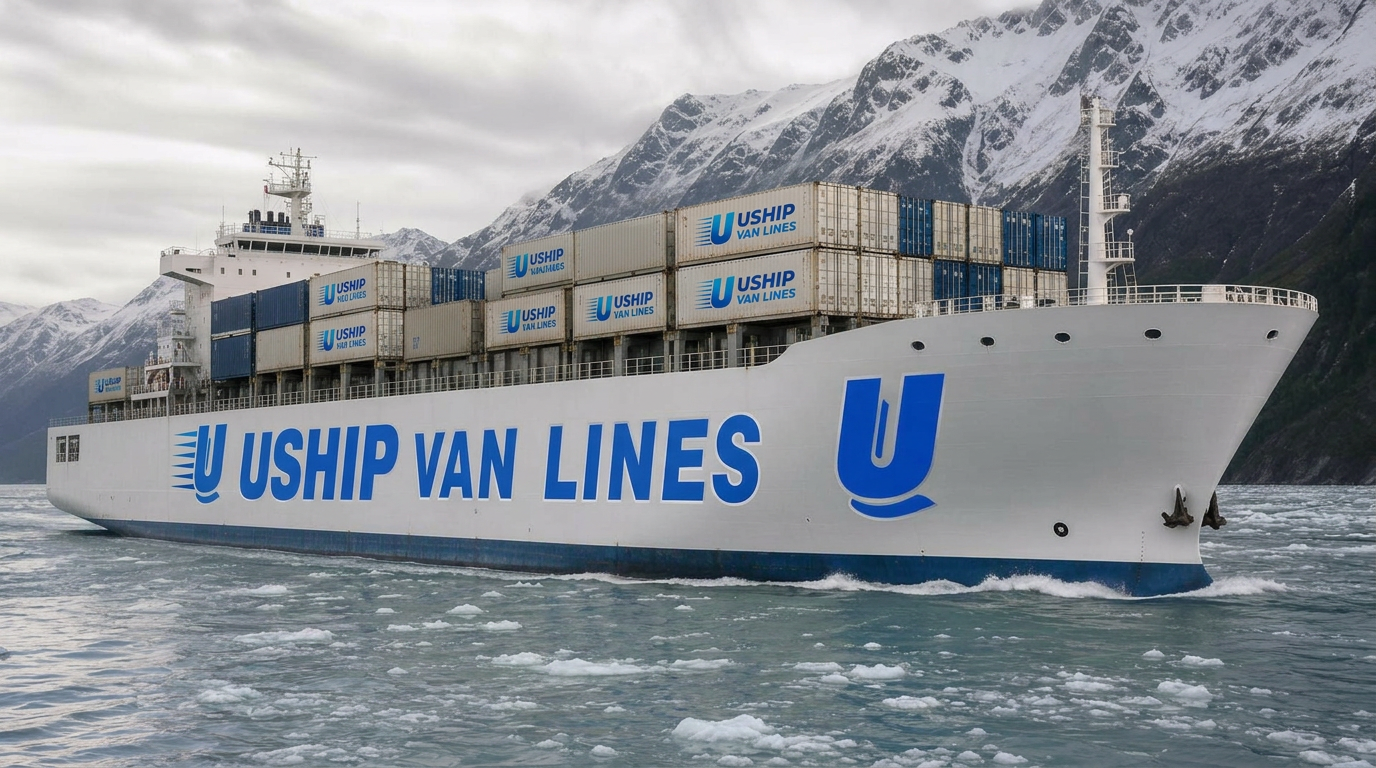
Moving from Alaska to Harrisonburg, VA
Moving from Alaska to Harrisonburg, Virginia means coordinating a complex 3,500+ mile journey that combines marine barge transport with cross-country trucking. Whether you're relocating from Anchorage, Fairbanks, or the Mat-Su Valley to Virginia's Shenandoah Valley, this route requires specialized logistics that account for Alaska's unique shipping requirements and the long overland haul through Canada and the Lower 48.
Best Alaska & Hawaii Movers, powered by UShip Van Lines, handles every leg of your Alaska-to-Virginia move—from pickup at your Alaska home through barge consolidation in Tacoma, Seattle, or Prince Rupert, and final delivery to Harrisonburg. Our team coordinates timing, paperwork, and careful handling so you can focus on your transition to Virginia's college town charm and Blue Ridge Mountain access.
Route overview
Alaska to Harrisonburg Route Overview
The Alaska-to-Harrisonburg corridor serves families, military personnel, and professionals relocating from America's Last Frontier to Virginia's Shenandoah Valley region. Harrisonburg sits in the heart of the Valley between Charlottesville and the West Virginia border, home to James Madison University and a growing regional economy. This move requires marine barge service from Alaska ports (Anchorage, Whittier, or Kodiak) to Pacific Northwest terminals, followed by cross-country trucking through Idaho, Wyoming, Nebraska, Iowa, Illinois, Indiana, Ohio, West Virginia, and into Virginia.
Most Alaska shipments consolidate through the Port of Tacoma or Seattle before being loaded onto long-haul trucks for the 2,800-mile overland journey to Harrisonburg. The route crosses multiple climate zones—from Alaska's subarctic conditions through mountain passes and Great Plains weather to Virginia's humid subtropical climate. Timing coordination between barge sailings and trucking schedules is critical, as delays in either segment can extend your total transit window by days or weeks.
Harrisonburg's location off Interstate 81 provides good truck access, though the final delivery may involve navigating historic downtown streets or hilly neighborhoods near the university. Many moves to this area involve college relocations, military transfers to regional installations, or retirees seeking Virginia's lower cost of living and four-season climate after years in Alaska.
How the moving process works
Your Alaska to Harrisonburg Moving Process
-
Initial Survey and Quote – We assess your inventory via video walkthrough or detailed list, noting any items requiring special handling (firearms, taxidermy mounts, outdoor equipment). Alaska moves require precise cubic footage estimates since barge space is allocated months in advance.
-
Alaska Pickup and Local Transport – Our team picks up your household goods anywhere in the Alaska road system (Anchorage, Fairbanks, Mat-Su, Kenai Peninsula, Juneau via separate barge). Items are carefully inventoried, packed if needed, and transported to the departure port. Bush community pickups require small aircraft or seasonal barge service with extended lead times.
-
Barge Loading and Marine Transit – Your shipment is containerized or loaded as break-bulk cargo onto Alaska Marine Highway System barges or commercial freight vessels sailing to Tacoma, Seattle, or Prince Rupert, BC. This ocean leg takes 4–9 days depending on route and weather. All items are secured for marine transport with moisture barriers and tie-downs.
-
Port Unloading and Customs (if applicable) – At the Pacific Northwest terminal, your shipment is offloaded, inspected, and transferred to our long-haul trucking partner. If routed through Canada (Prince Rupert), temporary customs documentation is processed for transit through British Columbia and Alberta.
-
Cross-Country Trucking – Your consolidated load travels via Interstate 90 and I-80 corridors through the northern states, then south on I-81 into Virginia's Shenandoast Valley. This segment typically takes 5–7 days with driver rest stops and fueling breaks built into the schedule.
-
Harrisonburg Delivery and Placement – Upon arrival in Harrisonburg, we schedule your delivery window and complete final placement in your new home. Our team navigates local streets (including university-area traffic during academic year), unloads all items, and performs a final inventory check. We remove packing materials and ensure everything arrived in expected condition.
-
Post-Move Support – We follow up within 48 hours to address any concerns and assist with filing claims if needed. Our team provides guidance on adjusting to Virginia's climate and unpacking timeline recommendations for your household goods.
Estimated moving costs
Cost Estimates for Alaska to Harrisonburg Moves
A typical 2-bedroom move from Alaska to Harrisonburg generally ranges from $6,800 to $11,500, while a 3-bedroom home runs $9,500 to $16,000 or more. These estimates reflect the combined cost of Alaska local pickup, barge transport to the Pacific Northwest (approximately $2,500–$4,500 for a standard shipment), and cross-country trucking to Virginia (approximately $4,500–$8,500 for 2,800+ miles).
Key cost factors include:
- Volume and weight – Alaska barge pricing is often calculated by cubic feet or weight, while overland trucking uses weight-based rates. A 1,200 cu.ft. shipment (typical 2-BR) weighs 6,000–8,000 lbs.
- Barge schedule and routing – Summer sailings (May–September) offer more frequent departures but higher demand pricing. Winter sailings may require longer warehouse storage while waiting for the next available vessel.
- Pickup/delivery locations – Anchorage and Fairbanks pickups are straightforward; remote Alaska locations (Kenai, Homer, Juneau, Kodiak) add $800–$2,500 for positioning. In Harrisonburg, university-area deliveries during move-in periods (August, January) may incur wait-time fees.
- Packing services – Professional packing for an entire household adds $1,200–$2,800. Alaska movers often recommend full packing due to the marine leg's vibration and movement.
- Vehicle shipping – Adding a vehicle from Alaska to Virginia costs $2,200–$3,800 via separate auto carrier (marine + overland). Most families drive one vehicle and ship another.
- Insurance coverage – Basic carrier liability covers $0.60/lb; full-value protection adds 1.5–3% of declared shipment value.
- Storage – If your Harrisonburg home isn't ready, warehousing in Tacoma or a Virginia facility runs $150–$400/month.
We provide transparent, itemized quotes with no hidden fees. Request your personalized estimate to see exact costs based on your inventory and timing.
Estimated transit times
Transit Time: Alaska to Harrisonburg, VA
Door-to-door transit from Alaska to Harrisonburg typically takes 14–28 days, broken down as follows:
- Alaska pickup to port delivery: 1–3 days (Anchorage/Wasilla to port; 3–5 days from Fairbanks or Kenai; 5–10 days from bush communities requiring feeder barge or air freight)
- Barge transit to Pacific Northwest: 4–9 days (Anchorage/Whittier to Tacoma runs 4–6 days on direct sailings; Kodiak or Southeast Alaska adds 2–4 days; winter storm delays can add 3–7 days)
- Port processing and truck loading: 2–4 days (offloading, customs if routed via Canada, consolidation onto long-haul trailer)
- Cross-country trucking: 5–7 days (Tacoma/Seattle to Harrisonburg is approximately 2,800 miles; team drivers can shorten to 4–5 days; solo drivers with mandatory rest stops take 6–8 days)
- Final delivery window: 1–2 days (we provide 48-hour delivery windows upon truck arrival in Virginia)
Total planning window: Most customers should allow 3–4 weeks for summer moves and 4–6 weeks for winter relocations when barge schedules are less frequent. Rush service can compress timelines by coordinating premium barge space and dedicated truck service, but expect 20–40% cost premiums.
Weather is the wild card: winter storms in Alaska can delay port access by 3–7 days, while blizzards across Wyoming or the Dakotas may pause trucking for 24–48 hours. Summer moves offer the most predictable schedules, though Harrisonburg's August university move-in period can create local delivery scheduling challenges.
Regional logistics
Alaska-Specific Moving Logistics
Port Operations: Most Alaska household goods move through the Port of Alaska in Anchorage (Valdez terminal) or the Port of Whittier. Southcentral Alaska shipments (Anchorage, Mat-Su, Kenai) typically use Anchorage; Southeast Alaska (Juneau, Sitka, Ketchikan) uses Whittier or direct AMHS sailings. Barge bookings must be made 4–8 weeks in advance during peak season. Shipments are containerized (20' or 40' containers) or loaded as break-bulk freight, depending on volume.
Canadian Transit: Some shipments route through Prince Rupert, BC for faster marine transit. This requires temporary Canadian customs documentation and adds 1–2 days for border processing. Your shipment remains sealed in transit, but commercial invoices must list all items for customs review.
Vehicle Shipping: If shipping a vehicle separately, it goes via TOTE Maritime or Matson to Tacoma, then overland auto carrier to Virginia (total 14–21 days, $2,200–$3,800). Many Alaska residents drive the Alaska Highway (ALCAN) while their household goods ship—a 2,300-mile drive from Anchorage to the Canadian border, then another 2,500+ miles to Virginia. Allow 6–8 days of driving time.
Restricted Items: Alaska moves often include firearms, hunting trophies, and outdoor gear. Firearms must be declared and packed according to federal law (unloaded, separate from ammunition, locked cases). Bear hides, moose antlers, and other trophies require fish & game documentation for interstate transport. Ammunition generally cannot ship on barges; plan to transport separately or dispose of properly.
Bush Community Access: Moves from off-road-system communities (Bethel, Nome, Kotzebue, Barrow, Dillingham, Cordova) require small aircraft freight or seasonal barge service to a hub port. These add $1,500–$5,000 and require 2–4 weeks of additional lead time. We coordinate with Alaska bush freight forwarders for seamless service.
Climate Transition: Alaska goods moving to Virginia's humid climate should be unpacked within 48 hours to prevent moisture issues. Items stored in Alaska's dry cold may develop condensation in Virginia's summer humidity if left in boxes. We recommend climate-controlled storage if there's a delivery gap.
Seasonal considerations
Seasonal Considerations for Alaska to Virginia Moves
Summer (May–September): Peak season for Alaska moves. Barge sailings run weekly from Anchorage and Whittier, with the most reliable weather and shortest transit times. Road conditions throughout Alaska are optimal, and Harrisonburg's warm, humid summers (75–90°F) make delivery easier. However, demand is highest—book 6–8 weeks ahead and expect premium pricing. James Madison University move-in periods (mid-August, early January) create local delivery congestion; avoid these dates if possible.
Fall (October–November): Excellent shoulder season with moderate pricing and good availability. Barge frequency begins to decline in late October as Alaska Marine Highway reduces runs. Early snow in Alaska's Interior (Fairbanks, Mat-Su) can affect pickup access after mid-October. Cross-country trucking faces increasing winter weather risk in Montana, Wyoming, and the Dakotas by November. Harrisonburg's fall is beautiful (50–70°F, stunning foliage) and less congested for deliveries.
Winter (December–March): Most challenging and economical season. Barge sailings from Alaska run every 10–14 days rather than weekly, and severe weather can delay departures. Anchorage and Fairbanks pickups remain feasible, but remote areas may be inaccessible until spring breakup. Cross-country routes face snow, ice, and chain requirements over mountain passes. However, pricing drops 15–25% due to low demand, and you'll have excellent availability. Plan for 4–6 week transit windows. Harrisonburg winters are mild (25–45°F) compared to Alaska, with occasional snow and ice.
Spring (April–May): Transition season as Alaska thaws and barge schedules increase. Breakup (late April–early May) creates muddy, difficult road conditions in Alaska's Interior but improves rapidly. Pricing begins rising toward summer peaks by late May. Cross-country weather improves dramatically, and Harrisonburg's spring (50–70°F, blooming dogwoods) is delightful. Book by early March for May moves to secure good rates before peak demand.
Why choose Best Alaska & Hawaii Movers
Why Choose Best Alaska & Hawaii Movers
-
Alaska Specialists – We handle Alaska's unique logistics daily: barge coordination, port operations, bush community access, and ALCAN routing. Our team understands Alaska Marine Highway schedules, weather contingencies, and last-mile challenges across the Last Frontier.
-
End-to-End Coordination – You get a single point of contact managing your entire move from Alaska pickup through Harrisonburg delivery. We coordinate barge lines, trucking partners, and customs brokers so you don't juggle multiple vendors across 3,500+ miles.
-
Powered by UShip Van Lines – Our backing by UShip Van Lines provides nationwide carrier networks, cargo insurance options, and customer protection that local Alaska brokers can't match. You get local expertise with national infrastructure.
-
Transparent Pricing – We provide detailed, itemized quotes breaking down barge costs, trucking rates, and service fees. No hidden charges, no surprise fuel surcharges. Our estimates include realistic transit windows so you can plan accordingly.
-
Real-Time Tracking – Monitor your shipment as it moves from Alaska to the Pacific Northwest and across the country to Virginia. We provide barge sailing confirmations, port arrival notices, and truck dispatch updates throughout your move.