
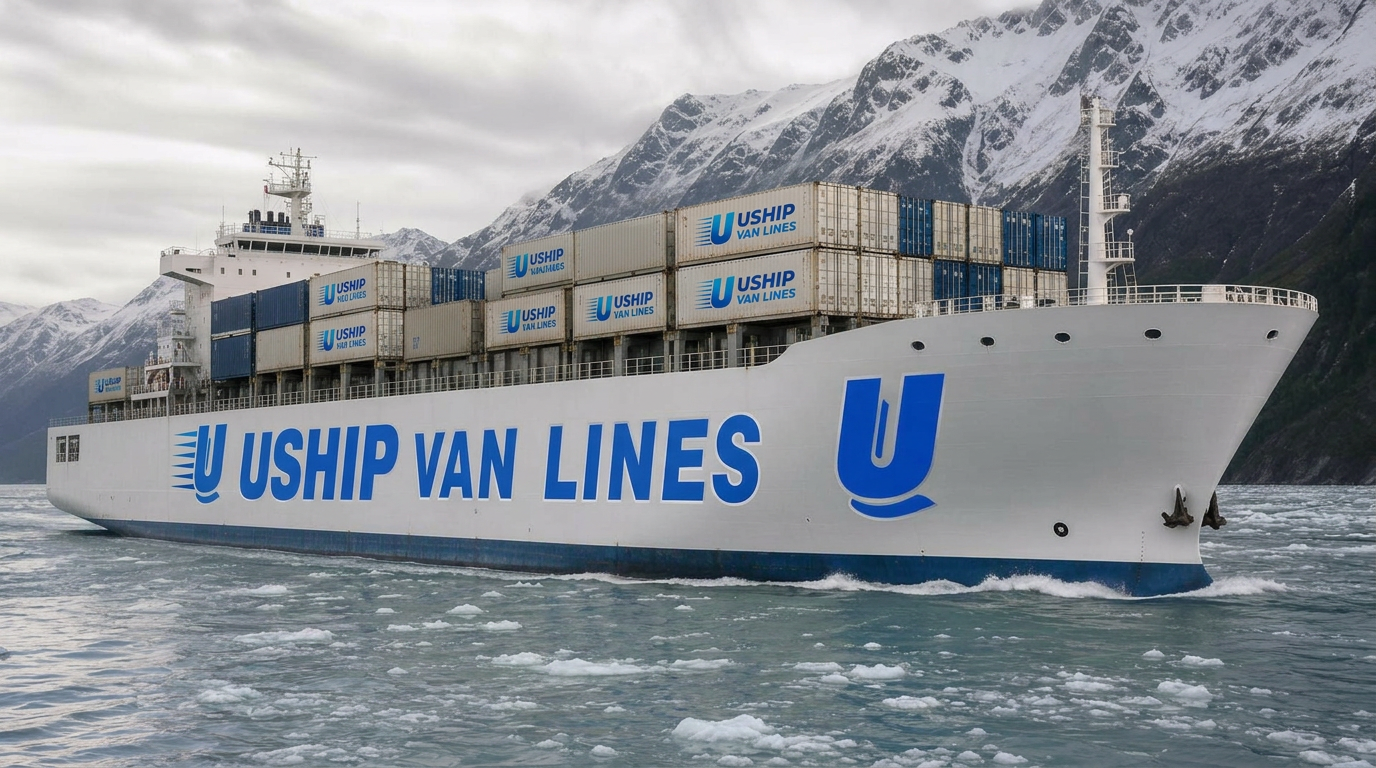
Moving from Ohio to Alaska
Moving from Ohio to Alaska is one of North America's most ambitious relocations, combining cross-country highway transport with maritime shipping. Your household goods will travel by truck from cities like Columbus, Cleveland, or Cincinnati to the Port of Tacoma, then voyage by barge across the Gulf of Alaska to Anchorage, Fairbanks, or beyond.
Whether you're relocating for career opportunities in Alaska's energy sector, embracing wilderness living in the Mat-Su Valley, or joining family in Kenai, this move requires specialized coordination across multiple modes of transport. Best Alaska & Hawaii Movers connects you with experienced carriers who handle every detail from Midwest pickup to Last Frontier delivery. Request your free quote to start planning this unique journey.
Route overview
The Ohio to Alaska Moving Route
Your belongings will begin their journey at your Ohio residence—whether in urban centers like Columbus and Cleveland, suburban communities in Hamilton County, or smaller towns across the Buckeye State. A long-distance carrier will load your shipment and transport it approximately 2,300–2,500 miles west to the Port of Tacoma, Washington, the primary consolidation point for Alaska-bound freight.
From Tacoma, your household goods are loaded into weatherproof containers and shipped via commercial barge service operated by carriers like Lynden Transport or TOTE Maritime Alaska. The barge voyage covers roughly 1,450 nautical miles through the Inside Passage and across the Gulf of Alaska to the Port of Anchorage. Final delivery extends from the port to your destination—whether that's Anchorage itself, a drive north to Fairbanks along the Parks Highway, suburban Mat-Su communities like Wasilla or Palmer, coastal Kenai Peninsula towns, or remote bush locations requiring additional coordination.
This intermodal route typically involves three distinct service providers: your origin carrier in Ohio, the marine shipping line, and a destination carrier in Alaska. Coordinating these handoffs seamlessly is where specialized Alaska moving expertise becomes essential.
How the moving process works
How Your Ohio to Alaska Move Works
-
Initial Survey & Quote – Your move begins with a detailed inventory assessment, either virtual or in-home. The coordinator evaluates your shipment volume, special items (vehicles, boats, ATVs), and final Alaska destination to provide a comprehensive cost estimate covering all transport legs.
-
Booking & Barge Schedule Coordination – Once you confirm, your move is scheduled around southbound barge sailings from Tacoma (typically 1–2 departures weekly during peak season, less frequent in winter). Your pickup date in Ohio is calculated backward from the sailing date to ensure your shipment arrives at the port with adequate time for container loading.
-
Ohio Pickup & Cross-Country Transport – Professional movers arrive at your Ohio residence, carefully pack and load your belongings, and transport them westward to Tacoma. This leg takes 4–7 days depending on routing, weather, and consolidation needs.
-
Port Consolidation & Container Loading – At the Port of Tacoma, your shipment is transferred into marine-grade containers (typically 20-foot or 40-foot units). Items are secured with moisture barriers and blocking to withstand ocean conditions. Vehicles, if shipped, are driven into roll-on/roll-off (RoRo) spaces or loaded into containers.
-
Barge Voyage to Alaska – The container ship departs Tacoma for a 3–5 day ocean voyage to Anchorage. Barges operate year-round but face weather delays during winter storms. Your shipment crosses open ocean waters and navigates Alaska's coastal channels to dock at the Port of Anchorage.
-
Customs Clearance & Alaska Unloading – Though moving between U.S. states doesn't require customs, port authorities inspect shipments. Containers are unloaded, and your goods are transferred to a local Alaska carrier for final delivery.
-
Last-Mile Delivery – Your Alaska carrier transports your belongings to your new home. For Anchorage-area deliveries, this happens within 1–3 days of port arrival. Fairbanks deliveries add 6–8 hours of highway driving. Remote destinations may require smaller trucks, barge connections, or even air cargo for bush communities not accessible by road.
Estimated moving costs
What an Ohio to Alaska Move Costs
A typical 2–3 bedroom household moving from Ohio to Anchorage or Fairbanks ranges from $8,500 to $16,000, with larger homes (4+ bedrooms) reaching $18,000–$25,000 or more. These figures reflect the combined cost of long-haul trucking, marine freight, and Alaska delivery—not a single carrier rate.
Key cost drivers include:
- Shipment volume – Charged per cubic foot or container size; a 1,200 sq ft apartment might fill a 20-foot container (~1,200 cu ft), while a 2,500 sq ft home could require a 40-foot container or more
- Final Alaska destination – Anchorage delivery is most economical; Fairbanks adds $800–$1,500; Kenai Peninsula, Mat-Su Valley, or bush locations add $1,200–$3,500 depending on accessibility
- Packing services – Professional packing adds $800–$2,000 but protects items during the multi-leg journey
- Vehicle shipping – Cars/trucks shipped in the same container or via RoRo add $1,800–$3,200 per vehicle
- Season – Peak summer moves (May–September) cost 15–25% more than off-season due to barge capacity and Alaska demand
- Special items – Heavy items (pianos, safes, shop equipment), fragile antiques, or bulky recreational gear may incur additional handling fees
- Storage – If your Alaska housing isn't ready, warehouse storage in Anchorage runs $150–$350/month per container
These are estimated ranges based on industry norms. Your actual cost depends on your specific inventory, services, and timing. Every shipment is unique—request a detailed quote for an accurate assessment tailored to your move.
Estimated transit times
How Long Your Ohio to Alaska Move Takes
Door-to-door transit from Ohio to Alaska typically requires 14–28 days, broken into three distinct phases:
Ohio to Tacoma (4–7 days) – Cross-country trucking covers 2,300–2,500 miles through the Midwest, Great Plains, and Rockies. Direct shipments move faster; consolidated loads picking up multiple customers may take longer.
Port Processing in Tacoma (2–5 days) – Your shipment must arrive before the barge sailing date, allowing time for container loading, documentation, and staging. During peak season, processing is streamlined; winter moves may face longer warehouse windows.
Barge Voyage (3–5 days) – The ocean crossing from Tacoma to Anchorage takes approximately 72–120 hours depending on weather, sea conditions, and the vessel's route through the Inside Passage and across the Gulf of Alaska.
Alaska Delivery (1–7 days) – After port arrival, customs inspection and unloading take 1–2 days. Anchorage-area delivery can happen the same day; Fairbanks adds 1–2 days for highway transport; remote destinations require additional coordination and may extend timelines by 3–7 days or more.
Weather and seasonal variables significantly impact timing. Summer moves benefit from calm seas and frequent barge schedules. Winter storms can delay ocean crossings by 1–3 days, and snow conditions can slow highway transport in Alaska. Allow buffer time if you're coordinating with a lease start date or job relocation deadline.
Regional logistics
Alaska-Specific Moving Logistics from Ohio
Port Operations & Documentation – The Port of Tacoma serves as your shipment's Pacific gateway. Your moving company handles marine bills of lading, container manifests, and coordination with Alaska port authorities. While interstate moves don't require customs clearance like international shipments, agricultural inspections do occur. Alaska restricts certain plants, soil, and organic materials—declare any gardening items or outdoor equipment to avoid delays.
Vehicle Shipping Considerations – Most Ohio-to-Alaska movers ship at least one vehicle. Cars and trucks can be driven into containers alongside household goods (maximizing container space) or shipped via roll-on/roll-off service. Vehicles must be clean (no mud or soil due to agricultural inspections), with less than a quarter tank of fuel for safety regulations. Shipping a midsize sedan adds $1,800–$2,500; larger trucks or SUVs cost $2,200–$3,200. If you're driving the Alaska Highway yourself as part of your relocation adventure, coordinate timing so your household goods arrive concurrently.
Last-Mile Delivery Challenges – Alaska's road system is limited. Anchorage, Fairbanks, and communities along the Parks Highway, Glenn Highway, and Seward Highway are accessible year-round by truck. However, destinations like Juneau (Alaska's capital, accessible only by ferry or air), Kodiak Island, the Aleutian Chain, or remote Interior villages require additional marine or air freight. Bush deliveries may involve cargo planes, seasonal barge service, or winter ice road access. Discuss your final destination in detail during the quoting process to ensure realistic logistics and costs.
Storage Options – If your Alaska housing isn't ready upon arrival, most carriers offer warehouse storage in Anchorage. Container storage (your goods remain sealed) costs $150–$250/month. Warehouse storage (items unloaded for later redelivery) runs $200–$350/month and allows you to take partial deliveries if needed. Military and government relocations often use storage to bridge housing gaps.
Insurance & Valuation – Given the multi-leg nature of this route (truck, barge, truck), adequate insurance is essential. Standard carrier liability covers $0.60 per pound per item—minimal protection for a cross-country/ocean move. Full-value replacement coverage costs 1–2% of your shipment's declared value but provides comprehensive protection. Discuss valuation options during booking, especially for high-value items like electronics, firearms, or family heirlooms.
Special Items – Alaska movers are experienced with outdoor recreation gear (kayaks, snowmobiles, ATVs), firearms, and hunting equipment common to relocations to the Last Frontier. Declare firearms for proper documentation, drain fuel from all engines, and photograph serial numbers on valuable gear. Pianos and heavy safes require special handling on both ends—communicate these items early for accurate planning.
Seasonal considerations
Best Times to Move from Ohio to Alaska
Spring (April–May) – Barge schedules increase frequency as Alaska emerges from winter. Ohio weather is unpredictable with late snowstorms, but Pacific Northwest ports are fully operational. Costs begin rising as summer demand builds. This is an ideal window for those wanting to arrive before Alaska's short construction season or tourism industry ramps up.
Summer (June–August) – Peak moving season for Alaska. Barge departures are most frequent (sometimes multiple per week), and Alaska road conditions are optimal. However, demand drives prices 20–30% higher, and booking requires 4–6 weeks advance notice. Ocean conditions are generally calm, and long daylight hours in Alaska facilitate deliveries. Families relocating for school often move during this window despite higher costs.
Fall (September–October) – The "shoulder season" offers moderate pricing and still-reliable weather. Barge schedules begin tapering, but sailings remain weekly. Early snowfall can occur in Alaska's Interior by late September, potentially complicating deliveries to Fairbanks or remote areas. This is the sweet spot for budget-conscious movers who can be flexible.
Winter (November–March) – The most economical period, with costs 15–25% below summer rates. Barge frequency drops to 1–2 sailings per week, and winter storms can delay ocean crossings or create port congestion. Ohio winter weather may affect pickup timing (snow, ice), and Alaska road conditions require experienced drivers for Interior deliveries. Some bush destinations become inaccessible until spring. If you have timeline flexibility and want the best rates, winter moves work well—just build extra buffer time.
Barge schedule coordination is critical year-round. Your moving coordinator will align your Ohio pickup date with confirmed Tacoma sailing schedules to minimize port storage fees and ensure smooth handoffs.
Why choose Best Alaska & Hawaii Movers
Why Choose Best Alaska & Hawaii Movers for Your Ohio to Alaska Move
-
Specialized Alaska Route Expertise – We exclusively focus on moves to and from Alaska and Hawaii, coordinating the complex intermodal logistics that general moving companies struggle with. Our carrier network understands barge schedules, Alaska port operations, and last-mile challenges from Anchorage to the bush.
-
Transparent, All-Inclusive Quotes – We provide detailed estimates covering the entire journey—Ohio pickup, cross-country transport, marine shipping, and Alaska delivery—so you're never surprised by hidden port fees or transfer charges. Our quotes reflect realistic costs based on your specific route and inventory.
-
Powered by UShip Van Lines – Our platform connects you with licensed, insured carriers experienced in Alaska moving. We vet our network for reliability, safety records, and customer satisfaction, giving you confidence in your carrier selection.
-
End-to-End Coordination – You get a single point of contact who manages handoffs between your Ohio carrier, the marine line, and your Alaska delivery team. We track your shipment through every phase and keep you informed from pickup to final delivery.
-
Flexible Service Options – Whether you need full-service packing, vehicle shipping, short-term storage, or partial-load consolidation to reduce costs, we tailor services to your timeline, budget, and unique Alaska destination—from downtown Anchorage apartments to remote Kenai Peninsula cabins.