
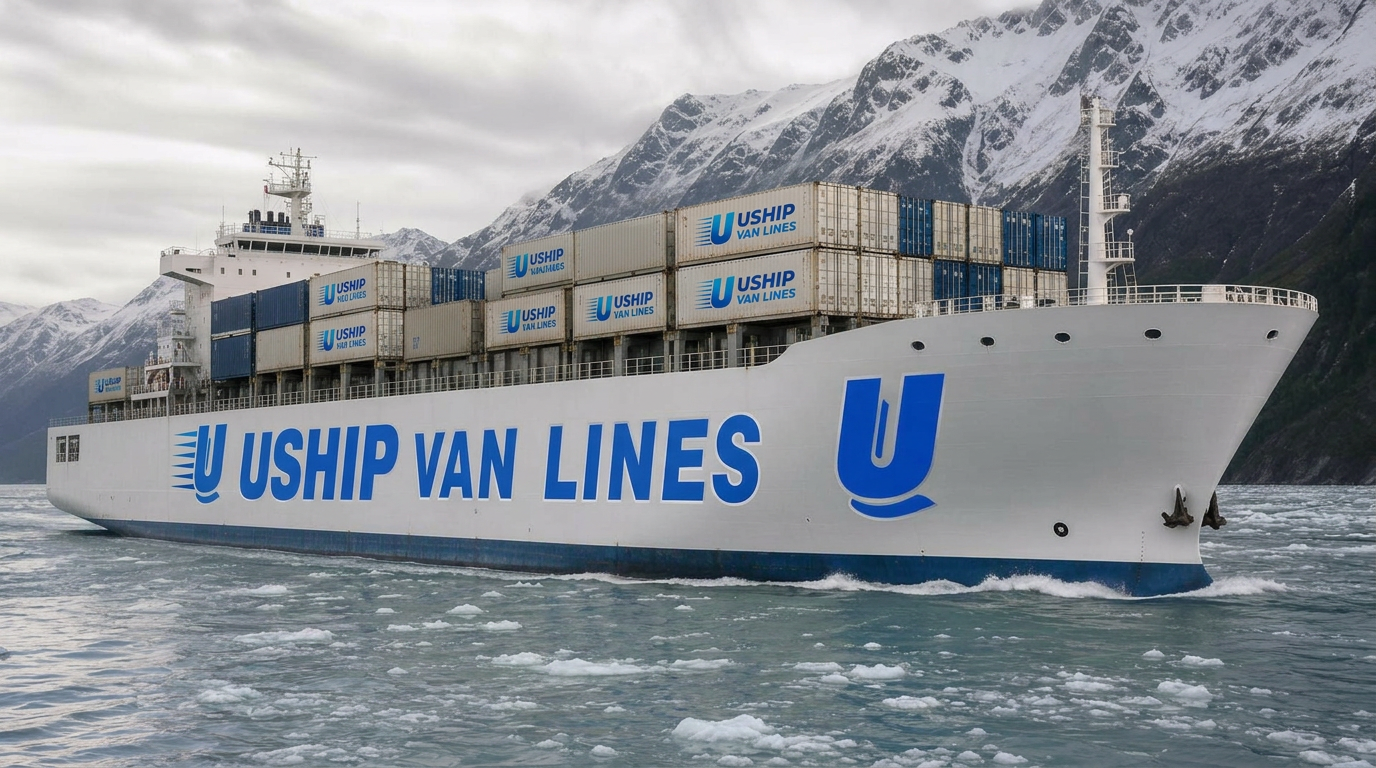
Moving from Alaska to La Crosse, WI
Moving from Alaska to La Crosse, WI covers roughly 2,400 miles and requires coordinated logistics across multiple transportation modes. Your household goods travel by barge from Alaska ports to the Port of Tacoma, then overland through the northern route corridor into Wisconsin's scenic Driftless Region.
Best Alaska & Hawaii Movers, powered by UShip Van Lines, specializes in Alaska-origin moves with transparent pricing and experienced coordination. Request a free quote to see exactly what your Alaska-to-La Crosse move will cost based on your inventory and timeline.
Route overview
Understanding the Alaska to La Crosse Moving Route
Your move begins with pickup anywhere in Alaska—Anchorage, Fairbanks, the Mat-Su Valley, Kenai Peninsula, or even remote bush communities. Goods are consolidated and transported to either the Port of Anchorage or Whittier for barge loading to Tacoma. The ocean leg takes 5–7 days depending on weather and vessel schedule.
After customs clearance and port unloading in Tacoma, your shipment travels approximately 1,800 miles overland through Washington, Idaho, Montana, and into western Wisconsin. The I-90 corridor provides the primary route, with final delivery into La Crosse via Highway 53 or I-90 directly.
La Crosse sits at the confluence of the Mississippi, Black, and La Crosse rivers, offering a dramatically different climate and geography from Alaska. Most moves arrive between late spring and early fall when both Alaska barge schedules and Midwest weather cooperate optimally.
How the moving process works
How Your Alaska to La Crosse Move Works
-
Free Quote and Planning – Contact us with your origin location in Alaska, destination address in La Crosse, and approximate inventory. We'll provide a detailed estimate covering barge, overland transport, and any additional services like packing or vehicle shipping.
-
Pre-Move Survey – For larger moves (3+ bedrooms), we conduct a virtual or in-person survey to assess volume, identify fragile items, and plan for any specialized handling requirements like pianos, artwork, or antiques.
-
Packing and Alaska Pickup – Professional crews pack (if selected) and load your belongings in Alaska. Goods are transported to the departure port in Anchorage or Whittier, consolidated into shipping containers rated for marine transport.
-
Barge Transit to Tacoma – Your containerized shipment sails to the Port of Tacoma over 5–7 days. Marine-grade containers protect against saltwater, temperature fluctuations, and movement during ocean transit.
-
Customs and Port Processing – Upon arrival in Tacoma, containers clear customs (routine for domestic Alaska moves), are unloaded, and transferred to overland carriers within 1–2 business days.
-
Overland Transport to Wisconsin – Long-haul trucks carry your shipment east through the northern tier, typically taking 4–6 days depending on weather and required rest stops for driver compliance.
-
Final Delivery in La Crosse – Crews unload at your Wisconsin residence, place furniture, and remove packing materials. You'll complete a final inventory check and delivery confirmation before the crew departs.
Estimated moving costs
What Does an Alaska to La Crosse Move Cost?
For a typical 2–3 bedroom household (approximately 6,000–9,000 pounds), expect total moving costs between $8,500 and $16,000. Studio or 1-bedroom moves may range $4,500–$7,500, while larger 4–5 bedroom homes can exceed $18,000–$25,000.
Key Cost Drivers:
- Volume and weight – Pricing is primarily based on cubic feet or pounds shipped; larger inventories cost proportionally more
- Barge scheduling – Peak summer sailings (May–September) typically cost 10–20% more than shoulder or winter departures
- Alaska origin accessibility – Remote locations (Kodiak, Bethel, Nome) require additional positioning costs; Anchorage and Mat-Su Valley pickups are most economical
- Packing services – Professional packing adds $800–$2,500 depending on home size and fragile item quantity
- Vehicle shipping – Adding a car or truck to your barge shipment costs $1,200–$2,800 depending on vehicle size
- Storage – If you need warehouse storage in Tacoma or Wisconsin between move legs, expect $150–$400 per month
- Insurance coverage – Full-value protection adds 1–3% of declared shipment value
We provide detailed, itemized quotes with no hidden fees. Actual costs depend on your specific inventory, services selected, and move dates. Request your personalized estimate to see exactly what your Alaska-to-La Crosse move will cost.
Estimated transit times
How Long Does the Move Take?
Door-to-door transit from Alaska to La Crosse typically requires 14–21 days under normal conditions. This timeline breaks down into distinct phases:
Alaska Pickup to Port (1–3 days) – Local transport from your Alaska residence to the Port of Anchorage or Whittier. Anchorage-area pickups often load directly; remote locations require additional positioning time.
Port Staging and Barge Loading (1–4 days) – Containers wait for the next scheduled barge departure. Summer sailings (May–September) depart 2–3 times weekly; winter schedules are less frequent, sometimes adding 3–7 days.
Ocean Transit (5–7 days) – Sailing time from Alaska to Tacoma. Weather, sea conditions, and vessel routing affect timing; winter storms occasionally extend transit by 1–2 days.
Tacoma Port Processing (1–2 days) – Customs clearance, container unloading, and transfer to overland carriers. Peak summer periods may add an extra day.
Overland Transport (4–6 days) – Highway transit through Washington, Idaho, Montana, and into Wisconsin. Weather, especially winter conditions in Montana passes, can extend this leg by 1–3 days.
Final Delivery Window (1–2 days) – Carriers typically provide a delivery window rather than exact date. Most La Crosse deliveries occur on weekdays; weekend delivery may be available for an additional fee.
Expedited service can reduce total transit to 12–16 days during optimal conditions (summer months, priority barge booking, dedicated overland carrier). Off-season moves (October–April) should plan for 18–28 days due to reduced barge frequency and winter weather contingencies.
Regional logistics
Alaska-Specific Moving Logistics
Port Operations and Access
The Port of Anchorage handles the majority of Alaska household goods shipments, with sailings to Tacoma departing from Terminal 2. Whittier serves as an alternative port, particularly useful for Kenai Peninsula and Southcentral Alaska origins. Both ports require advance booking through freight forwarders; walk-up barge space is rarely available. Your moving company coordinates all port documentation and container positioning.
Container Types and Marine Rating
Alaska barge shipments use marine-rated containers (typically 20-foot or 40-foot units) that withstand saltwater exposure, temperature swings, and vessel movement. Goods are wrapped, padded, and secured differently than standard overland moves. Fragile items receive extra protection; marine shipments experience more vibration than highway-only transport.
Vehicle Shipping Considerations
Adding your vehicle to the same barge as household goods saves coordination hassle. Cars must be cleaned (no Alaska mud, especially on undercarriages) and contain no more than ¼ tank of fuel per maritime regulations. Personal items cannot remain in vehicles during ocean transit. Drive-away services (hiring someone to drive your car) are not practical for this route due to distance and lack of direct road connection from Alaska.
Bush and Remote Alaska Pickups
Communities off the road system (Nome, Bethel, Kotzebue, Kodiak Island, Southeast Alaska villages) require additional logistics. Goods may fly via small cargo plane to Anchorage or barge to a hub port before connecting to the Tacoma sailing. These moves add $1,500–$5,000 and 3–7 days. Early planning (8–12 weeks ahead) is essential for remote origins.
Documentation and Regulations
Alaska-to-Lower 48 moves are domestic shipments—no international customs forms required. However, barge manifests and port security paperwork must be filed 48–72 hours before sailing. Agricultural restrictions apply: Alaska-sourced plants, soil, firewood, or certain food items may be restricted entry to Washington or Wisconsin. Your mover handles documentation; you're responsible for restricted item compliance.
Weather Contingency Planning
Alaska weather affects every move. Winter storms can delay port access or postpone barge departures 12–72 hours. Anchorage area roads remain passable year-round, but Seward Highway (access to Whittier) occasionally closes during avalanche events. Barge sailings rarely cancel but may delay departure until conditions improve. Build 2–3 day buffers into your timeline, especially October–April.
Seasonal considerations
Best Time to Move from Alaska to La Crosse
Summer (May–September): Peak Season
Most frequent barge sailings (2–3 per week from Anchorage) and reliable highway conditions make summer the preferred window. Expect premium pricing (10–20% higher) and book 6–8 weeks ahead as capacity fills quickly. Wisconsin's warm, humid summers contrast sharply with Alaska—plan for temperature-sensitive items like chocolates, candles, or electronics.
Fall (October–November): Shoulder Season
Barge frequency decreases to 1–2 weekly departures. Moderate pricing and less competition for capacity. Early winter storms can begin affecting Montana mountain passes by late November, potentially adding 1–3 days to overland transit. Good balance of cost and reliability if you have flexible timing.
Winter (December–March): Off-Season Challenges
Lowest barge frequency (sometimes 1 departure every 7–10 days from Anchorage). Significant weather risks: Alaska port operations may pause during severe storms; Montana and Wyoming I-90 closures during blizzards can delay trucks 2–5 days. Budget-friendly pricing (15–25% below summer rates) but plan for extended timelines (21–28 days typical). Best for flexible, cost-conscious movers.
Spring (April–early May): Transition Period
Barge schedules increase as ice conditions improve and Alaska construction season begins. Pricing transitions from winter lows to summer highs. Midwest spring flooding occasionally affects river-adjacent areas in La Crosse; confirm delivery access with your driver. Generally reliable with moderate costs—book 4–6 weeks ahead.
For predictable timing and maximum barge availability, schedule your move between mid-May and mid-September. For cost savings with flexible deadlines, winter moves offer substantial discounts despite longer transit windows.
Why choose Best Alaska & Hawaii Movers
Why Choose Best Alaska & Hawaii Movers for Your Alaska to La Crosse Move
-
Alaska Logistics Expertise – We coordinate Alaska-origin moves daily, managing barge bookings, port documentation, and weather contingencies that generalist movers often mishandle or underestimate.
-
Transparent, All-Inclusive Pricing – Your quote includes barge fees, overland transport, port charges, and standard liability coverage with no surprise add-ons at delivery. Optional services (packing, full-value insurance, vehicle shipping) are clearly itemized upfront.
-
Powered by UShip Van Lines Network – Access to hundreds of vetted carriers nationwide ensures competitive pricing and reliable capacity even during peak summer season when Alaska moves surge.
-
Single-Point Coordination – One contact manages your entire move from Alaska pickup through La Crosse delivery. You won't chase multiple vendors or coordinate barge/truck handoffs yourself.
-
Flexible Storage Solutions – Need to move out of your Alaska home before your La Crosse residence is ready? We offer secure warehouse storage in Tacoma or Wisconsin at competitive monthly rates, seamlessly integrated into your move timeline.