
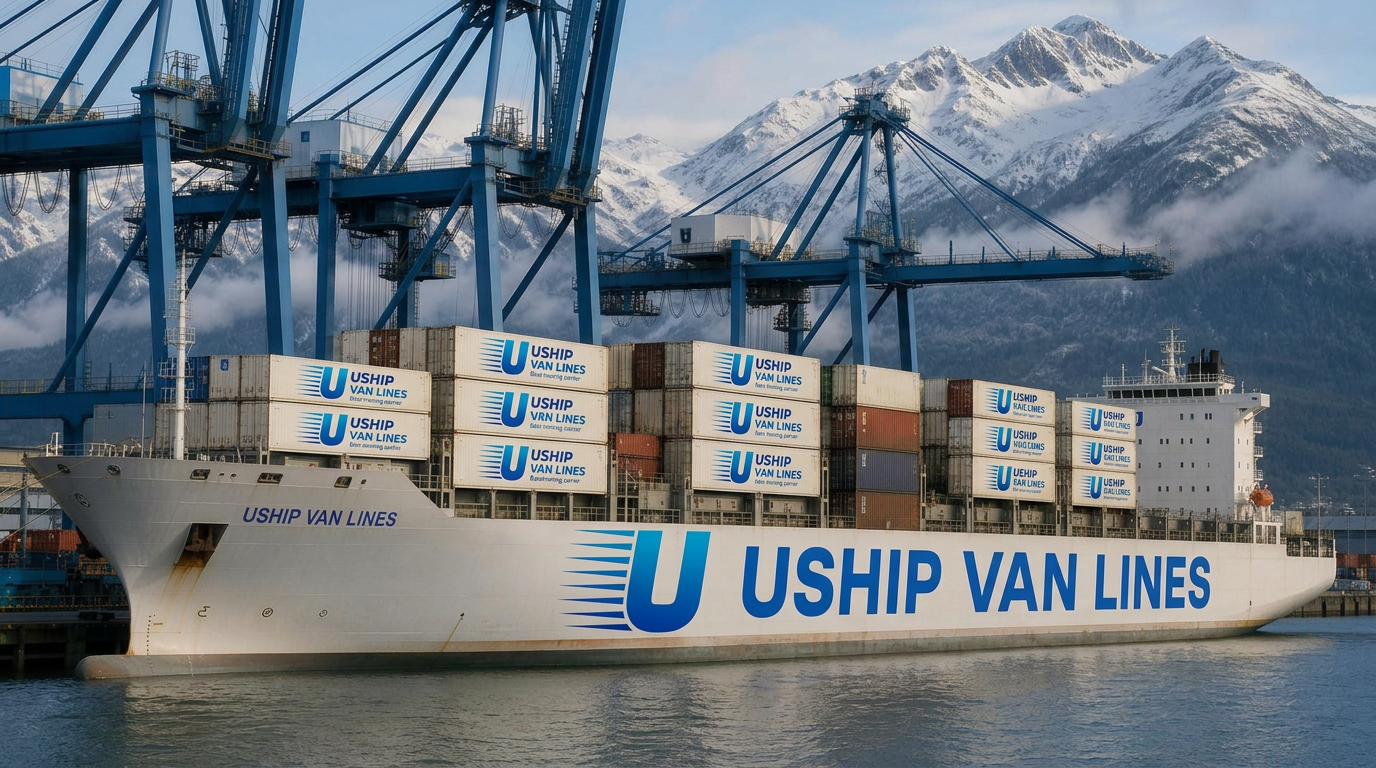
Moving from United States to United States
Planning a cross-country move to or from Alaska or Hawaii requires specialized expertise that standard moving companies simply don't have. Whether you're relocating from the Lower 48 to Anchorage, shipping household goods from Fairbanks to the mainland, or coordinating a move involving Hawaii's island logistics, Best Alaska & Hawaii Movers provides the integrated barge, truck, and last-mile solutions these unique moves demand.
Unlike traditional cross-country movers who can't handle non-contiguous states, we specialize exclusively in Alaska and Hawaii relocations. Our team understands port schedules, marine shipping requirements, customs documentation, and the last-mile challenges of getting your belongings to remote communities. Request a detailed quote today to see how we simplify your cross-country move.
Route overview
Cross-Country Moving to Alaska & Hawaii: What Makes It Different
Cross-country moves to Alaska and Hawaii aren't just longer versions of coast-to-coast relocations—they involve fundamentally different logistics. Alaska moves typically combine overland trucking to Seattle or Tacoma with weekly barge service to the Port of Anchorage, followed by last-mile delivery throughout the state. Hawaii moves require container shipping from West Coast ports (Long Beach, Oakland, Seattle) with inter-island coordination for neighbor island destinations.
For Alaska-bound shipments, your belongings travel by truck to Tacoma, then aboard vessels operated by carriers like TOTE Maritime or Alaska Marine Lines to Anchorage. From there, we coordinate final delivery to Fairbanks, the Mat-Su Valley, Kenai Peninsula, or bush communities requiring special arrangements. Hawaii moves typically use Matson or Pasha Hawaii vessels, with 7–14 days ocean transit depending on your origin port and destination island.
The timeline and cost structure differ significantly from Lower 48 moves. You're paying for both ground transportation and marine shipping, with costs influenced by container type (shared vs. dedicated), barge schedule availability, and seasonal demand. Understanding these Alaska- and Hawaii-specific logistics is critical for accurate budgeting and realistic timeline expectations.
How the moving process works
How Your Cross-Country Alaska or Hawaii Move Works
-
Initial Consultation & Custom Quote – Contact us with your origin city, destination (specific Alaska community or Hawaii island), approximate inventory size, and preferred moving dates. We'll explain whether your route requires barge service, container shipping, or specialized arrangements for remote locations.
-
Pre-Move Survey & Documentation – For larger moves (3+ bedrooms), we conduct a virtual or in-home survey to assess volume accurately. We'll also review prohibited items (firearms regulations for Hawaii, hazardous materials restrictions for barge transport) and advise on vehicle shipping if needed.
-
Packing & Origin Pickup – Professional packers can handle your entire household or just fragile/high-value items. We load your belongings onto our truck, creating a detailed inventory for insurance and customs purposes (required for Hawaii moves).
-
Ground Transport to Port – Your shipment travels by truck to the appropriate gateway: Tacoma for Alaska barge service, or Long Beach/Oakland/Seattle for Hawaii container shipping. Transit takes 1–5 days depending on your origin city.
-
Marine Shipping – Belongings are loaded into shared or dedicated containers and shipped via established Alaska barge routes (weekly departures, 4–7 days ocean transit) or Hawaii container vessels (7–14 days depending on service).
-
Port Clearance & Last-Mile Delivery – After arrival at Port of Anchorage or Hawaii ports (Honolulu, Hilo, Kahului, etc.), we clear your shipment through documentation checks, then coordinate final delivery to your new address. Alaska last-mile can add 1–7 days for interior or remote locations.
-
Unpacking & Post-Move Support – Full-service options include unpacking, furniture placement, and debris removal. We follow up to ensure everything arrived in good condition and address any concerns immediately.
Estimated moving costs
What Cross-Country Alaska & Hawaii Moves Cost
A typical 2-bedroom apartment move from the Lower 48 to Alaska ranges from $5,800–$9,500, while 3-bedroom homes run $9,000–$16,000+. Hawaii moves cost similarly, with 2-bedroom shipments averaging $6,200–$10,500 and larger homes reaching $12,000–$20,000+ depending on island destination and container requirements.
Key cost drivers include:
- Distance to gateway port – Moving from Florida costs more than moving from Seattle due to longer ground transport
- Shared vs. dedicated container – Sharing container space (consolidation) saves 30–40% but adds scheduling flexibility requirements
- Barge/vessel schedule – Peak summer season (May–September) sees higher demand and pricing for Alaska; Hawaii rates are more stable year-round
- Last-mile complexity – Delivery to Fairbanks, Mat-Su, or Kenai adds $800–$2,000; bush communities requiring air freight or seasonal barge service cost significantly more
- Packing services – Professional full-pack adds $1,200–$3,500 depending on home size
- Vehicle shipping – Cars to Alaska via barge run $1,800–$3,200; to Hawaii $1,200–$1,800
- Storage – If barge schedules don't align with your move-out date, short-term storage runs $150–$400/month
We provide itemized quotes with no hidden fees. Costs are estimates based on current fuel surcharges and carrier rates, which fluctuate seasonally. Request a detailed quote to get accurate pricing for your specific route and timeline.
Estimated transit times
How Long Your Cross-Country Move Takes
Alaska moves typically require 12–28 days door-to-door from Lower 48 origins:
- Ground transport to Tacoma: 1–5 days (faster from West Coast, longer from East Coast)
- Port staging & loading: 1–3 days (depends on barge schedule alignment)
- Ocean transit to Anchorage: 4–7 days (weekly TOTE/Alaska Marine Lines departures)
- Anchorage port clearance: 1–2 days
- Last-mile delivery: Same day for Anchorage metro; 1–3 days for Fairbanks, Mat-Su, Kenai; 3–14 days for bush communities on seasonal barge schedules
Hawaii moves run 14–35 days depending on origin and island:
- Ground transport to West Coast port: 1–6 days
- Container staging & vessel loading: 2–5 days
- Ocean transit: 7–14 days (Matson/Pasha schedules vary by origin port and destination island)
- Port clearance & customs: 1–3 days (Hawaii agricultural inspections add time)
- Final delivery: Same day for Oahu; 1–5 days for neighbor islands requiring inter-island barge or additional ground transport
Expedited options are limited by fixed barge/vessel schedules, but we can prioritize your shipment for first-available departure and fastest last-mile routing. Off-season moves (October–April for Alaska) often move faster due to lower port congestion.
Regional logistics
Alaska & Hawaii Moving Logistics You Should Understand
Alaska barge considerations: Most household shipments route through the Port of Tacoma, then sail to the Port of Anchorage aboard TOTE Maritime Alaska or Alaska Marine Lines vessels. Barges depart weekly year-round, with increased frequency May–September. Your belongings travel in weather-protected containers or trailers. Alaska state regulations prohibit certain items (some firearms require special permits; ammunition is restricted). Vehicle shipping uses the same vessels; cars must be cleaned (undercarriage inspections required) and in running condition.
Hawaii container shipping: Household goods ship in 20' or 40' containers (shared or exclusive use) from Long Beach, Oakland, or Seattle. Matson and Pasha Hawaii operate regular schedules to Honolulu, with connecting barge service to Hilo, Kahului, Nawiliwili, and Kapalua. Hawaii has strict agricultural regulations—no soil, certain plants, fresh produce, or wooden packing materials. USDA and Hawaii Department of Agriculture inspect all shipments. Vehicle shipping to Hawaii requires title documents, registration, and safety inspection appointments upon arrival.
Remote Alaska destinations: Communities not on the road system (Dutch Harbor, Nome, Kotzebue, Bethel, and many bush villages) require seasonal barge service or air freight. These moves demand specialized planning and significant lead time. Winter ice roads to some communities operate January–March only.
Last-mile challenges: Alaska interior deliveries (Fairbanks, North Pole, Delta Junction) add 1–3 days from Anchorage. Gravel highway conditions, narrow roads, and weather delays are common. Hawaii neighbor island deliveries require inter-island barge coordination, adding 2–5 days and $500–$1,500 to total costs.
Documentation requirements: Alaska moves require standard inventory lists. Hawaii moves require detailed customs declarations listing all items, with emphasis on restricted agricultural products. We handle all paperwork, but you'll need to review and sign customs forms.
Seasonal considerations
Best Times to Move Cross-Country to Alaska & Hawaii
Spring (March–May): Alaska barge schedules ramp up as ice conditions improve. Early May is ideal for securing summer delivery before peak pricing hits. Hawaii moves see moderate demand; weather is excellent for both ocean transit and settling in.
Summer (June–August): Peak season for Alaska relocations. Families moving for school years, seasonal workers, and retirees create high demand. Expect premium pricing and book 6–8 weeks ahead to secure preferred barge departures. Road construction season in Alaska can complicate last-mile delivery to interior locations. Hawaii moves remain steady; tropical storm season begins in June but rarely impacts container shipping.
Fall (September–November): Alaska barge frequency begins tapering in late September. Excellent value period for moves, though winter weather can arrive early in northern communities. Hawaii moves are ideal—post-summer pricing, calm ocean conditions, and lower port congestion.
Winter (December–February): Alaska winter moves are possible but challenging. Barge schedules reduce frequency; cold-weather packing precautions necessary; last-mile delivery to remote areas may require waiting for spring ice road access. Significant cost savings available for flexible movers. Hawaii winter moves are popular with mainland snowbirds; book early for January–February departures.
Hurricane season note: While Hawaii container vessels rarely delay for tropical storms, September–November can see occasional schedule adjustments. We monitor weather and reroute when necessary.
Why choose Best Alaska & Hawaii Movers
Why Best Alaska & Hawaii Movers for Your Cross-Country Relocation
-
Non-contiguous state specialists – We exclusively handle Alaska and Hawaii moves, so we know every port, barge schedule, customs requirement, and last-mile solution. Mainland-only movers subcontract these details; we own the entire process.
-
Integrated logistics network – Powered by UShip Van Lines, we coordinate ground transport, marine shipping, port clearance, and final delivery as a single point of contact. You never juggle multiple vendors.
-
Transparent, itemized pricing – Our quotes break down ground, ocean, last-mile, and service costs separately. No surprise fees at delivery. We explain seasonal pricing fluctuations and offer cost-saving alternatives (shared containers, flexible scheduling).
-
Experienced with remote & challenging deliveries – From bush Alaska to Molokai, we've delivered to communities that mainstream movers won't serve. We know which routes require seasonal planning, ice road timing, or air freight alternatives.
-
Real-time shipment tracking – Monitor your move from origin pickup through ocean transit to final delivery. We provide barge departure/arrival updates and last-mile ETAs so you're never wondering where your belongings are.