
Moving from United States to Hawaii
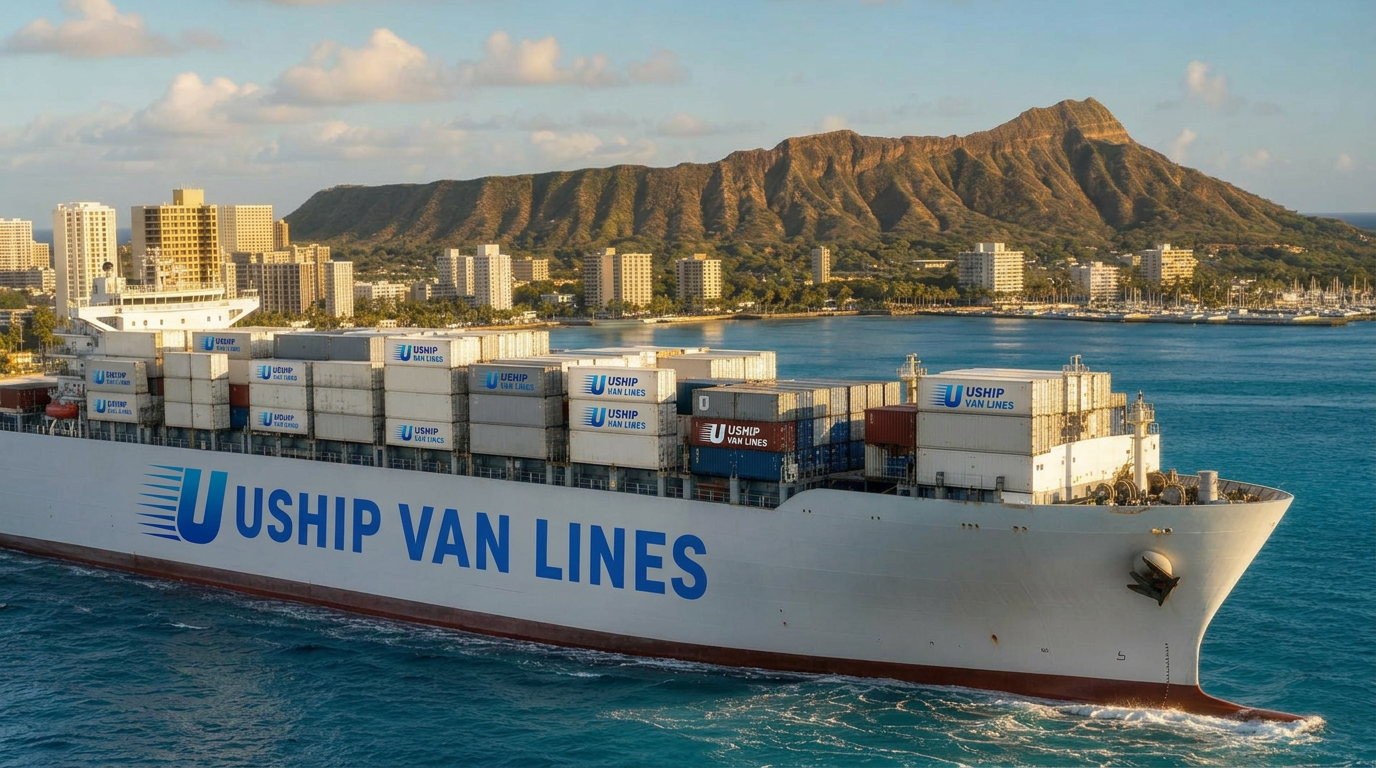
Moving from the continental United States to Hawaii represents one of the most unique domestic relocations you'll ever make. Unlike a traditional interstate move, your household goods will travel by ocean container from West Coast ports—typically Long Beach or Oakland—to Honolulu, then potentially onward to your final island destination.
Best Alaska & Hawaii Movers, powered by UShip Van Lines, specializes in these complex island moves. We coordinate every step from mainland pickup through ocean transit to your new Hawaiian home. Request your free quote today to start planning your island relocation with confidence.
Route overview
How Your Mainland-to-Hawaii Move Works
Your belongings travel by truck from anywhere in the United States to consolidation points near Long Beach or Oakland, California. From there, they're loaded into ocean containers aboard Matson or Pasha vessels for the 5–7 day voyage to Honolulu. If you're moving to Maui, Kauai, or the Big Island, goods continue via inter-island barge—adding another 3–7 days to your timeline.
This multi-leg journey requires specialized expertise in both over-the-road logistics and maritime shipping regulations. Hawaii's strict agricultural inspection requirements, container booking cycles, and island-specific delivery challenges make working with an experienced Hawaii moving specialist essential.
Most mainland-to-Hawaii moves take 14–28 days door-to-door, with variables including your origin city distance from West Coast ports, container availability, vessel schedules, and final island destination. Weather, port congestion, and seasonal demand—especially during summer and military PCS season—can extend timelines.
How the moving process works
Your Step-by-Step Moving Process
-
Free consultation and quote – We assess your inventory, origin location, destination island, and timeline to provide accurate cost estimates and identify items prohibited or restricted in Hawaii (certain plants, soil, animals).
-
Mainland pickup and consolidation – Our partner carriers collect your household goods from anywhere in the lower 48 states and transport them to our California consolidation facility near Long Beach or Oakland.
-
Container loading and port delivery – Your items are professionally loaded into shared (LCL) or dedicated (FCL) ocean containers, sealed, and delivered to the port facility for agricultural pre-inspection and vessel booking.
-
Ocean transit to Honolulu – Matson or Pasha vessels depart weekly from West Coast ports, arriving in Honolulu 5–7 days later. Your container clears U.S. Customs and Hawaii Department of Agriculture inspection upon arrival.
-
Inter-island transfer (if applicable) – For Maui, Kauai, or Big Island destinations, containers transfer to inter-island barges operated by Young Brothers or Aloha Marine Lines, adding 3–7 days.
-
Final delivery and unloading – Once cleared at your destination island port, we coordinate delivery to your new home, unload your belongings, and remove packing materials.
-
Post-move support – We follow up to ensure everything arrived safely and address any questions about vehicle shipping, storage needs, or additional services.
Estimated moving costs
What to Expect: Moving Costs
A typical 2–3 bedroom mainland-to-Hawaii move costs $4,500–$9,500, depending on multiple factors. Moves from West Coast cities (Seattle, Los Angeles, San Diego) fall on the lower end, while East Coast or Midwest origins add $1,500–$3,000 in mainland trucking.
Key cost drivers include:
- Origin distance from California ports – The farther from Long Beach/Oakland, the higher your mainland leg costs
- Container type – Shared container space (LCL, charged per cubic foot) versus full 20' or 40' container (FCL)
- Volume – More belongings mean more container space; average 3BR home = 800–1,200 cubic feet
- Destination island – Oahu deliveries cost less; Maui, Kauai, and Big Island add $800–$1,500 for inter-island barge and delivery
- Timing – Peak season (May–September) sees 15–25% price increases due to demand and limited container availability
- Additional services – Packing, crating for fragile items, vehicle shipping, and storage all add to base costs
These are representative ranges based on typical moves. Every relocation is unique, and final costs depend on your specific inventory, services needed, and current market conditions. Request a detailed quote for accurate pricing tailored to your move.
Estimated transit times
Realistic Timeline: Door-to-Door
Plan for 14–28 days total from mainland pickup to delivery at your Hawaiian home, broken down by leg:
Mainland pickup to California port: 2–7 days depending on your origin state. East Coast and Midwest moves require cross-country trucking; West Coast pickups reach consolidation facilities in 1–3 days.
Port processing and vessel departure: 2–5 days for container loading, agricultural pre-screening, and scheduled vessel departure. Matson and Pasha operate weekly sailings, but booking cutoffs require advance planning.
Ocean transit to Honolulu: 5–7 days for the transpacific voyage from Long Beach or Oakland to Honolulu port facilities.
Customs and inspection: 1–2 days for U.S. Customs clearance and mandatory Hawaii Department of Agriculture inspection (checking for invasive species, prohibited plants, and agricultural contraband).
Inter-island transfer (Maui/Kauai/Big Island only): 3–7 days for barge transport from Honolulu to outer islands, including port processing at both ends.
Final delivery: 1–3 days from port release to scheduled delivery at your residence, depending on island logistics and your delivery location accessibility.
Rush services rarely exist for Hawaii moves due to fixed vessel schedules. Book 4–8 weeks ahead during peak season (summer, military PCS periods) to secure preferred timing.
Regional logistics
Hawaii-Specific Logistics You Must Know
Ports and routing: Virtually all mainland-to-Hawaii household goods flow through Long Beach or Oakland to Honolulu, regardless of your final island. Only Honolulu has full container port facilities; Maui, Kauai, and Big Island receive goods via inter-island barge from Oahu.
Agricultural restrictions: Hawaii enforces strict biosecurity laws. Prohibited items include most live plants, soil, certain seeds, fresh fruits/vegetables, and various animal products. The Hawaii Department of Agriculture inspects every container. Non-compliant items are confiscated and destroyed—without reimbursement. Review the Hawaii Department of Agriculture's plant and animal quarantine requirements before packing.
Vehicle shipping: Cars, trucks, and motorcycles ship separately from household goods, typically via roll-on/roll-off (RORO) vessel service. Matson and Pasha both offer vehicle transport ($1,000–$1,800 per standard car from West Coast). Vehicles must be clean (no soil), contain less than ¼ tank fuel, and pass agricultural inspection. We can coordinate vehicle shipping alongside your household move.
Container options: Shared container (LCL) works for smaller moves (studio to 2BR), with costs based on cubic footage. Full container (FCL) makes sense for 3+BR homes or when you want exclusive container access. Standard containers are 20' (1,150 cu ft) or 40' (2,350 cu ft).
Last-mile delivery challenges: Outer island deliveries face unique constraints. Roads to remote areas (Hana on Maui, North Shore Kauai, Volcano/Puna on Big Island) may not accommodate full-size moving trucks. Narrow streets, steep grades, and overhead clearances sometimes require shuttle trucks or multiple trips, potentially adding costs and time.
Storage options: We offer mainland storage if your Hawaii housing isn't ready, and Honolulu-based storage for flexible delivery timing. Climate-controlled warehousing protects belongings from Hawaii's humidity while you finalize living arrangements.
Seasonal considerations
When to Move: Seasonal Factors
Summer (June–August): Peak moving season coincides with school breaks and military PCS cycles. Expect 20–30% higher costs, limited container availability, and longer booking lead times (6+ weeks recommended). Ports experience maximum congestion. Weather is ideal, but hurricanes become possible starting late summer.
Fall (September–November): Hurricane season peaks in September–October, though direct hits on Hawaii remain rare. Tropical storms can delay vessel departures or port operations 2–5 days. Demand begins tapering after Labor Day, with moderately better availability and pricing than summer. Book 4–6 weeks ahead.
Winter (December–February): Lowest demand means better pricing (10–20% below peak) and shorter booking windows (3–4 weeks often sufficient). Winter storms can affect mainland pickup and West Coast port operations but rarely impact transpacific crossings. Holiday periods (Thanksgiving–New Year's) see brief demand spikes and carrier schedule changes.
Spring (March–May): Shoulder season with moderate demand, good availability, and reasonable pricing. Excellent weather both mainland and Hawaii. Military PCS activity begins ramping up in May. Book 4–5 weeks ahead for best selection. Ideal window for families wanting to settle before summer or new school year.
No season is "bad" for Hawaii moves, but summer requires the most advance planning while winter offers the best value for flexible schedules.
Why choose Best Alaska & Hawaii Movers
Why Choose Best Alaska & Hawaii Movers
-
Island moving specialists – We focus exclusively on Alaska and Hawaii relocations, giving us deep expertise in ocean shipping, agricultural compliance, and island logistics that general moving companies simply don't have.
-
Single-source coordination – One point of contact manages your entire move from mainland pickup through ocean transit to final island delivery, eliminating the confusion of coordinating multiple carriers yourself.
-
Transparent pricing and realistic timelines – We provide detailed quotes breaking down each cost component and set honest expectations for transit times, seasonal factors, and potential delays.
-
Powered by UShip Van Lines network – Access to nationwide pickup coverage and vetted carrier partners ensures professional service whether you're moving from Maine or California.
-
White-glove Hawaii expertise – We guide you through agricultural restrictions, vehicle shipping, documentation requirements, and island-specific delivery challenges that surprise first-time Hawaii movers.