
Moving from South Carolina to Alaska
Moving from South Carolina to Alaska represents one of the most logistically complex domestic relocations. Your household goods will travel over 4,000 miles—first overland to the Port of Tacoma, then via marine barge across the Gulf of Alaska, and finally by truck to your new Alaska home.
Best Alaska & Hawaii Movers, powered by UShip Van Lines, specializes in this exact route. We coordinate every leg of your cross-country and marine journey, from Charleston or Columbia to Anchorage, Fairbanks, or the Mat-Su Valley. Ready to start planning? Request your free moving quote today.
Route overview
South Carolina to Alaska: Route and Method
Your belongings leave South Carolina via long-haul truck, traveling approximately 3,000 miles across the continental U.S. to the Port of Tacoma, Washington. This overland leg typically takes 5–7 days, depending on pickup location and consolidation schedules.
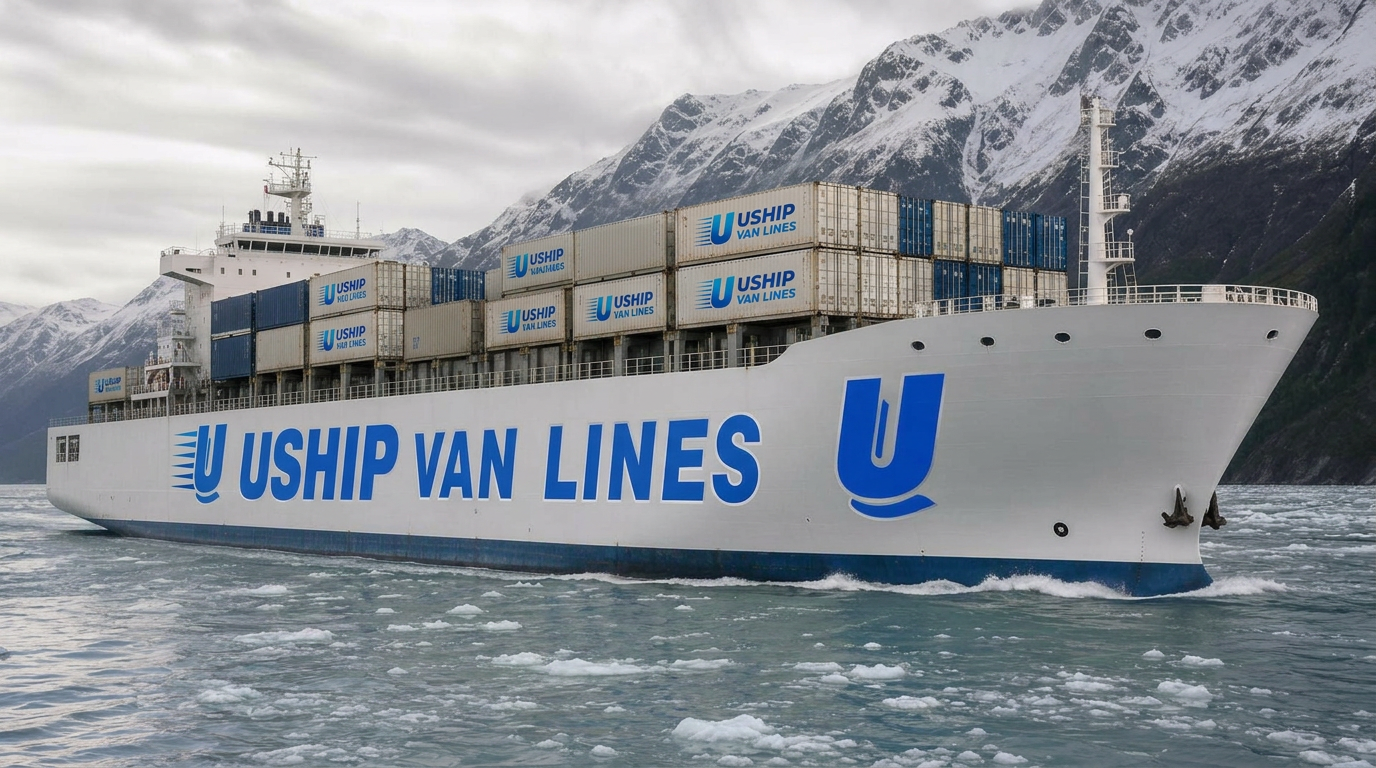
From Tacoma, your shipment boards a weekly marine barge bound for the Port of Anchorage. The ocean voyage covers roughly 1,400 nautical miles and takes 7–10 days in calm conditions, longer during winter weather events. Once the barge docks in Anchorage, your goods clear customs (yes, even domestic Alaska shipments require documentation), then transfer to local trucks for final delivery throughout the state—whether you're moving to Anchorage proper, the Matanuska-Susitna Borough, Fairbanks, the Kenai Peninsula, or even remote bush communities accessible by seasonal roads.
This multi-modal process requires precise coordination between trucking companies, marine carriers, and Alaska-based delivery partners. Working with a mover experienced in Alaska logistics eliminates the headache of managing three separate vendors yourself.
How the moving process works
How Your South Carolina to Alaska Move Works
-
Free quote and survey – Share your inventory and destination (specific Alaska city matters for last-mile costing). We'll provide a detailed estimate covering all three legs: pickup, barge, and Alaska delivery.
-
Schedule your pickup – South Carolina pickup windows are typically flexible. We'll arrange a date that aligns with the next available Tacoma barge departure to minimize warehouse storage time.
-
Overland transport to Tacoma – Your household goods load onto a climate-controlled truck and travel via I-40 and I-84 corridors to Washington. Transit takes 5–7 days; shipments are tracked in real time.
-
Port staging and barge loading – At the Port of Tacoma, your container is inspected, documented, and loaded onto the Alaska Marine Lines or Span Alaska vessel. Barge sailings depart weekly during peak season (May–September), biweekly in winter.
-
Marine transit to Alaska – The barge sails through the Inside Passage and across the Gulf of Alaska. Ocean transit averages 7–10 days in summer, up to 14 days in winter due to weather holds.
-
Anchorage port clearance – Upon arrival, your shipment clears Alaska customs documentation (even domestic moves require this for marine cargo). Clearance typically takes 1–2 business days.
-
Final delivery – A local Alaska trucking partner delivers to your new home. Anchorage and Wasilla deliveries happen within 2–3 days of clearance; Fairbanks, Kenai, or Soldotna add 1–3 days; remote areas may require special scheduling or seasonal road access.
-
Unloading and inspection – You'll inspect your shipment upon delivery and note any damage on the driver's paperwork before signing. Keep all documentation for potential insurance claims.
Estimated moving costs
What Does a South Carolina to Alaska Move Cost?
For a typical 2–3 bedroom household (approximately 7,000–10,000 pounds), expect to invest $8,500–$14,500 for full-service door-to-door moving from South Carolina to Anchorage or nearby Railbelt communities. Fairbanks and Kenai Peninsula destinations add $800–$1,800 due to longer last-mile hauls. Remote bush locations requiring barge-plus-air or seasonal ice road access can exceed $18,000.
Key cost drivers:
- Cubic footage and weight – Marine barge pricing is volume-sensitive. A studio apartment (2,000 lbs) may cost $4,200–$5,800, while a 4-bedroom home (12,000+ lbs) can reach $16,000–$22,000.
- Packing services – Professional packing adds $800–$2,200 but protects against marine transit vibration and humidity. Alaska movers strongly recommend it for fragile items.
- Tacoma port fees – Dock handling, documentation, and inspection add $400–$700 per shipment.
- Seasonal demand – May through August is peak Alaska moving season. Booking during shoulder months (April, September–October) can save 10–15%.
- Vehicle shipping – Cars and trucks ship separately via roll-on/roll-off barge. Expect $1,400–$2,100 per vehicle from Tacoma to Anchorage.
- Final delivery distance – Anchorage-to-Fairbanks last-mile haul adds significant trucker time; Homer or Seward on the Kenai require expensive ferry or long haul around Turnagain Arm.
- Insurance – Basic carrier liability covers $0.60/lb. Full-value replacement insurance costs 1–2% of declared shipment value but provides peace of mind for a 4,000+ mile journey.
We never quote guaranteed prices without reviewing your specific inventory and delivery address. Request a detailed written estimate to understand your exact costs.
Estimated transit times
How Long Does South Carolina to Alaska Moving Take?
Door-to-door transit from South Carolina to Alaska typically requires 18–28 days during peak summer season, and 25–40 days in winter when barge schedules slow and weather causes delays.
Breakdown by leg:
- South Carolina pickup to Tacoma port: 5–7 days overland
- Tacoma warehouse staging: 1–5 days (depends on next barge departure)
- Barge transit to Anchorage: 7–10 days (summer), 10–14 days (winter)
- Anchorage customs clearance: 1–2 business days
- Final delivery to your door: 1–3 days (Anchorage/Wasilla), 3–5 days (Fairbanks/Kenai), 5–10 days (remote areas)
Weather is the wild card. Gulf of Alaska storms, especially September through March, can delay barge departures or slow ocean transit. Winter also brings reduced sailing frequency—barges may run biweekly instead of weekly, adding 7–10 days to your overall timeline. Plan buffer time if you have hard move-in deadlines like a lease start date or closing.
Regional logistics
Alaska-Specific Moving Logistics
Ports and documentation: All barge shipments to Alaska require a Bill of Lading and a Household Goods Manifest for Port of Anchorage clearance, even though this is a domestic move. Your mover prepares these documents, but you must provide accurate inventory descriptions. Prohibited items include firearms (must ship separately via FFL dealer), hazardous materials (paint, propane, gasoline), and perishable food.
Vehicle shipping: Cars and trucks ship separately on the same barge system. The vehicle travels as rolling cargo, driven on and off the vessel. You'll need to leave the gas tank under ¼ full and remove all personal items (insurance doesn't cover contents left in vehicles). Vehicle barge transit mirrors household goods: 7–10 days Tacoma to Anchorage. Cost runs $1,400–$2,100 per vehicle. The Alaska DMV requires registration within 30 days of establishing residency; bring your South Carolina title and be prepared for a VIN inspection.
Last-mile realities: Alaska's road system is limited. Anchorage, Eagle River, Wasilla, Palmer, Fairbanks, and the Kenai Peninsula (Homer, Soldotna, Seward) are accessible year-round by truck. Remote communities like Bethel, Nome, Kodiak, or Southeast Alaska towns (Juneau, Sitka, Ketchikan) require additional barge legs or air freight—dramatically increasing cost and time. Always specify your exact Alaska delivery address when requesting quotes.
Storage options: If your Alaska housing isn't ready when your shipment clears Anchorage, short-term storage (30–90 days) is available at Anchorage-area warehouses for $150–$400/month depending on volume. Long-term storage costs less but requires advance arrangement.
Insurance: Marine transit exposes cargo to humidity, vibration, and rough seas. Standard carrier liability ($0.60/lb) won't replace a damaged heirloom or electronics. Full-value protection costs 1–2% of declared value but covers repair or replacement. For a $50,000 shipment, that's $500–$1,000—cheap compared to out-of-pocket replacement of a water-damaged furniture set.
Military and government moves: PCS orders to Joint Base Elmendorf-Richardson (JBER) or Eielson AFB? The military covers your move, but you can still hire commercial movers for overflow or specialty items not included in your government weight allowance. We coordinate with TMO offices regularly.
Seasonal considerations
Best Time to Move from South Carolina to Alaska
Summer (May–August): Peak season for Alaska moves. Weekly barge sailings, predictable weather, and dry conditions for final delivery. Roads to remote areas are fully accessible. Trade-off: highest prices and tight truck capacity. Book 6–8 weeks ahead.
Shoulder season (April, September–October): Weekly barge service continues through September, then tapers to biweekly in October. Costs drop 10–15%, and you'll have more flexible pickup dates. Early snowfall can complicate last-mile delivery in interior Alaska (Fairbanks, Delta Junction) after mid-October, but Anchorage and Mat-Su remain accessible.
Winter (November–March): Lowest prices and abundant availability, but barge schedules run biweekly or less frequently. Gulf of Alaska storms cause unpredictable delays—budget an extra 7–14 days. Winter road conditions in Alaska require experienced local drivers; some remote areas become inaccessible until spring thaw. If your destination is off the road system entirely, delivery may wait until breakup (late April/May) or require costly air freight.
Pro tip: South Carolina summers are brutal for loading trucks. If moving in July or August, request early-morning pickup to protect temperature-sensitive items. Alaska summers offer 20+ hours of daylight—great for delivery flexibility but plan window coverings before you arrive.
Why choose Best Alaska & Hawaii Movers
Why Choose Best Alaska & Hawaii Movers for Your South Carolina to Alaska Move
- Alaska specialists, not generalists – We run this exact route year-round. Our team knows Tacoma port schedules, Alaska Marine Lines sailing dates, and last-mile delivery quirks for every Railbelt community and beyond.
- Single point of contact – You'll work with one coordinator who manages overland trucking, barge booking, customs clearance, and final delivery. No phone tag between three different vendors.
- Transparent pricing – We provide itemized quotes covering every leg and fee. No surprise port charges or "destination fees" that appear on moving day.
- Real-time tracking – Monitor your shipment's location from South Carolina pickup through barge transit and Alaska delivery via our online portal and SMS updates.
- Powered by UShip Van Lines – Our parent network gives us nationwide reach for your South Carolina pickup and deep Alaska partnerships for your final delivery, combining big-network resources with local expertise.
- Flexible scheduling – We accommodate South Carolina pickup dates that align with barge sailings, minimizing warehouse time and keeping your belongings moving efficiently.