
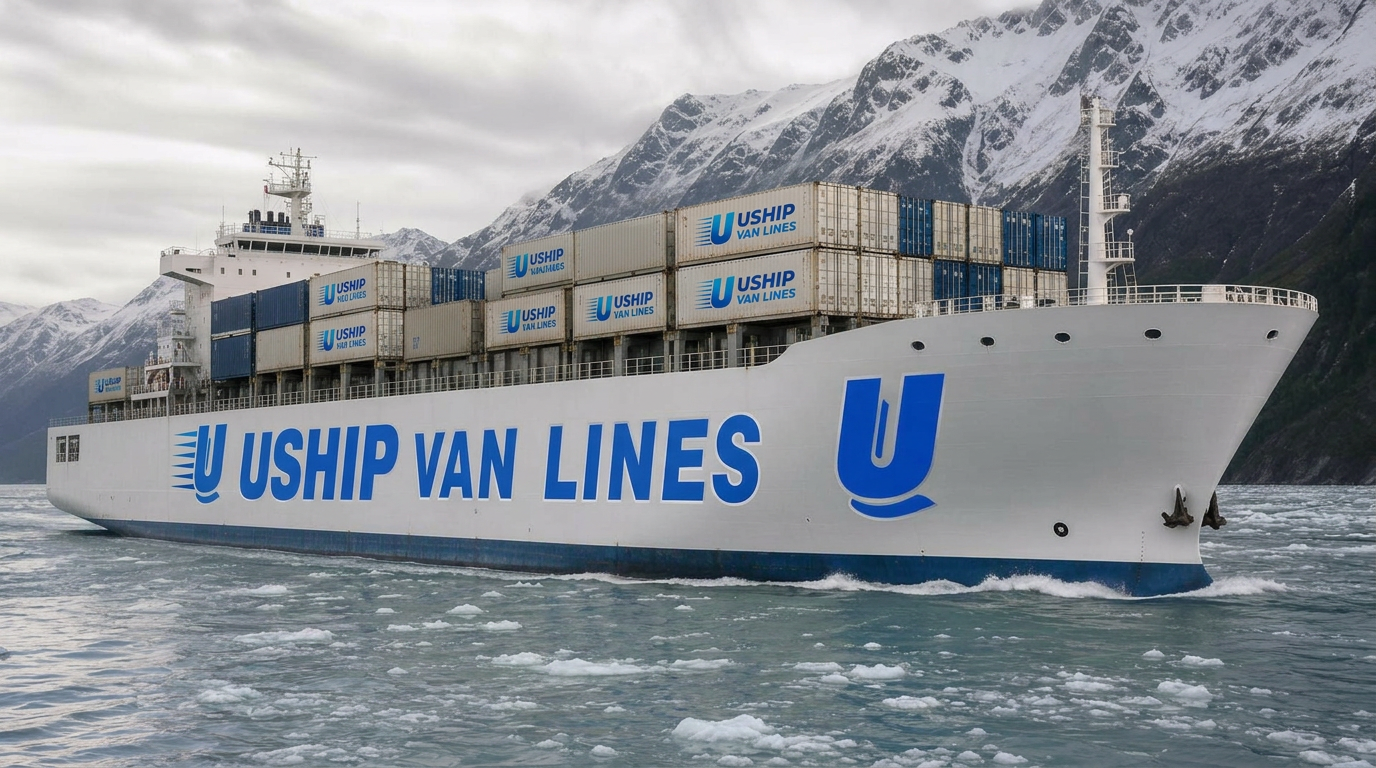
Moving from Mississippi to Alaska
Relocating from Mississippi to Alaska represents one of the most dramatic geographic transitions you can make in North America. You're trading the warm humidity of the Deep South for subarctic winters, leaving Gulf Coast convenience for frontier logistics, and embarking on a move that involves ocean freight, strict timelines, and careful planning.
Best Alaska & Hawaii Movers, powered by UShip Van Lines, specializes in these complex non-contiguous relocations. We coordinate the entire journey—overland transport from Mississippi, barge freight through Tacoma to Alaska's port system, and final delivery whether you're settling in Anchorage, Fairbanks, or a remote community. Ready to start planning your Alaska adventure? Request a free quote today and speak with specialists who understand every phase of this unique move.
Route overview
Understanding the Mississippi to Alaska Moving Route
Your belongings will travel approximately 3,500–4,000 miles from Mississippi to Alaska, combining highway transport with ocean freight. The journey begins with overland pickup anywhere in Mississippi—Jackson, Gulfport, Hattiesburg, Tupelo, or smaller communities—and consolidation for cross-country transport to the Port of Tacoma, Washington. From there, your shipment boards a commercial barge bound for Alaska's port system, typically Port of Anchorage.
This route crosses nearly every climate zone in North America. Your household goods leave the subtropical South, cross the Great Plains and Rocky Mountains, navigate Pacific Northwest ports, then sail through the Inside Passage or Gulf of Alaska before reaching your destination. The complexity requires specialized logistics coordination, strict weather-window planning, and expertise in both continental trucking and Alaska maritime freight.
Unlike moves within the Lower 48, timing is critical. Alaska barge schedules are fixed, weather windows are seasonal, and missing a sailing can delay your move by weeks. Professional coordination ensures your shipment catches the right vessel and arrives when you need it.
How the moving process works
How Your Mississippi to Alaska Move Works: Step-by-Step
1. Initial survey and inventory Our team conducts a detailed assessment of your Mississippi home—whether virtual or in-person—cataloging everything you're moving. We identify items requiring special handling, discuss what cannot ship to Alaska (certain chemicals, perishables, plants), and provide a binding estimate based on cubic footage and services needed.
2. Overland pickup and consolidation On your scheduled date, professional movers arrive at your Mississippi location, pack and load your belongings into our trucks, and transport everything cross-country to our consolidation point near Tacoma, Washington. This overland leg typically takes 5–7 days and covers approximately 2,500 miles.
3. Port processing and containerization At the Tacoma staging facility, your shipment is inventoried, containerized according to Alaska barge requirements, and prepared for ocean freight. Items are secured to prevent shifting during the 1,500-mile sea voyage, and all documentation—including customs paperwork if you're shipping vehicles—is finalized.
4. Barge transport to Alaska Your container boards a scheduled barge to Alaska, typically to the Port of Anchorage. This ocean leg takes 7–10 days depending on route, weather, and whether the vessel makes intermediate stops at other Alaska ports. Barges generally sail weekly during peak season (May–September), less frequently in winter.
5. Alaska port clearance and inland transport Upon arrival in Alaska, your shipment clears the port, is loaded onto Alaska-equipped trucks, and transported to your final destination. If you're moving to Anchorage or the Mat-Su Valley, this is straightforward. Fairbanks adds another 350+ miles. Remote or off-road-system communities require additional arrangements (bush plane, winter ice road, or seasonal barge).
6. Final delivery and placement Our Alaska-based crew delivers your belongings to your new home, unloads, and places furniture according to your instructions. We walk through the inventory, address any concerns, and ensure you're settled before completing the job.
7. Vehicle shipping (if applicable) If you're shipping a vehicle separately, it follows a similar route but with specific RoRo (roll-on/roll-off) or container requirements, Alaska DMV inspections upon arrival, and different insurance protocols.
Estimated moving costs
What Does a Mississippi to Alaska Move Cost?
Expect to invest $7,500–$14,000 for a typical 2–3 bedroom household moving from Mississippi to Alaska. Studio or 1-bedroom moves may range $5,000–$7,500, while 4+ bedroom homes or shipments exceeding 1,500 cubic feet can reach $16,000–$22,000 or more.
Key cost drivers include:
- Volume and weight: Alaska moves are priced primarily by cubic footage, with weight as a secondary factor. A 1,200 cubic-foot load (typical 3-bedroom home) costs significantly more than a 400 cubic-foot studio.
- Origin accessibility: Pickup from rural Mississippi locations may incur additional mileage fees compared to metro Jackson or Gulfport pickups.
- Packing services: Full-service packing typically adds $1,200–$2,500, but it's often worth it for fragile items facing a 3,500-mile journey including ocean freight.
- Alaska destination: Anchorage or Mat-Su deliveries are least expensive. Fairbanks adds $800–$1,500. Off-road-system communities (Bethel, Kodiak, Nome) require custom quotes due to bush delivery logistics.
- Season and timing: Summer peak season (May–August) commands premium pricing due to high demand and optimal weather. Winter moves can save 10–15% but face stricter schedules.
- Vehicle shipping: Adding a car typically costs $2,200–$3,200 from Mississippi to Alaska, depending on vehicle type and whether you use container or RoRo shipping.
- Insurance and valuation: Basic liability is included, but full-value protection for high-value households adds 1–3% of declared value.
We provide transparent, binding estimates with no hidden fees. Costs are finalized after your detailed inventory, ensuring you know exactly what you'll pay before committing.
Estimated transit times
Realistic Timeline: Mississippi to Alaska Door-to-Door
Plan for 18–28 days total transit time from pickup in Mississippi to delivery in Alaska, broken down as follows:
Overland to Tacoma: 5–7 days Your shipment travels approximately 2,500 miles from Mississippi to the Pacific Northwest. Transit time depends on whether the truck runs direct or makes intermediate stops for other shipments along the route.
Port staging and containerization: 2–5 days At the Tacoma consolidation point, your goods are inventoried, containerized, and prepared for barge loading. This window accommodates the next available sailing.
Barge transit to Alaska: 7–10 days Ocean freight from Tacoma to Anchorage typically takes 7–10 days depending on weather, route (Inside Passage vs. Gulf of Alaska), and whether the barge makes stops at Kodiak, Whittier, or other Alaska ports en route.
Alaska port processing: 1–3 days After the barge docks in Anchorage, containers are offloaded, cleared, and transferred to Alaska trucking for final delivery.
Last-mile delivery: 1–2 days (Anchorage/Mat-Su), 2–4 days (Fairbanks or beyond) Final delivery to your Alaska address depends on distance and road conditions. Anchorage and Mat-Su Valley are quickest. Fairbanks adds highway time. Remote communities may require waiting for bush delivery schedules.
Seasonal note: Winter moves can extend timelines by 3–7 days due to weather delays, reduced barge frequency, and Alaska road conditions. Summer moves benefit from optimal weather but face higher demand, requiring early booking to secure your preferred dates.
Regional logistics
Alaska-Specific Logistics You Must Understand
Barge scheduling and booking Unlike Lower 48 moves where trucks run continuously, Alaska barges operate on fixed schedules. Missing your sailing can delay everything by 1–3 weeks. We coordinate your entire timeline—Mississippi pickup, cross-country transport, and Tacoma staging—to ensure your shipment catches the designated vessel.
Port of entry: Anchorage vs. alternatives Most Mississippi-to-Alaska shipments route through Port of Anchorage, Alaska's primary freight hub. However, depending on your final destination, alternative ports may be more efficient: Whittier for Prince William Sound access, Kodiak for the island, or even Fairbanks for select shipments. We optimize routing based on your specific address.
Vehicle shipping requirements If shipping a car, Alaska requires a clean exterior (undercarriage inspections at the port), no more than ¼ tank of gas, and specific documentation. Vehicles can ship RoRo (driven onto the barge) or in containers. From Mississippi, container shipping offers better protection for high-value vehicles. Allow an additional 2–3 days beyond household goods for vehicle processing.
Restricted and prohibited items Alaska has strict biosecurity rules. You cannot ship plants, fresh produce, or untreated soil. Hazardous materials (propane tanks, ammunition, certain cleaning chemicals) are prohibited on barges. We provide a detailed checklist during your quote process to avoid costly surprises.
Remote and off-road-system delivery If you're moving to a community not connected to Alaska's highway system (Bethel, Nome, Kotzebue, Barrow, Dillingham, or hundreds of villages), final delivery requires bush planes, seasonal barges, or winter ice roads. These add significant cost and require specialized scheduling. We handle these complex logistics regularly.
Storage options in Alaska If your Alaska housing isn't ready when your shipment arrives, we offer secure storage in climate-controlled Anchorage facilities. This is particularly useful for winter moves when home construction or renovation timelines can slip due to weather.
Unpacking and setup Alaska homes often require special considerations—positioning furniture to account for winter darkness, ensuring appliances work with Alaska electrical systems (standard in most areas, but some remote locations differ), and understanding propane vs. fuel oil heating setups if you're bringing appliances.
Seasonal considerations
When to Move from Mississippi to Alaska: Seasonal Planning
Spring (April–May): Transition season Barge schedules increase as Alaska emerges from winter. Weather is improving but still unpredictable—late snowstorms in Alaska, rain in the Pacific Northwest. This is an excellent time for slightly lower rates than peak summer while avoiding winter challenges. Book 6–8 weeks ahead.
Summer (June–August): Peak moving season Optimal weather, maximum barge frequency (often weekly sailings), and best road conditions throughout Alaska. Expect premium pricing due to high demand, especially for Fairbanks and Mat-Su Valley destinations. The midnight sun provides long working days for loading and unloading. Book 8–12 weeks in advance to secure your preferred dates.
Fall (September–October): Shoulder season value Cooling temperatures, reduced demand, and potential cost savings of 10–15%. Barge schedules begin tapering in late October. Weather is generally cooperative but increasingly variable. Good option for flexible timelines. Book 5–7 weeks ahead.
Winter (November–March): Lowest volume, highest complexity Reduced barge frequency (sometimes bi-weekly or monthly), challenging weather at both ends of the route, and potential ice delays in Alaska ports or on interior highways. However, you'll find the lowest prices and greatest scheduling flexibility. Not recommended if you need guaranteed delivery dates or have strict timelines. Winter moves require 8–10 weeks lead time due to limited sailing windows.
Mississippi departure considerations: Mississippi weather is a minor concern, but spring tornado season (March–May) can occasionally disrupt pickup schedules. Summer heat and humidity won't damage properly packed goods but can make loading physically demanding.
Alaska arrival considerations: Winter deliveries to Fairbanks or interior Alaska may face temperatures as low as -40°F, requiring careful handling of temperature-sensitive items. Remote communities may be accessible only during specific seasons (summer barge, winter ice road).
Why choose Best Alaska & Hawaii Movers
Why Best Alaska & Hawaii Movers for Your Mississippi to Alaska Move
-
Alaska specialist expertise: We focus exclusively on non-contiguous moves. Our team understands barge schedules, Alaska port logistics, winter delivery challenges, and bush community access in ways general movers simply don't. This isn't a side service—it's our core business.
-
Single-source accountability: One company manages your entire move from Mississippi pickup through Alaska delivery. No handoffs to unknown subcontractors, no coordination gaps, no finger-pointing if issues arise. We own the entire process.
-
Transparent, binding estimates: We provide detailed quotes based on actual cubic footage, with all fees disclosed upfront. No surprise charges, no bait-and-switch pricing. What we quote is what you pay, barring only changes you request.
-
Powered by UShip Van Lines infrastructure: Our partnership with UShip Van Lines gives us nationwide pickup capability, established Tacoma consolidation facilities, and priority booking on Alaska barge schedules. You get boutique Alaska expertise backed by enterprise logistics infrastructure.
-
Realistic timelines and proactive communication: We provide honest transit estimates and keep you informed at every milestone—when your shipment leaves Mississippi, when it reaches Tacoma, when it boards the barge, when it clears the Alaska port, and when it's en route to your home. No guessing, no generic tracking numbers that never update.