
Moving from Tennessee to Alaska
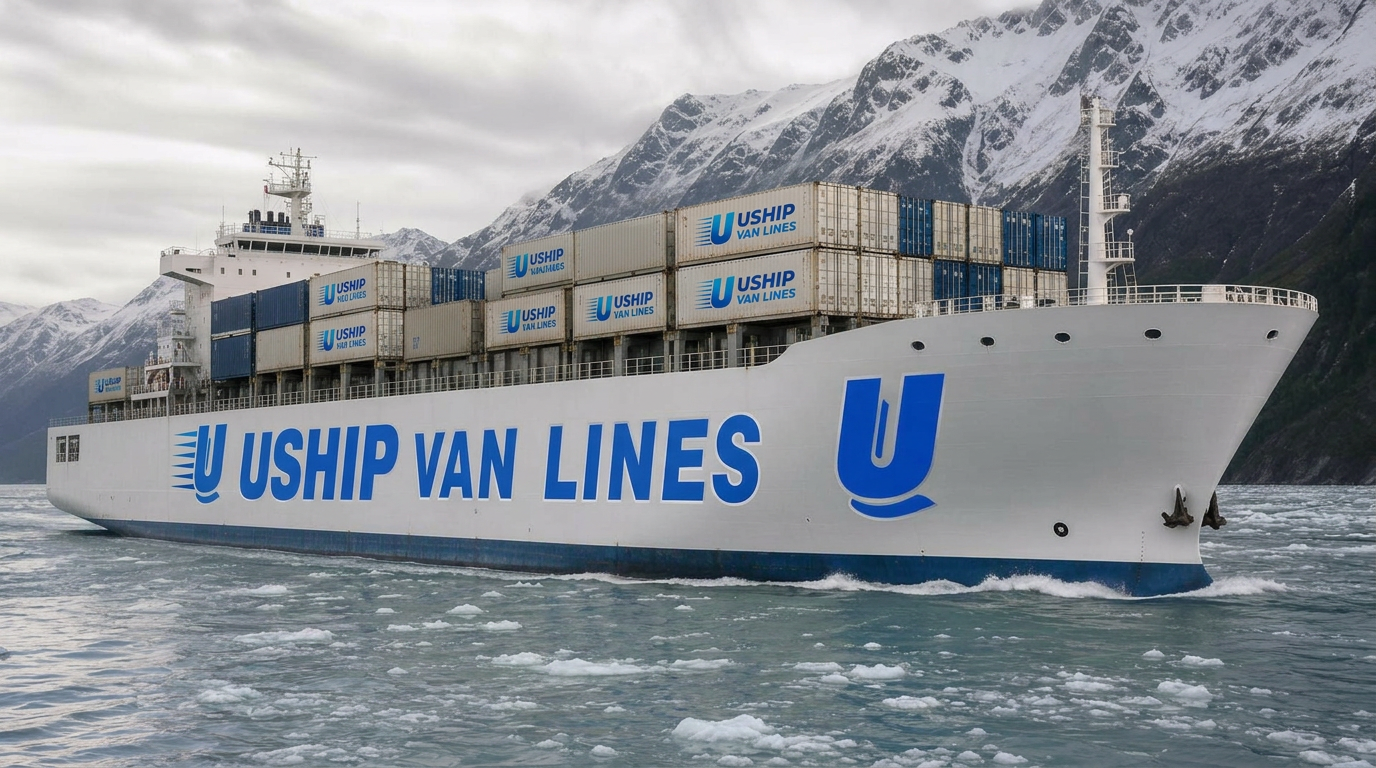
Moving from Tennessee to Alaska represents one of the most ambitious relocations in North America—swapping Southern hospitality for the Last Frontier's rugged beauty. Unlike a standard interstate move, your household goods will travel over 3,500 miles via truck and barge, crossing through the Pacific Northwest before reaching Anchorage, Fairbanks, or Alaska's remote communities.
Best Alaska & Hawaii Movers, powered by UShip Van Lines, specializes in Tennessee-to-Alaska relocations. We coordinate the entire journey—from pickup in Memphis, Nashville, Knoxville, or Chattanooga through containerized barge shipping via Tacoma to final delivery across Alaska's road system. Ready to start? Request your personalized moving quote and speak with an Alaska logistics specialist today.
Route overview
The Tennessee to Alaska Moving Route
Your belongings begin their journey with ground transportation from your Tennessee home to a consolidation hub, typically in the Pacific Northwest. From there, goods are loaded into 20-foot or 40-foot steel containers and transported to the Port of Tacoma, Washington—the primary departure point for Alaska-bound freight.
Containers board weekly barge services operated by carriers like TOTE Maritime and Matson, sailing approximately 1,400 nautical miles to the Port of Anchorage. The marine transit takes 5–7 days under normal conditions. Once docked, containers clear customs (if applicable), undergo port processing, and are loaded onto trucks for last-mile delivery to Anchorage, the Matanuska-Susitna Valley, Fairbanks via the Parks Highway, the Kenai Peninsula, or other road-accessible communities.
For Tennessee residents bound for off-road-system locations like Bethel, Kodiak, or Southeast Alaska communities, additional barge segments or air freight may be required, extending timelines and costs significantly.
How the moving process works
How Your Tennessee to Alaska Move Works: Step by Step
-
Free Quote & Survey – Contact Best Alaska & Hawaii Movers for a no-obligation estimate. We'll conduct a virtual or in-home survey of your Tennessee residence to calculate volume (cubic feet), identify special items (pianos, safes, antiques), and recommend container size.
-
Scheduling & Container Assignment – We coordinate your pickup date in Tennessee and reserve container space on the next available barge sailing from Tacoma. Peak season (May–September) requires 3–6 weeks' advance booking; off-season moves offer more flexibility.
-
Packing & Pickup in Tennessee – Professional movers arrive at your Tennessee home, pack and load your belongings into the truck, and transport everything to the Pacific Northwest staging facility. Full-service packing, partial packing, or self-pack options are available.
-
Containerization & Port Loading – Your household goods are loaded into weatherproof steel containers at the Tacoma facility, sealed, and transported to the port for barge boarding. Container numbers are logged for tracking.
-
Barge Transit to Anchorage – Containers sail from Tacoma to Anchorage over 5–7 days. Barges operate year-round but maintain more frequent schedules during Alaska's construction and tourism season (late spring through early fall).
-
Port Clearance & Deconsolidation – Upon arrival in Anchorage, containers are offloaded, inspected, and processed through the terminal. Your shipment is then transferred to a local delivery truck.
-
Final Delivery in Alaska – A local driver delivers your container to your new Alaska address. Depending on distance—whether Anchorage, Eagle River, Wasilla, Palmer, Soldotna, or Fairbanks—final delivery occurs 1–3 days post-barge arrival. Movers unload and place items in your home per your instructions.
Estimated moving costs
What Does It Cost to Move from Tennessee to Alaska?
A typical 2–3 bedroom household moving from Tennessee to Alaska costs $6,500–$14,000 for door-to-door service, including ground transportation, barge freight, and Alaska delivery. Studio and 1-bedroom moves start around $4,000–$6,500, while 4+ bedroom homes or shipments exceeding 1,500 cubic feet can reach $15,000–$20,000 or more.
Key cost drivers include:
- Volume and weight – Charges are based on cubic feet or weight. A 1,200 cubic-foot shipment (standard 3-bedroom home) occupies roughly half of a 40-foot container.
- Container exclusivity – Exclusive use of a full container costs more but ensures faster transit and reduced handling. Consolidated (shared) containers lower costs but may extend timelines.
- Distance within Alaska – Delivery to Anchorage is least expensive. Fairbanks adds $800–$1,500; Kenai Peninsula routes add $400–$900; remote or off-road-system locations require custom quotes.
- Packing services – Professional packing adds $800–$2,500 depending on home size and fragility of items.
- Vehicle shipping – Cars, trucks, and SUVs ship separately via roll-on/roll-off (RoRo) barge services, costing $1,200–$2,200 per vehicle from Seattle/Tacoma to Anchorage.
- Season and demand – Peak summer months (June–August) see higher rates due to increased Alaska-bound traffic. Winter moves may qualify for off-season discounts.
- Insurance and valuation – Basic carrier liability (60 cents per pound) is included; full-value protection costs 1–3% of declared shipment value.
Best Alaska & Hawaii Movers provides transparent, itemized quotes with no hidden fees. We never guarantee exact prices without a detailed inventory, as every move's scope varies.
Estimated transit times
How Long Does a Tennessee to Alaska Move Take?
Door-to-door transit from Tennessee to Alaska typically takes 10–21 days, depending on routing, barge schedules, and final delivery location.
Timeline breakdown:
- Tennessee pickup to Tacoma staging – 4–7 days via over-the-road freight. Your goods travel I-40 West through Arkansas, Oklahoma, and into the Pacific Northwest.
- Tacoma terminal processing & barge loading – 1–3 days. Containers are loaded, manifested, and boarded onto the next scheduled sailing.
- Barge transit (Tacoma to Anchorage) – 5–7 days on the water under normal marine conditions. Winter weather or port congestion can add 1–2 days.
- Anchorage port clearance & deconsolidation – 1–2 days for offloading, customs (if needed), and transfer to local delivery trucks.
- Final delivery within Alaska – Same-day for Anchorage metro; 1–2 days for Matanuska-Susitna Valley (Wasilla, Palmer) or Kenai Peninsula; 2–3 days for Fairbanks or remote highway-accessible areas.
Consolidated shipments may experience longer timelines (18–25 days) as carriers wait to fill containers. Exclusive containers or expedited service can shorten total transit to 10–14 days during off-peak periods.
We provide tracking updates at each major milestone—pickup, containerization, barge departure, Anchorage arrival, and delivery dispatch.
Regional logistics
Tennessee to Alaska Moving Logistics: What You Need to Know
Port and routing: All Tennessee-to-Alaska household goods move through West Coast ports, primarily Tacoma. Your belongings travel overland from Tennessee via interstate highways (I-40, I-84, I-90) before containerization.
Container types: Most moves use 20-foot or 40-foot steel ocean freight containers. A typical 3-bedroom home fits comfortably in a 40-foot container with room for a vehicle (if using container vs. RoRo). Smaller moves share containers to reduce costs.
Vehicle shipping: Cars and trucks ship separately via dedicated vehicle carriers (RoRo barges). Vehicle must be operable, clean (Alaska requires agricultural inspection), and contain no personal items. Processing takes 7–14 days Seattle/Tacoma to Anchorage.
Restricted and prohibited items: Alaska enforces strict agricultural quarantine rules. Fresh produce, soil, plants, and untreated wood may be rejected. Hazardous materials (propane, ammunition, paint, chemicals) cannot ship via barge. Ensure fuel tanks (lawnmowers, generators) are drained.
Last-mile delivery zones: Anchorage, Eagle River, and JBER are primary delivery zones. Matanuska-Susitna Valley (Wasilla, Palmer, Big Lake) adds 1 day and modest fees. Kenai Peninsula (Soldotna, Homer, Seward) requires 1–2 days. Fairbanks and North Pole are accessible via the Parks Highway (2–3 days post-barge arrival). Off-road-system communities (Kodiak, Sitka, Juneau, Bethel) require secondary barge or air freight—consult us for custom quotes.
Insurance: Basic carrier liability is included. Consider full-value protection for high-value items like antiques, electronics, or artwork. Document pre-move condition with photos.
Storage options: If your Alaska home isn't ready upon barge arrival, we offer short- and long-term storage in Anchorage climate-controlled facilities. Typical storage rates are $150–$350/month depending on volume.
Seasonal considerations
Best Times to Move from Tennessee to Alaska
Spring (April–May): Barge schedules ramp up as Alaska's construction season begins. Rates are moderate, and availability is good. Melting snow and mud in Alaska can complicate rural deliveries.
Summer (June–August): Peak moving season. Highest demand for Alaska relocations driven by job transfers, military PCS moves, and seasonal work. Expect premium pricing and the need to book 4–8 weeks in advance. Barge frequency is highest, and Alaska road conditions are optimal. Long daylight hours facilitate flexible delivery windows.
Fall (September–October): Shoulder season. Barge schedules remain consistent through September, then taper in October. Rates drop slightly, and availability improves. Early snowfall in Interior Alaska (Fairbanks, Delta Junction) may impact deliveries on unpaved roads.
Winter (November–March): Off-season for Alaska moves. Barge service continues year-round but on reduced schedules (often weekly instead of twice-weekly). Rates are lowest, and availability is excellent. Winter road conditions—ice, extreme cold, limited daylight—can delay final deliveries, especially to rural areas. Vehicles shipped in winter should be winterized. Some Tennessee residents prefer winter moves to avoid summer heat during packing and to settle before Alaska's tourist season.
For flexible movers, late April–May or September–early October offer the best balance of cost, availability, and favorable Alaska weather.
Why choose Best Alaska & Hawaii Movers
Why Choose Best Alaska & Hawaii Movers for Your Tennessee to Alaska Move
-
Alaska Specialists, Not Generalists – We focus exclusively on Alaska and Hawaii relocations. Our team understands barge logistics, port requirements, Alaska delivery challenges, and seasonal considerations that general moving companies miss.
-
Powered by UShip Van Lines' Network – Backed by UShip Van Lines' vetted carrier network, we coordinate every leg—Tennessee pickup, cross-country transport, Tacoma containerization, barge booking, and Alaska last-mile delivery—under one point of contact.
-
Transparent Pricing, No Hidden Fees – Our quotes include all major costs: packing, loading, ground transport, barge freight, port fees, and Alaska delivery. No surprise charges for "barge fuel surcharges" or "remote area fees" that weren't disclosed upfront.
-
Real-Time Tracking & Communication – Receive updates at every milestone. Know when your container is loaded, when the barge departs Tacoma, when it docks in Anchorage, and when delivery is scheduled. Our customer service team is responsive and proactive.
-
Flexible Service Levels – Choose full-service packing and white-glove delivery, or opt for cost-saving self-pack and basic delivery. We tailor service to your budget and timeline without compromising reliability.