
Moving from Georgia to Alaska
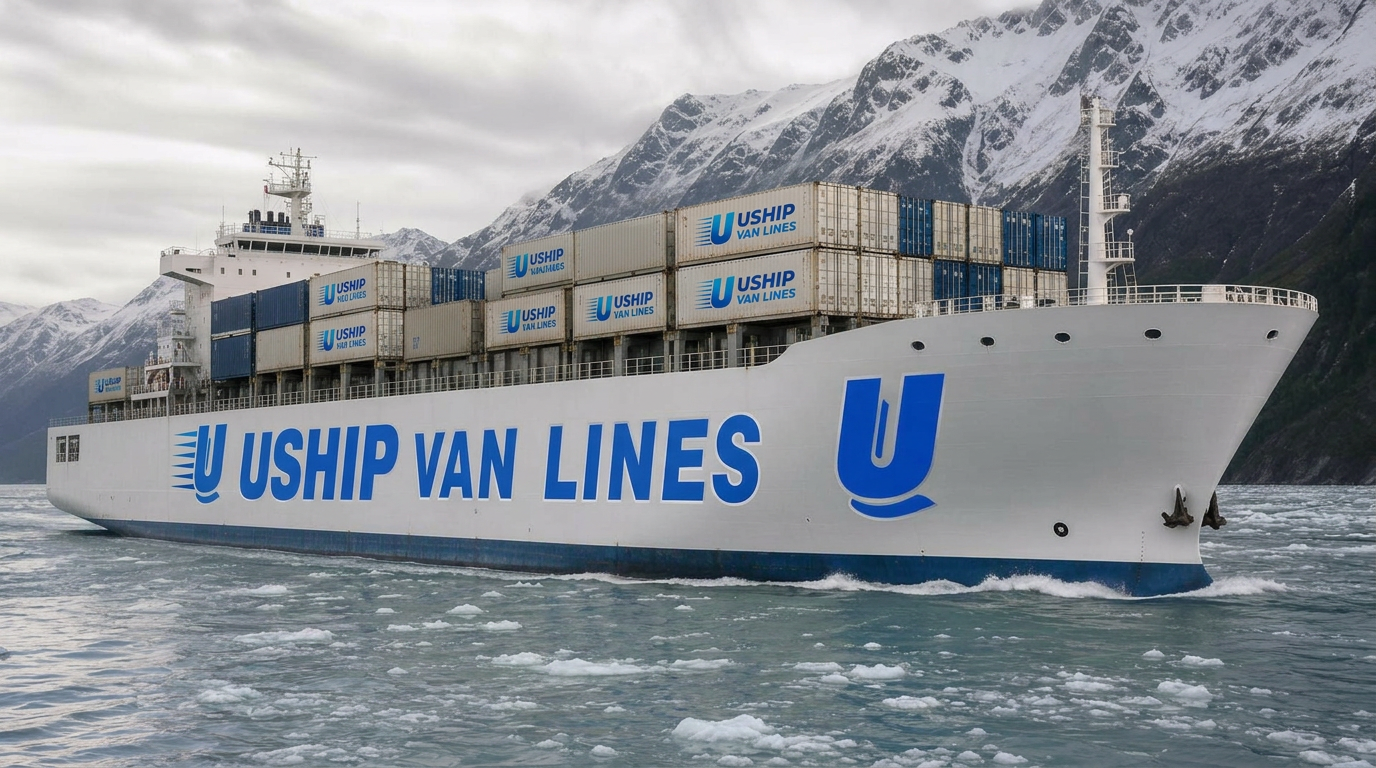
Moving from Georgia to Alaska means trading peach trees for glaciers, humidity for tundra, and navigating one of the most logistically complex domestic moves in the United States. Unlike a standard lower-48 relocation, your belongings will travel by truck across the continental U.S., load onto a cargo barge in Tacoma, sail through the Inside Passage or Gulf of Alaska, and finally arrive at an Alaskan port before completing the last-mile journey to your new home.
Best Alaska & Hawaii Movers, powered by UShip Van Lines, specializes in Georgia-to-Alaska relocations. We coordinate every leg—highway transit, barge scheduling, customs paperwork, and final delivery to Anchorage, Fairbanks, the Mat-Su Valley, Kenai Peninsula, or even remote bush communities. Ready to start planning your move north? Request a free, no-obligation quote and speak with a specialist who understands the Alaska freight network.
Route overview
Route Overview: Georgia to Alaska
Your household goods depart Georgia via long-haul truck, traveling approximately 3,400–3,700 miles across the southern or northern tier to Tacoma, Washington—the primary staging hub for Alaska-bound cargo. In Tacoma, your shipment transfers to a marine container, boards a northbound barge operated by carriers like TOTE Maritime or Alaska Marine Lines, and sails 1,500+ nautical miles to Alaska ports (typically Anchorage, but also Whittier, Kodiak, or regional hubs).
Once the barge docks, containers clear customs inspection, reload onto trucks, and complete the last-mile delivery. If you're moving to Anchorage or the Mat-Su Valley, delivery is straightforward. Fairbanks adds another 360 highway miles. Kenai Peninsula destinations require the Seward Highway or Sterling Highway. Remote or off-road-system villages may necessitate a second barge leg, bush plane, or winter ice-road transport, significantly extending timelines and costs.
This multi-modal journey demands precise coordination. Barge schedules run weekly or biweekly depending on season, and missing a sailing window can add 7–14 days to your move. Weather delays, port congestion, and Alaska's compressed summer shipping season all play a role in final delivery dates.
How the moving process works
The Moving Process: Georgia to Alaska, Step by Step
-
Request a Quote and Book Early
Contact Best Alaska & Hawaii Movers 6–12 weeks before your target move date. Alaska barge capacity is limited, especially May–September. Early booking secures space and locks in pricing. -
In-Home or Virtual Survey
A moving specialist inventories your household, identifies items restricted or costly to ship (liquids, propane, certain foods), and provides a binding or not-to-exceed estimate based on weight and cube. -
Packing and Pickup in Georgia
Professional packers arrive 1–2 days before load day. Your goods are wrapped, boxed, inventoried, and loaded onto a long-haul truck. The driver begins the 5–7 day overland journey to Tacoma. -
Tacoma Staging and Container Loading
At the Tacoma freight terminal, your shipment transfers into a 20-foot or 40-foot marine container (often shared with other households unless you book an exclusive container). The container is sealed, documented, and queued for the next Alaska barge. -
Barge Transit to Alaska
The container sails from Tacoma to Anchorage (or another Alaska port) over 3–7 days, depending on weather, routing (Inside Passage vs. open Gulf), and port calls. This is the slowest leg but the most critical for protecting your belongings from saltwater and temperature swings. -
Customs Clearance and Port Unloading
Upon arrival, U.S. Customs inspects the container (especially if carrying vehicles, food, or plants). Clearance typically takes 1–2 business days. The container is then trucked to a local warehouse or directly to your delivery address. -
Final Delivery and Unpacking
A local Alaska driver completes the last-mile delivery to your home. The crew unloads, places furniture, and removes packing debris. You inspect the shipment, note any damage on the inventory sheet, and the move is complete.
Pro tip: If your new home isn't ready, ask about short-term storage in Anchorage or Fairbanks. Many movers offer climate-controlled warehouse space while you finalize housing.
Estimated moving costs
Cost Estimate: What to Expect for a Georgia to Alaska Move
A typical 2–3 bedroom household (8,000–12,000 pounds) moving from Georgia to Anchorage or Fairbanks costs $6,500–$14,000, depending on volume, distance within Georgia, season, and services. Larger homes (4+ bedrooms, 15,000+ pounds) or remote destinations can exceed $18,000.
Key cost drivers:
- Weight and cube: Alaska moves price by both weight (pounds) and volume (cubic feet). Dense, compact loads cost less per pound than bulky, light items.
- Distance to Tacoma: Origin cities in north Georgia (Atlanta metro) have shorter overland legs than coastal Savannah or southern Georgia towns, slightly reducing trucking costs.
- Season: Peak summer (May–August) sees higher barge rates and tighter capacity. Off-season (October–March) offers discounts but fewer sailings and weather risks.
- Destination within Alaska: Anchorage/Mat-Su Valley delivery is baseline. Fairbanks adds $800–$1,500. Kenai Peninsula or remote locations add significantly more due to limited access and extra fuel surcharges.
- Packing and special handling: Full-service packing (recommended for Alaska's long transit) adds $800–$2,000. Crating for antiques, artwork, or pianos adds $200–$600 per item.
- Vehicle shipping: If you're also shipping a car or truck, add $1,800–$3,200 for roll-on/roll-off (RORO) barge service from Tacoma to Anchorage.
Not included in base quotes:
Storage fees (if barge is delayed or your home isn't ready), insurance deductibles, unpacking services, or shuttle fees if a full-size truck can't access your Alaska property.
Best Alaska & Hawaii Movers does not guarantee prices online. Every move is custom-quoted based on your specific inventory, dates, and services. Request a detailed estimate to understand your total investment.
Estimated transit times
Transit Time: How Long Does a Georgia to Alaska Move Take?
Door-to-door transit from Georgia to Alaska typically takes 14–28 days, broken down as follows:
- Georgia pickup to Tacoma staging: 5–7 days (cross-country highway transit)
- Tacoma staging and container loading: 2–5 days (waiting for the next available barge sailing)
- Barge sailing (Tacoma to Anchorage): 3–7 days (Inside Passage routes are slower; direct Gulf crossings are faster but weather-dependent)
- Customs clearance and port processing: 1–3 days
- Final delivery from Anchorage port to your home: Same day to 3 days (Anchorage/Mat-Su same-day or next-day; Fairbanks 1–2 days; remote areas vary)
Factors that extend timelines:
- Missed barge sailing: If your truck arrives in Tacoma after a barge departs, you wait 7–14 days for the next sailing.
- Weather delays: Winter storms in the Gulf of Alaska or highway closures on the Alaska Highway can add 3–7 days.
- Peak-season congestion: Summer moves (June–August) often face port backups and trucking shortages in Alaska, adding 3–5 days.
- Remote delivery: Bush villages accessible only by plane, barge, or ice road can add weeks or require waiting for seasonal access windows.
Fastest possible scenario: An express shipment with dedicated container and priority barge booking can complete in 10–12 days, but this premium service costs 40–60% more than standard scheduling.
Plan conservatively. Most movers recommend arriving in Alaska 1–2 weeks before your household goods, staying in temporary housing, and coordinating delivery once you have keys to your new home.
Regional logistics
Alaska-Specific Logistics: What You Need to Know
Ports and marine transit:
Georgia shipments typically route through the Port of Tacoma, Washington, the largest hub for Alaska cargo. Your goods load into marine containers (20' or 40') and sail to the Port of Anchorage (the most common destination), Whittier (for rail/highway access to Interior Alaska), Kodiak, or regional ports. TOTE Maritime and Alaska Marine Lines are the primary carriers. Barge schedules are fixed; missing a sailing can delay your move by a week or more.
Customs and inspections:
Alaska is part of the U.S., so no international customs apply unless your route transits Canada (rare for household goods). However, USDA and Alaska Department of Natural Resources inspect shipments for invasive species, prohibited plants, soil, and untreated wood. Declare any live plants, seeds, or outdoor equipment (like gardening tools with soil residue) to avoid delays or fines.
Vehicle shipping:
Many Georgia movers bundle household goods and vehicles. Cars/trucks ship via RORO barge from Tacoma to Anchorage (5–7 days on the water). Vehicles must be nearly empty (less than 1/4 tank of gas, no personal items except a spare tire and jack), operable, and titled in your name. Inoperable vehicles require special crating and cost significantly more.
Last-mile challenges:
Anchorage, Fairbanks, and the Mat-Su Valley (Wasilla, Palmer) have paved road access year-round. Kenai Peninsula towns (Soldotna, Homer, Seward) are accessible via the Seward and Sterling Highways. However, many Alaska communities—especially in the bush (Bethel, Nome, Barrow, Dillingham)—are off the road system and require a second barge, bush plane, or winter ice-road delivery. If you're moving to a remote village, discuss this upfront; costs can double and timelines extend to 4–8 weeks.
Restricted items:
Alaska movers will not ship hazardous materials (paint, propane, gasoline, aerosols), perishable food, or live animals in the main shipment. If bringing firearms, ensure they're legal under Alaska and federal law, declared on your inventory, and properly secured. Some movers require firearms in a separate, locked container.
Climate considerations:
Your goods will experience temperature swings from Georgia heat to Pacific Northwest rain to Alaska cold. Use climate-controlled packing when possible (plastic bins for clothing, moisture barriers for electronics, silica packs for documents). Wooden furniture and musical instruments should be inspected for moisture damage upon delivery.
Seasonal considerations
Seasonal Considerations: Timing Your Georgia to Alaska Move
Spring (March–May): Barge schedules ramp up in late April/early May as Alaska thaws. This is a sweet spot—lower rates than summer, improving weather, and increasing sailings. However, spring breakup can make some Alaska roads (especially rural gravel routes) impassable due to frost heaving and mud. If moving to a remote area, confirm road conditions with your mover.
Summer (June–August): Peak moving season for Alaska. Barge capacity is maxed, prices are highest, and booking windows are tight (reserve 8–12 weeks ahead). Weather is most favorable, roads are dry and accessible, and daylight is abundant for deliveries. If you have school-age children or a fixed job start date, summer is often unavoidable—just budget accordingly and book early.
Fall (September–October): Excellent value window. Demand drops after Labor Day, barge rates decline 10–20%, and weather is still mild. By mid-October, snow begins in Interior Alaska (Fairbanks, Denali corridor), and barge frequency decreases. This is ideal for flexible movers seeking cost savings and faster scheduling.
Winter (November–February): Off-peak, with the fewest sailings (often biweekly or monthly) and the lowest rates. Winter storms in the Gulf of Alaska can delay barges 3–7 days. Some remote villages are accessible only in winter via ice roads, making this the required season for those moves. Anchorage and Fairbanks are accessible year-round, but snow, ice, and extreme cold (-20°F to -40°F in Fairbanks) require winterized packing (extra padding, climate-controlled containers). If you're moving in winter, allow 3–4 weeks total transit and plan for weather contingencies.
Alaska-specific note: Commercial fishing season (May–September) competes for barge space, especially for shipments to coastal towns like Kodiak, Homer, or Cordova. Book early if your delivery coincides with fishing industry freight.
Why choose Best Alaska & Hawaii Movers
Why Choose Best Alaska & Hawaii Movers for Your Georgia to Alaska Relocation
-
Alaska freight expertise: We specialize in Georgia-to-Alaska moves, with established relationships with Tacoma freight terminals, barge lines, and Alaska-based delivery teams. We know the sailing schedules, port protocols, and last-mile networks that general moving companies don't.
-
End-to-end coordination: One point of contact manages your entire move—pickup in Georgia, overland transit, barge booking, customs paperwork, and final delivery in Alaska. You're never handed off to multiple vendors or left guessing where your shipment is.
-
Transparent, customized pricing: We provide detailed, itemized estimates based on your actual inventory and services—no hidden brokerage fees, no surprise fuel surcharges. You'll know your costs upfront and understand what drives the price.
-
Flexible scheduling and storage: If your Alaska home isn't ready or you're waiting for a barge slot, we offer short-term warehousing in Tacoma or Anchorage. You control the delivery date, not the other way around.
-
Powered by UShip Van Lines: Our parent network connects vetted, licensed carriers across North America, ensuring your Georgia pickup is handled by experienced long-haul pros and your Alaska delivery by drivers who navigate Alcan winters and bush routes regularly.
Ready to experience the Best Alaska & Hawaii Movers difference? Request your free quote today and let us turn your Georgia-to-Alaska move into a seamless, stress-free transition.