
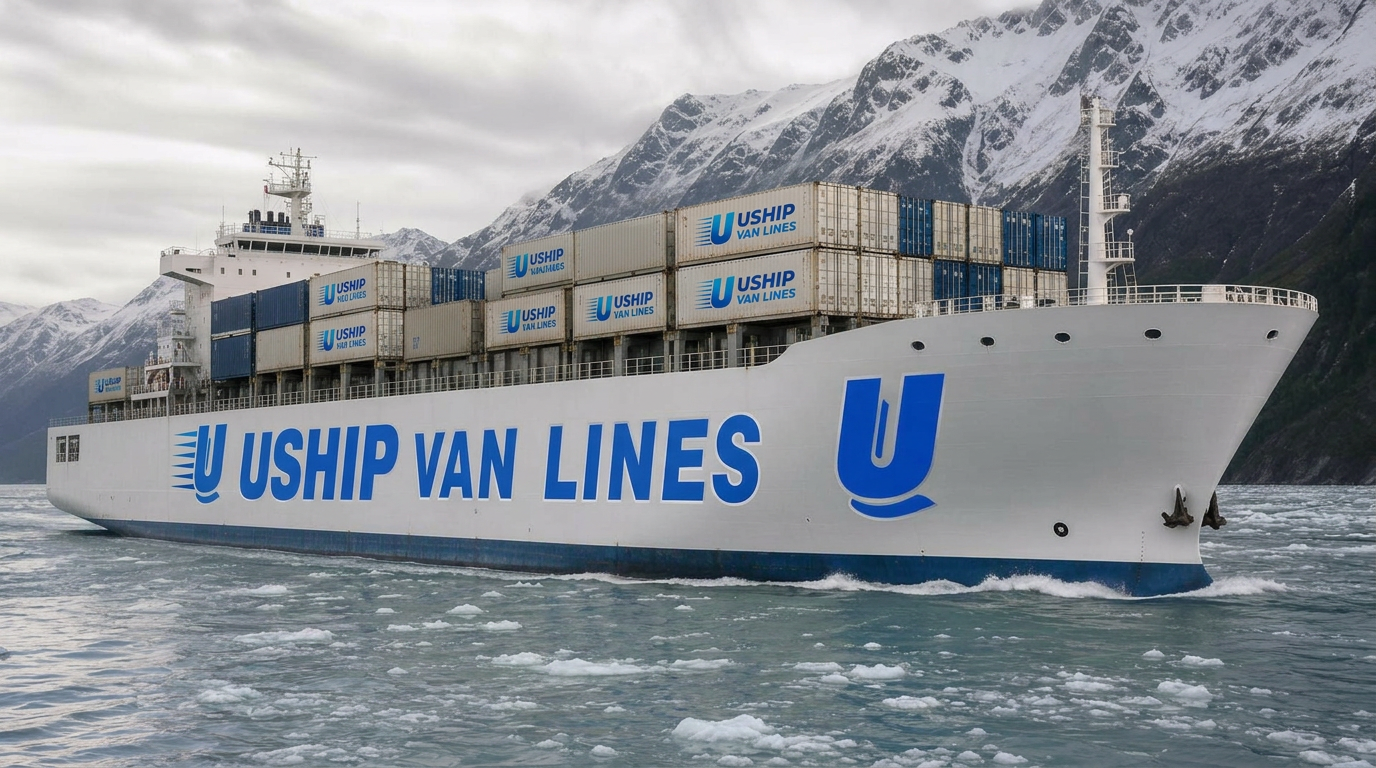
Moving from Kentucky to Alaska
Relocating from the rolling hills of Kentucky to the vast wilderness of Alaska is one of the most dramatic moves you can make—both geographically and logistically. Your household goods will travel over 3,500 miles, transitioning from truck to barge in Tacoma before crossing the Gulf of Alaska to reach Anchorage, Fairbanks, or your final destination.
Best Alaska & Hawaii Movers, powered by UShip Van Lines, specializes in this exact route. We handle every detail—from pickup in Louisville, Lexington, or anywhere in the Bluegrass State to final delivery across Alaska's unique terrain. Ready to start planning your Kentucky-to-Alaska move? Request your free, no-obligation quote today.
Route overview
Kentucky to Alaska: A Multi-Modal Journey
Moving from Kentucky to Alaska requires seamless coordination between over-the-road trucking and ocean freight. Your belongings are loaded in Kentucky, transported via truck approximately 2,400 miles to the Port of Tacoma in Washington, then loaded onto a barge for the 1,400-nautical-mile voyage to the Port of Anchorage. From there, items are trucked to your final destination—whether that's Anchorage itself, Fairbanks, the Mat-Su Valley, the Kenai Peninsula, or even remote bush communities accessible only by smaller aircraft or seasonal ice roads.
This route demands specialized expertise. Not every moving company understands Alaska Marine Lines' sailing schedules, USDA inspection requirements for agricultural products, or the challenges of delivering to off-road-system communities. The Bluegrass State to the Last Frontier is a journey of contrasts: from mild humid summers to subarctic winters, from rolling farmland to glaciated peaks.
Timing is critical. Barge schedules run weekly during peak season (May–September) but reduce frequency in winter. Weather in the Gulf of Alaska can delay sailings. Planning ahead—ideally 6–8 weeks before your target move date—ensures space on the barge, competitive pricing, and flexibility if schedules shift.
How the moving process works
How Your Kentucky-to-Alaska Move Works: Step-by-Step
-
Free In-Home or Virtual Survey: We assess your inventory—furniture, boxes, vehicles, special items like firearms or freezers—and provide a binding or not-to-exceed estimate. We discuss Alaska-specific restrictions (no firewood, strict rules on soil/plants, ammunition limits).
-
Packing and Loading in Kentucky: Professional crews pack fragile items using marine-grade materials designed for barge transit. Your shipment is loaded into a 20' or 40' container or as part of a consolidated load, depending on volume. The truck departs Kentucky for the 4–6 day cross-country haul to Tacoma.
-
Port of Tacoma Staging and Barge Loading: Your container arrives at the port, clears customs paperwork if needed, and is loaded onto the next available Alaska Marine Lines or TOTE Maritime barge. Sailing schedules are published months in advance; we coordinate to minimize warehouse time.
-
Ocean Voyage to Anchorage (5–7 Days): The barge crosses the Gulf of Alaska. Weather and sea conditions can extend transit by 1–2 days. Containers are sealed and weather-protected throughout the voyage.
-
Port of Anchorage Offload and Customs Clearance: Once docked, containers are offloaded and inspected by USDA (if flagged). Most household goods clear same-day or next-day.
-
Last-Mile Delivery Across Alaska: Your shipment is loaded onto a truck for final delivery. Anchorage and Mat-Su deliveries typically occur within 1–3 days of port arrival. Fairbanks, Kenai, or Soldotna add 1–2 days. Bush destinations require additional coordination—float plane, bush pilot, or winter ice road access.
-
Unpacking and Placement: Crews unload, place furniture, and remove packing debris. We conduct a final walkthrough to ensure everything arrived safely and address any concerns immediately.
Estimated moving costs
What Does a Kentucky-to-Alaska Move Cost?
For a typical 2–3 bedroom household (approximately 7,000–10,000 lbs), expect to invest $8,500–$14,000 for a full-service move from Kentucky to Anchorage or Fairbanks. Smaller 1-bedroom or studio moves may range $4,500–$7,000, while larger 4-bedroom homes can reach $16,000–$22,000 or more.
Key cost drivers include:
- Distance and origin city: Pickup from Louisville or Lexington is straightforward; remote Kentucky counties may incur additional mileage fees.
- Volume and weight: Barge freight is priced by cubic footage or weight. Heavier items (pianos, safes, full garages) increase costs significantly.
- Packing services: Full-service packing adds $800–$2,000 but ensures items survive barge motion and humidity changes.
- Seasonality: Peak summer months (June–August) command premium rates due to high demand. Off-season moves (October–March) can save 15–25%, though scheduling is less flexible.
- Final destination: Anchorage is the base rate. Fairbanks adds $500–$1,200. Kenai Peninsula, Homer, or Kodiak add $800–$2,000. Bush communities requiring air freight add $2–$5 per pound.
- Vehicles: Shipping a car or truck via barge adds $1,400–$2,200 from Tacoma to Anchorage. Driving the Alaska Highway from Kentucky is a 4,000+ mile adventure but saves shipping fees.
- Storage: If your Alaska housing isn't ready, short-term storage in Tacoma or Anchorage runs $150–$300/month for a typical load.
We never guarantee prices without a detailed survey. Costs fluctuate with fuel surcharges, barge line rate changes, and your specific inventory. Request a personalized quote to lock in your estimate.
Estimated transit times
How Long Does Kentucky to Alaska Take?
Door-to-door transit from Kentucky to Alaska averages 16–26 days, depending on final destination and barge schedule alignment.
Breakdown by leg:
- Kentucky to Tacoma (truck): 4–6 days. Interstate routes via I-64, I-80/I-84, or I-90 are efficient, but mountain passes in Wyoming or Montana may slow transit in winter.
- Tacoma port staging: 1–4 days, depending on when your truck arrives relative to the next barge sailing. We coordinate tightly to minimize warehouse time.
- Tacoma to Anchorage (barge): 5–7 days under normal conditions. Weather delays in the Gulf of Alaska can add 1–2 days, especially October–March.
- Anchorage port clearance: 1–2 days for offload and any USDA inspections.
- Anchorage to final destination (truck): Same-day to 3 days. Fairbanks is 6–7 hours north. Kenai is 3–4 hours south. Bush destinations requiring air charter add 1–5 days depending on weather and pilot availability.
Expedited options are limited—you can't speed up the ocean crossing—but booking a direct barge sailing (versus waiting for the next one) and prioritizing unload at the port can shave 3–5 days off the timeline.
Winter considerations: Ice fog in Fairbanks, road closures on the Parks Highway, or storms in the Gulf can extend timelines by 2–5 days. Build buffer time if you're moving November–March.
Regional logistics
Alaska-Specific Logistics: What Kentucky Movers Need to Know
Port and Barge Operations: The Port of Anchorage is Alaska's primary freight hub. Containers are offloaded by crane onto the dock, then staged for customs/USDA inspection. Your moving company coordinates with Alaska Marine Lines or TOTE Maritime for sailing schedules and container allocation. You don't interact with the port directly.
USDA Agricultural Inspections: Alaska enforces strict biosecurity. Inspectors may open your shipment to check for prohibited items: untreated firewood, soil on garden tools, certain plants, fresh produce, or animal products. Declare anything questionable in advance. Non-compliance can mean delays, fines, or confiscation. Most Kentucky household goods pass without issue.
Vehicle Shipping: Driving the Alaska Highway from Kentucky is a 4,000+ mile journey (roughly 6–8 days of hard driving). Many movers choose to ship one vehicle via barge ($1,400–$2,200 Tacoma to Anchorage) and drive a second for the adventure. Vehicles must be clean (no mud, no hitchhiking pests), have less than ¼ tank of gas, and contain no personal items. Alaska requires vehicle registration within 30 days of establishing residency.
Firearms and Ammunition: Alaska is gun-friendly, but shipping regulations are strict. Firearms must be declared, unloaded, and packed separately from ammunition. Ammo is limited by weight and must meet hazmat rules. We guide you through ATF and TSA compliance for legal transport.
Bush and Off-Road-System Deliveries: Communities like Bethel, Kotzebue, Nome, or Dillingham aren't connected by road. Shipments are barged to regional hubs, then flown via bush plane or delivered by seasonal ice road (winter only). Costs are significantly higher—$2–$5/lb by air—and weight limits are strict. Plan minimalist if moving to the bush.
Cold-Weather Prep: Electronics, musical instruments, and liquids (paint, cleaning supplies) must be protected from extreme cold during final delivery in winter. We use insulated blankets and climate-controlled trucks where possible. Liquids may need to be drained or packed separately.
Residency Documentation: Alaska has no state income tax, but you'll establish residency for PFD (Permanent Fund Dividend) eligibility after one year. Keep moving documents, lease agreements, and bills of lading—they help prove your move date for state benefits and vehicle registration.
Seasonal considerations
Best Time to Move from Kentucky to Alaska
Spring (April–May): Barge schedules ramp up, but rates haven't peaked. Kentucky weather is mild for loading; Alaska is thawing. Snow may still affect remote deliveries. Good balance of cost and reliability.
Summer (June–August): Peak season. Weekly or twice-weekly barge sailings. Highest demand = highest prices (15–30% premium). Midnight sun in Alaska makes delivery easier, but book 8–10 weeks ahead to secure space. Ideal if you must move during school break.
Fall (September–October): Shoulder season. Barge frequency decreases to weekly or biweekly. Rates drop 10–20%. Kentucky autumn weather is pleasant; Alaska sees early snow in Fairbanks and high country. Solid option if you're flexible.
Winter (November–March): Off-peak. Significant savings (20–30% off summer rates), but barge schedules are sparse—sometimes just 2–3 sailings per month. Gulf of Alaska storms cause delays. Ice fog and extreme cold in Alaska (-20°F to -40°F in Fairbanks) complicate deliveries. Best for budget-conscious movers with flexible timelines and no time-sensitive commitments.
Kentucky-specific tip: Avoid moving during Derby Week (late April/early May) if you're in Louisville—traffic and lodging costs spike. Alaska's salmon season (June–August) also means busy ports and higher demand for all freight services.
Why choose Best Alaska & Hawaii Movers
Why Choose Best Alaska & Hawaii Movers for Your Kentucky-to-Alaska Move
- Alaska Route Expertise: We specialize in barge-and-truck logistics to Alaska. We know the Port of Tacoma, Alaska Marine Lines schedules, USDA rules, and last-mile delivery challenges across the Last Frontier—from Anchorage high-rises to Fairbanks cabins to Kenai fishing lodges.
- Powered by UShip Van Lines: Our platform connects you with vetted, licensed carriers experienced in long-haul and Alaska freight. You get competitive bids, transparent pricing, and customer reviews—all in one place.
- Seamless Coordination: One point of contact manages your entire move—Kentucky pickup, cross-country trucking, port staging, barge booking, and Alaska delivery. No handoffs, no confusion.
- Flexible Service Levels: Choose full-service packing and white-glove delivery, or save money with partial packing and terminal-to-terminal options. We tailor the move to your budget and timeline.
- Transparent Pricing: We provide detailed, itemized estimates with no hidden fees. You'll know exactly what barge freight, labor, packing materials, and fuel surcharges cost before you commit.
- Customer-First Support: Moving to Alaska is stressful. Our team answers questions 7 days a week, provides real-time shipment tracking, and troubleshoots delays proactively. Your peace of mind is our priority.