
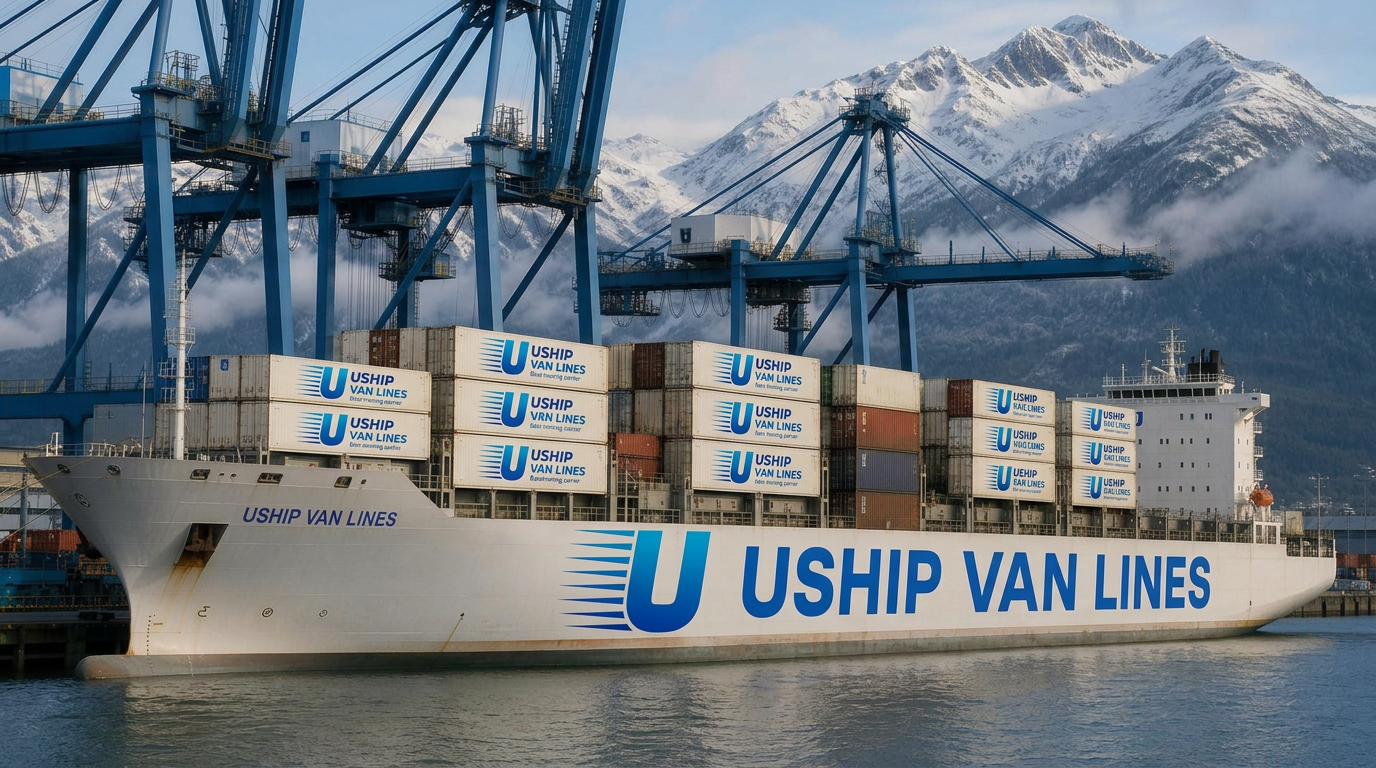
Moving from United States to United States
Military Permanent Change of Station (PCS) moves to and from Alaska and Hawaii require specialized logistics expertise that goes far beyond standard CONUS relocations. Service members face unique challenges including ocean freight, vehicle shipping, extended timelines, remote base locations, and strict weight allowances that demand a mover experienced in non-contiguous state relocations.
Best Alaska & Hawaii Movers, powered by UShip Van Lines, coordinates every phase of your PCS move—from household goods containerization and barge/ship transport to last-mile delivery in remote communities. Whether you're moving to Joint Base Elmendorf-Richardson in Anchorage, Eielson Air Force Base near Fairbanks, or any Hawaiian military installation, we handle the complexities so you can focus on your transition. Request your free quote today to begin planning your stress-free military relocation.
Route overview
Military PCS Route Overview: Alaska & Hawaii
Military PCS moves to Alaska typically route through Seattle/Tacoma, where household goods are containerized and loaded onto barges bound for the Port of Anchorage or other Alaska ports. From there, ground transport delivers to bases across the state—including Anchorage (JBER), Fairbanks (Eielson AFB, Fort Wainwright), and smaller installations in the Mat-Su Valley and Kenai Peninsula. Alaska's limited road network and seasonal weather patterns require careful scheduling, especially for moves to remote duty stations accessible only during specific months.
Hawaii PCS relocations involve ocean shipping from West Coast ports (Long Beach, Oakland, or Tacoma) to Honolulu, with onward inter-island transport if you're assigned to Schofield Barracks (Oahu), Marine Corps Base Hawaii (Kaneohe Bay), or installations on the Big Island, Maui, or Kauai. Military moves to Hawaii must coordinate with Defense Personal Property System (DPP) requirements, strict agricultural inspection protocols, and housing availability timelines at your destination base.
Both routes demand movers who understand Department of Defense regulations, weight allowance verification, personally procured move (PPM/DITY) documentation, and the critical importance of meeting report dates. Coordinating your household goods shipment, vehicle transport, and temporary storage (if needed) requires a single experienced partner familiar with military timelines and non-contiguous logistics.
How the moving process works
Your Military PCS Moving Process: Step-by-Step
-
Pre-Move Counseling & Weight Estimate – Once you receive PCS orders, contact us for a virtual or in-person survey to estimate your household goods weight against your authorized allowance (based on rank and dependents). We'll advise on what to ship, store, or dispose of to stay within weight limits and avoid excess cost liability.
-
Schedule & Book Your Move Window – Military moves operate within specific pickup and delivery windows. We coordinate with your Transportation Office (TO) to lock in dates that align with your report date, leave schedule, and housing availability. For Alaska and Hawaii, booking 60–90 days in advance is critical due to limited barge/ship schedules.
-
Professional Packing & Inventory – Our team arrives on your scheduled pack date to carefully wrap, box, and inventory every item. Military moves require detailed item-by-item inventories for insurance and claims purposes. You'll receive copies of all inventory sheets before we load your goods.
-
Containerization & Ocean Freight – Your household goods are loaded into weatherproof containers and transported to the port of embarkation (Tacoma for Alaska; Long Beach/Oakland for Hawaii). We manage all customs paperwork, container sealing, and coordination with ocean carriers operating on military-compatible schedules.
-
Ocean Transit & Port Processing – Containers travel by barge (Alaska, 5–10 days) or ship (Hawaii, 7–14 days) to the destination port. Upon arrival, goods clear customs and agricultural inspection (especially critical for Hawaii), then are staged for final delivery.
-
Last-Mile Delivery & Unpacking – We coordinate delivery to your on-base or off-base housing, often working within base access requirements and scheduled delivery appointment windows. Full unpacking services are available, with all packing materials removed from your home.
-
Vehicle Shipping (If Applicable) – If shipping a POV (privately owned vehicle) separately, we arrange roll-on/roll-off (RoRo) auto transport through military-approved carriers, ensuring your vehicle arrives within days of your household goods for maximum convenience.
Estimated moving costs
Military PCS Moving Cost Estimates
For most military PCS moves to Alaska or Hawaii, the Department of Defense covers the cost of household goods shipment up to your authorized weight allowance (ranging from 5,000 lbs for junior enlisted to 18,000 lbs for senior officers). If you stay within your allowance and use a government-arranged mover through DPS (Defense Personal Property Program), your out-of-pocket cost is typically $0.
If you choose a Personally Procured Move (PPM/DITY move), you arrange and pay for your own mover, then receive reimbursement based on the government's cost to ship that weight. For a typical 10,000-lb household (E-5/E-6 family) moving from the Lower 48 to Alaska, commercial moving costs range from $8,000–$14,000, and you may be reimbursed 95–100% of the government rate, potentially pocketing the difference if you move efficiently. Hawaii moves for the same weight run $9,000–$16,000 due to longer ocean transit.
Key cost drivers include your total weight, distance from origin to port, packing services (full-pack vs. self-pack), vehicle shipping (separate POV transport adds $1,200–$2,500 per vehicle), storage needs (if there's a gap between outbound and inbound housing), and whether you require expedited delivery. Excess weight beyond your allowance is your financial responsibility and can cost $0.60–$1.20 per pound over the limit.
We provide transparent quotes for both government-coordinated moves and PPM scenarios, helping you understand your reimbursement potential and any additional services (like temporary storage in Tacoma or vehicle winterization for Alaska) that may fall outside standard military coverage. Every quote is tailored to your rank, allowance, and specific duty station assignment.
Estimated transit times
Realistic Transit Times for Military PCS Moves
Alaska PCS moves typically require 3–5 weeks door-to-door from pickup in the Lower 48 to delivery at your Alaska duty station. This breaks down to:
- 5–7 days: Ground transport from origin to Tacoma/Seattle port
- 5–10 days: Barge transit from Tacoma to Port of Anchorage (weekly sailings during peak season, less frequent in winter)
- 2–5 days: Port clearance, deconsolidation, and customs processing
- 1–3 days: Final delivery to Anchorage/JBER, Fairbanks, or other bases
Remote locations like King Salmon, Kodiak, or bush communities may add 1–2 weeks for seasonal barge service or air freight connections.
Hawaii PCS moves generally take 2–4 weeks door-to-door:
- 3–5 days: Ground transport to West Coast port (Long Beach, Oakland)
- 7–14 days: Ocean shipping to Honolulu (weekly sailings year-round)
- 2–4 days: Agricultural inspection, customs clearance, and port processing
- 1–3 days: Delivery to Oahu bases or inter-island transport to neighbor islands
Transit times are longer during PCS peak season (May–August) due to high volume and vessel capacity. Off-season moves (September–April) often enjoy faster clearance and delivery. We recommend building a 1–2 week buffer between your household goods delivery window and your report date, shipping essentials and uniforms separately in your unaccompanied baggage or vehicle.
Regional logistics
Alaska & Hawaii Military PCS Logistics
Port Operations & Routing
Alaska moves route primarily through the Port of Tacoma, with containers loaded onto northbound barges operated by carriers like TOTE Maritime and Alaska Marine Lines. The Port of Anchorage is the main destination, with secondary ports in Whittier, Seward, Kodiak, and Dutch Harbor for specific regions. Hawaii shipments depart from Port of Long Beach or Port of Oakland, arriving at Honolulu Harbor (Sand Island), with inter-island barges to Hilo, Kahului, and Nawiliwili for neighbor island assignments.
Base Access & Delivery Coordination
Deliveries to military installations (JBER, Eielson AFB, Fort Wainwright, Schofield Barracks, MCB Hawaii) require advance coordination with base housing offices for delivery appointments and gate access passes. You'll need to provide your sponsor's contact information and proof of orders. Off-base deliveries in Anchorage, Fairbanks, or Honolulu are more flexible but still require you to be present for inventory verification.
Vehicle Shipping (POV Transport)
Military members are typically authorized to ship one POV per PCS at government expense. Vehicles to Alaska travel via the same barge system as household goods (RoRo service, 7–14 days). Hawaii-bound POVs ship via dedicated military auto carriers (Pasha Hawaii, Matson) from West Coast ports, taking 7–10 days. Vehicles must be nearly empty (less than ¼ tank of gas), clean, and operable. We coordinate POV paperwork and port drop-off to align with your travel schedule.
Weight Allowances & Excess Baggage
Your weight allowance is strictly enforced. E-1 to E-5 service members typically have 5,000–9,000 lbs; E-6 to E-9 range 11,000–14,000 lbs; officers vary from 12,000–18,000 lbs depending on rank and dependents. We provide accurate weight estimates and advise on disposing of excess items before packing. Shipping excess weight is expensive and not reimbursed—plan carefully.
Temporary Storage (SIT/NTS)
If there's a gap between when you vacate your current home and when your Alaska/Hawaii housing is ready, the military provides Temporary Storage (up to 90 days at origin or 90 days at destination) or Non-Temporary Storage (NTS) for longer-term needs. We coordinate storage in climate-controlled facilities near Tacoma or Honolulu, ensuring your goods remain secure until you're ready for delivery.
Agricultural Inspections (Hawaii)
All household goods entering Hawaii undergo mandatory agricultural inspection to prevent invasive species. Inspectors examine containers for soil, plants, seeds, and certain restricted items. Delays are rare but possible if contraband is found. We advise clients to avoid packing potted plants, fresh produce, untreated wood, or outdoor equipment with soil residue.
Remote & Bush Alaska Deliveries
Assignments to remote locations (King Salmon, Galena, Clear AFS) often require barge service only accessible in summer or air freight at significant extra cost. We work with Alaska bush carriers to schedule deliveries during the brief ice-free season (June–September) or arrange winter airlift if mission-critical. Advance planning is essential for these challenging routes.
Seasonal considerations
Seasonal Considerations for Military PCS Moves
Summer (May–August): Peak PCS Season
This is the busiest period for military moves, coinciding with the end of the school year and optimal Alaska weather. Barge schedules to Alaska run weekly, and Hawaii shipping capacity is maxed out. Book 90+ days in advance to secure your preferred dates. Expect longer wait times for delivery appointments on-base and higher demand for off-base housing. Temperatures in Alaska are mild (50–70°F), making unpacking and settling easier.
Fall (September–November): Shoulder Season
PCS volume drops significantly, offering more flexible scheduling and often faster transit times. Alaska barge frequency decreases to bi-weekly, and winter weather begins affecting Interior Alaska (Fairbanks area) by late October, with snow and freezing temperatures. Hawaii moves remain straightforward year-round, with pleasant fall weather (75–85°F) ideal for settling in. This is an excellent window for cost-effective PPM moves with less competition for movers.
Winter (December–February): Off-Peak Challenges
Alaska-bound PCS moves face serious weather challenges: ice on roads, limited barge sailings (some routes pause entirely), and extreme cold in Fairbanks (-20°F to -40°F). Moving into base housing during winter requires winterization planning—ensure utilities are activated before delivery. Hawaii moves are unaffected by season, though holiday periods (late December) can slow port operations. Winter is the least expensive time for PPM moves due to low demand.
Spring (March–April): Pre-Peak Transition
Alaska thaws and barge schedules ramp back up to weekly service by April. Roads become muddy, and
Why choose Best Alaska & Hawaii Movers
Why Choose Best Alaska & Hawaii Movers for Your Military PCS
-
Military PCS Specialists: We understand DOD regulations, DPS coordination, weight allowances, PPM/DITY reimbursement, and the strict timelines that come with military orders—our team has coordinated hundreds of Alaska and Hawaii PCS moves for all service branches.
-
Single-Source Logistics: From household goods containerization and barge/ship transport to vehicle shipping, temporary storage, and last-mile delivery to remote bases, we manage every step so you don't juggle multiple vendors during an already stressful transition.
-
Transparent PPM Support: If you're pursuing a Personally Procured Move to maximize reimbursement, we provide detailed weight tickets, certified invoices, and all documentation required for your finance office—ensuring you receive every dollar you're entitled to.
-
Alaska & Hawaii Route Expertise: Our established relationships with barge operators, port facilities, and military housing offices mean we secure priority space during peak PCS season and navigate seasonal challenges (winter ice, agricultural inspections) that trip up inexperienced movers.
-
Flexible Scheduling & Storage: We accommodate tight report dates, early departures, and housing gaps with short-notice pickups and secure temporary storage at origin or destination—critical when base housing assignments arrive with little notice.
-
Dedicated Move Coordinators: You'll have a single point of contact who tracks your shipment from pack-out to delivery, provides real-time updates, and resolves issues immediately—no phone tree, no runaround, just answers when you need them.