
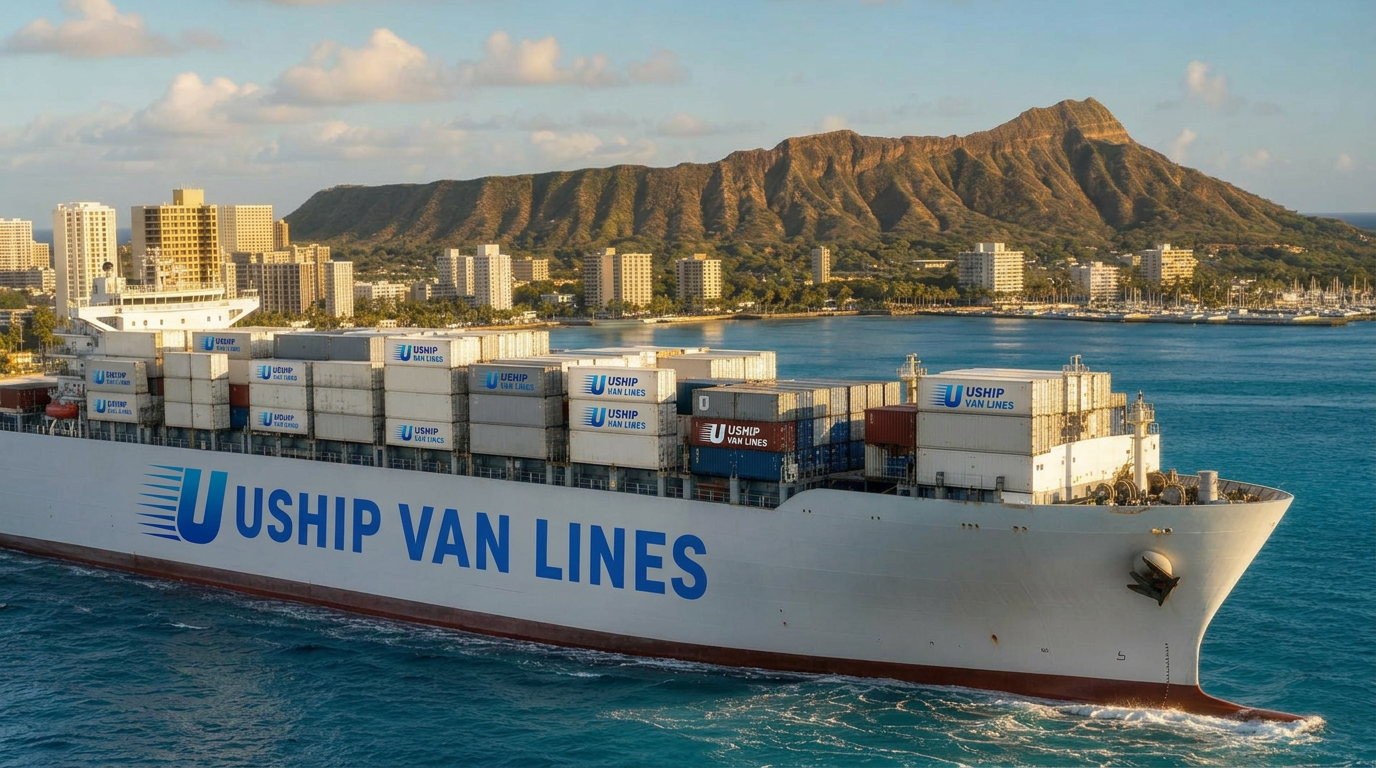
Moving from United States to Hawaii
Moving to Hawaii from the mainland United States requires specialized ocean freight expertise whether you're executing a Military PCS or coordinating a civilian household move. Your belongings travel by container ship from West Coast ports—typically Long Beach or Oakland—to Honolulu, with additional inter-island transport if you're heading to Maui, Kauai, or the Big Island.
Best Alaska & Hawaii Movers, powered by UShip Van Lines, coordinates every phase of your Hawaii move: mainland pickup, port drayage, ocean container booking with Matson or Pasha, customs clearance, and final delivery across the islands. Request a free quote to see transparent pricing tailored to your departure city and destination island.
Route overview
How Mainland-to-Hawaii Moves Work
All household goods moving to Hawaii travel by ocean container via one of two primary carriers: Matson Navigation or Pasha Hawaii. Your shipment typically consolidates at the Port of Long Beach or Port of Oakland, though Seattle serves as a secondary gateway. From there, containers sail 5–7 days to Honolulu's Sand Island terminal, where cargo clears customs and USDA agricultural inspection before final delivery.
Military PCS moves follow Department of Defense protocols with government-contracted carriers (Transportation Service Providers or TSPs), while civilian moves operate through commercial freight brokers like UShip Van Lines. Both routes use the same ocean vessels and port infrastructure; the key difference lies in how the move is funded and which regulations govern packing, weight limits, and liability.
Inter-island delivery adds complexity. If your final destination is Maui, Kauai, or the Big Island, your container either reloads onto Young Brothers' inter-island barges (adding 2–4 days) or gets deconsolidated in Honolulu for smaller vessel transport. Always confirm whether your quote includes inter-island leg or stops at Honolulu delivery.
How the moving process works
Step-by-Step: Mainland to Hawaii Move Process
-
Initial survey and quote – Schedule an in-home or virtual walkthrough so the carrier can assess volume (typically measured in cubic feet, not weight). Provide your mainland pickup address, Hawaii delivery address, and preferred shipping window. Military PCS customers work through their Transportation Office; civilians request quotes directly from freight brokers.
-
Book your ocean container slot – Space on Matson and Pasha vessels fills quickly during peak military PCS season (May–September). Book 4–6 weeks ahead for summer moves, 3–4 weeks during off-peak months. Your broker reserves container space and coordinates pickup timing to match the vessel sailing schedule.
-
Mainland pickup and packing – Professional movers arrive at your home, pack and load your household goods, and transport them to the port consolidation warehouse. Military PCS moves include full packing service; civilian customers can choose full-service, partial pack, or self-pack to control costs.
-
Port staging and container loading – Your shipment stages at Long Beach, Oakland, or Seattle, where it's loaded into a 20-foot or 40-foot ocean container (often shared with other households unless you book exclusive use). The container gets inspected, sealed, and loaded onto the vessel.
-
Ocean transit – Sailing time from California ports to Honolulu averages 5–7 days. Vessels make scheduled weekly departures; your container travels on the next available sailing after staging is complete.
-
Honolulu port clearance – Upon arrival at Sand Island, containers undergo customs inspection and mandatory USDA agricultural screening. Hawaii prohibits many plants, soil, certain woods, and untreated materials. This clearance adds 1–3 business days.
-
Final delivery – For Oahu destinations, carriers deliver directly from the port. For neighbor islands, your container either sails via Young Brothers barge (adding 2–4 days) or gets deconsolidated for smaller inter-island transport. Delivery crews unload, place furniture, and remove packing materials per your service agreement.
Estimated moving costs
What a Mainland-to-Hawaii Move Costs
A typical 2-bedroom apartment move (approximately 1,200–1,800 cubic feet) from the West Coast to Oahu runs $4,500–$7,500 for full-service civilian moves. A 3-bedroom home (2,500–3,500 cubic feet) typically costs $8,000–$13,000. Moves originating from the East Coast or Midwest add $1,500–$3,500 for cross-country ground transport to the port.
Military PCS moves are government-funded based on service member rank and dependent status, with the military paying carriers directly. Service members don't see out-of-pocket costs for standard weight allowances, though excess weight triggers personal expense.
Key cost drivers:
- Distance to port – Moving from California costs significantly less than moving from Florida or Texas due to shorter mainland haul.
- Volume – Ocean freight prices by cubic footage; reducing shipment size yields immediate savings.
- Packing service level – Full professional packing adds $800–$2,000; self-packing cuts costs but voids coverage for improperly packed items.
- Inter-island delivery – Neighbor island destinations (Maui, Kauai, Big Island) add $800–$2,200 for barge transport and additional handling.
- Seasonal demand – Summer PCS season (May–September) commands premium pricing due to container capacity constraints.
- Vehicle shipping – Cars ship separately via Roll-on/Roll-off (RoRo) vessels; expect $1,200–$1,800 per vehicle West Coast to Hawaii.
Always request itemized quotes showing mainland pickup, port fees, ocean freight, Hawaii delivery, and optional services separately. Beware quotes that seem unusually low—they often exclude critical fees revealed later.
Estimated transit times
How Long Your Move Takes Door-to-Door
Total transit time from mainland pickup to Hawaii delivery typically spans 14–28 days, broken down by leg:
Mainland pickup to port staging: 1–5 days depending on your distance from Long Beach, Oakland, or Seattle. California moves stage quickest; cross-country hauls need 4–5 days truck transit.
Port staging and container loading: 2–7 days while your shipment awaits the next scheduled vessel departure. During peak season, staging extends as containers queue for available ship space.
Ocean transit: 5–7 days sailing time from California ports to Honolulu. Seattle departures take 7–9 days. Vessels sail on fixed weekly schedules; timing depends on which sailing your container catches.
Port clearance in Honolulu: 1–3 business days for customs and USDA agricultural inspection. Delays occur if inspectors find prohibited items or paperwork issues arise.
Final delivery (Oahu): 1–3 days from port release to your door, depending on carrier schedule and delivery queue.
Inter-island transport (neighbor islands): Add 2–4 days for Maui, Kauai, or Big Island delivery via Young Brothers barge, plus 1–2 days for final last-mile delivery.
Military PCS moves during peak season (June–August) often experience the longest timelines due to sheer volume. Civilian moves booked during off-peak months (October–March) typically complete faster with more predictable scheduling.
Regional logistics
Hawaii-Specific Moving Logistics
Port Operations: Matson and Pasha dominate Hawaii ocean freight, operating from Sand Island Container Terminal in Honolulu. West Coast departures originate primarily from Long Beach (Pier T) and Oakland (Outer Harbor). Seattle's Terminal 46 serves as a secondary gateway with less frequent sailings. Your carrier coordinates all port interactions; you don't visit terminals personally.
Customs and Agricultural Restrictions: Every container entering Hawaii undergoes USDA inspection for prohibited agricultural items. Banned items include most live plants, soil, untreated wood, certain seeds, fresh produce, and animals. Hawaii also restricts firearms (requires registration within 5 days of arrival) and certain invasive species. Review Hawaii Department of Agriculture guidelines before packing. Prohibited items found during inspection face confiscation and potential fines.
Vehicle Shipping: Cars ship separately from household goods via RoRo vessels operated by Matson and Pasha. Vehicles must be operable (able to roll on/off under their own power), contain less than 1/4 tank fuel, and be free of personal items except factory-installed equipment. Registration and safety inspection are required within 30 days of Hawaii arrival. Ship vehicles 2–3 weeks before your household goods to ensure transportation upon arrival.
Military PCS Specifics: Service members receive weight allowances based on rank and dependent count (ranging from 5,000 lbs for junior enlisted to 18,000 lbs for senior officers). TSPs handle packing and shipping under government contract. File claims for damaged items within 75 days of delivery through the military claims system, not directly with carriers. Coordinate your move through your installation's Transportation Office; they assign your TSP.
Storage Options: If your Hawaii residence isn't ready, request storage-in-transit (SIT). Carriers can hold your container at the Honolulu port warehouse (expensive, charged daily) or deliver to a local Hawaii storage facility. Military PCS includes 90 days free SIT; civilians pay $150–$400 per month depending on volume. Book storage early—Honolulu facilities fill quickly.
Delivery Access: Many Hawaii properties feature narrow streets, steep driveways, low-hanging trees, and weight-restricted roads. High-rise condos require freight elevator reservations and building permits. Notify your carrier of access limitations during the initial survey. Long-carry fees apply if the truck can't park within 75 feet of your entrance.
Seasonal considerations
Best and Worst Times to Move to Hawaii
May–September (Peak Military PCS Season): The busiest period for Hawaii moves coincides with military change-of-station orders. Container space becomes scarce, pricing reaches annual highs, and port congestion extends staging times. Book 6–8 weeks ahead if moving during summer months. Expect premium rates and less scheduling flexibility.
October–April (Off-Peak Season): Civilian movers enjoy better pricing, faster booking, and shorter overall timelines during fall through spring. Carriers offer discounts to fill capacity, and port operations run smoother with reduced volume. October and November offer ideal weather and availability. However, winter months (December–February) bring rougher Pacific seas, occasionally delaying sailings by 1–2 days.
Hurricane Season (June–November): While Hawaii rarely sees direct hurricane strikes, tropical storms can disrupt shipping schedules. Matson and Pasha may delay departures or hold containers in port if severe weather threatens. Build buffer time into your move if relocating during peak hurricane months (August–October).
Holiday Periods: Avoid booking around Thanksgiving, Christmas, and New Year's when port operations slow and carrier staff levels drop. Customs clearance can extend to 5+ days during holiday weeks.
Agricultural Inspection Delays: No seasonal variation, but USDA staffing at Honolulu port sometimes thins during federal holidays and budget cycles (end of September). Always disclose plants, wood furniture, outdoor equipment, or soil-contact items on your inventory to avoid clearance holds.
Why choose Best Alaska & Hawaii Movers
Why Best Alaska & Hawaii Movers for Your Mainland-to-Hawaii Move
-
Specialized Hawaii routing expertise – We coordinate ocean freight exclusively for Alaska and Hawaii moves, managing West Coast port logistics, container booking with Matson/Pasha, and inter-island delivery connections that generalist movers don't understand.
-
Transparent pricing, no hidden port fees – Our quotes itemize every cost: mainland pickup, port drayage, ocean freight, customs fees, and Hawaii delivery. You'll never encounter surprise "terminal handling charges" or undisclosed surcharges at delivery.
-
Military PCS and civilian move experience – Whether you're a service member working through your Transportation Office or a civilian relocating for work, we speak both languages and navigate the distinct requirements of government and commercial Hawaii moves.
-
Powered by UShip Van Lines' carrier network – Our platform connects you with vetted, licensed interstate carriers while our Hawaii specialists manage the ocean leg, agricultural compliance, and island-specific logistics that mainland-only brokers can't handle.
-
End-to-end tracking and proactive communication – You'll receive updates at every milestone: mainland pickup confirmation, port arrival, vessel departure, Honolulu clearance, and delivery scheduling. Our team monitors your shipment from initial survey through final placement.