
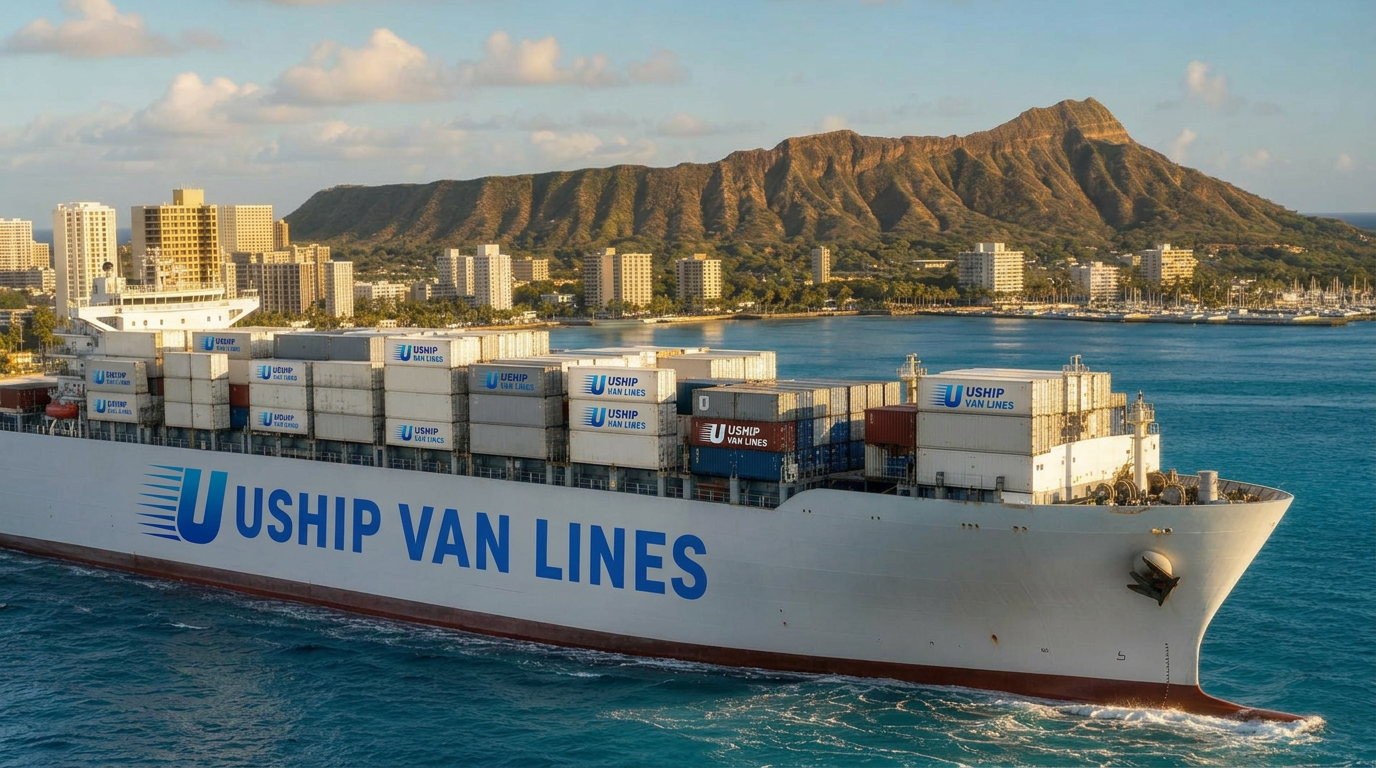
Moving from Irving, TX to Hawaii
Relocating from Irving, TX to Hawaii transforms a mainland move into a multi-modal logistics journey spanning 3,800+ miles across the Pacific. Your belongings will travel by truck from Irving to West Coast ports—typically Long Beach or Oakland—then voyage by ocean container to Honolulu, with additional inter-island shipping if you're moving to Maui, Kauai, or the Big Island.
Best Alaska & Hawaii Movers, powered by UShip Van Lines, specializes in these complex mainland-to-island transitions. We coordinate every leg—from North Texas pickup through California port handling, ocean freight booking with Matson or Pasha, and final delivery to your new Hawaiian address. Request your free quote today to lock in transparent pricing and a dedicated move coordinator who understands both Texas logistics and Hawaii's unique receiving requirements.
Route overview
The Irving-to-Hawaii Moving Corridor
Irving sits in the heart of the Dallas–Fort Worth metroplex, approximately 1,400 miles from California's primary Hawaii-bound shipping terminals. Your household goods will first travel overland via dedicated moving truck to the Port of Long Beach or Port of Oakland, where they're loaded into 20-foot or 40-foot ocean containers. Matson Navigation and Pasha Hawaii operate the only regular cargo vessel services between the West Coast and the Hawaiian Islands, running weekly sailings that take 5–6 days at sea to reach Honolulu.
Once your container clears customs and port inspections at Honolulu's Sand Island terminal, goods either stay on Oahu or transfer to inter-island barges operated by Young Brothers for neighbor island delivery. This additional hop adds 3–7 days depending on your destination island and barge schedules. The entire door-to-door timeline typically runs 14–28 days from your Irving pickup date, with variability driven by port congestion, weather windows, and seasonal shipping volumes.
Texas-to-Hawaii moves require careful planning around Hawaii's strict agricultural inspections and vehicle import regulations. Unlike a standard cross-country move, you'll navigate USDA paperwork, vehicle emissions testing requirements, and limited receiving windows at island addresses—factors that make experienced Hawaii moving specialists invaluable for a smooth transition.
How the moving process works
How Your Irving-to-Hawaii Move Unfolds
-
In-Home or Virtual Survey – Your move coordinator assesses your Irving residence (whether a Las Colinas high-rise, Valley Ranch townhome, or North Irving single-family) to calculate cubic footage, identify specialty items like pianos or artwork, and provide a binding quote based on container space and service level.
-
Pre-Move Purge and Hawaii Prep – Before packing, eliminate prohibited items: potting soil, fresh produce, certain hardwoods, and any plants (Hawaii's quarantine laws are strict). Dispose of hazardous materials; sell or donate excess furniture to reduce cubic feet and lower costs.
-
Professional Packing and Irving Pickup – Crews arrive at your scheduled date, wrap furniture in padded blankets, box fragile items, and load the truck. The driver begins the 1,400-mile haul to California, typically routing via I-20 West through Abilene, Midland, and El Paso, then I-10 to Los Angeles or I-40 to I-5 toward Oakland.
-
Port Drayage and Container Loading – At the West Coast port, your goods transfer to a secure warehouse where longshoremen load them into a shipping container alongside other Hawaii-bound shipments (consolidated LCL) or into your exclusive container (FCL). The container is logged, sealed, and staged for the next Matson or Pasha sailing.
-
Trans-Pacific Ocean Voyage – Your container boards a containership for the ~2,500-nautical-mile crossing to Honolulu. Vessels maintain 20–23 knot speeds, completing the journey in 5–6 days under normal sea conditions. Track your container via the carrier's online portal using your booking number.
-
Honolulu Port Clearance and Inspection – Upon arrival at Sand Island, U.S. Customs and Border Protection and Hawaii Department of Agriculture inspect containers. Random agricultural inspections can add 1–3 days; complete all pre-clearance paperwork in advance to minimize delays.
-
Final Delivery to Your Island Address – For Oahu destinations, a local delivery truck brings your container or unloaded goods directly to your home. For neighbor islands, your shipment transfers to a Young Brothers barge (3–7 additional days), then a local crew completes the last-mile delivery to Maui, Kauai, Hilo, or Kona. Confirm building elevator reservations, parking permits, and narrow-road access in advance—many Hawaiian neighborhoods have challenging delivery conditions.
Estimated moving costs
What to Budget for Your Irving-to-Hawaii Move
A typical 2-bedroom household (approximately 7,000–10,000 pounds or 1,000–1,400 cubic feet) moving from Irving to Honolulu generally costs $6,500–$11,500 for full-service door-to-door transport. A 3-bedroom home (12,000–15,000 pounds) can range $10,000–$17,000, while studio or 1-bedroom moves may fall between $4,200–$7,000. These figures include mainland pickup, overland haul to California, port handling, ocean freight, Honolulu delivery, and basic valuation coverage.
Key cost drivers:
- Container type – Exclusive-use 20-foot containers (FCL) cost more upfront but offer faster port turnaround and no co-mingling risk; consolidated (LCL) shares space with other shipments and prices by cubic foot, better for smaller loads.
- Neighbor island surcharges – Maui, Kauai, and Big Island destinations add $800–$2,200 for barge fees, inter-island handling, and rural delivery depending on exact zip code.
- Packing services – Professional pack-and-load adds $1,200–$3,500; self-packing saves money but increases damage risk and voids some insurance protections.
- Vehicle shipping – Cars ship separately via RORO (roll-on/roll-off) carriers from Long Beach/San Diego; expect $1,100–$1,600 per sedan to Honolulu, plus safety inspection fees upon Hawaii arrival.
- Peak season premiums – Summer months (June–August) and holiday windows see 15–25% rate increases due to military PCS season and vacation-home demand.
- Specialty items – Grands pianos, hot tubs, safes, and gun collections require custom crating and rigging, adding $500–$2,000 per item.
- Storage – If your Hawaii residence isn't ready, Honolulu warehouse storage runs $150–$300/month for a typical household; mainland storage in Irving or California costs slightly less but extends total transit time.
Never accept quotes without a detailed inventory and written estimate. Reputable movers conduct surveys (in-person or via video) and provide binding or binding-not-to-exceed quotes. Avoid brokers who lowball with non-binding estimates, then inflate charges after pickup—a common complaint on mainland-to-Hawaii routes.
Estimated transit times
Realistic Door-to-Door Timelines
Plan for 14–28 days total travel time from your Irving pickup to your Hawaiian delivery. Breaking down each leg:
- Irving to California port: 3–5 days for the overland truck haul (1,400 miles), including mandatory driver rest periods and potential warehouse staging if you miss a tight sailing cutoff.
- Port processing and container loading: 2–4 days at Long Beach or Oakland for drayage, customs documentation, container stuffing, and vessel assignment. Peak-season congestion or labor slowdowns can stretch this to 7 days.
- Ocean crossing: 5–6 days at sea from California to Honolulu on Matson's or Pasha's scheduled sailings. Storm diversions rarely occur but can add 1–2 days.
- Honolulu clearance: 1–3 days for CBP and agriculture inspections, container unloading, and local delivery dispatch. Pre-submitted paperwork expedites this phase.
- Inter-island barge (neighbor islands only): 3–7 additional days for Young Brothers barge service to Maui (Kahului), Kauai (Nawiliwili/Port Allen), or Big Island (Hilo/Kawaihae), plus final trucking to your address.
Expedited options are limited in Hawaii shipping—ocean vessels run fixed weekly schedules, and you cannot "speed up" a barge crossing. The best way to shorten timelines is booking early (6–8 weeks out) to secure the earliest available sailing, completing all Hawaii import paperwork in advance, and choosing direct Honolulu delivery if your destination is on Oahu.
Seasonal variability: Hurricane season (June–November) and winter North Pacific storms (December–February) can delay sailings by 1–3 days. Summer's high military move volumes increase port dwell times. Always build a 5–7 day buffer before lease start dates or job report deadlines.
Regional logistics
Hawaii-Specific Moving Logistics You Must Know
Port operations: Matson (matson.com) and Pasha Hawaii (pahippahawaii.com) are the only regular carriers offering Los Angeles/Oakland to Hawaii container service. Sailings depart 2–3 times weekly from Long Beach, slightly less frequently from Oakland. Containers arrive at Honolulu's Sand Island terminal (Pier 51–53), where strict USDA and Hawaii Dept. of Agriculture inspections occur. Bring or submit your USDA Form PPQ 505 (for plants, if any are pre-approved) and complete Hawaii's online import declaration well before your container arrives.
Vehicle shipping: Cars, trucks, and motorcycles ship via separate RORO vessels operated by Matson and Pasha. Drive your vehicle to the Long Beach or San Diego terminal (not Oakland for autos), where it's driven onto the ship's cargo deck. Upon Honolulu arrival, you'll need a Hawaii safety inspection within 30 days, proof of insurance, and registration transfer. Out-of-state vehicles older than model year 2010 may require emissions testing. Budget $1,100–$1,600 per vehicle to Honolulu, plus ~$85 safety inspection and registration fees. Shipping to neighbor islands adds another $200–$400 per vehicle via barge.
Prohibited and restricted items: Hawaii bans or restricts snakes, certain reptiles, all fresh fruits/vegetables, soil, untreated wood, bamboo, and most live plants. Even common houseplants require pre-arrival permits from the Hawaii Department of Agriculture. Dispose of all ammunition, fireworks, and flammable liquids before your Irving pickup—these cannot legally enter ocean containers. If you're bringing pets, coordinate separate air travel (Hawaiian Airlines Pets in Cabin or cargo); dogs and cats face 5-day or 120-day quarantine depending on rabies vaccination timelines and microchip compliance.
Inter-island logistics: Moving to Maui, Kauai, Hilo, or Kona means your container offloads in Honolulu, reloads onto a Young Brothers barge (the sole inter-island cargo carrier), and sails 3–7 additional days to your destination island's port. Final delivery on neighbor islands can be challenging: narrow roads, steep driveways, and limited truck access in upcountry Maui or North Shore Kauai require smaller trucks and sometimes multiple trips. Confirm delivery access with your local crew; some remote areas charge extra or require you to meet the truck at a central point.
Condo and high-rise considerations: Many Honolulu condos (Waikiki, Ala Moana, Kakaako) require certificate of insurance, elevator reservations (booked weeks in advance), and move-in fees ($200–$500). Some buildings restrict move hours to weekdays before 4 PM. Verify all building rules with your property manager and relay them to your moving coordinator—missed reservations can mean your delivery reschedules at your expense.
Storage contingencies: If your Hawaii home isn't ready or you're house-hunting upon arrival, your shipment can go into Honolulu warehouse storage. Rates run $150–$300/month for a typical 2–3 bedroom load. Some movers offer limited free storage (7–14 days); clarify terms in your contract. Storing on the mainland (Irving or California) is cheaper but delays your delivery and adds re-handling fees when you're ready to ship.
Seasonal considerations
Timing Your Move Around Hawaii's Seasons and Port Cycles
Spring (March–May): Ideal moving window with moderate weather, lower shipping volumes post-winter, and competitive rates. Ports clear containers faster, and neighbor island barge schedules run reliably. Book 4–6 weeks ahead for best pricing.
Summer (June–August): Peak season driven by military Permanent Change of Station (PCS) orders and family relocations before the school year. Expect 15–25% rate premiums, fuller containers, and 3–5 day longer port processing. Hurricane season officially begins June 1—while direct hits on shipping lanes are rare, tropical storms can delay sailings. Request guaranteed delivery windows and purchase full-value protection insurance.
Fall (September–November): Hurricane risk peaks in September; major storms (though infrequent) can shut ports for 2–4 days and create backlog ripple effects lasting two weeks. Rates drop after Labor Day, making October–November a value sweet spot if you can tolerate weather uncertainty. Thanksgiving week is a booking dead zone—secure your slot by mid-October.
Winter (December–February): North Pacific winter storms create rougher sea crossings and occasional delayed sailings, but costs drop 10–20% compared to summer. Holiday shipping freezes (mid-December to early January) mean limited sailings and skeleton port crews. January–February offers the best combination of low rates, available capacity, and post-holiday service resumption. Neighbor island roads may see flooding during Kona low-pressure systems, complicating final delivery—confirm with local delivery teams.
Year-round port congestion: Los Angeles/Long Beach ranks among the world's busiest port complexes. Labor negotiations, chassis shortages, and COVID-era disruptions have created unpredictable dwell times. Oakland offers a less-congested alternative with nearly identical sailing schedules. Your move coordinator will recommend the optimal port based on current conditions and your timeline.
Why choose Best Alaska & Hawaii Movers
Why Best Alaska & Hawaii Movers for Your Irving-to-Hawaii Relocation
-
Specialized mainland-to-island expertise – We focus exclusively on Alaska and Hawaii moves, coordinating the multi-modal complexity (truck, port, ocean, barge, last-mile) that general moving companies avoid or subcontract poorly.
-
Transparent, all-inclusive quoting – Our binding estimates include overland transport, port fees, ocean freight, and island delivery with no hidden fuel surcharges or surprise accessorials. You'll know your final cost before signing.
-
Direct carrier relationships – As a high-volume shipper with Matson and Pasha, we secure priority container allocations during peak season and faster port release, reducing your total transit time by 3–5 days compared to low-volume brokers.
-
Single-point accountability powered by UShip Van Lines – One coordinator manages your entire move from Irving pickup through Hawaiian delivery, with real-time tracking, proactive weather/port delay updates, and 24/7 support. No handoffs between disconnected vendors.
-
Full-value protection options – Beyond basic carrier liability (60¢/lb.), we offer comprehensive insurance covering full replacement cost for your high-value items during ocean transit and island delivery—critical for cross-Pacific moves where saltwater and humidity pose risks.
-
Neighbor island and rural delivery network – Our Hawaii-based partner crews know every port, barge schedule, and back-road restriction on Maui, Kauai, and the Big Island, ensuring your goods reach even the most remote addresses without delays or damage.