
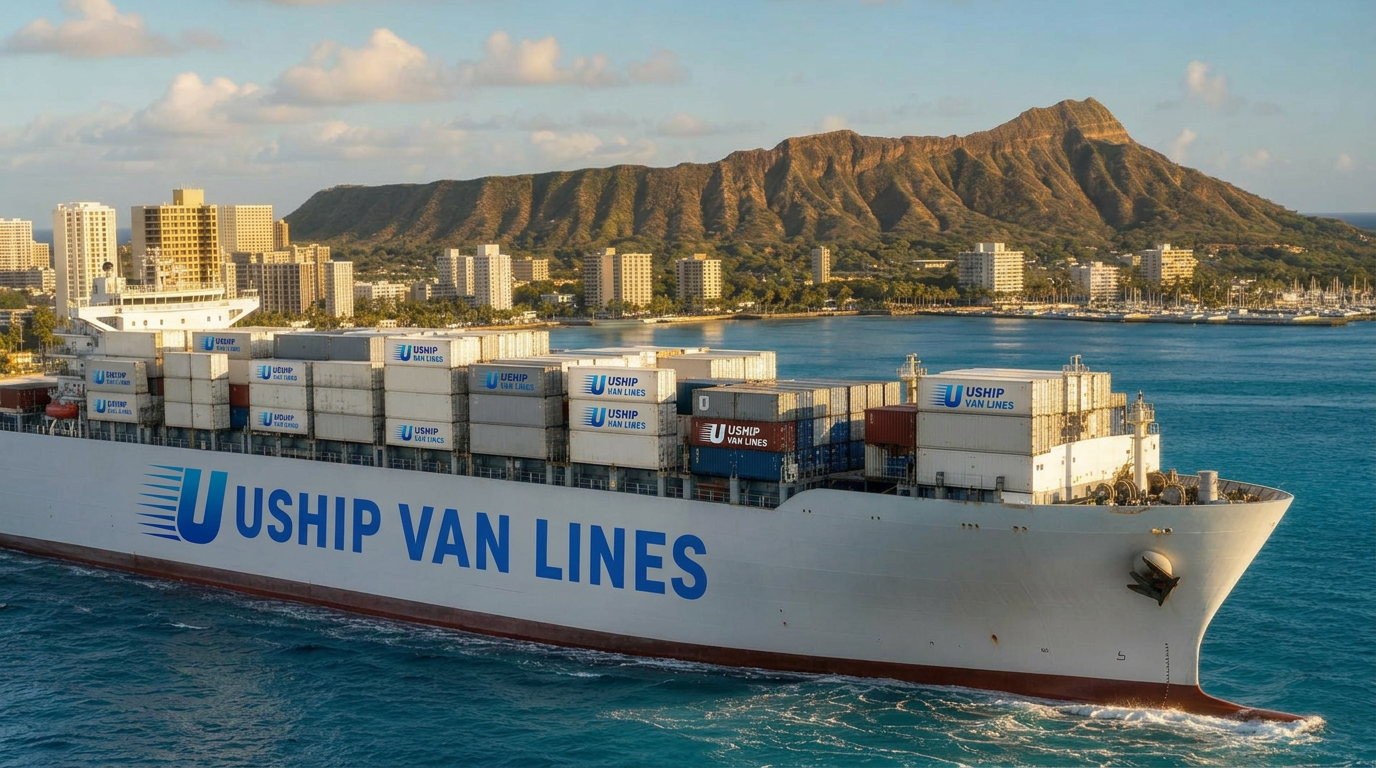
Moving from Atlanta, GA to Hawaii
Moving from Atlanta to Hawaii means coordinating a complex cross-country and transpacific journey—your household goods will travel roughly 5,000 miles by truck and container ship. Unlike a typical interstate move, this route requires mainland trucking from Atlanta to a West Coast port (usually Long Beach or Oakland), ocean freight to Honolulu, and potentially inter-island shipping to Maui, Kauai, or the Big Island.
Best Alaska & Hawaii Movers, powered by UShip Van Lines, specializes in these logistics-heavy relocations. We handle every step from pickup in Atlanta through final delivery at your new Hawaiian address. Ready to start planning your island move? Request a free, no-obligation quote tailored to your specific needs and timeline.
Route overview
Atlanta to Hawaii: Understanding Your Moving Route
Your belongings will take a two-stage journey from Georgia's capital to the Pacific islands. First, a long-haul truck will transport your packed container or consolidated shipment approximately 2,200 miles from Atlanta to the Port of Long Beach or Port of Oakland—typically a 4–6 day drive depending on routing and carrier schedules. At the port, your shipment transfers to ocean freight.
Matson Navigation and Pasha Hawaii operate the primary container services from California to Honolulu, with sailings typically 1–2 times weekly. The ocean voyage takes 5–7 days depending on the vessel and service route. Once in Honolulu, shipments destined for neighbor islands (Maui, Kauai, Big Island) require additional inter-island barge service, adding 1–3 days and extra handling fees.
This route demands careful coordination between trucking carriers, port schedules, and Hawaiian delivery services. Temperature and humidity differences between Atlanta and Hawaii also require proper packing techniques—electronics, wooden furniture, and climate-sensitive items need special attention to prevent warping or condensation damage during the transition from Georgia's climate to tropical conditions.
How the moving process works
How Your Atlanta to Hawaii Move Works: Step-by-Step
-
Free In-Home or Virtual Survey — We assess your inventory, discuss packing needs, review restricted items (Hawaii has strict agricultural and environmental regulations), and provide a detailed written estimate. Expect quotes 30–60 days before your desired move date for best pricing and availability.
-
Mainland Pickup & Container Loading — Professional movers arrive at your Atlanta home, pack (if you've selected full-service packing), and load your belongings into a dedicated shipping container or reserve space in a consolidated shipment. Container options include 20-foot or 40-foot steel ocean containers or smaller wooden lift vans.
-
Cross-Country Transit to West Coast Port — Your shipment travels by truck to Long Beach or Oakland, typically taking 4–6 days. We track the shipment and coordinate arrival timing with the next available Matson or Pasha sailing to minimize port storage fees.
-
Ocean Freight to Honolulu — Your container boards a cargo vessel for the 5–7 day Pacific crossing. Matson and Pasha operate regular schedules year-round, though summer and holiday periods see higher volume and occasionally longer port wait times.
-
Customs Clearance & Port Processing — While Hawaii is a U.S. state (no international customs), shipments undergo agricultural inspection by Hawaii Department of Agriculture. Prohibited items include most plants, soil, certain fruits, and untreated wood. We handle documentation and coordinate inspections.
-
Inter-Island Transfer (if needed) — If your destination is Maui, Kauai, Hilo, or Kona, your container transfers to Young Brothers inter-island barge service. This adds 1–3 days and typically $800–$1,500 depending on island and container size.
-
Final Delivery & Unloading — Local Hawaiian movers deliver to your new address, unload, and place items in rooms. Most island deliveries occur within 1–2 days of container arrival at the destination port. We confirm delivery windows 48–72 hours in advance.
Estimated moving costs
What Does an Atlanta to Hawaii Move Cost?
For a typical 2–3 bedroom household (approximately 7,000–10,000 lbs), expect total costs between $8,500 and $16,000 for a full-service move from Atlanta to Honolulu. Neighbor island destinations add $1,200–$2,500 for inter-island transport and additional handling.
Major cost drivers include:
- Volume and weight — Charges typically calculated per cubic foot or by container size (20-ft containers hold ~1,000 cu ft, 40-ft hold ~2,000 cu ft)
- Packing services — Full professional packing adds $1,500–$3,500; partial packing (fragiles only) runs $500–$1,200; self-pack is most economical but requires proper materials and technique
- Mainland trucking distance — Atlanta to West Coast is one of the longer mainland hauls, adding $2,000–$3,500 to the total
- Ocean freight rates — Seasonal fluctuations affect container pricing; summer months (June–August) typically see 10–20% higher rates due to peak moving season
- Final destination — Honolulu is least expensive; Maui, Kauai, and Big Island require inter-island barge; remote areas may have accessibility surcharges
- Insurance coverage — Basic carrier liability (60¢/lb) is included; full replacement value coverage costs 1–3% of declared shipment value
- Storage — If your new home isn't ready, Hawaiian storage runs $150–$400/month for a typical household
We provide transparent, itemized quotes with no hidden fees. Prices vary based on exact inventory, services selected, and current carrier rates—request a personalized estimate for accurate budgeting. Never trust online calculators that promise instant quotes without reviewing your specific inventory and needs.
Estimated transit times
How Long Does Atlanta to Hawaii Moving Take?
Door-to-door transit typically takes 18–28 days from pickup in Atlanta to delivery at your Hawaiian address. This timeline breaks down into distinct segments:
Mainland trucking (4–6 days) — Atlanta to Long Beach/Oakland, depending on carrier routing, weather, and driver schedules. Direct hauls are faster; consolidated shipments that pick up multiple households may take longer.
Port dwell time (2–5 days) — Time between truck arrival at port and container loading onto the next available vessel. Booking early helps secure space on preferred sailing dates. Peak summer season may extend port wait times.
Ocean voyage (5–7 days) — Matson and Pasha operate regular schedules, but vessel speed, routing (some ships make multiple port calls), and weather can affect exact crossing time.
Hawaiian port processing (1–3 days) — Agricultural inspection, container unloading from ship, and preparation for final delivery or inter-island transfer.
Inter-island transport (1–3 days, if applicable) — Young Brothers barge service to Maui, Kauai, Hilo, or Kona operates on fixed weekly schedules. Missing a barge sailing can add 7 days to your delivery.
Final delivery scheduling (1–2 days) — Local movers coordinate delivery windows based on container availability and your schedule.
Expedited service is rarely available for Hawaii moves—ocean shipping operates on fixed vessel schedules. Book 6–8 weeks ahead for summer moves, 4–6 weeks for off-season relocations. Rush moves (under 3 weeks notice) may incur premium charges and offer limited sailing options.
Regional logistics
Hawaii-Specific Moving Logistics You Need to Know
Port operations: West Coast departures typically use Port of Long Beach (Matson's primary hub) or Port of Oakland (Pasha's main terminal). Both ports have dedicated Hawaii service terminals with regular sailing schedules. Your shipment may arrive at Honolulu's Sand Island terminal (Matson) or Pier 51 (Pasha). Neighbor island shipments clear Honolulu then transfer to Young Brothers inter-island service.
Agricultural restrictions: Hawaii Department of Agriculture enforces strict biosecurity to protect the islands' fragile ecosystem. Prohibited items include: most live plants, soil and sand, fresh fruits and vegetables, seeds, untreated wood furniture or pallets, certain meats and animal products, and packing materials with soil contamination. Inspectors may require container unpacking for examination—concealing prohibited items risks fines and delays. We provide detailed restriction lists during your survey.
Vehicle shipping: Cars, trucks, and motorcycles ship separately from household goods, typically in roll-on/roll-off (RoRo) vessels. Matson and Pasha offer vehicle service; booking 3–4 weeks ahead is standard. Costs run $1,200–$1,800 Atlanta to Honolulu for standard vehicles. Vehicles must be clean (no dirt, no personal items inside), under ¼ tank fuel, and operationally sound. Expect 2–3 weeks door-to-door for vehicles.
Container types: Exclusive-use containers (your household fills an entire 20-ft or 40-ft container) offer maximum protection and faster transit but cost more—ideal for 3+ bedroom homes. Consolidated shipments (your goods share container space with other households) cost less but add handling steps and slightly longer timelines—good for 1–2 bedroom apartments or partial loads. Lift vans (smaller wooden crates) work for studio/small 1BR moves under 1,000 cu ft.
Insurance requirements: Carrier liability covers 60 cents per pound (a 50-lb TV damaged = $30 payout). Full replacement value insurance costs 1–3% of declared value and covers actual replacement cost. High-value items (jewelry, art, collectibles) may need separate riders. We recommend insuring Hawaii moves at $30,000–$60,000 minimum for typical households given the complex multi-modal journey.
Delivery access: Many Hawaiian properties have narrow streets, steep driveways, or limited truck access—especially older Honolulu neighborhoods, upcountry Maui, and rural Big Island areas. Walk-up apartments without elevators incur per-floor charges ($50–$150/floor). Gated communities and military bases require advance access arrangements. Share photos and address details during your survey so we can plan appropriate equipment and crews.
Seasonal considerations
Best Times to Move from Atlanta to Hawaii
Summer (June–August) — Peak moving season sees highest demand and rates. Families relocate between school years, military PCS orders concentrate in summer, and tourist season strains Hawaiian delivery resources. Book 8–10 weeks ahead. Expect 15–25% price premiums and tighter delivery windows. Atlanta's heat and humidity make packing more challenging—start early morning to avoid afternoon heat.
Fall (September–November) — Excellent shoulder season with moderate rates and good availability. Hurricane season officially runs June 1–November 30, though Hawaii sees far fewer storms than the Gulf Coast or Caribbean. September occasionally brings tropical storms that can delay vessel schedules by 2–4 days. Atlanta's mild fall weather makes packing and loading comfortable.
Winter (December–February) — Best rates and availability, but holiday weeks (Thanksgiving through New Year's) see reduced sailing schedules. Matson and Pasha may skip sailings around Christmas. Winter Pacific storms occasionally delay vessels or cause rough crossings that can shift cargo. Atlanta's cold snaps are minor compared to northern states, but protect water-sensitive items during loading. Book early for January moves (popular for corporate relocations and military orders).
Spring (March–May) — Second-best season for pricing and weather. Port congestion is minimal, Hawaiian delivery crews have good availability, and rates run 10–15% below summer peaks. March and April are ideal for families wanting to arrive before summer without peak-season premiums. Atlanta's spring storms rarely delay pickups, but communicate flexible load dates just in case.
Hurricane considerations: While Atlanta isn't coastal, major Atlantic hurricanes can disrupt trucking routes through the Southeast and close Gulf Coast ports. Hurricane season in Hawaii is less severe than Atlantic/Gulf regions, but August–October storms occasionally delay vessels or require ships to reroute, adding 1–3 days to crossing times.
Why choose Best Alaska & Hawaii Movers
Why Choose Best Alaska & Hawaii Movers for Your Atlanta to Hawaii Relocation
-
Specialized Hawaii expertise — We focus exclusively on Alaska and Hawaii moves, giving us deep relationships with Matson, Pasha, inter-island carriers, and Hawaiian delivery crews. We know agricultural rules, port procedures, and island-specific challenges that general movers miss.
-
Single-point coordination — You work with one dedicated move coordinator from Atlanta pickup through Hawaiian delivery. No handoffs to separate trucking, ocean freight, and local delivery vendors—we manage all partners and keep you informed at every stage.
-
Transparent, itemized pricing — Our quotes break down every cost component: mainland trucking, ocean freight, port fees, Hawaiian delivery, packing materials, insurance options, and any accessorial charges. You'll understand exactly what you're paying for with no surprise fees at delivery.
-
Powered by UShip Van Lines' network — Best Alaska & Hawaii Movers operates on UShip Van Lines' nationwide carrier network, giving us access to vetted trucking partners, competitive rates, and accountability systems that protect your shipment across its 5,000-mile journey.
-
Flexible service levels — Choose full-service packing (we pack everything), partial packing (we handle fragiles, you pack boxes), or self-pack with professional loading. Select exclusive-use containers for maximum protection or consolidated shipments for budget-conscious moves. We tailor services to your needs and timeline.
-
Proactive communication — Receive milestone updates via text, email, or phone: mainland pickup completed, shipment arrived at port, container loaded on vessel, vessel departed, container cleared Honolulu, delivery scheduled. Our team monitors your shipment daily and alerts you to any schedule changes before you have to call and ask.