
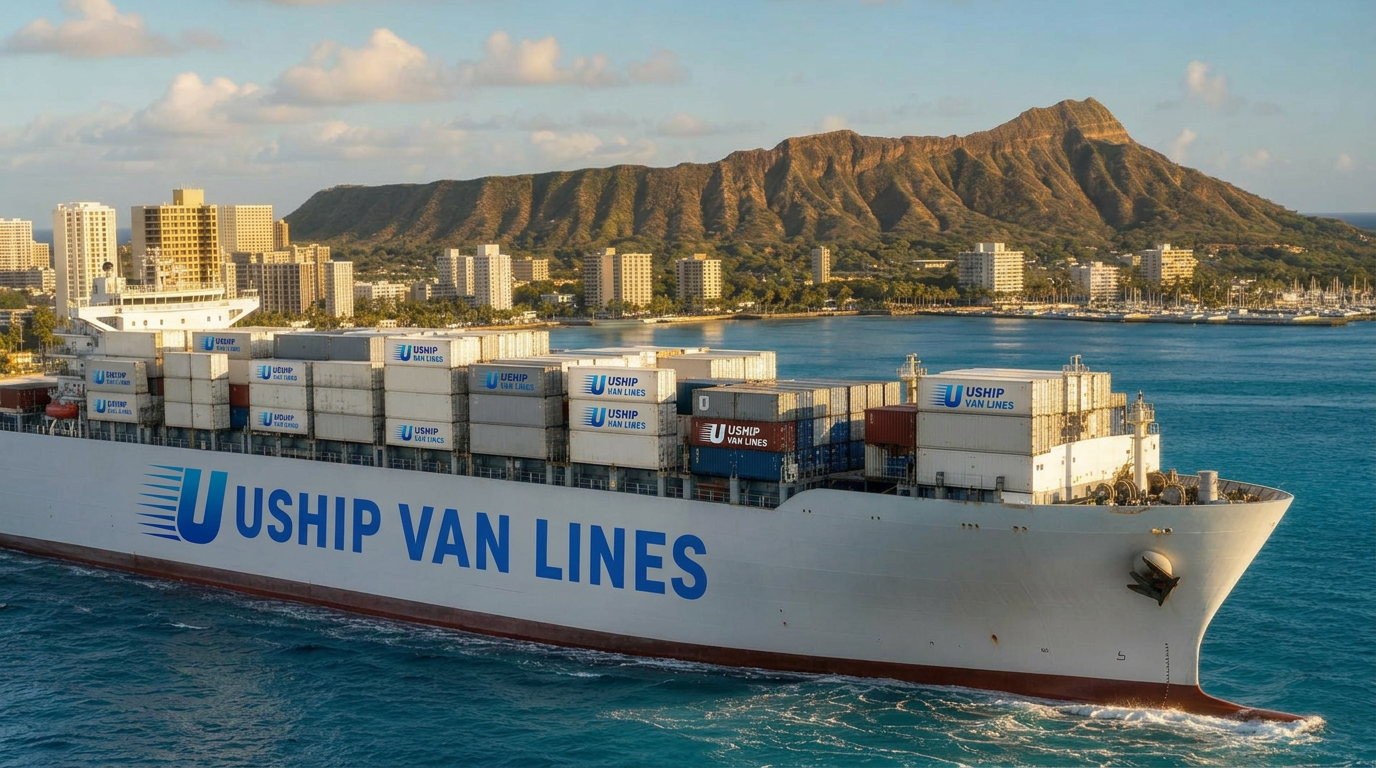
Moving from Hawaii to Atlanta, GA
Relocating from the Hawaiian Islands to Atlanta represents one of the most complex domestic moves you can make—combining ocean freight, mainland trucking, and careful coordination across 4,400 miles. Whether you're leaving Oahu, Maui, Kauai, or the Big Island for Atlanta's thriving job market and lower cost of living, understanding the multi-stage logistics will help you plan effectively and avoid costly surprises.
Best Alaska & Hawaii Movers, powered by UShip Van Lines, specializes in Hawaii-to-mainland relocations and handles every phase of your move—from island pickup through ocean container shipping and final delivery to your Atlanta neighborhood. Ready to start planning? Request a detailed quote tailored to your specific island, household size, and timeline.
Route overview
The Hawaii to Atlanta Moving Lane
Moving from Hawaii to Atlanta requires coordinating three distinct transportation segments: local pickup on your island, inter-island transfer to Honolulu (if you're not already on Oahu), ocean container shipping to the West Coast (typically Long Beach or Oakland), and cross-country trucking to Georgia. This multi-modal journey typically spans 2–4 weeks door-to-door, depending on sailing schedules, port processing times, and mainland routing.
Atlanta's position as a southeastern logistics hub works in your favor—once your container reaches the West Coast and your belongings are transferred to a truck, the I-40/I-20 corridor offers direct highway access. However, the ocean crossing remains the critical path element, dictated by Matson Navigation and Pasha Hawaii sailing schedules that typically run weekly but can face delays during peak summer months and hurricane season.
Most households shipping from Hawaii to Atlanta fill a 20-foot ocean container (roughly equivalent to a 2–3 bedroom home) or share space in a consolidated container for smaller loads. Understanding container dimensions, weight limits, and prohibited items—Hawaii has strict outbound restrictions on soil, certain plants, and untreated wood—is essential for a smooth move.
How the moving process works
How Your Hawaii to Atlanta Move Works: Step-by-Step
-
Initial survey and booking – A moving coordinator conducts a virtual or in-person assessment of your Hawaii home, catalogs your belongings, identifies any items requiring special handling (surfboards, musical instruments, artwork), and provides a binding or binding-not-to-exceed quote. Book 6–8 weeks ahead during summer peak season, 4–6 weeks in off-season.
-
Island pickup and packing – Professional packers arrive at your Hawaii residence, wrap and box your household goods using ocean-rated materials (reinforced cartons, moisture barriers), and load everything into a container or truck for transport to the consolidation point. If you're on a neighbor island, goods are first trucked to the local port for barge service to Honolulu.
-
Ocean freight to the mainland – Your container is loaded aboard a Matson or Pasha Hawaii vessel for the 5–7 day voyage to Long Beach or Oakland. Containers are sealed and secured; you won't have access during transit. Sailing schedules are fixed, so your booking date determines your departure window.
-
West Coast port processing – Upon arrival, containers clear customs (usually routine for household goods), undergo USDA agricultural inspection if required, and are unloaded to a warehouse or directly onto a truck chassis. This phase typically adds 2–5 days depending on port congestion and inspection queues.
-
Cross-country trucking – Your goods are loaded onto a semi-truck for the 2,200-mile journey from California to Atlanta. Drivers typically cover 500–600 miles per day, making the mainland leg a 4–6 day trip via I-40 through Arizona, New Mexico, Texas, Arkansas, Tennessee, and into Georgia.
-
Atlanta delivery and unloading – The truck arrives at your Atlanta address within the scheduled delivery window (usually a 2–3 day range). Movers unload, place furniture in rooms per your direction, and remove packing materials. Inspect for damage immediately and note any issues on the delivery receipt.
-
Post-move settlement – File any damage claims within the timeframe specified in your contract (typically 9 months for loss, 120 days for damage). Unpack at your own pace, recycle or donate moving materials, and update your address with USPS, DMV, voter registration, and other agencies.
Estimated moving costs
What Does a Hawaii to Atlanta Move Cost?
For a typical 2–3 bedroom household (approximately 7,000–10,000 pounds), expect to invest $6,500–$12,000 for a full-service move from Hawaii to Atlanta. Studio and 1-bedroom moves in shared containers may range $3,500–$6,000, while larger 4-bedroom homes requiring exclusive container use can reach $14,000–$18,000 or more.
Key cost drivers include:
- Volume and weight – Ocean freight is billed primarily by cubic footage or container share, while the mainland trucking leg is weight-sensitive. A 20-foot container holds roughly 1,000–1,200 cubic feet.
- Island of origin – Moves from Oahu cost less because containers ship directly from Honolulu; neighbor island moves incur additional barge fees ($800–$1,500) and handling charges for Maui, Kauai, Hilo, or Kona pickups.
- Packing services – Full professional packing adds $800–$2,000 but provides better protection for the ocean voyage and is often required for insurance coverage on fragile items.
- Sailing season – Summer months (May–September) see higher demand and pricing premiums of 10–20% compared to winter moves. Hurricane season (June–November) can also cause schedule disruptions.
- Vehicle shipping – Cars are shipped separately via roll-on/roll-off vessel and cost $1,200–$1,800 from Hawaii to the mainland, then require separate transport from the West Coast to Atlanta (add $800–$1,400).
- Storage – If your Atlanta home isn't ready, warehouse storage on the mainland runs $150–$300 per month for a typical household load.
- Insurance – Basic carrier liability covers only 60 cents per pound; full-value protection costs 1–2% of your declared shipment value.
Request itemized quotes from multiple carriers and confirm what's included—some quotes bundle packing and insurance, others price them separately. Never accept a quote without a detailed inventory and clear understanding of liability limits.
Estimated transit times
How Long Does a Hawaii to Atlanta Move Take?
Plan for 14–28 days door-to-door from your final pickup date in Hawaii to delivery in Atlanta, with most moves completing in the 18–22 day range under normal conditions.
Typical timeline breakdown:
- Island pickup to Honolulu departure: 1–5 days (same-day for Oahu residents, 2–5 days for neighbor island barge transfers)
- Ocean voyage to Long Beach/Oakland: 5–7 days (Matson and Pasha maintain regular schedules, but weather and port conditions can add 1–2 days)
- West Coast port processing: 2–5 days (customs clearance, USDA inspection if flagged, container unloading, and truck loading)
- Cross-country trucking: 5–7 days (approximately 2,200 miles at 400–500 miles per day, including required driver rest periods)
- Delivery window: Your carrier will provide a 2–3 day delivery window once the truck is en route from the West Coast
Factors that extend timelines include:
- Sailing schedule alignment – If you miss a weekly departure by one day, you wait a full week for the next vessel
- Hurricane season disruptions – Tropical storms can delay sailings or force vessels to divert; September and October are historically most affected
- Peak season congestion – Summer moves (May–August) face fuller vessels, longer port queues, and tighter truck capacity
- Neighbor island logistics – Barge service from Maui, Kauai, or Big Island ports to Honolulu runs 2–4 times weekly, not daily
- Atlanta delivery access – Urban high-rise buildings, gated communities, or addresses with difficult truck access may require shuttle service, adding 1–2 days
To minimize delays, book during off-peak months (October–April), maintain flexible delivery dates, and ensure your Atlanta address can accommodate a 53-foot semi-truck.
Regional logistics
Hawaii-Specific Moving Logistics You Must Understand
Port operations: Honolulu's Sand Island terminal handles virtually all Hawaii household goods exports. Matson and Pasha maintain separate terminals with distinct procedures. Your mover coordinates container delivery, but you must ensure your inventory is accurate—once sealed, containers aren't reopened until the mainland. Neighbor island ports (Kahului, Nawiliwili, Kawaihae, Hilo) connect via Young Brothers barge service to Honolulu, typically running 2–4 times weekly depending on the route.
Prohibited and restricted items: Hawaii and USDA regulations prohibit moving soil, sand, plants in soil, fresh produce, certain seeds, untreated wood, and live animals in household goods containers. Declared agricultural items may trigger USDA inspection on the mainland, adding 1–3 days. Never pack prohibited items—fines run $500–$10,000 and can delay your entire shipment. Propane tanks, ammunition, and hazardous materials are also banned from ocean containers.
Vehicle shipping: Cars ship separately via Matson or Pasha roll-on/roll-off service (5–7 days ocean transit, $1,200–$1,800 Honolulu to Long Beach/Oakland). Vehicles must be in running condition, empty except for 1/4 tank of gas and a spare tire, and will arrive on the West Coast 1–2 weeks before or after your household goods. You'll need separate mainland auto transport from California to Atlanta unless you fly back to retrieve the car yourself.
Container types and sharing: A 20-foot container (internal dimensions roughly 19'4" × 7'8" × 7'10") holds a 2–3 bedroom home's furnishings. Smaller households share consolidated containers, with your goods palletized, wrapped, and segregated from other shipments. Exclusive-use containers offer more security and predictable pricing but only make economic sense for 3+ bedroom moves. A 40-foot container is rarely cost-effective for residential moves unless you're shipping vehicles inside.
Insurance and valuation: Carrier basic liability (60 cents per pound) is inadequate for most households—a 50-pound TV damaged beyond repair yields only $30. Purchase full-value protection (declared value coverage) for 1–2% of your shipment's total value. Document high-value items with photos, model numbers, and receipts. Marine cargo insurance is also available through third parties for additional peace of mind during the ocean leg.
Delivery logistics in Atlanta: Confirm your Atlanta address can accommodate a 53-foot semi-truck and trailer (needs 100+ feet of straight curb space). High-rise buildings often require freight elevator reservations and certificates of insurance weeks in advance. Gated communities may need delivery pre-authorization. If truck access is impossible, shuttle service (transferring goods to a smaller truck) adds $500–$1,200 and 1–2 days. Narrow historic streets in older Atlanta neighborhoods (Inman Park, Cabbagetown, Grant Park) frequently require shuttles.
Seasonal considerations
Best Times to Move from Hawaii to Atlanta
Winter (December–February): The most affordable and predictable season for Hawaii moves. Ocean schedules run smoothly, port congestion is minimal, and mainland trucking capacity is abundant. Hawaii weather is ideal, but Atlanta can experience occasional ice storms that delay final delivery. Expect 10–15% lower pricing than summer peaks.
Spring (March–May): Moderate demand and good weather on both ends make spring attractive. Booking windows tighten as summer approaches, so reserve 6+ weeks ahead. Pricing sits in the mid-range. Atlanta's severe weather season (tornados) peaks in April, but delivery delays are rare.
Summer (June–August): Peak moving season coincides with hurricane season's start. Expect premium pricing (10–20% higher), vessel capacity constraints, and longer booking lead times (8+ weeks recommended). June–July offer the most stable sailing schedules before August hurricane risks increase. Atlanta heat and humidity mean items arrive in hot containers—avoid leaving candles, vinyl records, or chocolate in your shipment.
Fall (September–November): Hurricane season peaks in September, creating the highest risk of sailing delays, diversions, or cancellations. October and November see diminishing storm risk and falling demand—excellent pricing and availability emerge. Thanksgiving week is tricky for mainland trucking due to driver shortages and holiday closures. Atlanta's mild fall weather is ideal for move-in.
Hurricane season strategy: If you must move June–November, purchase comprehensive travel delay coverage, build 1–2 weeks of buffer into your timeline, and maintain a backup plan (temporary housing, extended storage). Monitor NOAA forecasts and stay in close contact with your moving coordinator as your sailing date approaches.
Why choose Best Alaska & Hawaii Movers
Why Choose Best Alaska & Hawaii Movers for Your Hawaii to Atlanta Relocation
-
Hawaii specialists, not generalists – We focus exclusively on Alaska and Hawaii long-distance moves, giving us deep relationships with Matson, Pasha, and inter-island carriers that translate to better scheduling, pricing, and problem-solving when issues arise.
-
Single-point accountability – One coordinator manages your entire move from island pickup through Atlanta delivery, eliminating the confusion of dealing with separate local, ocean, and mainland carriers who point fingers when problems occur.
-
Transparent, binding pricing – Our quotes include detailed line-item breakdowns of packing, ocean freight, mainland trucking, and insurance. No surprise fees, no bait-and-switch tactics. What we quote is what you pay, absent changes you request.
-
Powered by UShip Van Lines' network – Our mainland trucking partner operates a nationwide fleet with real-time tracking, experienced drivers, and the capacity to handle delivery anywhere in the Atlanta metro area, from Buckhead high-rises to Marietta suburbs.
-
Proactive communication – We provide milestone updates at every stage (container loaded, vessel departed, mainland arrival, truck dispatched) and respond to questions within hours, not days. You'll never wonder where your belongings are or when they'll arrive.
-
Flexible storage solutions – If your Atlanta home isn't ready, we offer secure warehouse storage on the mainland at competitive rates, with the ability to deliver when you're ready—no rush, no pressure.