
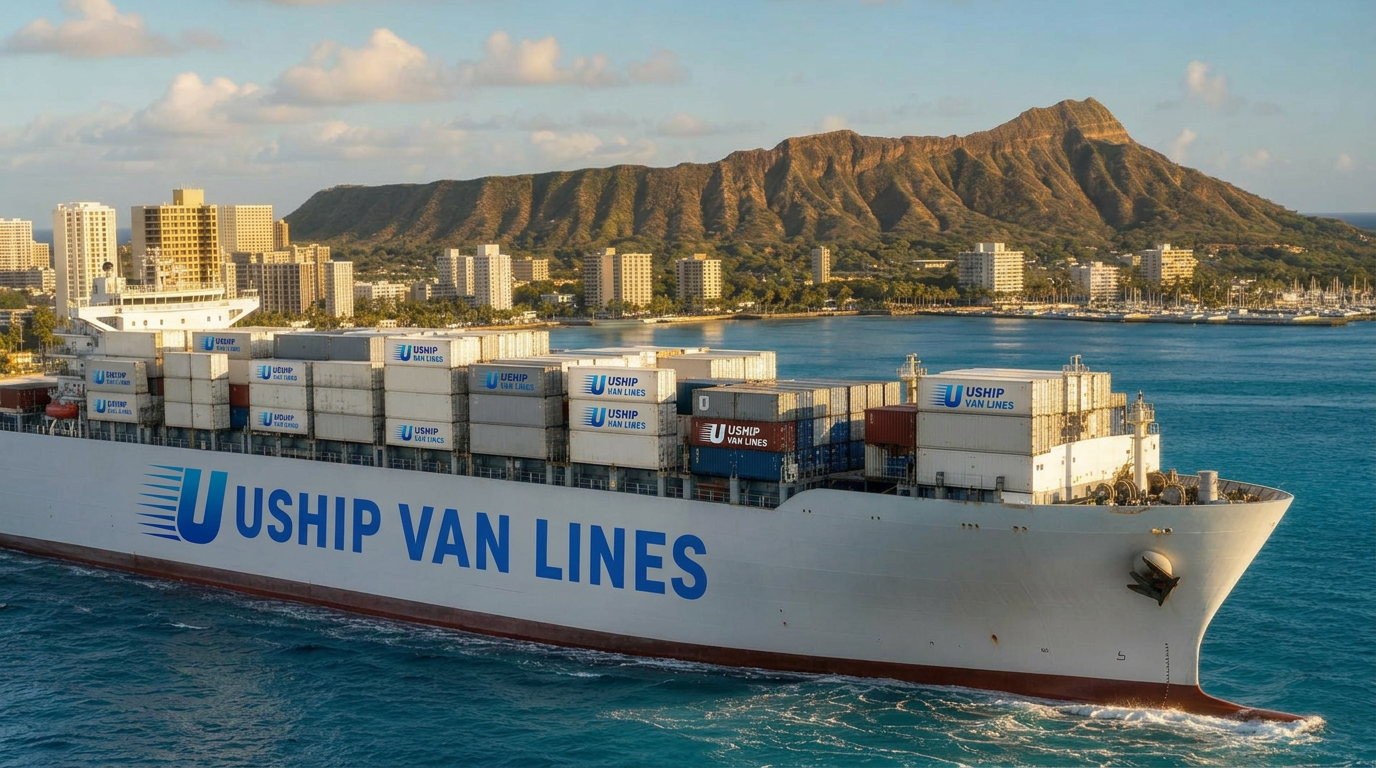
Moving from Hawaii to West Virginia
Moving from the Hawaiian Islands to the Mountain State requires careful orchestration of ocean freight, mainland trucking, and timing across 4,800+ miles. Your household goods will travel by container ship from Honolulu, Kahului, or Hilo to the U.S. West Coast, then overland through the Rockies and Appalachians to West Virginia's valleys and ridges.
Best Alaska & Hawaii Movers, powered by UShip Van Lines, coordinates every segment—port delivery, container consolidation, cross-country transit, and final delivery to Charleston, Huntington, Morgantown, or anywhere across West Virginia. Request your free quote to see transparent pricing and build a custom timeline for your island-to-mainland move.
Route overview
Route Overview: Hawaii to West Virginia
This transpacific-transcontinental move begins with container pickup at your Hawaii residence (Oahu, Maui, Kauai, or Big Island), followed by ocean transit from Honolulu or Nawiliwili to Long Beach or Oakland (7–14 days). After port clearance and customs inspection, your shipment travels approximately 2,400 miles overland via I-80 or I-70 through Nevada, Utah, Colorado, Kansas, Missouri, and into West Virginia via I-64 or I-77.
West Virginia's terrain—steep grades, narrow valleys, and winding Appalachian roads—requires experienced drivers familiar with the region's challenges. Final delivery may involve shuttles or smaller trucks in remote hollows or mountain communities where full tractor-trailers cannot navigate.
Total door-to-door time typically runs 3–5 weeks depending on container sailing schedules, port dwell time, and mainland routing. Early booking and off-peak travel (September–April) yield the smoothest experience and best pricing.
How the moving process works
The Moving Process: Hawaii to West Virginia
-
Free Quote & Survey – Contact Best Alaska & Hawaii Movers for a detailed, obligation-free estimate. We'll assess your inventory, discuss special items (surfboards, instruments, vehicles), and outline the full timeline.
-
Container Selection & Booking – Choose exclusive 20' or 40' container use, or cost-effective consolidated (shared) container service. We book space on the next available Matson or Pasha sailing and reserve mainland trucking capacity.
-
Packing & Island Pickup – Professional crews pack and load your belongings at your Hawaii home. Items are inventoried, wrapped, and secured for ocean transit. We coordinate elevator/parking permits and handle building requirements.
-
Ocean Transit to West Coast – Your container sails from Honolulu to Long Beach or Oakland (typically 7–14 days). We track the shipment and notify you of arrival, customs clearance, and port release.
-
Mainland Trucking – After port dwell (1–3 days), your container or consolidated shipment departs for West Virginia. Transit across the Rockies and Plains takes 4–7 days; expect an additional day navigating Appalachian routes.
-
Delivery & Unload – Our driver contacts you 24–48 hours before arrival. We unload, place furniture, and remove packing materials. You inspect and sign off on the inventory.
-
Post-Move Support – File any claims within 9 months. Our team provides guidance on West Virginia vehicle registration, USPS forwarding, and settling into your new community.
Estimated moving costs
Cost Estimate: What to Expect
A typical 2–3 bedroom move from Hawaii to West Virginia costs $6,500–$12,000 for full-service door-to-door shipping. Studio or 1-bedroom moves may start around $4,200; larger 4+ bedroom homes can exceed $15,000.
Key cost drivers include:
- Container mode – Exclusive 20' container ($5,000–$7,500 ocean leg alone) vs. consolidated shared space ($2,800–$4,500 for ~400 cu ft)
- Origin island – Neighbor Island pickups (Maui, Kauai, Big Island) add inter-island barge fees ($400–$900)
- Mainland distance – West Virginia's 2,400+ mile overland haul from California adds $2,200–$3,800 in trucking costs
- Packing services – Full professional packing runs $800–$1,800; DIY (you pack, we load) saves 15–25%
- Seasonal demand – Summer (May–August) commands 10–20% premiums; late fall/winter offers the best rates
- Access & delivery complexity – Remote hollows, steep driveways, or narrow mountain roads may require shuttle fees ($200–$600)
- Insurance & valuation – Basic (60¢/lb) is included; full-value replacement coverage costs 1–2% of declared value
We never guarantee prices without a full survey. Request a personalized quote to see transparent line-item costs for your specific inventory and timeline.
Estimated transit times
Transit Time: Hawaii to West Virginia
Plan for 21–35 days door-to-door under normal conditions:
- Island pickup to port delivery: 1–2 days (same-day for Oahu; add 1–3 days for Neighbor Island barge to Honolulu)
- Ocean sailing (Honolulu to Long Beach/Oakland): 7–14 days (weekly Matson sailings; Pasha typically 10–12 days)
- Port clearance & dwell: 1–3 days (customs inspection, container release, drayage to trucking terminal)
- Mainland trucking (California to West Virginia): 5–9 days (I-80 northern route ~6 days; southern I-40/I-64 ~7 days; mountain weather can add delays)
- Final delivery window: Typically 1–2 day window once truck is in-state
Factors that extend timelines:
- Neighbor Island origins (Big Island, Kauai) add 2–4 days for inter-island barge connections
- Holiday/peak summer congestion at Long Beach/Oakland can add 2–5 days of port dwell
- Winter weather in the Rockies or Appalachians (November–March) may delay trucking 1–3 days
- Consolidated shipments wait for full loads, adding 3–7 days vs. exclusive container direct dispatch
Book 6–8 weeks ahead for summer moves, 4–6 weeks for off-peak travel. Expedited exclusive containers can shave 5–7 days off consolidated timelines.
Regional logistics
Logistics: Hawaii-Specific Moving Details
Ports & Container Handling:
Most Hawaii moves funnel through Honolulu's Sand Island terminal (Matson, Pasha). Neighbor Island shipments barge to Honolulu before mainland sailing. Long Beach and Oakland are primary West Coast ports; your mover selects based on sailing schedules and mainland routing efficiency.
Prohibited & Restricted Items:
USDA and Hawaii Dept of Agriculture prohibit most plants, soil, seeds, fresh foods, and certain wood items. Hazardous materials (propane, paint, cleaners, batteries) cannot ship via ocean container. Firearms require special declarations and compliance with both Hawaii export and West Virginia import laws.
Vehicle Shipping:
Vehicles ship separately via roll-on/roll-off (RoRo) service—typically $1,200–$1,800 Honolulu to California, then $800–$1,400 overland to West Virginia. Total 3–4 weeks. Vehicles must be operable, clean (agricultural inspection), and under ¼ tank fuel. We coordinate vehicle and household goods timing to align arrivals.
Inter-Island Coordination:
Big Island, Maui, and Kauai residents: your container or palletized goods barge to Honolulu (Young Brothers, Matson inter-island) before the transpacific leg. This adds 2–4 days and $400–$900. We manage the hand-off and tracking.
West Virginia Delivery Challenges:
Many WV communities—particularly in Greenbrier, Pocahontas, or Webster counties—have weight-restricted bridges, narrow hollows, and steep grades unsuitable for 53' tractor-trailers. We arrange shuttle trucks (26' straight trucks or smaller) for final-mile delivery when needed. Communicate your exact address and any access constraints during the quote phase.
Paperwork & Customs:
All Hawaii-to-mainland moves are domestic (no international customs), but USDA agricultural inspections occur at West Coast ports. Ensure your inventory lists are accurate. We handle port documentation and coordinate inspections to minimize delays.
Seasonal considerations
Seasonal Considerations: Timing Your Move
Summer (June–August):
Peak moving season for mainland-bound Hawaii families. Expect 15–20% higher costs, limited container availability, and longer port dwell times (up to 5 days at busy California terminals). Book 8+ weeks ahead. Benefit: dry weather on both ends, ideal for open-air loading and mountain passes.
Fall (September–November):
Ideal window. Hurricane season tapers after September; shipping rates drop 10–15%. West Virginia's autumn is spectacular but prepare for early snow in higher elevations (Snowshoe, Davis) after mid-October. Thanksgiving week can congest mainland trucking—avoid if possible.
Winter (December–February):
Lowest rates (20–30% below summer peaks) and fastest container availability. Ocean crossings remain reliable; challenges arise in mainland trucking through Sierra Nevada and Rockies (chains required, occasional closures). West Virginia's I-64/I-77 corridors experience ice storms and closures in January–February. Budget extra transit days. Perfect for flexible schedules and cost-conscious movers.
Spring (March–May):
Rates climb as families plan summer transitions. Hawaii's trade winds are consistent; watch for late-season Kona storms (rare but disruptive). Mainland mountain passes clear by late April. May sees the start of peak-season pricing. Book by March for June moves.
Hurricane considerations:
Central Pacific hurricane season runs June–November (peak August–September). While direct hits on shipping lanes are uncommon, named storms can delay sailings 2–7 days. Carriers reschedule proactively; stay in contact with your coordinator.
Why choose Best Alaska & Hawaii Movers
Why Choose Best Alaska & Hawaii Movers
- Hawaii & Non-Contiguous Specialists – We focus exclusively on Alaska and Hawaii moves, understanding the unique logistics, carrier relationships, and regulatory requirements that generalist movers miss.
- Transparent Pricing, No Surprises – Detailed line-item quotes covering ocean, trucking, packing, insurance, and accessorial fees. No hidden charges at delivery.
- End-to-End Coordination – Single point of contact manages your container booking, island pickup, port clearance, mainland trucking, and West Virginia delivery. You're never handed off between vendors.
- Powered by UShip Van Lines' Network – Access to vetted mainland carriers, real-time tracking, and nationwide support infrastructure ensuring reliable overland transit across 2,400+ miles.
- Flexible Scheduling & Storage – Need to store goods in California or en route? We offer short- and long-term warehousing at partner facilities, with redelivery when your West Virginia home is ready.
- Proven Track Record – Thousands of successful transpacific moves, with expertise navigating Hawaii's ports, California's congestion, and Appalachia's challenging terrain.