
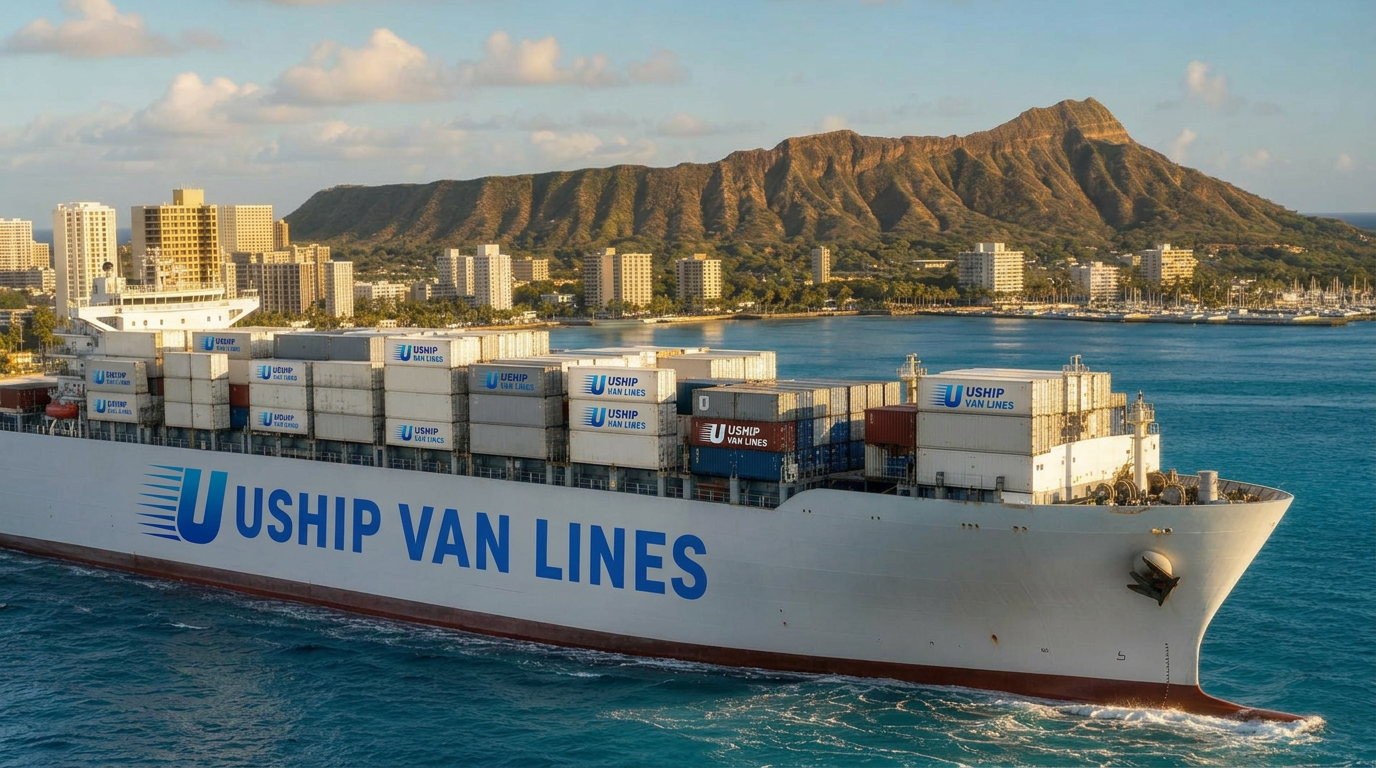
Moving from Hawaii to Indianapolis, IN
Relocating from the tropical islands of Hawaii to Indiana's heartland capital requires careful orchestration of ocean freight, mainland transportation, and cross-country logistics. Whether you're leaving Honolulu, Maui, Kauai, or the Big Island for Indianapolis's thriving tech corridor and affordable Midwest lifestyle, this move combines the complexity of international-style shipping with the precision of long-haul ground transport.
Best Alaska & Hawaii Movers, powered by UShip Van Lines, specializes in seamless Hawaii-to-mainland relocations. We coordinate every step—from island pickup through container shipping to your new Indianapolis doorstep. Request your free, no-obligation quote today to start planning your cross-Pacific move with confidence.
Route overview
Route Overview: Hawaii to Indianapolis, IN
Moving from Hawaii to Indianapolis spans approximately 4,400 miles and crosses the Pacific Ocean before traversing nearly the entire width of the continental United States. Your household goods will travel by ocean container from your island to either Long Beach or Oakland, California, then transfer to a dedicated moving truck for the 2,100-mile overland journey through Nevada, Utah, Wyoming or Colorado, Nebraska, and Iowa before reaching central Indiana.
This route requires coordination between ocean carriers (typically Matson Navigation or Pasha Hawaii), West Coast port operations, and experienced long-haul moving teams familiar with Midwest delivery. Indianapolis sits at the intersection of multiple interstate highways (I-65, I-70, I-74), making final delivery straightforward once your shipment reaches the mainland. The city's central location and excellent infrastructure mean fewer last-mile complications compared to coastal destinations.
Inter-island moves add an initial leg before ocean transit. If you're moving from Maui, Kauai, or the Big Island, your belongings first travel by barge to Honolulu, then consolidate with other shipments for the mainbound sailing. This staged approach ensures economies of scale while maintaining careful handling throughout the journey.
How the moving process works
The Moving Process: Step-by-Step
-
Initial survey and quote – A moving coordinator conducts a virtual or in-home assessment of your inventory, discusses Indianapolis delivery requirements, and provides a detailed cost estimate covering ocean freight, mainland transport, and any additional services like vehicle shipping or storage.
-
Schedule and book your shipment – Reserve your container space 4–6 weeks before your preferred move date. Hawaii ocean carrier schedules run weekly, but space fills quickly during peak summer months (May–August) and around military PCS seasons.
-
Island pickup and packing – Professional movers arrive at your Hawaii residence, carefully pack and inventory your belongings, then transport everything to the designated port (Honolulu, Kahului, Nawiliwili, or Hilo). Items are loaded into a shared container or, for larger moves, a dedicated 20-foot or 40-foot ocean container.
-
Ocean transit to California – Your container sails to Long Beach or Oakland, typically arriving 5–7 days after departure. Customs clearance is generally straightforward for domestic Hawaii-to-mainland moves, though agriculture inspections may occur.
-
Port unloading and transfer – Container contents are either transferred directly to a moving truck or temporarily warehoused if scheduling requires. Reputable carriers minimize warehouse time to reduce handling and potential delays.
-
Cross-country transport – A dedicated moving truck departs the West Coast port for Indianapolis, traveling I-80 or I-70 east. Transit time averages 4–6 days depending on routing, weather, and required rest stops.
-
Indianapolis delivery and unpacking – Your moving team contacts you 24–48 hours before arrival, delivers to your new address, unloads all items, and provides optional unpacking services. Final walkthrough ensures everything arrived as expected before the crew departs.
Estimated moving costs
Cost Estimate for Hawaii to Indianapolis Moves
A typical 2–3 bedroom household moving from Hawaii to Indianapolis generally costs $6,800–$11,500, depending on volume, services, and timing. Studio or 1-bedroom moves may range $4,200–$6,500, while larger 4-bedroom homes can exceed $13,000–$17,000.
Key cost drivers include:
- Shipment volume – Ocean freight is priced by container space (cubic feet) or weight. A standard 2-bedroom home fills roughly 800–1,200 cubic feet; 3-bedroom homes typically require 1,200–1,800 cubic feet.
- Island of origin – Inter-island barge fees add $400–$900 for moves originating on Maui, Kauai, or the Big Island before mainbound sailing.
- Mainland distance – Indianapolis's mid-continental location means approximately 2,100 miles of ground transport from California ports, a moderate distance that balances cost and transit time.
- Packing services – Full professional packing adds $800–$1,800; partial packing (fragiles and specialty items only) costs $350–$700.
- Vehicle shipping – Cars and trucks ship separately via roll-on/roll-off vessels (Honolulu to mainland ports) at $1,100–$1,600 per vehicle, then overland to Indianapolis for an additional $600–$900.
- Seasonal demand – Summer months (June–August) and year-end holidays see 15–25% premium pricing due to high demand and limited container availability.
- Insurance and valuation – Basic carrier liability is included; full-value protection insurance typically costs 1–2% of declared shipment value.
These are estimates only; actual quotes depend on your specific inventory, service selections, and current market conditions. Request a personalized quote to understand your exact costs.
Estimated transit times
Transit Time: Hawaii to Indianapolis
Door-to-door delivery from Hawaii to Indianapolis typically takes 14–24 days, broken down as follows:
Island pickup to port: 1–3 days for scheduling, packing, and local transport to your departure port. Inter-island moves add 3–7 days for barge transit to Honolulu.
Ocean transit: 5–7 days sailing time from Honolulu to Long Beach or Oakland. Matson and Pasha operate regular weekly schedules, with actual voyage duration depending on sea conditions and port congestion.
Port operations: 1–3 days for container unloading, customs/agriculture clearance (if required), and transfer to moving truck. Efficient operations complete this in 24–48 hours; delays occur during peak seasons or labor disruptions.
Cross-country ground transport: 4–6 days driving from California to Indianapolis via I-80 or I-70. Professional carriers operate within federal Hours of Service regulations, requiring rest periods that extend transit time but ensure safety.
Delivery scheduling: Most movers provide 24–48 hour advance notice and offer delivery windows rather than exact times, allowing for traffic, weather, and final route optimization.
Expedited service can sometimes compress timelines by 2–4 days through dedicated containers and priority trucking, though this significantly increases cost. Off-season moves (September–April, excluding holidays) generally proceed faster due to reduced port congestion and more flexible scheduling.
Regional logistics
Hawaii-Specific Moving Logistics
Port operations and paperwork: Moves from Honolulu use Sand Island terminals; neighbor island ports include Kahului (Maui), Nawiliwili (Kauai), and Hilo/Kawaihae (Big Island). While Hawaii-to-mainland moves are domestic shipments requiring no customs documentation, USDA agriculture inspections may examine containers for prohibited plants, soil, or restricted items. Your moving company handles port documentation, including bills of lading and delivery orders.
Inter-island transfers: If you're moving from a neighbor island, your goods first travel by Young Brothers barge to Honolulu (typically 1–2 sailings weekly per island), where they consolidate with mainbound containers. This adds 3–7 days but is unavoidable for outer island origins. Coordinate timing carefully to avoid extended warehouse storage between barge arrival and ocean vessel departure.
Vehicle shipping considerations: Cars and motorcycles ship separately via Matson or Pasha vehicle services. Vehicles must be in operable condition with less than ¼ tank fuel; personal items in vehicles are prohibited. Ship vehicles 7–10 days before your mainland arrival to avoid rental car expenses. From West Coast ports, vehicles transport overland to Indianapolis in 5–8 days, arriving slightly behind or ahead of household goods depending on scheduling.
Prohibited and restricted items: Do not pack hazardous materials (propane, paint, cleaning chemicals, ammunition), perishable foods, or Hawaii-regulated items like certain plants, soil, or fresh flowers. Prescription medications, important documents, and irreplaceable valuables should travel with you personally. Some movers restrict or prohibit high-value items like jewelry or cash.
Indianapolis delivery details: The city's grid street system and good infrastructure simplify final delivery. However, older neighborhoods near downtown (Fountain Square, Broad Ripple) may have narrow streets or parking restrictions requiring shuttle trucks for final approach. New construction areas in Fishers, Carmel, or Westfield typically offer excellent truck access. Discuss specific delivery address details with your coordinator to plan appropriately.
Storage options: If your Indianapolis home isn't ready for immediate delivery, most carriers offer short-term warehouse storage at mainland facilities. Typical storage is charged monthly (30-day minimums) and requires separate delivery fees when goods are released. Plan carefully to minimize storage duration and associated costs.
Seasonal considerations
Seasonal Considerations for Your Hawaii to Indianapolis Move
Summer (June–August): Peak moving season brings highest demand and premium pricing. Ocean carrier space books weeks in advance, and mainland trucking capacity tightens. Indianapolis weather is ideal for delivery, but California port congestion can add 2–3 days to transit. Book 6–8 weeks ahead and expect 15–25% cost premiums.
Fall (September–November): Excellent moving window with moderate pricing and good availability. Hurricane season officially runs through November 30, though major storms affecting Hawaii are rare in fall. Indianapolis weather remains cooperative through October; November brings increasing cold but rarely impacts delivery. Book 4–6 weeks ahead for best rates.
Winter (December–February): Off-peak season offers lowest prices and maximum flexibility, though holiday weeks (mid-December through early January) see brief demand spikes. Pacific winter storms occasionally delay sailings by 1–2 days. Indianapolis can experience snow and ice, requiring flexible delivery dates. Movers experienced with Midwest winter conditions navigate these challenges routinely. Book 3–4 weeks ahead; serious discounts available for flexible timing.
Spring (March–May): Demand increases steadily, especially April–May as families coordinate with school calendars. Pricing sits between winter lows and summer peaks. Pacific conditions are generally calm; Indianapolis weather improves through the season. Military PCS season (late May–June) can tighten capacity. Book 5–7 weeks ahead for preferred dates.
Hurricane preparedness: Official Pacific hurricane season runs June 1–November 30. While direct hits to the Hawaiian Islands are uncommon (averaging one significant storm every 5–7 years), tropical systems can delay sailings. Reputable movers monitor forecasts and communicate proactively about weather-related schedule adjustments. Container ships routinely navigate around storm systems with minimal delay.
Why choose Best Alaska & Hawaii Movers
Why Choose Best Alaska & Hawaii Movers
-
Hawaii moving specialists – We focus exclusively on Alaska and Hawaii relocations, understanding the unique logistics of ocean freight, inter-island transfers, port operations, and long-haul mainland delivery that general movers simply don't encounter.
-
Transparent pricing and realistic timelines – Our quotes include all foreseeable costs: ocean freight, mainland transport, fuel, standard insurance, and delivery. We explain the entire process upfront so you understand exactly what to expect and when.
-
Powered by UShip Van Lines' nationwide network – Our mainland transportation leverages UShip Van Lines' established carrier relationships, ensuring experienced, professional drivers and equipment for the cross-country journey from California to Indianapolis.
-
White-glove coordination – A dedicated move coordinator manages your shipment from initial quote through final delivery, communicating proactively about sailing schedules, transit updates, and delivery appointments. You'll never wonder where your belongings are or who to contact with questions.
-
Flexible service options – Whether you need full-service packing, vehicle shipping, temporary storage, or just the core transportation, we tailor services to your specific needs and budget. No one-size-fits-all packages—just the right solution for your move.