
Moving from Atlanta, GA to Alaska
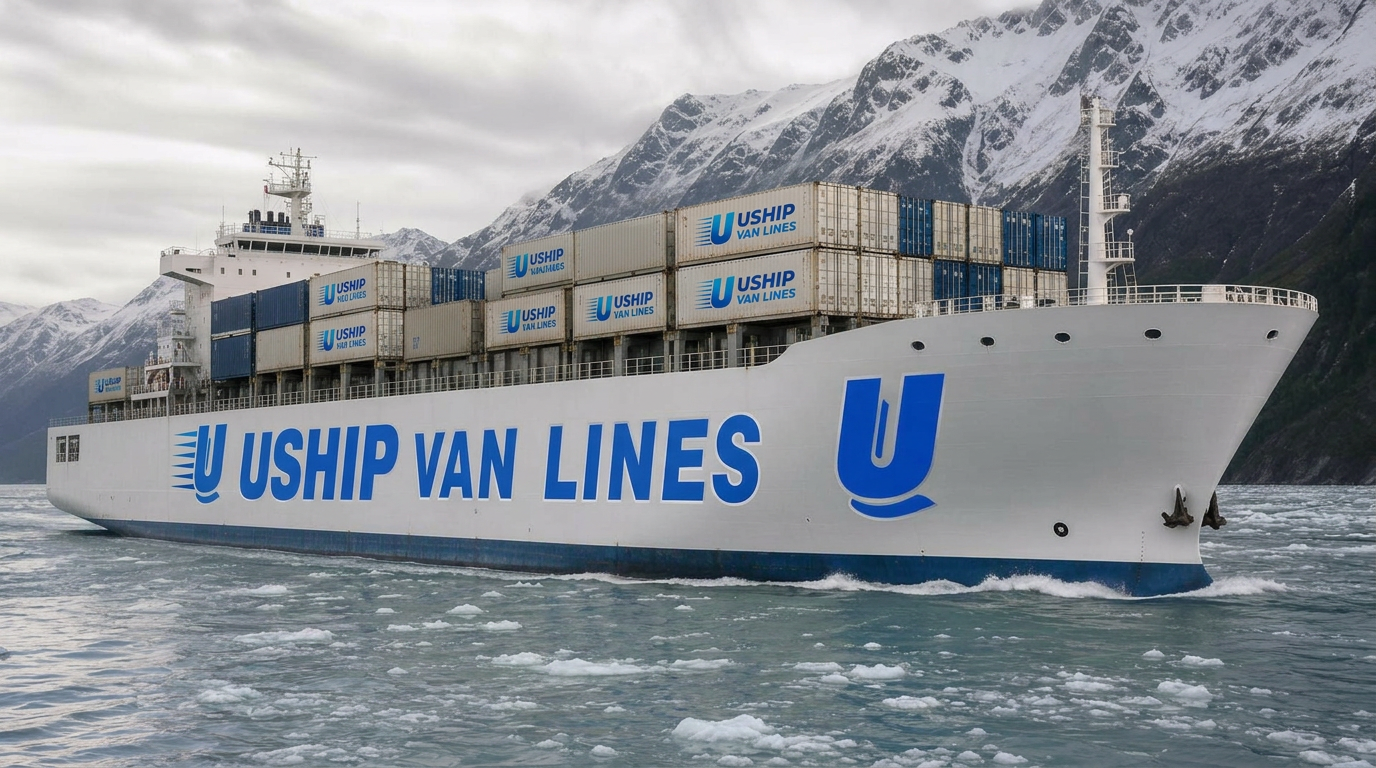
Moving from Atlanta's mild climate to Alaska's frontier requires careful planning and specialized logistics. Unlike a standard long-distance move, your household goods will travel 3,500+ miles by truck to Tacoma, Washington, then ride a northbound barge to the Port of Anchorage before final delivery to your new Alaska home.
Best Alaska & Hawaii Movers, powered by UShip Van Lines, coordinates every leg of your Atlanta-to-Alaska move—from professional packing in the Peach State to white-glove delivery in Anchorage, Fairbanks, the Mat-Su Valley, Kenai Peninsula, or beyond. Request a free, no-obligation quote to see how we simplify one of America's most complex moving routes.
Route overview
The Atlanta to Alaska Moving Route
Your belongings begin their journey with overland transport from Atlanta to the Pacific Northwest consolidation hub in Tacoma, Washington—approximately 2,800 miles and 3–5 days by truck. From Tacoma, containers are loaded aboard Alaska Marine Highway System barges or commercial freight vessels sailing to the Port of Anchorage, a voyage of 1,400+ nautical miles taking 5–10 days depending on sailing schedules and weather.
Once your shipment clears customs and port operations in Anchorage, local Alaska carriers handle last-mile delivery. If you're moving to Fairbanks (360 miles north), Wasilla in the Mat-Su Borough, Soldotna on the Kenai Peninsula, or rural communities accessible only by seasonal roads, expect additional transit time and coordination.
This multi-modal route demands precise timing: a missed barge sailing can add 7–14 days to your delivery window. Working with a move coordinator experienced in Alaska logistics ensures your shipment rides the optimal sailing and arrives intact, even during Alaska's short construction season or winter freeze-up.
How the moving process works
How Your Atlanta to Alaska Move Works: Step-by-Step
-
Free Virtual Survey & Quote – Share your inventory list via video walkthrough or detailed form. We calculate cubic footage, identify specialty items (pianos, safes, artwork), and provide a binding or not-to-exceed estimate covering truck, barge, and last-mile.
-
Schedule & Reserve Barge Space – Alaska sailings book weeks in advance, especially April–September. We reserve your spot on the next viable Tacoma departure, lock in your Atlanta pickup date, and provide a detailed timeline.
-
Professional Packing in Atlanta – Certified crews arrive with marine-grade packing materials. Fragile items receive double-boxing and moisture barriers; furniture is padded and shrink-wrapped to withstand humidity changes and barge motion.
-
Overland Haul to Tacoma – Your goods travel I-20 West, I-84 through the Columbia River Gorge, arriving at our Tacoma consolidation warehouse. Transit typically takes 4–6 days; shipments are inspected and staged for containerization.
-
Containerization & Barge Loading – Items are loaded into 20' or 40' ocean-rated containers, sealed, and delivered to the Tacoma barge terminal. Your container rides a northbound vessel alongside vehicles, perishables, and commercial freight.
-
Sailing to Anchorage – The barge navigates the Inside Passage and Gulf of Alaska. Voyage duration varies by route (direct vs. port-of-call stops) and weather; summer sailings average 6–8 days, winter crossings can exceed 10 days.
-
Port Clearance & Last-Mile Delivery – After offloading in Anchorage, your container clears port inspection. Local Alaska movers transport your belongings to your final address, whether downtown Anchorage high-rise, Fairbanks suburban home, or off-grid cabin (road-accessible only).
Estimated moving costs
What Does It Cost to Move from Atlanta to Alaska?
A typical 2-bedroom apartment (approximately 5,000–7,000 lbs) costs $6,500–$10,500 door-to-door, while a 3-bedroom house (10,000–12,000 lbs) ranges $11,000–$16,500. These estimates include Atlanta packing and loading, overland truck to Tacoma, barge freight, port handling, and final delivery within the Anchorage Bowl or Fairbanks metro area.
Key cost drivers:
- Volume and weight – Charges are per cubic foot or per hundredweight (CWT). Heavy items like gun safes, library collections, or workshop equipment increase costs significantly.
- Barge sailing season – Summer sailings (May–September) command premium rates due to high demand; winter slots may offer modest savings but face weather delays.
- Last-mile distance – Delivery to Anchorage is baseline; Fairbanks adds $800–$1,500, Kenai Peninsula communities $600–$1,200, and bush locations requiring seasonal ice roads or air charter can double final-leg costs.
- Packing services – Full-service packing (recommended for Alaska moves) adds $1,200–$2,800 depending on inventory complexity and fragile items.
- Vehicle shipping – If driving the Alaska Highway isn't feasible, add $2,500–$4,000 per car via Roll-on/Roll-off (RoRo) barge service from Tacoma.
- Storage – If your new Alaska home isn't ready, climate-controlled storage in Anchorage runs $150–$300/month for a 10×15 unit.
We never guarantee prices without a detailed inventory. Request a personalized quote to see how your specific needs, timing, and destination affect total cost.
Estimated transit times
How Long Does Atlanta to Alaska Shipping Take?
Plan for 14–28 days door-to-door under normal conditions. Here's the realistic breakdown:
- Atlanta pickup to Tacoma consolidation: 4–6 days (2,800 highway miles)
- Tacoma warehouse staging & barge loading: 2–5 days (depends on next available sailing)
- Barge transit Tacoma to Anchorage: 6–10 days (direct summer sailings faster; winter or multi-stop routes longer)
- Port clearance in Anchorage: 1–2 days (customs, offloading, container release)
- Last-mile delivery: 1–3 days (Anchorage same-day possible; Fairbanks or Kenai +1–2 days; remote areas variable)
Summer moves (May–August) benefit from frequent sailings and better weather but face tight equipment availability—book 6–8 weeks ahead. Winter moves (November–March) encounter fewer sailings, weather delays in the Gulf of Alaska, and potential road closures (ice road season for some rural areas is limited to January–March). Shoulder seasons (April, September–October) offer the best balance of sailing frequency and competitive rates.
If you need guaranteed delivery by a specific date (job start, school enrollment, lease expiration), build in a 5–7 day buffer and communicate your timeline during the quote process.
Regional logistics
Alaska-Specific Logistics You Must Know
Barge Ports & Routing: All Atlanta-to-Alaska shipments consolidate in Tacoma, WA, then sail to the Port of Anchorage (Alaska's primary deep-water port). From there, goods can be trucked to Fairbanks via the Parks Highway (year-round), Kenai Peninsula via the Seward Highway (year-round), or Mat-Su Valley communities (year-round). Bush and off-road-system villages require air cargo or seasonal ice road transport—consult your coordinator early.
Customs & Documentation: Alaska is a U.S. state, so no international customs applies. However, port inspections for agricultural products (firewood, plants, soil) are strict. USDA regulations prohibit many live plants and untreated wood. If shipping a vehicle, title and registration must be current; if shipping firearms, declare them on your inventory for compliant handling.
Vehicle Shipping: Driving the Alaska Highway (ALCAN) from Atlanta is a 4,000+ mile, 7–10 day adventure through Canada. If you prefer to ship your car, RoRo barge service from Tacoma to Anchorage costs $2,500–$4,000 per vehicle and takes 10–14 days. Vehicles must be clean (no dirt, no personal items inside except floor mats and spare tire). Coordinate vehicle and household goods sailings for simultaneous arrival.
Last-Mile Challenges: Anchorage and Fairbanks deliveries are straightforward. However, if you're moving to Wasilla, Palmer, Soldotna, Homer, or smaller communities, confirm road conditions and seasonal access. Some addresses require transferring your shipment to a smaller truck or even a charter flight. Remote deliveries (Bethel, Nome, Kotzebue, etc.) are beyond standard service—plan for freight forwarding and significantly higher costs.
Climate Prep: Alaska's extreme temperature swings (summer highs of 70°F, winter lows of -40°F) demand proper packing. Electronics, musical instruments, and leather furniture should be climate-stabilized before final delivery. We use moisture-barrier wraps and desiccant packs to protect your belongings during the voyage and while in transit.
Seasonal considerations
Seasonal Planning for Atlanta to Alaska Moves
Spring (April–May): Breakup season in Alaska—roads turn to mud, and ice roads close. Barge sailings increase in frequency as winter schedules transition to summer. Good time for cost-conscious movers willing to accept variable last-mile conditions. Book 6 weeks ahead.
Summer (June–August): Peak moving season. Barge space is at a premium; families relocate before the school year, military personnel PCS, and resource industry workers mobilize. Expect highest rates but most reliable schedules and fastest last-mile delivery. Book 8–10 weeks ahead. Long daylight hours in Alaska simplify unloading.
Fall (September–October): Shoulder season with moderate pricing and decent sailing frequency. Weather in the Gulf of Alaska becomes less predictable; occasional storm delays add 1–3 days. Ideal if you're flexible and want to avoid peak-season premiums. Book 5–6 weeks ahead.
Winter (November–March): Fewest sailings; some runs skip or combine due to low demand and harsh conditions. Significant potential for weather delays (Gulf storms, port closures). Costs may be 10–15% lower, but transit reliability suffers. Only recommended if you have storage flexibility and no hard deadline. Some rural Alaska destinations become inaccessible until spring thaw or ice road formation.
Why choose Best Alaska & Hawaii Movers
Why Best Alaska & Hawaii Movers for Your Atlanta to Alaska Relocation
-
Dedicated Alaska Expertise – We specialize exclusively in moves to and from Alaska and Hawaii. Our team knows Tacoma barge schedules, Alaska port operations, and last-mile carriers intimately—no learning curve at your expense.
-
Single-Point Coordination – One move coordinator manages your entire journey: Atlanta pickup, Tacoma consolidation, barge booking, Anchorage port clearance, and final delivery. No handoffs, no confusion, no finger-pointing.
-
Transparent Pricing – Binding or not-to-exceed estimates with every cost component itemized: packing labor, truck miles, barge freight, port fees, last-mile delivery. No hidden fuel surcharges or "Alaska premiums" tacked on at the end.
-
Flexible Service Levels – Choose full-service packing and white-glove delivery, or self-pack and save. We accommodate partial loads, vehicle shipping, and climate-controlled storage at origin or destination.
-
Powered by UShip Van Lines – Backed by a nationwide carrier network and technology platform, we offer the reliability of a major van line with the personal touch of an Alaska moving specialist.