
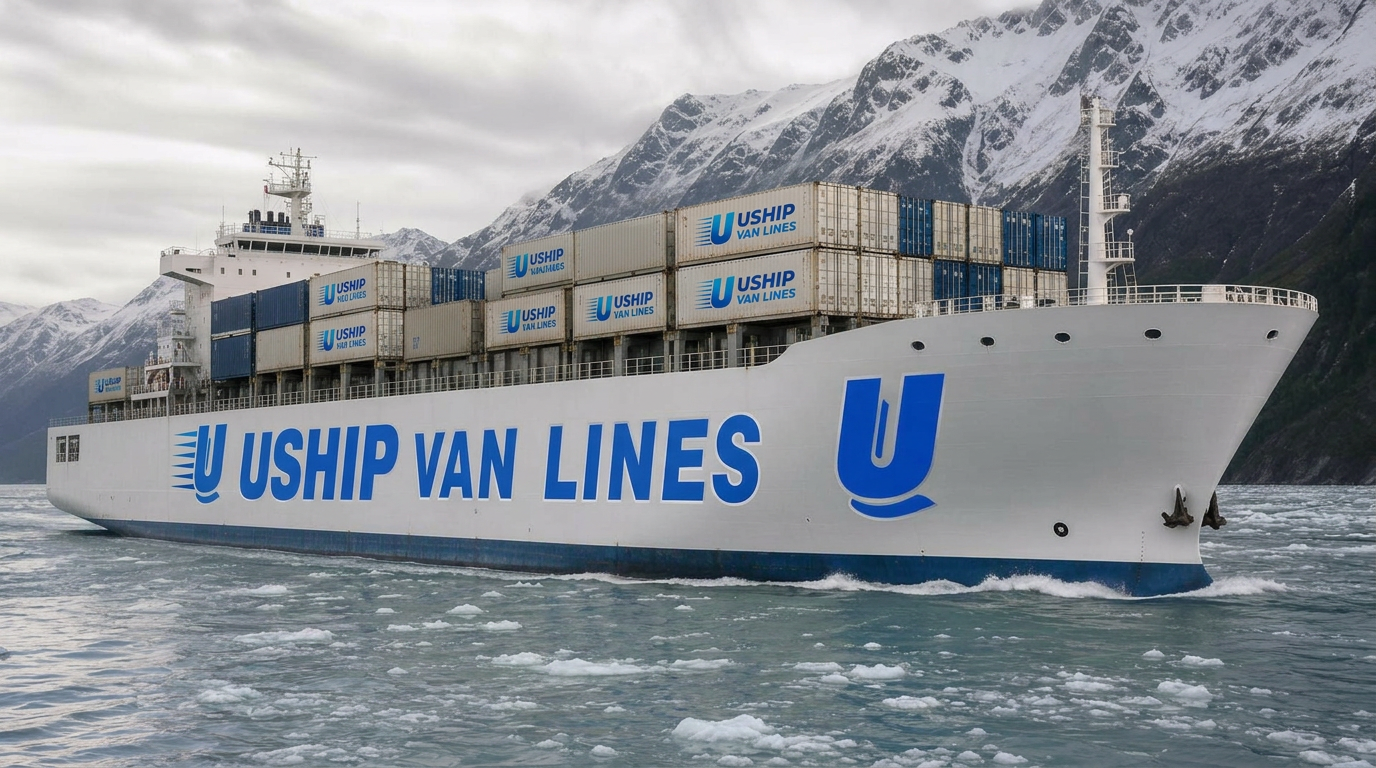
Moving from Alaska to Atlanta, GA
Moving from Alaska to Atlanta, GA, involves a multi-modal journey spanning over 3,400 miles and crossing some of the continent's most varied terrain. Your belongings travel by barge from Alaska ports to Seattle or Tacoma, then overland via dedicated truck to Georgia's capital—a bustling metro hub known for its warm climate, robust job market, and vibrant culture.
Best Alaska & Hawaii Movers, powered by UShip Van Lines, specializes in this unique route. We coordinate barge schedules, handle customs paperwork for goods leaving Alaska, and deliver door-to-door service from Anchorage, Fairbanks, the Mat-Su Valley, Kenai Peninsula, and even remote bush communities. Request your free quote today to lock in competitive rates and reserve space on the next available sailing.
Route overview
Alaska to Atlanta Route Overview
The Alaska-to-Atlanta corridor is one of the longest domestic moves in the Lower 48, requiring careful logistics and reliable carriers. Goods originate in Alaska—whether from Anchorage's urban core, Fairbanks' interior, the growing Mat-Su Borough, the Kenai Peninsula's fishing towns, or fly-in bush villages—and are consolidated at the Port of Anchorage or nearby docks. From there, a weekly or twice-weekly barge sails south through the Inside Passage to Puget Sound ports (Tacoma or Seattle), a voyage that typically takes 3–5 days depending on weather and stops.
Once your shipment clears the Seattle/Tacoma hub, it's loaded onto a long-haul semi and driven southeast across Washington, Idaho, Montana (or through Oregon and Nevada), then through Wyoming, Nebraska, Kansas, Missouri, and into the Southeast via Tennessee or the Carolinas before arriving in metro Atlanta. The overland leg covers roughly 2,800 miles and takes 5–8 days under normal traffic and weather conditions. Total door-to-door transit averages 10–18 days, with seasonal variables like winter storms in the Rockies or barge delays adding time.
Atlanta's sprawling metro area—encompassing Fulton, DeKalb, Cobb, Gwinnett, and surrounding counties—offers easy highway access via I-75, I-85, and I-20, so final delivery is straightforward. Most moves land in neighborhoods like Buckhead, Midtown, Decatur, or suburbs such as Marietta, Alpharetta, and Sandy Springs. Communication throughout the journey is key: we provide tracking updates at each handoff point so you know exactly where your household goods are at all times.
How the moving process works
How the Alaska-to-Atlanta Move Works
-
Free Quote & Survey
Contact Best Alaska & Hawaii Movers for a no-obligation estimate. We'll ask about your home size, inventory (especially heavy items like pianos or gun safes), pickup location in Alaska, and preferred delivery window in Atlanta. Virtual surveys via video call help us provide accurate cubic-foot or weight estimates. -
Barge Reservation & Scheduling
We book space on the next available southbound barge from Anchorage or your nearest Alaska port. Sailings run weekly in summer, less frequently in winter. Lead time of 2–4 weeks is recommended, especially May–September when demand peaks. -
Packing & Pickup in Alaska
Professional crews pack your belongings (or you can self-pack and we load) and transport everything to the Port of Anchorage or a regional consolidation point. Items are inventoried, labeled, and loaded into a 20 ft or 40 ft container or onto shared pallet space, depending on shipment size. -
Barge Transit to Tacoma/Seattle
Your container or palletized freight sails down the coast, typically arriving in Puget Sound within 3–5 days. Weather, sea conditions, and intermediate stops (Ketchikan, Prince Rupert) can affect timing. -
Transload & Overland Dispatch
At the Seattle/Tacoma hub, goods are offloaded, cleared through any necessary inspections, and loaded onto a long-haul truck. The driver departs within 24–48 hours, bound for Atlanta via the most direct interstate corridors. -
Cross-Country Transit
The truck crosses the Northern or Central states—Montana, Wyoming, Nebraska, Missouri—then dips into the South via Tennessee or the Carolinas. This leg takes 5–8 days, with electronic logging ensuring rest compliance and safe driving. -
Delivery in Atlanta
Upon arrival in metro Atlanta, our local team contacts you to schedule delivery. We unload, place items in rooms, and reassemble any furniture disassembled at origin. You inspect and sign off on the inventory, and any claims are filed promptly if needed.
Estimated moving costs
What Does an Alaska-to-Atlanta Move Cost?
For a typical 2–3 bedroom household (approximately 7,000–10,000 pounds or 800–1,200 cubic feet), expect to pay $6,500–$12,000 for full-service door-to-door moving from Alaska to Atlanta. Smaller studio or 1-bedroom moves may start around $4,000–$5,500, while large 4+ bedroom homes can exceed $15,000.
Key cost drivers include:
- Distance & Mode: Barge freight from Alaska is billed per cubic foot or container size; overland mileage (≈2,800 mi Seattle to Atlanta) adds fuel, driver wages, and tolls.
- Weight & Volume: Heavier loads (pianos, slate pool tables, large furniture) increase barge and truck charges. Consolidated/shared-load shipments cost less than dedicated containers.
- Packing Services: Professional packing for a 3 BR home runs $800–$1,500; fragile-only packing is $300–$600.
- Seasonality: Summer (May–September) is peak season in Alaska; rates rise 10–20% and space is tight. Winter moves (November–March) offer lower prices but face weather delays.
- Access & Special Handling: Remote Alaska pickups (bush planes, ferry transfers), narrow Atlanta streets, or high-rise condos with elevator reservations add fees ($200–$800).
- Insurance: Basic carrier liability (60¢/lb) is included; full-value replacement coverage costs 1–2% of declared value (e.g., $100–$200 for $10,000 coverage).
- Vehicle Shipping: If you're also moving a car, add $1,200–$2,000 for open-carrier auto transport on the same barge-and-truck route.
No quote is guaranteed until a formal survey is completed. Fuel surcharges, port fees, and tariff adjustments can change monthly. Request your personalized estimate to see real-time pricing for your specific move.
Estimated transit times
How Long Does the Move Take?
Door-to-door transit from Alaska to Atlanta typically requires 10–18 days, broken down as follows:
- Pickup to Port (Alaska): 1 day for Anchorage-area pickups; 1–3 days if you're in Fairbanks, Mat-Su, Kenai, or bush locations requiring barge/plane feeder service to Anchorage.
- Barge Anchorage → Tacoma/Seattle: 3–5 days on the water. Summer sailings are more frequent (weekly); winter sailings may run every 10–14 days, adding wait time.
- Port Processing & Transload: 1–2 days to offload the barge, clear inspections, and load the truck.
- Overland Seattle → Atlanta: 5–8 days driving. Interstate routing via I-90, I-80, or I-70 east, then I-75 or I-85 south. Electronic logs mandate rest breaks; weather (winter Rockies/Plains snow, Southern ice storms) can delay 1–2 days.
- Delivery Window: Once the truck reaches Atlanta, you're contacted 24–48 hours ahead to schedule unloading.
Total typical range: 10–14 days in ideal summer conditions; 14–18 days in winter or during peak-season congestion. Expedited service (dedicated container, priority truck dispatch) can shave 2–4 days but costs 20–30% more. Always build in buffer time if you have a firm lease start or closing date in Atlanta.
Regional logistics
Alaska-Specific Moving Logistics
Ports & Barge Operations:
The Port of Anchorage (ANC) is the primary hub; larger shipments may route through the Port of Whittier (especially for Mat-Su Valley and Kenai pickups) or Seward. Weekly sailings in summer connect to Tacoma's Husky Terminal or Seattle's Terminal 115. Barge lines such as Lynden Transport and Totem Ocean Trailer Express (TOTE) dominate Alaska freight. You don't need to visit the port—movers handle all dock delivery and retrieval.
Customs & Paperwork:
Alaska is part of the U.S., so no international customs apply. However, USDA and state agriculture inspections may check for pests/soil if you're bringing plants (not recommended) or outdoor gear. We complete all necessary freight manifests and bills of lading.
Vehicle Shipping:
Many clients drive the Alaska Highway (ALCAN) or ship their car separately. If shipping, vehicles ride on the same barge as household goods, then roll onto an auto carrier in Seattle for delivery to Atlanta. Cost: $1,200–$2,000 per vehicle. Transit is similar (10–18 days). Vehicles must be clean, under ¼ tank fuel, and personal items removed.
Remote & Bush Pickups:
If you live off the road system (e.g., Bethel, Nome, Kodiak, Southeast island communities), we arrange floatplane, ferry, or local barge service to get your goods to Anchorage for consolidation. This adds 2–5 days and $500–$1,500 depending on distance and mode.
Storage Options:
Need interim storage in Anchorage or Atlanta? We offer 30-day free storage at origin or destination (terms apply), and month-to-month warehouse storage thereafter ($100–$200/month for a typical bedroom's worth of goods). Useful if your Atlanta home isn't ready or you're house-hunting.
Last-Mile Delivery in Atlanta:
Atlanta's metro sprawl means delivery addresses range from downtown high-rises (Midtown, Buckhead) requiring building COIs and elevator reservations, to suburban single-family homes with long driveways. Communicate access details (stairs, narrow streets, HOA rules) during booking so we dispatch the right equipment.
Seasonal considerations
Best Time to Move: Seasonal Tips
Spring (March–May):
Barge schedules ramp up as ice clears; April–May sees increasing sailings but not yet peak crowds. Weather is mild in Atlanta (60s–70s°F), ideal for moving in. Rates are moderate. Book 3–4 weeks ahead.
Summer (June–August):
Peak Alaska moving season. Barge space fills fast due to military PCS moves, school-year relocations, and tourism industry turnover. Atlanta is hot and humid (85–95°F), so plan for climate-controlled trucks if you have sensitive items. Expect highest prices and longest lead times (4–6 weeks). Advantage: most reliable barge frequency and road conditions.
Fall (September–November):
Excellent shoulder season. Barge sailings continue through October; November sees reduced frequency as winter approaches. Atlanta enjoys pleasant fall weather (60s–70s°F). Rates drop 10–15% after Labor Day. Book 2–3 weeks out.
Winter (December–February):
Lowest rates and least competition for space, but logistical challenges increase. Barge schedules thin out; Alaska winter weather (Anchorage avg. 20°F, Fairbanks -10°F) can delay port operations. Overland routing faces snow/ice in the Rockies and Plains; Southern ice storms occasionally shut I-20/I-75. Atlanta winters are mild (40s–50s°F), so delivery is easy. Allow extra transit days (up to 21–25) and flexible delivery windows.
General Advice: If your timeline is firm, move May–October. If budget is paramount and you have flexibility, move November–March for significant savings.
Why choose Best Alaska & Hawaii Movers
Why Choose Best Alaska & Hawaii Movers (Powered by UShip Van Lines)
- Alaska & Non-Contiguous Specialists: We focus exclusively on Alaska and Hawaii moves. Our team knows barge schedules, port procedures, and the nuances of multi-modal logistics that generic nationwide movers miss.
- Single-Source Coordination: One point of contact manages your entire move—barge booking, truck dispatch, delivery scheduling, and claims. No handoffs between disconnected carriers.
- Transparent Pricing & Tracking: Detailed estimates with line-item breakdowns; real-time tracking updates at each leg (port departure, truck dispatch, delivery ETA). No surprise fees.
- Flexible Service Levels: Choose full-service packing and white-glove delivery, or cost-saving self-pack and standard unload. Consolidated shared-load or exclusive-use containers. We tailor the service to your budget and timeline.
- Proven Carrier Network: Powered by UShip Van Lines' vetted carrier network, ensuring reliable equipment, licensed drivers, and cargo insurance. We monitor performance and customer feedback to maintain high standards.
- Customer-First Support: Dedicated move coordinators available via phone, email, and text. We proactively communicate delays (weather, port congestion) and work to minimize disruption to your plans.