
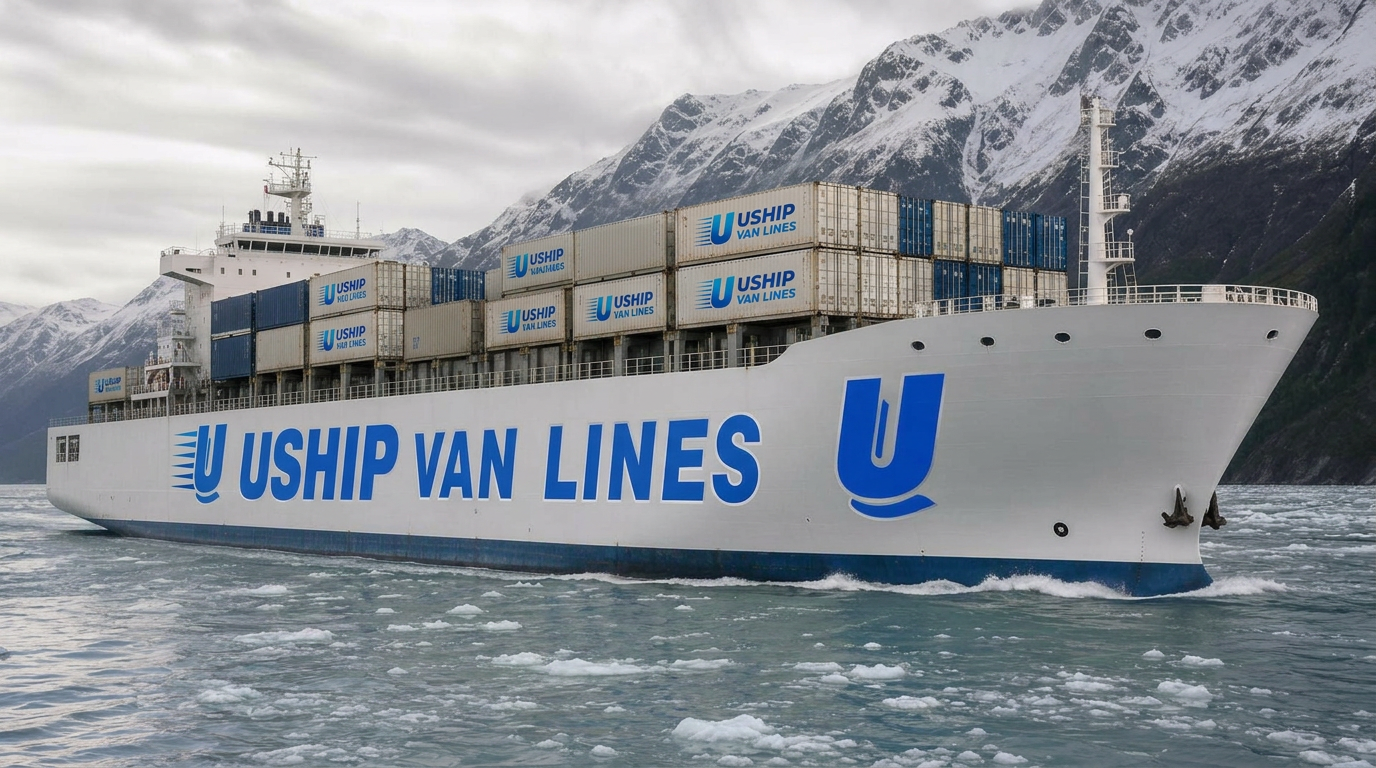
Moving from Jacksonville, FL to Alaska
Moving from Jacksonville, FL to Alaska means trading Atlantic beaches for glaciers, bears, and the midnight sun—but the logistics are anything but simple. Your household goods will travel roughly 4,500 miles: first by truck across the continental U.S. to the Port of Tacoma, then by ocean barge through the Inside Passage to the Port of Anchorage, and finally by ground to your Alaska destination.
Best Alaska & Hawaii Movers, powered by UShip Van Lines, specializes in this exact corridor. We coordinate every leg—truck pickup in Jacksonville, barge booking, Alaska customs clearance, and last-mile delivery to Anchorage, Fairbanks, the Mat-Su Valley, Kenai Peninsula, or even bush communities. Request a free quote to see how we simplify your cross-country, cross-ocean move.
Route overview
The Jacksonville to Alaska Moving Corridor
Jacksonville sits on Florida's northeast coast, roughly 4,500 road miles from Tacoma, Washington—the primary staging port for Alaska-bound cargo. Your move begins with a long-haul truck pickup in Duval County, crossing the southern or central United States (typically I-10 west to I-5 north, or I-75/I-40/I-84 depending on seasonal weather). That overland leg alone takes 5–7 days.
Once your container reaches Tacoma, it's loaded onto a commercial barge operated by carriers like Alaska Marine Lines or TOTE Maritime. The ocean voyage to Anchorage takes 6–9 days, depending on weather, fuel stops, and whether the barge makes intermediate port calls in Kodiak or other communities. After clearing customs at the Port of Anchorage, your shipment is trucked to your final address—whether that's downtown Anchorage, a homestead in Palmer, a cabin near Kenai, or a remote village accessible only by seasonal ice road.
This isn't a quick move. Total door-to-door transit typically runs 14–21 days under ideal conditions, and longer during winter storms or peak summer sailings. Planning ahead and booking early are essential.
How the moving process works
How Your Jacksonville-to-Alaska Move Works: Step by Step
-
Free In-Home or Virtual Survey
A moving consultant assesses your inventory—furniture, appliances, boxes, vehicles. We provide a binding or not-to-exceed quote based on weight or cubic footage and your chosen services (full-pack, partial-pack, vehicle shipping). -
Scheduling & Booking the Barge
We reserve space on the next available Tacoma–Anchorage barge sailing. Summer slots (May–September) fill fast; winter sailings are fewer but less crowded. Lead time of 4–6 weeks is recommended. -
Packing & Loading in Jacksonville
Professional crews wrap, box, and load your goods into a 20 ft or 40 ft ocean container (or a shared consolidation if you have a smaller load). The container is sealed and trucked west. -
Cross-Country Transit to Tacoma
Your container moves by long-haul truck across the Lower 48, typically taking 5–7 days. We track the shipment and notify you when it arrives at the Tacoma staging yard. -
Barge Voyage to Anchorage
The container is loaded onto the barge and sails north through Puget Sound and the Inside Passage. Ocean transit takes 6–9 days; you receive updates at each port call. -
Customs Clearance & Port Processing
Alaska is part of the United States, so no international customs—but the Port of Anchorage still inspects all cargo. Processing usually takes 1–2 business days. -
Last-Mile Delivery to Your New Home
A local Alaska carrier unloads your container and delivers it to your address. In Anchorage, Fairbanks, or the Mat-Su Valley, this is straightforward. For remote or seasonal-access locations, we coordinate the best available transport (barge, plane, or ice-road truck). -
Unpacking & Vehicle Drop-Off
Crews unload your furniture, unpack boxes if contracted, and remove debris. If you shipped a car separately (via barge or drive-away), it arrives on a similar timeline and is delivered to your driveway.
Estimated moving costs
What Does It Cost to Move from Jacksonville to Alaska?
A typical 2–3 bedroom household (7,000–10,000 lbs) moving from Jacksonville to Anchorage generally costs $8,500–$14,000, depending on:
- Weight or volume: Ocean freight is billed by the container (20 ft vs. 40 ft) or by cubic footage in a shared consolidation.
- Barge schedule: Peak summer sailings command higher rates; winter may offer slight discounts but fewer departures.
- Packing services: Full professional packing adds $1,200–$2,500. DIY packing saves money but requires expertise in long-haul crating.
- Vehicle shipping: Adding a car or truck costs roughly $1,500–$2,800 (Tacoma to Anchorage by RORO barge).
- Final destination: Delivery to Anchorage is standard. Fairbanks adds 350 miles of ground transport ($600–$1,200 extra). Remote bush locations can double or triple last-mile costs.
- Insurance: Full-replacement-value coverage is recommended for a 21-day, multi-modal journey. Expect 1.5–3% of declared value.
We never guarantee prices sight-unseen. Request a detailed, itemized quote based on your actual inventory and timeline. Prices fluctuate with fuel costs, barge capacity, and seasonal demand.
Estimated transit times
How Long Does the Move Take?
Total door-to-door transit: 14–21 days under normal conditions, broken down as:
- Jacksonville pickup to Tacoma arrival: 5–7 days by truck across the continental U.S.
- Tacoma port staging & container loading: 1–3 days, depending on barge departure schedule.
- Ocean barge Tacoma → Anchorage: 6–9 days, including any intermediate port calls (Kodiak, Dutch Harbor).
- Port of Anchorage customs & unloading: 1–2 business days.
- Last-mile delivery to your Alaska address: Same day to 3 days, depending on distance and road conditions.
Winter moves (October–April) can add 3–7 days due to storms in the Gulf of Alaska, reduced barge frequency (sometimes one sailing every 10–14 days instead of weekly), and icy roads in Alaska's interior. Summer moves (May–September) enjoy more frequent departures but face high demand—book 6–8 weeks ahead.
For Fairbanks or North Slope destinations, add 1–2 days for the 350+ mile haul from Anchorage. For bush villages accessible only by seasonal barge or plane, transit can extend to 30+ days.
Regional logistics
Alaska-Specific Moving Logistics You Need to Know
Port of Entry: Anchorage
Nearly all Jacksonville-to-Alaska household shipments funnel through the Port of Anchorage. The port processes containers year-round, but winter ice and storms can cause brief closures. Your mover coordinates all port fees, wharfage, and cargo inspection.
Vehicle Shipping
Most customers ship one vehicle via RORO (roll-on/roll-off) barge from Tacoma to Anchorage. The vehicle must be empty (no personal items), with less than ¼ tank of fuel. Cost: ~$1,500–$2,800. Transit time matches household goods (6–9 days on water). Alternatively, you can drive the Alaska Highway (4,200 miles from Jacksonville via Canada), but that's a 7–10 day solo journey requiring Canadian entry permits.
Customs & Inspections
Alaska is a U.S. state, so no international customs forms. However, the USDA inspects all incoming cargo for invasive species—especially important if you're bringing plants, firewood, or soil. Certain agricultural items are prohibited. Your mover handles declarations.
Remote & Bush Deliveries
If your final destination is off the road system (e.g., villages in the Aleutians, North Slope, or Southeast Alaska islands),货物 moves by secondary barge, bush plane, or—in winter—ice road. These routes operate on strict seasonal schedules. We coordinate timing and provide realistic cost estimates; expect significant surcharges.
Storage Options
If your Alaska home isn't ready, we offer climate-controlled storage in Anchorage or Fairbanks. Winter storage is common for military families waiting for on-base housing. Fees typically run $150–$400/month for a 2-bedroom load.
Packing for Extreme Cold
Alaska's interior sees temperatures below -40°F. Electronics, liquids, and delicate items must be packed with extra insulation. We use heavy-duty plastic wrap, blankets, and reinforced boxes to protect against moisture and temperature swings during the barge crossing.
Seasonal considerations
When Should You Move? Seasonal Tips for the Jacksonville–Alaska Route
Spring (April–May)
Barge schedules ramp up as ice clears. Rates are moderate, and you'll arrive in time to enjoy Alaska's brief but glorious summer. Book early—May is popular with military and federal relocations.
Summer (June–August)
Peak season. Tacoma–Anchorage sailings run weekly, but container space sells out fast. Expect top-tier pricing. Upside: 20+ hours of daylight in Alaska, dry weather, and easier unpacking. Downside: higher costs and potential delays if you miss your reserved barge slot.
Fall (September–October)
Barge frequency drops after Labor Day. Rates soften slightly. September is ideal if you want to beat winter but avoid summer crowds. By October, prepare for early snow in Fairbanks and the Mat-Su Valley; last-mile delivery can slow.
Winter (November–March)
Fewest sailings (sometimes every 10–14 days). Lower rates, but severe Gulf of Alaska storms can delay barges 2–5 days. Road conditions in Alaska's interior are challenging—ice, darkness, and -20°F temperatures. If moving to remote areas, winter is often impossible; spring is the earliest safe window.
Pro tip: If you're flexible, late April or early September offer the best balance of price, reliability, and Alaska weather.
Why choose Best Alaska & Hawaii Movers
Why Choose Best Alaska & Hawaii Movers for Your Jacksonville–Alaska Relocation
- Alaska Barge Specialists: We move households to and from Alaska every week, coordinating Tacoma port logistics, barge bookings, and last-mile delivery across the state—from Anchorage high-rises to remote Mat-Su homesteads.
- Single-Source Accountability: One contract, one point of contact. We manage the truck pickup in Jacksonville, the cross-country haul, the ocean barge, customs clearance, and final delivery. No hand-offs, no confusion.
- Transparent, Itemized Quotes: You'll see exactly what you're paying for—labor, materials, barge fees, fuel surcharges, insurance. No hidden charges at delivery.
- Powered by UShip Van Lines: Our technology platform connects you with vetted, licensed carriers and provides real-time shipment tracking from Florida to Alaska.
- Flexible Service Levels: Full-service packing, partial packing, or self-pack with professional loading. Vehicle shipping, storage, and specialty crating (pianos, art, gun safes) all available.
- Alaska Know-How: Our teams understand permafrost foundations, seasonal access windows, and the realities of bush Alaska. We plan for weather delays and have contingency routes in place.