
Moving from Alaska to Jacksonville, FL
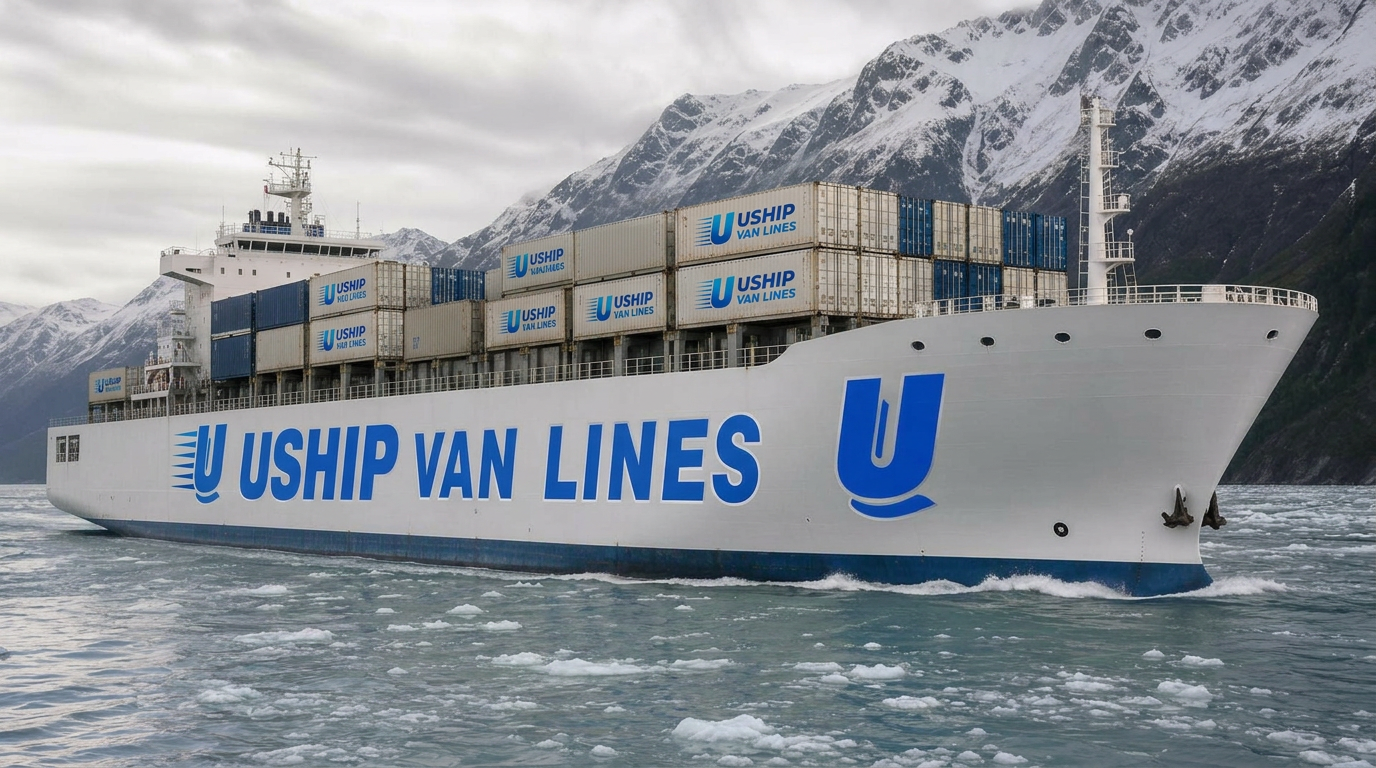
Moving from Alaska to Jacksonville, FL, means navigating one of the most logistically complex relocation routes in the United States. Your belongings will travel by freight barge from Alaska ports to the Port of Tacoma, transfer to overland carriers, and journey cross-country to Florida's First Coast—a process spanning thousands of miles, multiple transportation modes, and several weeks.
Best Alaska & Hawaii Movers, powered by UShip Van Lines, specializes in these multi-modal long-distance moves. We coordinate every leg—from last-mile pickup in Anchorage, Fairbanks, or Mat-Su through barge transit, cross-country trucking, and final delivery to your Jacksonville neighborhood. Ready to start planning? Request a free, no-obligation quote tailored to your moving date and inventory.
Route overview
Understanding the Alaska to Jacksonville Route
This route covers approximately 4,300 miles and requires seamless coordination between Alaska freight consolidators, barge operators, port logistics teams, and over-the-road trucking companies. Your household goods typically travel from Alaska communities to the Port of Anchorage or Whittier, sail to Tacoma, WA, clear customs and port inspections, then transfer to 53-foot trailers for the I-90 and I-10 cross-country haul to Jacksonville.
Jacksonville's position as a major port and logistics hub offers advantages for final delivery, with excellent highway access via I-95 and I-10. Whether you're relocating to Riverside, San Marco, Mandarin, or the beaches, the final-mile delivery is typically straightforward once your shipment reaches North Florida.
The entire process involves Alaska's unique transportation infrastructure—limited road access, weather-dependent barge schedules, and strict port protocols—combined with the logistics of a transcontinental move. Professional coordination is essential to prevent delays, ensure proper handling, and provide accurate tracking throughout the journey.
How the moving process works
The Step-by-Step Moving Process
1. Initial Consultation and Inventory Assessment
Your move begins with a detailed inventory review. We assess your household size, special items (vehicles, antiques, electronics), and pickup location within Alaska. Remote areas like Kenai, Homer, or Fairbanks may require additional last-mile coordination before port consolidation.
2. Pre-Barge Pickup and Consolidation
Our Alaska partners schedule pickup from your home, apartment, or military base. Items are transported to a consolidation warehouse near the Port of Anchorage or Whittier, where they're inventoried, packed into marine-rated containers, and prepared for barge loading. This step typically occurs 5–10 days before your scheduled sailing.
3. Barge Transit to Tacoma
Your container boards a southbound freight barge operated by Totem Ocean Trailer Express (TOTE) or Alaska Marine Lines. The sailing from Anchorage to Tacoma takes 3–5 days, depending on weather and routing. Containers remain sealed and climate-controlled throughout the voyage.
4. Port Clearance and Transfer in Tacoma
Upon arrival at the Port of Tacoma, containers clear customs (if applicable), undergo USDA inspection for regulated items, and transfer to our overland trucking partners. This port-side process typically requires 2–4 business days for paperwork, inspections, and trailer loading.
5. Cross-Country Trucking
Your shipment travels approximately 3,100 miles via I-90 east through Washington, Idaho, Montana, Wyoming, South Dakota, and Minnesota, then south through Wisconsin, Illinois, and connecting to I-65 or I-75 southbound routes, eventually reaching I-10 for the final approach to Jacksonville. Transit time averages 7–10 days depending on routing and weather.
6. Final Delivery in Jacksonville
Our delivery team contacts you 24–48 hours before arrival to schedule a delivery window. Upon arrival, movers unload, place items in designated rooms, and verify inventory. You'll review and sign delivery documents, noting any concerns for immediate resolution.
7. Post-Move Support
We remain available for claims assistance, unpacking coordination, or secondary deliveries if you need temporary storage during home closings or renovations. Our customer service team ensures every detail is resolved to your satisfaction.
Estimated moving costs
Cost Expectations for Alaska to Jacksonville Moves
A typical 2–3 bedroom household move from Alaska to Jacksonville ranges from $6,800 to $12,500, depending on volume, services, and timing. Studio or 1-bedroom moves may cost $4,200–$6,500, while 4+ bedroom homes often exceed $13,000–$18,000.
Primary cost drivers include:
- Volume and weight: Barge freight is priced by cubic footage and weight. A standard 3-bedroom home averages 8,000–12,000 pounds and 800–1,200 cubic feet.
- Origin accessibility: Pickups in Fairbanks, Kenai, or bush communities require additional last-mile trucking to Anchorage ports, adding $800–$2,200.
- Barge scheduling: Peak summer sailings (May–September) command premium pricing due to high demand. Off-season moves (October–April) may save 12–18%.
- Overland distance: The 3,100-mile Tacoma-to-Jacksonville leg is charged per mile and per hundredweight, influenced by fuel costs and routing.
- Special handling: Vehicles, boats, ATVs, pianos, antiques, and fragile items require dedicated packing, crating, or Roll-on/Roll-off (RORO) barge space.
- Storage: If your Jacksonville home isn't ready, warehouse storage in Tacoma or Jacksonville runs $150–$350/month depending on volume.
- Insurance coverage: Basic carrier liability covers $0.60/pound. Full-value replacement protection costs 1–2% of declared shipment value.
We provide itemized, binding estimates after reviewing your inventory and preferred moving dates. Request a quote to receive pricing specific to your timeline and household size. We never quote guaranteed prices without a detailed assessment, ensuring transparency and accuracy.
Estimated transit times
Realistic Transit Timelines
Door-to-door transit from Alaska to Jacksonville typically requires 18–28 days under normal conditions. Here's the breakdown:
- Pickup to port consolidation: 2–5 days, depending on your Alaska location. Fairbanks and Mat-Su pickups may need an extra day for transport to Anchorage.
- Barge sailing (Anchorage/Whittier to Tacoma): 3–5 days on the water. Sailings depart 1–3 times weekly during peak season, less frequently in winter.
- Port clearance and transfer in Tacoma: 2–4 business days for inspections, customs (if needed), and loading onto overland trailers.
- Cross-country trucking (Tacoma to Jacksonville): 7–10 days for the 3,100-mile journey. Team-driver expedited service can reduce this to 5–6 days for an additional fee.
- Final delivery scheduling: 1–2 days for appointment coordination once the truck reaches Jacksonville.
Total timeline: 15 days minimum for expedited service, 28+ days during winter storms or peak-season congestion. Weather delays—especially in the Gulf of Alaska, Montana passes, or Southern ice storms—can extend timelines by 3–7 days. We provide GPS tracking and proactive updates throughout every leg, so you're never left wondering where your belongings are.
Regional logistics
Alaska-Specific Logistics and Considerations
Port operations: Most Alaska shipments consolidate through the Port of Anchorage (primary) or Whittier (seasonal). Anchorage offers year-round sailings; Whittier serves Mat-Su and Kenai Peninsula efficiently during ice-free months. Your pickup location determines which port provides the best routing and cost.
Vehicle shipping: Vehicles can ship alongside household goods via RORO barge service. Cars, trucks, and motorcycles travel separately from containerized goods but on the same or adjacent sailings. Cost ranges from $1,200–$2,400 per vehicle (Alaska to Tacoma), plus $800–$1,400 for Tacoma-to-Jacksonville overland transport. Vehicles must be clean (free of soil/seeds for USDA compliance), less than ¼ tank of fuel, and free of personal items.
Restricted and prohibited items: USDA regulations prohibit uncertified plants, soil, certain seeds, fresh produce, and untreated wood. Hazardous materials (propane, ammunition, paint, batteries) are banned from barges. Frozen foods must be consumed or donated; refrigerated goods won't survive the multi-week journey. We provide a comprehensive restricted-items checklist during your consultation.
Last-mile coordination in Alaska: Pickups in Fairbanks, North Pole, Wasilla, Palmer, Soldotna, Kenai, Homer, or bush communities require specialized last-mile trucking to Anchorage. This adds 1–3 days and $600–$2,200 depending on distance and road conditions. Winter pickups on the Parks Highway or Sterling Highway may face weather delays.
Documentation: You'll need a detailed inventory list, proof of residence (for customs if applicable), vehicle titles (if shipping cars), and identification. Military members should provide PCS orders for potential reimbursement processing. We help prepare all required paperwork to ensure smooth port clearance.
Tracking and communication: Barge tracking is less granular than trucking—updates occur at port departure, port arrival, and truck dispatch. Overland transit provides real-time GPS tracking. We proactively communicate at every transition point and are available via phone, email, or text throughout your move.
Seasonal considerations
Seasonal Planning for Alaska Departures
Spring (March–May): Barge schedules increase frequency as ice conditions improve in Prince William Sound and the Gulf of Alaska. March and April offer moderate pricing before peak season, but weather remains unpredictable—late snowstorms can delay pickups in Interior Alaska. Jacksonville weather is ideal for delivery, with mild temperatures and low humidity.
Summer (June–August): Peak moving season for Alaska. Barge sailings run 2–3 times weekly, but demand drives prices up 15–25%. Families relocating after school years and military PCS moves create high volume. Book 6–8 weeks in advance to secure preferred dates. Jacksonville summers are hot and humid; plan for climate-controlled storage if delivery is delayed.
Fall (September–November): Excellent shoulder season. Barge pricing drops 10–15% after Labor Day, and schedules remain frequent through October. September offers the best balance of availability and cost. By late November, sailings decrease as winter approaches. Jacksonville fall weather is pleasant, ideal for move-in and unpacking.
Winter (December–February): Off-peak pricing can save 12–18%, but barge schedules reduce to 1–2 sailings weekly. Severe weather—Gulf of Alaska storms, Alaskan Pass closures, and rare Jacksonville freezes—can cause delays. Allow extra buffer time. Ideal for flexible timelines or cost-conscious moves. Military families and retirees often choose winter for budget-friendly relocations.
Booking recommendation: Reserve your move 4–6 weeks ahead during off-peak months, 6–10 weeks during summer. Last-minute moves (under 3 weeks) face limited barge space and premium pricing.
Why choose Best Alaska & Hawaii Movers
Why Choose Best Alaska & Hawaii Movers for Your Alaska to Jacksonville Move
-
Alaska-specific expertise: We've coordinated hundreds of Alaska-to-Lower 48 moves, understanding barge schedules, port protocols, and last-mile challenges unique to Anchorage, Fairbanks, Mat-Su, and Kenai regions. Our established relationships with Alaska freight consolidators and TOTE/Alaska Marine Lines ensure priority handling.
-
End-to-end coordination: You work with a single point of contact from initial quote through Jacksonville delivery. We manage pickup, port consolidation, barge booking, Tacoma transfer, cross-country trucking, and final delivery—eliminating the confusion of coordinating multiple vendors.
-
Transparent pricing: Our binding estimates include all legs of the journey—no surprise fees for port handling, fuel surcharges, or long-carry delivery. You'll know your total cost upfront, with clear explanations of each line item.
-
Proactive communication: We provide updates at every major milestone: pickup complete, barge departure, Tacoma port arrival, truck dispatch, and delivery scheduling. Our customer service team is available six days a week to answer questions and address concerns in real time.
-
Flexible service options: Whether you need full-service packing, vehicle shipping, temporary storage, or expedited delivery, we tailor solutions to your timeline and budget. Military families receive specialized support for PCS moves, including documentation assistance for DITY reimbursements.
-
Powered by UShip Van Lines: Our partnership with UShip Van Lines provides access to a nationwide network of vetted carriers, competitive pricing through volume agreements, and additional insurance options for high-value shipments.