
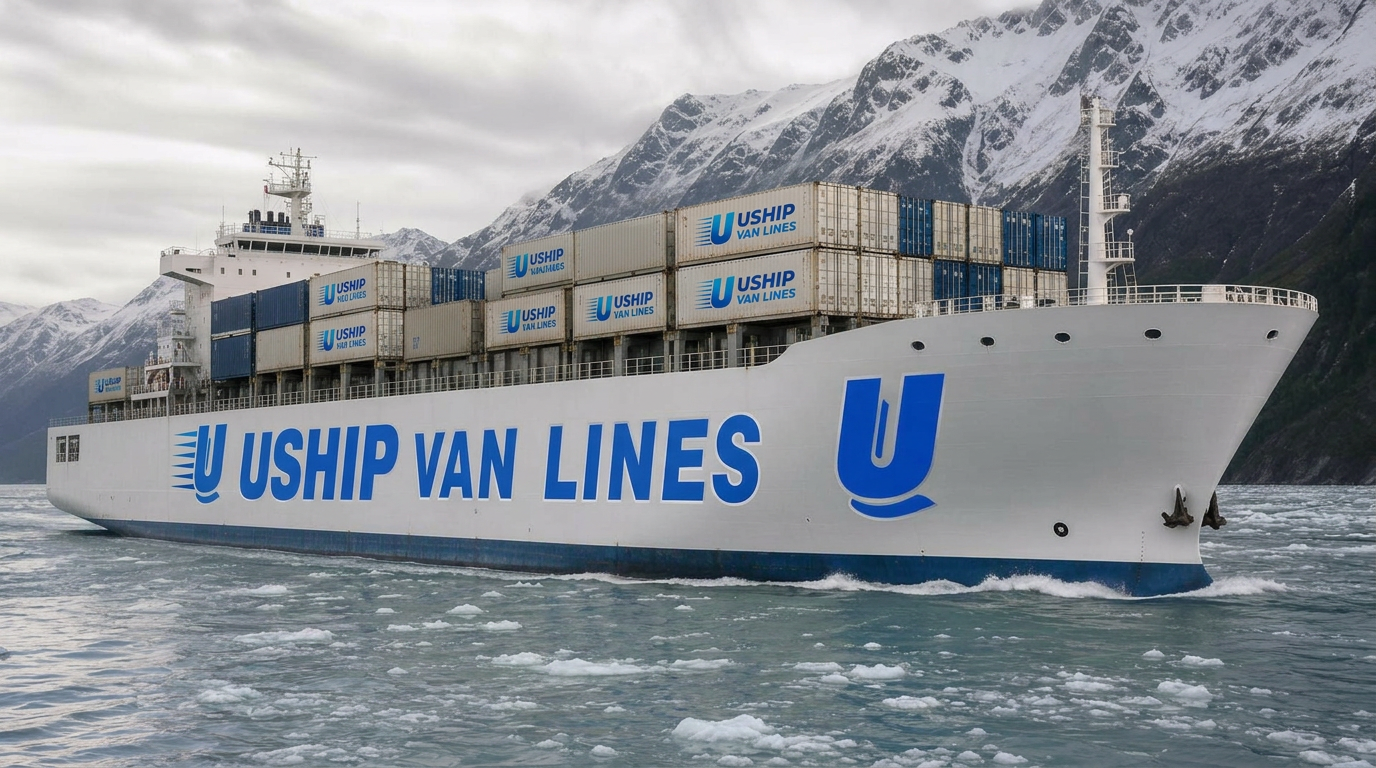
Moving from Portland, OR to Alaska
Relocating from Portland, Oregon to Alaska means coordinating a hybrid move that combines ground transportation with barge shipping across the Pacific Northwest. Your household goods travel by truck from Portland to the Port of Tacoma, load onto a commercial barge bound for the Port of Anchorage, then complete the journey overland to your final Alaska destination—whether that's Anchorage, Fairbanks, the Mat-Su Valley, Kenai Peninsula, or a bush community accessible by air or ice road.
Best Alaska & Hawaii Movers, powered by UShip Van Lines, streamlines this complex logistics chain by matching you with experienced carriers who handle Alaska routes year-round. Request your free quote today to compare real pricing, transit schedules, and service options tailored to your Portland-to-Alaska timeline.
Route overview
Portland to Alaska: Route Overview
The Portland–Alaska moving corridor is one of the most geographically diverse long-distance lanes in North America. Your belongings travel approximately 180 miles north from Portland to Tacoma, Washington, where they're containerized or palletized and loaded aboard a northbound barge. The marine leg spans roughly 1,440 nautical miles to the Port of Anchorage, threading through the Inside Passage and the Gulf of Alaska.
Once your shipment clears customs inspection and port handling in Anchorage, it's transferred to a local carrier for final delivery. If you're moving to Anchorage proper, last-mile delivery may take just a few hours. Destinations in Fairbanks (358 miles north via the Parks Highway), Mat-Su Valley communities like Wasilla or Palmer (40–60 miles), or the Kenai Peninsula (100+ miles) add 1–3 days of ground transit. Remote bush locations require specialized air freight or seasonal ice-road access, which can extend delivery by weeks.
This route is heavily influenced by barge sailing schedules—typically weekly departures from Tacoma during peak moving season (May–September) and bi-weekly or tri-weekly sailings in winter. Weather, tidal windows, and port congestion can shift estimated arrival dates by several days, so flexibility and contingency planning are essential.
How the moving process works
Step-by-Step: How Your Portland–Alaska Move Works
-
Request and compare quotes. Contact Best Alaska & Hawaii Movers to receive estimates from multiple Alaska-specialized carriers. Provide an itemized inventory, preferred move dates, and your exact Alaska destination (including remote access details if applicable).
-
Schedule your Portland pickup. The carrier dispatches a crew to load your household goods into a moving van in Portland. This typically occurs 7–14 days before the next available barge sailing from Tacoma to allow time for ground transit and port staging.
-
Ground transport to Tacoma. Your shipment travels 180 miles north on I-5 to the Port of Tacoma. The driver coordinates with the barge line to deliver your goods to the designated terminal, where they're palletized or containerized and weighed.
-
Barge loading and sailing. Once the barge departs Tacoma, your goods spend 4–7 days at sea en route to Anchorage. Carriers provide sailing manifests and estimated port arrival dates; you can often track the vessel online via the barge line's portal.
-
Port of Anchorage arrival and clearance. Upon docking, your shipment is offloaded, inspected by Alaska customs (for plants, produce, or restricted items), and transferred to the local delivery partner's warehouse or truck.
-
Last-mile delivery in Alaska. The Alaska-based carrier schedules final delivery to your new address. For Anchorage deliveries, this may happen within 1–2 days of port arrival. Fairbanks, Mat-Su, or Kenai destinations add 1–3 days; bush communities require coordination with bush air services or winter ice roads.
-
Unload and inspect. Walk through your inventory with the delivery crew, noting any damage or missing items on the bill of lading before signing off. File claims within the carrier's specified window (usually 9 months) for insurance coverage.
Estimated moving costs
What Does a Portland–Alaska Move Cost?
For a typical 2–3 bedroom household (7,000–10,000 pounds), expect to pay $6,500–$11,500 for door-to-door service from Portland to Anchorage. Fairbanks or remote destinations may add $800–$2,200 depending on mileage and accessibility.
Key cost drivers include:
- Shipment weight and volume. Barge freight is priced per hundred-weight (CWT) or per container; heavier or bulkier loads increase costs proportionally.
- Barge sailing schedule. Peak-season sailings (June–August) often carry higher fuel surcharges and demand premiums. Off-season moves may qualify for discounted rates.
- Packing and crating services. Full-service packing adds $800–$2,000; fragile-only or crating for antiques, artwork, or electronics runs $200–$600.
- Vehicle shipping. Driving a car onto the barge costs $1,200–$1,800 per vehicle, depending on size and season.
- Final-mile complexity. Bush deliveries requiring air charter or ice-road hauling can add $2,000–$5,000+ beyond standard ground rates.
- Storage. If your Alaska residence isn't ready, warehouse storage in Anchorage typically costs $75–$150 per month per container.
Best Alaska & Hawaii Movers never publishes guaranteed prices online—every move is unique. Request a detailed quote to see real numbers for your inventory and timeline.
Estimated transit times
How Long Does Portland to Alaska Take?
Door-to-door transit typically ranges 10–21 days, broken down as follows:
- Portland to Tacoma (ground): 1 day for the 180-mile haul, plus 1–3 days of port staging and barge loading.
- Tacoma to Anchorage (barge): 4–7 days at sea, depending on weather, vessel speed, and intermediate port calls (some barges stop in Whittier or Kodiak).
- Port clearance and transfer: 1–2 days for offloading, customs inspection, and warehouse handoff in Anchorage.
- Last-mile delivery: Same-day to 3 days for Anchorage proper; add 1–3 days for Fairbanks, Mat-Su, or Kenai; bush locations can add 1–6 weeks depending on air schedules or ice-road availability.
Variable factors:
- Barge sailing frequency: Weekly in summer, bi-weekly or less in winter.
- Weather delays: Gulf of Alaska storms can hold vessels in port or slow crossings by 1–2 days.
- Port congestion: Summer cruise-ship season (May–September) can slow cargo offloading.
- Bush access: Remote deliveries via bush plane or seasonal ice roads operate on limited schedules and weather windows.
Plan for a 3-week window from Portland pickup to Alaska delivery, with a one-week buffer for contingencies.
Regional logistics
Alaska-Specific Logistics for Portland Movers
Ports and terminals:
Your shipment loads onto the barge at the Port of Tacoma (Terminal 7 or Alaska Marine Lines' dedicated facility). Upon arrival in Alaska, it docks at the Port of Anchorage, where Alaska Railroad Corporation or local drayage companies handle offloading. If you're moving to Whittier or Kodiak, confirm whether your barge line serves those ports directly or requires an Anchorage transfer.
Paperwork and inspections:
Alaska enforces strict agricultural inspection rules. The Alaska Department of Natural Resources inspects shipments for invasive species, soil-contaminated items, and restricted plants. Clean all outdoor equipment (grills, bikes, gardening tools) thoroughly before packing. Expect 1–2 hours of delay at the Port of Anchorage for this inspection; carriers familiar with Alaska routes prepare manifests in advance to streamline the process.
Vehicle shipping:
Driving your car onto the same barge is cost-effective and convenient. Vehicles must be nearly empty (less than 1/4 tank of fuel, no personal items beyond floor mats and a spare tire) and are driven on/off by port personnel. Shipping a standard sedan or SUV adds $1,200–$1,800 to your total; oversized vehicles (RVs, trucks with campers) cost more. Drop your vehicle at the Tacoma terminal 1–3 days before sailing; pick it up in Anchorage 1–2 days after the barge docks.
Bush and remote deliveries:
If your destination is off the road system—villages in the Aleutians, North Slope, or Interior bush—your goods transfer from Anchorage to a bush air carrier (Everts Air, Ravn Alaska, Wright Air Service). These flights operate on limited schedules and weight restrictions; expect to pay $0.50–$1.50 per pound air freight. Alternatively, winter ice roads to communities like Bethel or Kotzebue open narrow delivery windows January–March. Coordinate closely with your Alaska carrier to plan the final leg.
Storage options:
If your new home isn't ready or you're still hunting for housing, many Alaska carriers offer containerized storage in Anchorage warehouses. Your shipment remains sealed in the same container it traveled in, minimizing handling. Monthly rates run $75–$150 per container; most facilities are climate-controlled to prevent freeze damage to furniture, electronics, and household goods during Alaska's subzero winters.
Seasonal considerations
Best Times to Move Portland to Alaska
Spring (April–May):
Barge schedules ramp up from winter frequency to near-weekly sailings. Weather in the Gulf of Alaska remains unpredictable—late-season storms can delay crossings. Portland weather is mild and dry, ideal for loading. Alaska highways begin clearing of winter ice, but remote areas may still be inaccessible until late May. Moderate demand keeps rates below peak-season highs.
Summer (June–August):
Peak moving season. Weekly (sometimes twice-weekly) barge sailings, warmest weather, and longest daylight hours make this the most popular window. Expect premium pricing, port congestion from cruise ships, and tight truck availability in Anchorage. Book 6–8 weeks in advance. Ideal for families moving before the school year or settling in before Alaska's short construction season.
Fall (September–October):
Barge frequency begins to taper. Weather in the Gulf of Alaska becomes stormier, occasionally delaying sailings. Demand drops sharply after Labor Day, so rates soften and carrier availability improves. September is still relatively mild in both Portland and Alaska; October brings early snow to interior Alaska (Fairbanks, Mat-Su) and freezing conditions that complicate bush deliveries.
Winter (November–March):
Barge sailings drop to bi-weekly or tri-weekly. Severe Gulf storms, short daylight hours, and port ice can extend transit times by several days. Portland experiences wet weather; Alaska sees deep snow and subzero temperatures. Winter moves qualify for off-season discounts (10–20% below summer rates), and truck availability is excellent. Bush communities relying on ice roads become accessible January–March, opening brief windows for remote deliveries that are impossible in summer.
Why choose Best Alaska & Hawaii Movers
Why Best Alaska & Hawaii Movers for Your Portland–Alaska Move
- Alaska route specialists. We connect you with carriers who run the Tacoma–Anchorage barge route year-round and maintain partnerships with local Alaska delivery teams, bush air services, and storage facilities.
- Transparent, binding quotes. Compare real estimates from multiple vetted movers in one platform. No hidden fuel surcharges, port fees, or surprise barge-schedule upcharges—every cost is itemized upfront.
- Flexible scheduling around barge sailings. We coordinate your Portland pickup to align with the next available northbound barge, minimizing port storage fees and expediting your delivery timeline.
- Comprehensive vehicle and household coordination. Ship your car and your furniture on the same barge, with unified tracking, single-point billing, and synchronized delivery in Alaska.
- Powered by UShip Van Lines. Leverage UShip's marketplace technology to access competitive bids, verified carrier reviews, and $25,000+ cargo insurance options for high-value shipments.