
Moving from Cape Coral, FL to Alaska
Moving from Cape Coral's warm Gulf Coast to Alaska's frontier requires specialized expertise in long-haul logistics and marine freight. This cross-continental move spans over 4,000 miles and involves coordination between ground transport to the Pacific Northwest, ocean barge shipping, and final delivery across Alaska's unique terrain.
Best Alaska & Hawaii Movers, powered by UShip Van Lines, handles every phase of your Cape Coral to Alaska relocation—from packing your Florida home through final delivery to Anchorage, Fairbanks, the Mat-Su Valley, Kenai Peninsula, or remote communities. Request your customized moving quote today to start planning your Alaska adventure.
Route overview
Your Cape Coral to Alaska Moving Route
The journey from Cape Coral, Florida to Alaska follows a carefully orchestrated multimodal path. Your household goods travel overland approximately 3,200 miles from Southwest Florida across the southern United States to the Port of Tacoma, Washington—the primary consolidation point for Alaska-bound freight. This leg typically takes 5-7 days depending on routing and weather conditions through multiple climate zones.
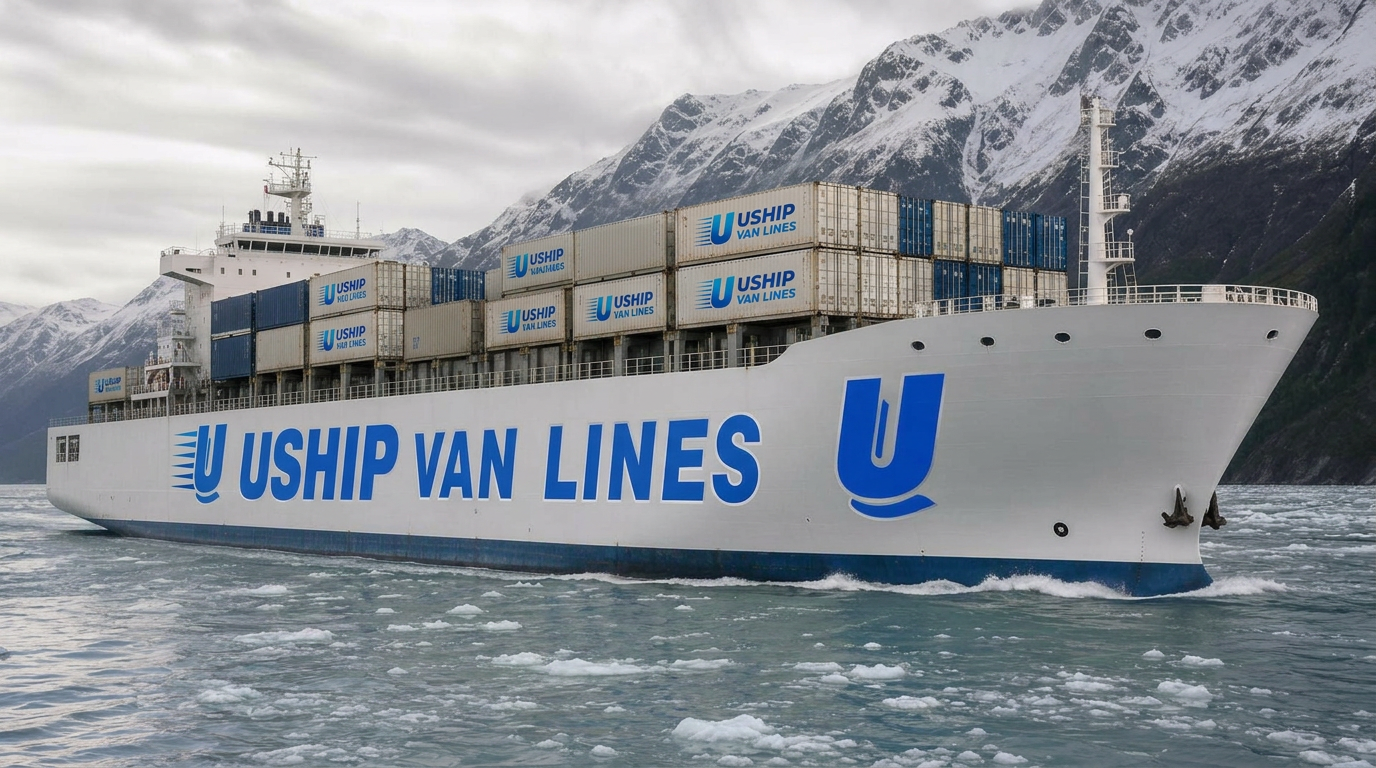
From Tacoma, your belongings board oceangoing barges operated by carriers serving the Alaska Marine Highway System and commercial freight routes. The voyage from Tacoma to the Port of Anchorage covers roughly 1,450 nautical miles through the Inside Passage and Gulf of Alaska, requiring 4-7 days depending on weather, routing, and barge schedules. After clearing the port, your shipment completes its journey via ground transport to your final Alaska destination—whether that's urban Anchorage, interior Fairbanks, the growing Mat-Su Valley communities, the Kenai Peninsula, or remote bush locations accessible by seasonal ice roads or smaller vessels.
This route requires expertise in interstate trucking regulations, marine freight documentation, Alaska customs procedures, and the logistical challenges unique to America's largest state. Temperature-controlled handling protects your belongings through dramatic climate transitions from Florida's humidity to Alaska's extreme cold.
How the moving process works
How Your Cape Coral to Alaska Move Works
-
Free Consultation & Quote – We assess your inventory, discuss your timeline, and provide a detailed estimate covering all phases: local pickup in Cape Coral, long-haul trucking to Tacoma, barge freight, and Alaska delivery. We'll explain volume-based pricing and answer questions about vehicles, specialty items, and storage options.
-
Pre-Move Planning & Documentation – You'll receive a comprehensive moving packet with checklists, timeline milestones, and required documentation for Alaska shipments. We coordinate barge schedules based on your preferred move dates and help you understand seasonal considerations that may affect timing and costs.
-
Professional Packing & Loading in Cape Coral – Our crew arrives at your Florida home with climate-appropriate packing materials designed for long-distance, multimodal transport. We inventory every item, use reinforced containers for the barge portion, and can coordinate vehicle shipping if you're transporting cars, boats, or recreational vehicles alongside household goods.
-
Overland Transport to Port of Tacoma – Your shipment travels via dedicated long-haul carriers across I-10, I-40, or southern routes to the Pacific Northwest. We provide tracking updates and maintain communication throughout this coast-to-coast journey, which accounts for roughly one-third of your total transit time.
-
Barge Consolidation & Ocean Freight – At Tacoma, your goods are consolidated with other Alaska-bound shipments, loaded into weather-sealed containers, and secured aboard commercial barges. We handle all marine freight documentation, ensure proper weight distribution and securing, and coordinate with barge operators for optimal sailing schedules.
-
Port of Anchorage Arrival & Customs Clearance – Upon arrival in Alaska, we manage port logistics including container offloading, customs inspection (if applicable), and coordination with local delivery teams. Anchorage serves as the distribution hub for shipments heading to other Alaska regions.
-
Final Delivery & Unpacking – Ground carriers complete the last-mile delivery to your Alaska address, whether that's a downtown Anchorage condo, a Fairbanks home, a Mat-Su Valley property, a Kenai Peninsula residence, or a remote community. Our team unloads, places items according to your instructions, and removes packing materials, leaving you ready to settle into Alaska life.
Estimated moving costs
What to Budget for Your Cape Coral to Alaska Move
A typical 2-3 bedroom household moving from Cape Coral to Alaska generally ranges from $8,500 to $16,000 for full-service door-to-door relocation. Studio and one-bedroom moves may start around $5,500–$8,000, while larger 4+ bedroom homes or moves exceeding 10,000 pounds can reach $18,000–$25,000 or more.
Key cost factors include:
- Volume and weight – Alaska moves are priced primarily by cubic footage or weight, with barge freight charges constituting 40-50% of total costs
- Service level – Full-service packing, crating of specialty items, and unpacking add $1,500–$4,000; DIY packing reduces costs but requires Alaska-appropriate materials
- Final destination – Anchorage delivery is most economical; Fairbanks, Mat-Su Valley, and Kenai Peninsula add $800–$2,000; remote bush communities requiring additional barge or air freight can add $3,000–$8,000
- Seasonal timing – Peak summer season (May–September) commands premium rates due to high demand and optimal weather; winter moves (October–April) may offer 10-20% savings but face scheduling limitations
- Vehicle shipping – Auto transport via barge adds $1,800–$3,500 per vehicle; boats and RVs priced separately based on dimensions
- Storage – Temporary warehousing in Tacoma or Anchorage costs $150–$400 per month if your move dates don't align perfectly with barge schedules
We provide transparent, itemized quotes with no hidden fees. Remember that these are estimates based on typical moves—your actual cost depends on your specific inventory, services selected, and delivery requirements. Request a personalized quote for accurate pricing tailored to your situation.
Estimated transit times
How Long Does Cape Coral to Alaska Moving Take?
Door-to-door delivery from Cape Coral, Florida to Alaska typically requires 18-35 days, with timing heavily dependent on barge schedules, final destination, and seasonal factors.
Transit breakdown by leg:
- Cape Coral pickup to Port of Tacoma: 5-8 days for the 3,200-mile overland haul across the continental U.S.
- Tacoma port staging: 2-7 days for consolidation, container loading, and waiting for the next scheduled barge departure (sailings typically occur 1-4 times weekly depending on season)
- Ocean freight Tacoma to Anchorage: 4-7 days for the barge voyage through Pacific Northwest waters and the Gulf of Alaska
- Anchorage port to final destination: 1-5 days depending on whether you're delivering within Anchorage (1-2 days) or to outlying areas like Fairbanks (3-4 days), Mat-Su Valley (2-3 days), Kenai Peninsula (2-4 days), or remote communities (5-14+ days)
Peak summer season (May through September) offers the most frequent barge sailings and fastest ground transport, typically hitting the lower end of these ranges. Winter months (October through April) may extend timelines due to reduced barge schedules, weather delays, and challenging road conditions, particularly for deliveries outside Anchorage.
For time-sensitive moves, we recommend booking 6-8 weeks in advance during summer and 8-12 weeks during winter to secure optimal barge space and coordinate all logistics. We provide detailed timeline projections and regular tracking updates throughout your move.
Regional logistics
Alaska-Specific Moving Logistics from Cape Coral
Port Operations & Marine Freight – Your shipment clears through the Port of Tacoma's Alaska freight terminals, where specialized handlers experienced in northern shipping consolidate containers. We ensure proper weatherproofing, load securing per maritime regulations, and documentation meeting both U.S. Coast Guard and Alaska Department of Transportation requirements. The Port of Anchorage receives the majority of inbound household goods, with modern container facilities and established customs procedures.
Vehicle & Auto Transport – If you're shipping vehicles separately, they're typically loaded onto the same or parallel barges as your household goods. Cars must be empty of personal items (only ¼ tank of gas allowed per maritime regulations), and we handle all vehicle documentation. Many Alaska residents drive the Alaska-Canada Highway (ALCAN) as an alternative, which takes 4-7 days from the Lower 48 and offers an adventurous moving experience, though winter driving requires serious preparation.
Remote & Bush Community Delivery – Destinations beyond Alaska's limited road system require additional planning. Communities accessible only by small aircraft, seasonal ice roads, or secondary marine transport need specialized arrangements. We coordinate with bush pilots, barge operators serving smaller coastal towns, and ice road carriers (typically January-March when tundra freezes solid). These deliveries add significant time and cost but are routine for experienced Alaska movers.
Climate Protection – Your belongings experience dramatic temperature swings from Cape Coral's 75-90°F humidity to Alaska's -20°F to 70°F extremes. We use moisture barriers, thermal blankets for sensitive electronics, and climate-controlled containers when needed. Wooden furniture, leather goods, and electronics require special attention during this transition.
Alaska Documentation – While Alaska is a U.S. state (no customs), certain items require special handling: firearms must be declared and properly secured, large quantities of alcohol may face state taxation, and endangered species products (ivory, certain furs) face restrictions. We provide a comprehensive checklist and guide you through all Alaska-specific requirements.
Final Mile Challenges – Alaska's infrastructure differs dramatically from Florida. Anchorage has modern highways, but roads to Fairbanks, the Mat-Su Valley, and Kenai Peninsula can be challenging, especially in winter. Remote addresses may require smaller trucks, all-terrain vehicles, or even helicopter delivery in extreme cases. We assess access and vehicle requirements during your quote consultation.
Seasonal considerations
Best Times to Move from Cape Coral to Alaska
Summer (May–September) is peak moving season for Alaska relocations. Barge schedules run at maximum frequency with sailings 3-4 times weekly from Tacoma. Weather conditions are most favorable for both ocean freight and final delivery across Alaska, with minimal delays. Road access to remote areas is best during these months. However, expect premium pricing—rates can be 15-25% higher than off-season, and booking 8-10 weeks ahead is essential to secure space during this high-demand window. If you're moving for employment, coordinating arrival with Alaska's endless summer daylight makes settling in much easier.
Fall (October–November) offers a transition period with moderate pricing and decent barge frequency (2-3 sailings weekly). Early fall weather is generally cooperative, though storms become more frequent in late October and November. This can be a sweet spot for budget-conscious movers willing to accept slightly longer windows and occasional weather delays. Book 6-8 weeks ahead.
Winter (December–March) presents the most economical rates—often 10-20% below summer pricing—but comes with significant logistical challenges. Barge schedules reduce to 1-2 sailings weekly, and severe Gulf of Alaska storms can cause delays. Ground transport in Alaska faces snow, ice, and limited daylight. Many remote communities become inaccessible except by air. However, for flexible movers with secure housing and no hard deadlines, winter moves offer substantial savings. Book 10-12 weeks ahead to navigate limited schedules.
Spring (April–early May) sees increasing barge frequency as operators ramp up for summer season. Weather is improving but still unpredictable. Pricing begins climbing toward peak rates by mid-May. This shoulder season works well for those seeking moderate costs with better logistics than deep winter. Book 6-8 weeks out.
Whatever season you choose, Best Alaska & Hawaii Movers monitors weather patterns, barge schedules, and route conditions to keep your move on track and minimize delays.
Why choose Best Alaska & Hawaii Movers
Why Choose Best Alaska & Hawaii Movers for Your Cape Coral to Alaska Move
-
Specialized Alaska Expertise – We focus exclusively on Alaska and Hawaii relocations, giving us unmatched knowledge of barge schedules, port logistics, Alaska road systems, and the unique challenges of northern moves that general movers simply don't understand.
-
True Door-to-Door Service – Unlike brokers who hand off your shipment multiple times, we coordinate every phase from your Cape Coral doorstep through final delivery anywhere in Alaska, maintaining accountability and communication throughout.
-
Transparent Pricing & No Hidden Fees – Your quote includes all anticipated costs: packing, long-haul trucking, barge freight, port fees, and Alaska delivery. We explain every line item and provide written estimates you can trust.
-
Powered by UShip Van Lines Network – Our partnership with UShip Van Lines gives us access to vetted carriers, competitive capacity, and nationwide logistics support while maintaining our specialized Alaska focus and personalized service.
-
Flexible Scheduling & Storage Solutions – We work around barge schedules, your timeline, and Alaska housing availability, offering secure storage in Tacoma or Anchorage when you need gap coverage between move-out and move-in dates.
-
Comprehensive Insurance & Protection – Full valuation coverage protects your belongings through every mile and mode of transport, with clear claims processes and responsive support if the unexpected occurs.