
Moving from Massachusetts to Alaska
Moving from Massachusetts to Alaska is one of the most logistically complex relocations in North America, spanning over 3,400 miles and requiring a combination of overland trucking and marine container shipping. Your household goods will travel across the continental U.S. to the Pacific Northwest, transfer to a barge in Tacoma or Seattle, and sail approximately 1,500 nautical miles to the Port of Anchorage before final delivery to your new home.
Best Alaska & Hawaii Movers, powered by UShip Van Lines, specializes in this exact route—coordinating every leg from Massachusetts pickup through barge transit to last-mile delivery in Anchorage, Fairbanks, the Mat-Su Valley, Kenai Peninsula, or even remote bush communities. Ready to start planning your cross-country Alaska adventure? Request your free, no-obligation quote today and speak with our Alaska moving specialists.
Route overview
How the Massachusetts to Alaska Route Works
The Massachusetts to Alaska moving corridor follows a carefully orchestrated three-stage journey. Your belongings are first loaded into a 53-foot truck or dedicated moving container at your Massachusetts home, then transported overland approximately 3,000 miles across the country to Tacoma, Washington. This transcontinental leg typically takes 5–7 days depending on weather and traffic conditions.
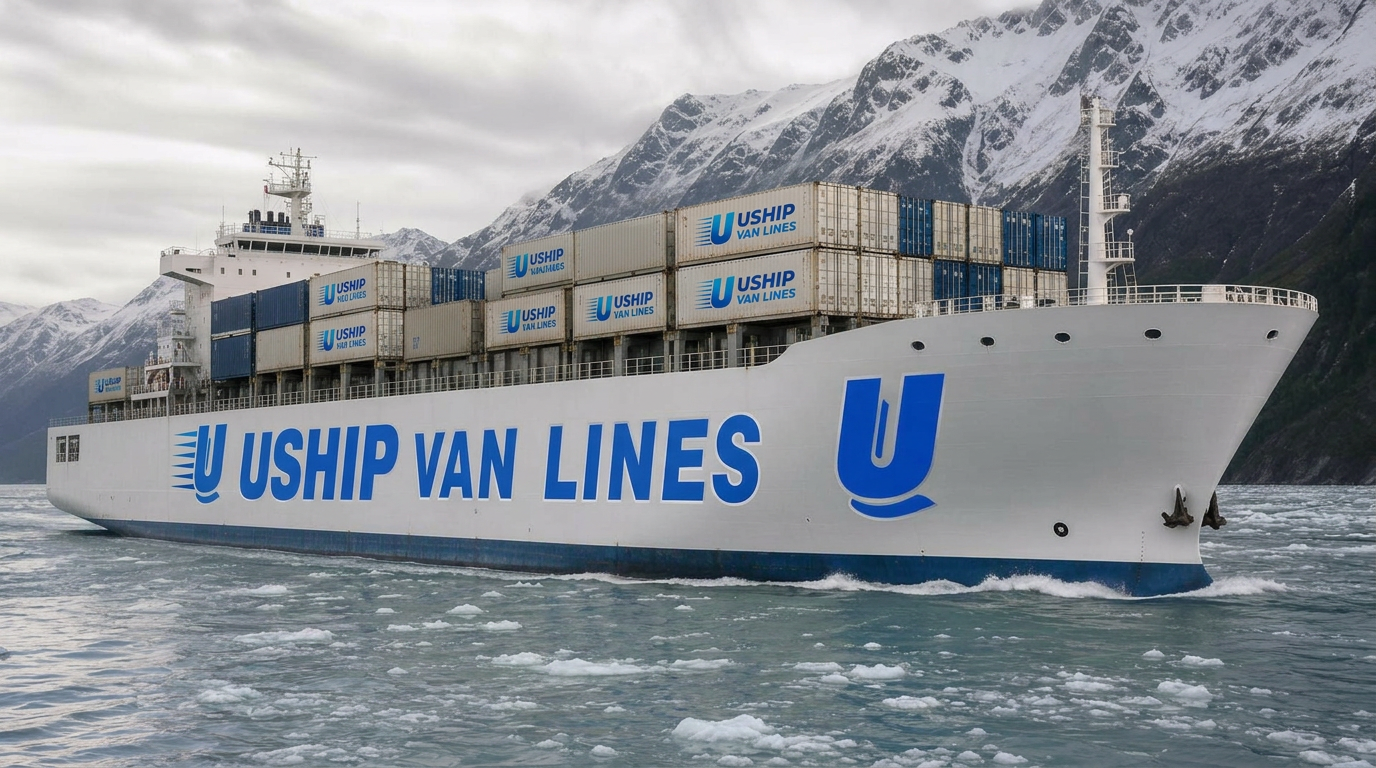
Once in Tacoma, your shipment is transferred to a weatherproof marine container (typically 20-foot or 40-foot steel containers) at the port facility. These containers are loaded aboard weekly Alaska Marine Lines or Totem Ocean Trailer Express (TOTE) barges that depart for Anchorage. The ocean voyage covers roughly 1,500 nautical miles through the Inside Passage and Gulf of Alaska, taking 5–7 days depending on weather and port calls.
After arriving at the Port of Anchorage, your container clears customs (a formality for domestic moves, but still required), is unloaded from the barge, and placed on a local delivery truck for the final leg to your destination. For Anchorage deliveries, this happens within 1–2 days. Fairbanks, Mat-Su, and Kenai Peninsula destinations add another 1–3 days. Remote bush locations require additional coordination with bush plane or winter ice road services, extending timelines significantly.
How the moving process works
The Step-by-Step Massachusetts to Alaska Moving Process
-
Free In-Home or Virtual Survey (3–4 weeks before move date): Our moving coordinator assesses your inventory via video call or in-person visit throughout Massachusetts (Boston, Worcester, Springfield, Cambridge, and all communities). We'll identify items that cannot ship to Alaska (propane tanks, certain chemicals, perishables) and provide a detailed weight estimate and timeline.
-
Book Your Move and Reserve Barge Space (2–3 weeks out): Once you approve the quote, we reserve space on the next available Alaska barge sailing from Tacoma. Summer sailings (May–September) book quickly, so early reservation is critical. We coordinate your Massachusetts pickup date to align perfectly with barge departure schedules.
-
Professional Packing and Loading in Massachusetts (1–2 days): Our crew arrives at your Massachusetts home with Alaska-specific packing materials—extra padding for the long journey, moisture barriers for the ocean leg, and reinforced boxes. We inventory every item, load the truck, and provide you with a detailed manifest and tracking information.
-
Overland Transit to Tacoma (5–7 days): Your shipment travels approximately 3,000 miles across I-90 and I-84 to the Pacific Northwest. You'll receive GPS tracking updates and can monitor progress in real-time through our customer portal.
-
Port Transfer and Containerization (1–2 days): At our Tacoma warehouse facility, your belongings are carefully transferred into marine-grade steel containers, sealed, and documented for barge loading. We handle all port paperwork, including Alaska customs pre-clearance.
-
Barge Transit to Anchorage (5–7 days): Your container sails north through Puget Sound, the Inside Passage, and across the Gulf of Alaska. Alaska Marine Lines provides weekly sailings year-round, with increased frequency in summer months. Weather can occasionally extend transit by 1–2 days.
-
Port Clearance and Final Delivery in Alaska (2–5 days): After docking in Anchorage, your container is offloaded, cleared through the Port of Anchorage inspection process, and loaded onto our local Alaska delivery trucks. We schedule your delivery window and complete the final leg to your new home, unpacking and placing items in your designated rooms.
Estimated moving costs
What Does a Massachusetts to Alaska Move Cost?
A typical 2-bedroom move (approximately 7,000–9,000 pounds) from Massachusetts to Anchorage ranges from $8,500 to $14,000, while a 3-bedroom home (10,000–14,000 pounds) typically costs $12,000 to $19,000. These estimates include overland trucking, barge shipping, Alaska delivery, basic liability coverage, and standard packing services. Your final cost depends on several key factors.
Primary cost drivers include:
- Shipment weight and volume: Alaska moves are priced primarily by weight and cubic footage. A full 20-foot container (up to 20,000 pounds) costs less per pound than partial loads that share container space.
- Packing services: Full-service packing adds $1,200–$2,800 depending on home size. Alaska-specific weatherproofing and padding add $300–$600 to standard packing costs.
- Final destination in Alaska: Anchorage is the base rate. Fairbanks adds $1,500–$2,500. Kenai Peninsula destinations add $800–$1,500. Remote bush communities require custom quotes and can add $3,000–$8,000+ depending on accessibility.
- Vehicle shipping: Shipping a car from Massachusetts to Alaska via the same barge route costs $2,200–$3,500 per vehicle. Vehicles travel in roll-on/roll-off (RoRo) configuration on the same barges.
- Seasonal timing: Summer moves (May–September) cost 15–25% more due to high demand and Alaska's peak moving season. Winter moves offer significant discounts but face weather uncertainties.
- Insurance and valuation: Basic liability (60 cents per pound) is included. Full-value protection costs approximately 1.5–2.5% of declared value and is strongly recommended for Alaska's long journey.
- Storage: If your barge arrival and housing availability don't align, Anchorage climate-controlled storage costs $150–$300 per month for a typical household.
We provide transparent, itemized quotes with no hidden fees. Request your free estimate to get pricing specific to your inventory and timeline.
Estimated transit times
Realistic Massachusetts to Alaska Moving Timelines
Door-to-door transit from Massachusetts to Anchorage typically takes 14–21 days under normal conditions. Breaking this down by leg:
- Massachusetts pickup to Tacoma port: 5–7 days overland (approximately 3,000 miles)
- Port staging and containerization: 1–2 days at Tacoma warehouse
- Barge sailing to Anchorage: 5–7 days on the water (1,500 nautical miles)
- Port clearance and offloading: 1–2 days at Port of Anchorage
- Final delivery in Alaska: 1–3 days depending on destination
For destinations beyond Anchorage, add extra time: Fairbanks adds 2–3 days (358 miles north), Kenai Peninsula adds 1–2 days (up to 150 miles south), and Mat-Su Valley locations (Wasilla, Palmer) add 1 day. Remote bush communities accessible only by plane or seasonal ice roads require custom scheduling and can add 1–3 weeks.
Seasonal timing impacts:
- Summer (May–September): Most reliable weather but highest demand. Book 4–6 weeks in advance to secure preferred dates.
- Winter (November–March): Weather delays are common. Overland transit across northern routes can add 2–4 days during snowstorms. Budget an extra week for weather contingency.
- Shoulder seasons (April, October): Good balance of availability and weather, though early spring breakup can affect Alaska road conditions.
We always provide a delivery window rather than a guaranteed date, as Alaska weather and marine conditions can shift schedules. Real-time tracking keeps you informed throughout the journey.
Regional logistics
Alaska-Specific Moving Logistics You Need to Know
Marine Barge Routes and Ports: Your Massachusetts shipment will transit through the Port of Tacoma in Washington, the primary hub for Alaska cargo. From there, Alaska Marine Lines and TOTE Maritime operate weekly barge services to the Port of Anchorage (by far the most common destination), with less frequent service to other Alaska ports. The Port of Anchorage handles over 90% of Alaska-bound household goods, providing the most reliable and cost-effective option.
Customs and Documentation: Even though Alaska is a U.S. state, shipments through the Port of Anchorage undergo customs-style inspection (a legacy of maritime law). We handle all required paperwork, including inventory manifests, shipper's declarations, and Alaska Department of Transportation documentation. You don't need to be present at the port, but you'll need to provide ID verification and a detailed inventory list. Do not pack firearms, ammunition, or alcohol in your household goods container—these require separate ATF and Alaska regulations.
Vehicle Shipping Alongside Household Goods: Most families ship at least one vehicle from Massachusetts to Alaska on the same barge. Cars drive onto the barge via roll-on/roll-off ramps and are secured on vehicle decks. Vehicles must be clean (Alaska requires agricultural inspection), operational, and contain no more than 1/4 tank of fuel. You can pack up to 100 pounds of personal items inside the vehicle (in the trunk only, not visible through windows). Vehicle shipping from Massachusetts to Alaska costs $2,200–$3,500 per car and takes the same 14–21 days as household goods.
Last-Mile Alaska Delivery Challenges: The final leg from the Port of Anchorage to your home requires Alaska-specific logistics. Anchorage deliveries are straightforward on paved roads. Fairbanks deliveries (358 miles north on the Parks Highway) require Alaska-experienced drivers familiar with winter conditions, wildlife encounters, and limited fuel stops. Mat-Su Valley and Kenai Peninsula deliveries navigate two-lane highways and occasional seasonal road closures. Remote bush communities may require transfer to smaller planes, seasonal ice roads, or summer barge-and-boat combinations, adding significant cost and time.
Temporary Storage Options: If your Alaska housing isn't ready when your shipment arrives, we offer climate-controlled storage in Anchorage. This is common for military families waiting for base housing or buyers whose home purchases are delayed. Storage costs $150–$300 per month for a typical household, with the first 30 days often included in moving quotes for summer moves.
Items That Cannot Ship to Alaska: Alaska regulations and barge restrictions prohibit certain items: propane tanks (even if "empty"), fireworks, opened food containers, liquid bleach, plants (Alaska has strict agricultural rules), and certain hazardous materials. We provide a comprehensive prohibited items list during your initial consultation. Most household items, including furniture, electronics, and properly packed kitchen goods, ship without issue.
Seasonal considerations
Navigating Alaska's Seasonal Moving Challenges
Summer (May–September): Alaska's peak moving season offers the most reliable weather and road conditions, with long daylight hours and calm Gulf of Alaska waters. However, barge space books solid 4–6 weeks in advance, and rates increase 15–25% due to demand. If moving for a summer start date (teachers, seasonal workers, military transfers), book by March or April. The Alaska State Ferry system also runs full summer schedules, providing backup options if barge space is tight.
Fall (September–October): Excellent moving window with lower rates and good availability. Early fall offers stable weather before winter storms arrive in late October. Barge schedules remain frequent through October, and you'll avoid summer premiums. However, be aware that Alaska's first major snowfall can arrive in Fairbanks and Mat-Su by mid-September, requiring snow-ready delivery logistics.
Winter (November–March): The most affordable time to move to Alaska, with discounts of 20–30% off peak summer rates. However, winter moves face significant weather risks. The overland leg across northern states can encounter blizzards, adding 2–4 days. Gulf of Alaska storms occasionally delay barges by 1–3 days. Interior Alaska roads (to Fairbanks, Denali area) require winter tires and experienced Alaska drivers. Some remote communities become accessible only by ice roads or ski planes during deep winter. If your timeline is flexible and you're prepared for potential delays, winter offers substantial savings.
Spring Breakup (April–early May): Alaska's infamous "breakup" period when snow melts and unpaved roads become impassable mud. Many remote communities and even some paved highway sections face restrictions. The Parks Highway to Fairbanks and Denali can experience frost heaves and temporary closures. If possible, avoid moves scheduled for delivery during April, or build in 1–2 weeks of buffer time. Anchorage and major highways are generally fine, but last-mile delivery to rural properties can be challenging.
We monitor Alaska weather and marine conditions daily, adjusting schedules proactively and keeping you informed of any weather-related delays.
Why choose Best Alaska & Hawaii Movers
Why Choose Best Alaska & Hawaii Movers for Your Massachusetts to Alaska Move
-
Alaska Barge Specialists: We coordinate Massachusetts to Alaska moves weekly, with established partnerships at the Port of Tacoma and Port of Anchorage. Our logistics team knows every barge schedule, weather pattern, and Alaska delivery route.
-
Single-Source Accountability: Unlike brokers who hand off your shipment to unknown carriers, we manage your entire move from Massachusetts pickup through Alaska delivery. One team, one point of contact, one commitment to your satisfaction.
-
Transparent, All-Inclusive Pricing: Our quotes include overland trucking, barge shipping, Alaska delivery, basic insurance, and all port fees. No surprise charges, no hidden fuel surcharges, no bait-and-switch pricing.
-
Real-Time Tracking and Communication: Track your shipment's progress from Massachusetts to Tacoma to the Alaska barge and beyond. Our customer portal and proactive text/email updates keep you informed at every stage.
-
Alaska Delivery Expertise: Our Alaska delivery team lives in Alaska year-round, understands winter road conditions, knows every remote community's access requirements, and coordinates final delivery with the same care as your initial pickup.
-
Flexible Storage and Timing: If your Alaska housing isn't ready, we provide climate-controlled storage in Anchorage at transparent rates. We'll hold your shipment as long as needed and deliver when you're ready.