
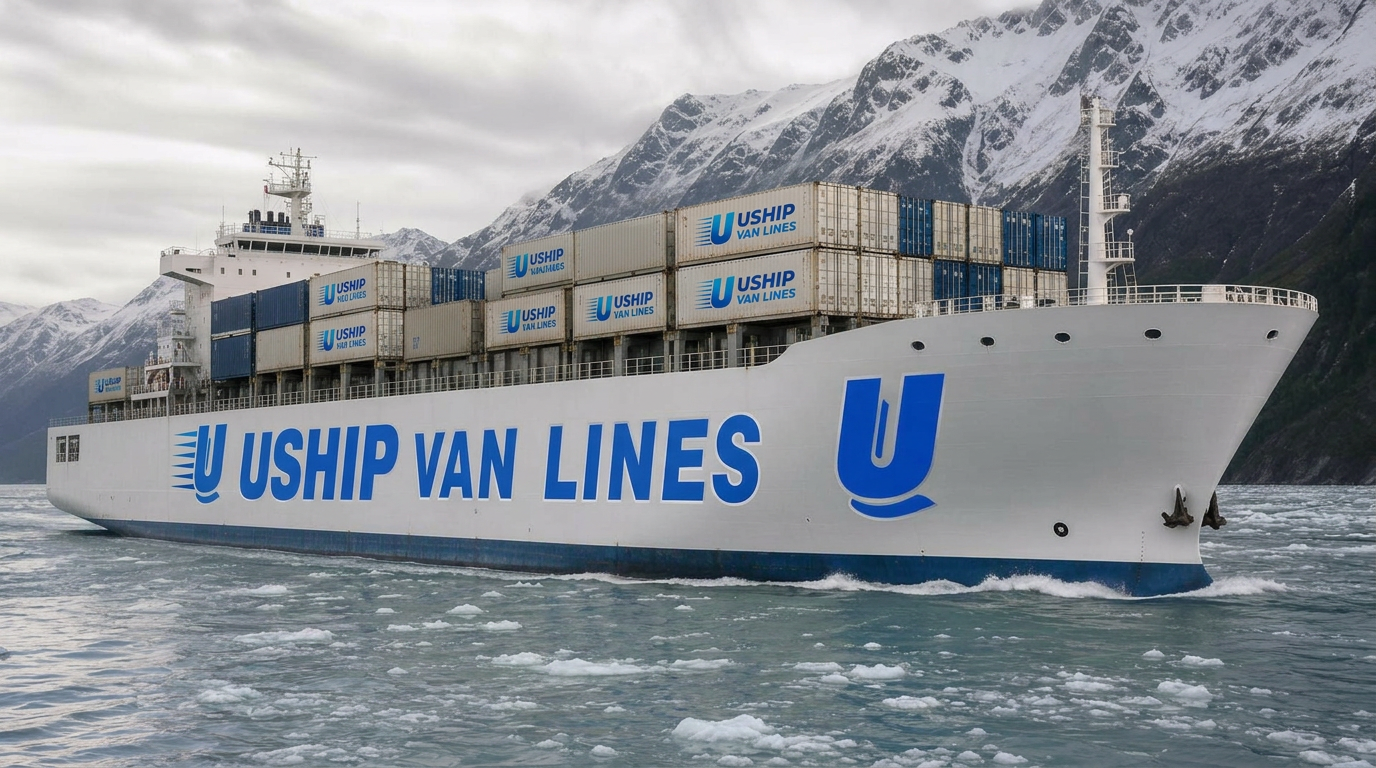
Moving from Milwaukee, WI to Alaska
Moving from Milwaukee to Alaska represents one of the most dramatic relocations you can make—trading the shores of Lake Michigan for untamed wilderness, mountains, and a completely different way of life. This isn't a simple cross-country drive; your household goods will travel over 3,000 miles through multiple transportation modes, including overland trucking to the Pacific Northwest and ocean barge service to Alaska ports.
Best Alaska & Hawaii Movers, powered by UShip Van Lines, specializes in these complex long-haul moves. We coordinate every leg of your journey from pickup in Milwaukee through final delivery to your new Alaska home, whether that's in Anchorage, Fairbanks, the Mat-Su Valley, or beyond. Request a detailed quote today to understand your timeline, costs, and what to expect during this unique moving experience.
Route overview
The Milwaukee to Alaska Moving Route
Your belongings begin their journey in Milwaukee, where professional movers load your household goods into a dedicated long-haul container or truck. This shipment travels west across the upper Midwest and Mountain states to the Pacific Northwest—typically to the Port of Tacoma in Washington, the primary gateway for Alaska-bound freight. The overland leg alone covers approximately 1,800 miles and typically takes 4–6 days depending on routing and weather.
From Tacoma, your goods transfer to ocean barge service bound for Alaska. The most common destination is the Port of Anchorage, though shipments can also route through other Alaska ports depending on your final destination. Barge transit adds 7–10 days at sea, plus terminal processing time on both ends. After arrival in Alaska, a local carrier completes the final delivery to your specific address—whether that's an Anchorage apartment, a Fairbanks neighborhood, a Mat-Su Valley homestead, or even a more remote community.
This multi-modal journey requires careful coordination between trucking companies, marine shipping lines, and Alaska delivery services. Weather, barge schedules, and seasonal demand all influence timing, making early planning essential for smooth execution.
How the moving process works
How Your Milwaukee to Alaska Move Works: Step by Step
-
Request quotes and book early – Contact Best Alaska & Hawaii Movers at least 6–8 weeks before your desired move date (longer for summer peak season). We'll survey your inventory, discuss your timeline, and provide a detailed cost estimate covering all transportation legs.
-
Schedule pickup in Milwaukee – Professional movers arrive at your Wisconsin home to load your belongings into a shipping container or dedicated truck space. They'll inventory items, secure fragile goods for long-distance transport, and handle all loading logistics.
-
Overland transit to Tacoma – Your shipment travels cross-country to the Port of Tacoma, the primary consolidation point for Alaska-bound freight. This leg typically takes 4–6 days depending on weather and road conditions through the Rockies and Cascades.
-
Barge loading and ocean transit – Once at the port, your container transfers to an Alaska Marine Lines or Totem Ocean Trailer Express (TOTE) barge. Ocean transit to Anchorage takes 7–10 days depending on weather and specific sailing schedule.
-
Port arrival and customs clearance – After docking in Alaska, your shipment clears port processing (usually 1–2 business days). While Alaska is a U.S. state requiring no international customs, port documentation and unloading procedures still apply.
-
Last-mile Alaska delivery – A local Alaska carrier picks up your container from the port and completes final delivery to your new address. For remote or bush locations, this may involve additional coordination and specialty equipment.
-
Unloading and final walkthrough – Movers unload your belongings at your new Alaska home, and you complete a final inventory check to confirm everything arrived as expected.
Estimated moving costs
What a Milwaukee to Alaska Move Costs
A typical 2–3 bedroom household moving from Milwaukee to Alaska generally ranges from $6,500 to $12,000 for full-service moving. This wide range reflects the complexity and variables inherent in Alaska moves, and your actual cost depends on several key factors.
Primary cost drivers include:
- Volume and weight – Alaska moves are typically priced by cubic feet or weight. A studio apartment might be 400–600 cubic feet ($4,500–$6,500), while a large 3-bedroom home could be 1,200–1,500 cubic feet ($10,000–$14,000+).
- Barge schedules and routing – Direct sailings to your destination port cost less than routes requiring transshipment or secondary barge connections.
- Final Alaska destination – Delivery to Anchorage costs significantly less than service to remote Mat-Su communities, Kenai Peninsula locations, or bush destinations requiring air freight.
- Packing services – Professional packing adds $800–$2,500 depending on home size and fragility of items. Many Alaska movers strongly recommend this for the multi-modal journey.
- Vehicle shipping – Adding a car or truck runs $2,000–$3,500 additional, using the same barge system (vehicles cannot be driven to Alaska through Canada without special permits and preparation).
- Season and demand – Summer moves (May–September) command premium pricing due to high demand and optimal barge schedules. Winter moves may offer lower rates but come with weather risks and limited sailing frequency.
- Storage needs – If your Alaska housing isn't ready, storage in Tacoma or Anchorage adds $150–$400 per month depending on volume.
We never guarantee prices without a detailed inventory assessment, as every move's unique characteristics affect final costs. Request a personalized quote to understand your specific investment for this major relocation.
Estimated transit times
How Long Your Milwaukee to Alaska Move Takes
Door-to-door transit from Milwaukee to Alaska typically requires 18–30 days under normal conditions. This timeline breaks down into distinct legs, each with its own variables:
Overland to Tacoma: 4–6 days – Your shipment travels from Milwaukee across the northern tier or central routes to Washington State. Winter weather through Montana, Idaho, and the Cascades can extend this leg by 1–3 days during severe conditions.
Port staging and barge loading: 2–7 days – Once in Tacoma, your container awaits the next available Alaska barge sailing. During peak summer season (June–August), sailings depart multiple times weekly with minimal wait. In winter, sailings become less frequent, potentially adding wait time.
Ocean barge transit: 7–10 days – The voyage from Tacoma to Anchorage takes approximately 7–9 days in good weather. Severe storms in the Gulf of Alaska can delay arrivals by 1–3 days, though modern barges maintain reliable schedules year-round.
Port processing in Alaska: 1–3 days – After docking, your container must be unloaded, processed through port systems, and released to local carriers. This typically happens within 1–2 business days but can extend during peak periods.
Final Alaska delivery: 1–5 days – Delivery to Anchorage addresses usually occurs within 1–2 days after port release. Fairbanks adds 1–2 days, Mat-Su Valley and Kenai Peninsula locations add 2–3 days, and remote destinations may require a week or more depending on accessibility and weather.
For planning purposes, assume a minimum of 3 weeks and allow buffer time for weather, mechanical issues, or seasonal scheduling constraints. Summer moves generally track toward the shorter end of estimates; winter moves should assume the longer end plus weather contingencies.
Regional logistics
Alaska-Specific Moving Logistics You Need to Know
Port and barge systems – Nearly all Milwaukee to Alaska household goods travel through the Port of Tacoma to Alaska Marine Lines or TOTE barges. Your container shares space with commercial freight, vehicles, and other household shipments. Port documentation requires accurate inventory lists, declared values for insurance purposes, and proper container sealing. Certain items—hazardous materials, propane tanks, ammunition, some chemicals—cannot travel by barge and must be disposed of or shipped separately.
Vehicle shipping – If you're bringing a car or truck, it travels on the same barge system as your household goods but requires separate booking and preparation. Vehicles must be cleaned (Alaska agricultural inspections), operable (or declared inoperable with arrangements), and empty of personal belongings except a spare tire and jack. Plan $2,000–$3,500 for vehicle barge transport, with similar transit times as household goods. You cannot drive through Canada to Alaska without specific permits, insurance, and vehicle preparation, making barge transport the standard choice.
Last-mile delivery challenges – Alaska's geography creates unique final-delivery challenges. Anchorage and major highway-accessible communities present no special issues. However, Mat-Su Valley properties on private roads, Kenai Peninsula locations, or remote communities may require smaller trucks, multiple transfers, or seasonal access considerations. Some bush locations are only accessible by air or water, requiring complete logistics replanning. Discuss your exact final address early in planning to understand any special delivery requirements.
What you can and can't ship – Alaska moves prohibit hazardous materials, firearms ammunition (ship separately through licensed dealers), propane tanks (even "empty" ones contain residual gas), and certain plants subject to agricultural restrictions. Perishable foods, while not prohibited, rarely survive the 3–4 week journey in unclimated containers. Prescription medications, important documents, and irreplaceable valuables should travel with you personally.
Insurance and liability – Basic carrier liability covers only 60 cents per pound per article—inadequate for Alaska moves. Purchase full-value protection or declared-value coverage to protect your belongings during the complex journey. Understand that coverage terms may differ between the overland leg, ocean transit, and final delivery, as different carriers handle each segment.
Paperwork and documentation – While Alaska is a U.S. state requiring no customs or international documentation, you'll still complete detailed inventory lists, declared-value forms, port documentation, and delivery authorization. Keep copies of all paperwork and your shipment tracking number for the entire journey. Port access in Alaska requires proper identification and often advance scheduling for personal pickup.
Seasonal considerations
Best Times to Move from Milwaukee to Alaska
Summer (May–September): Peak season – The vast majority of Milwaukee to Alaska moves happen during summer months when both Wisconsin and Alaska weather cooperate. Barge sailings run most frequently, roads are clear, and Alaska destinations are fully accessible. However, demand drives prices 15–30% higher than off-season, and you'll need to book 8–12 weeks ahead to secure preferred dates. Late August and early September offer good weather with slightly less demand.
Fall (October–November): Transition period – Moving in fall means departing Milwaukee before harsh winter but potentially arriving in Alaska as snow begins. Barge frequency decreases but service remains reliable. Pricing drops 10–20% from summer peaks. This works well if your Alaska housing is ready and you can handle potential early-winter delivery conditions. Book 6–8 weeks ahead.
Winter (December–March): Lowest cost, highest risk – Winter moves offer the lowest pricing (potentially 20–30% below summer) and easiest booking availability. However, you face multiple weather challenges: winter storms in the Midwest and Rockies can delay overland transit, Gulf of Alaska storms may delay barges, and Alaska delivery often requires waiting for road access to remote properties. Barge sailings run less frequently. Only recommended if you have flexibility on delivery dates and no time pressure. Book 4–6 weeks ahead.
Spring (April–early May): Shoulder season – As both Wisconsin and Alaska emerge from winter, spring moves offer moderate pricing and improving weather. Barge schedules begin ramping up for summer, and Alaska roads become more accessible. However, breakup season in Alaska (when frozen ground thaws) can make some rural roads temporarily impassable. This works well for flexible movers who can wait out any late-season weather issues. Book 6–8 weeks ahead.
Why choose Best Alaska & Hawaii Movers
Why Choose Best Alaska & Hawaii Movers for Your Milwaukee to Alaska Move
-
Specialized Alaska expertise – We focus exclusively on Alaska and Hawaii moves, understanding the unique logistics, barge systems, seasonal considerations, and last-mile challenges that general moving companies simply don't encounter. Your Milwaukee to Alaska move isn't our first—it's what we do.
-
Single-point coordination – Rather than managing separate contracts with local Milwaukee movers, long-haul truckers, barge lines, and Alaska delivery services, you work with one team coordinating all legs of your journey. We handle transfers, scheduling, and problem-solving across all providers.
-
Transparent, realistic timelines – We provide honest transit estimates based on actual barge schedules, seasonal weather patterns, and current conditions—not optimistic promises. You'll know what to expect and when to expect it, with proactive updates throughout your shipment's journey.
-
Comprehensive service options – From basic container transport to full-service packing, vehicle shipping, storage solutions, and specialized handling for fragile or valuable items, we tailor services to your specific needs and budget.
-
Powered by UShip Van Lines – Our partnership with UShip Van Lines provides the network, resources, and infrastructure to handle complex long-distance moves while maintaining the personalized service of Alaska move specialists.