
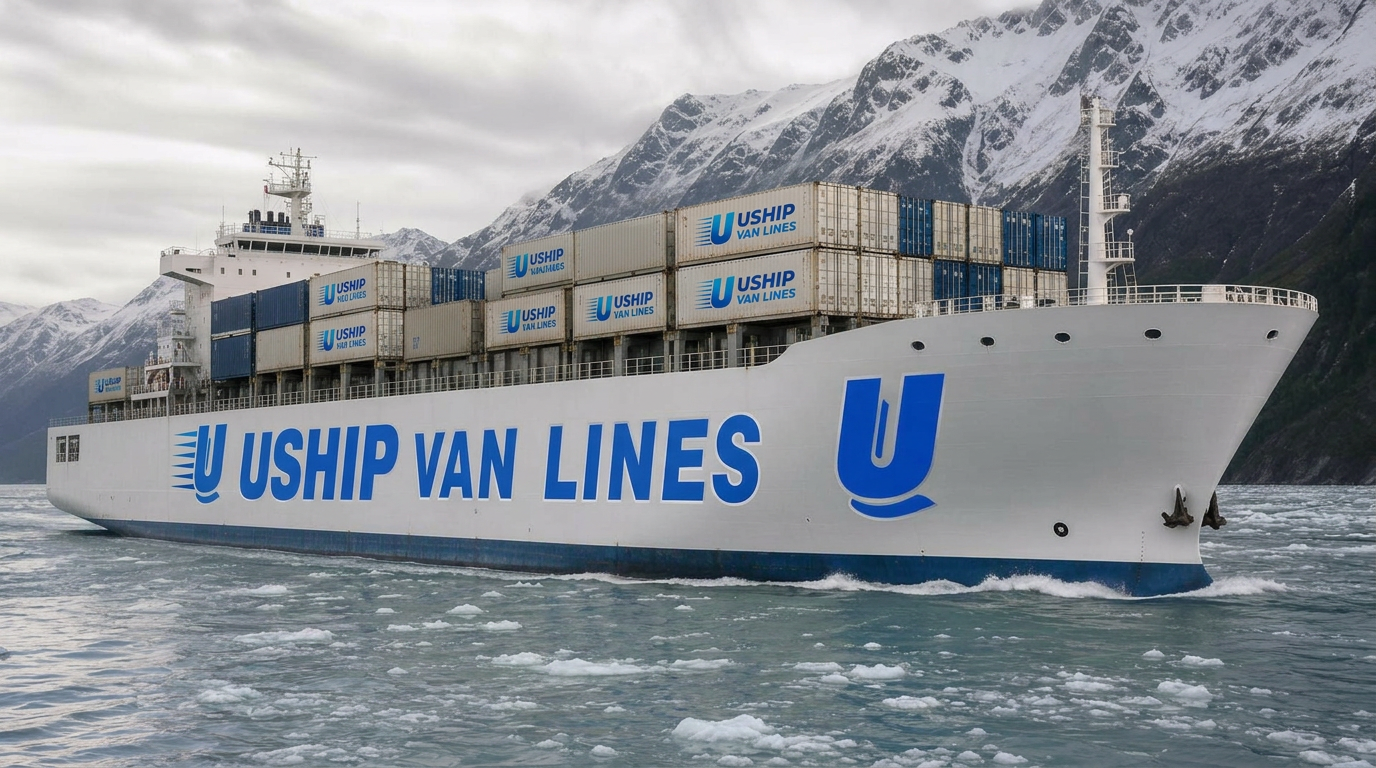
Moving from Sacramento, CA to Alaska
Relocating from California's capital to America's Last Frontier is an adventure unlike any other. Moving from Sacramento, CA to Alaska requires specialized logistics, barge transit through Tacoma, and careful planning for extreme climate differences and remote delivery challenges.
Best Alaska & Hawaii Movers, powered by UShip Van Lines, specializes in Sacramento-to-Alaska relocations. We coordinate every step—from packing your Central Valley home to final delivery in Anchorage, Fairbanks, the Mat-Su Valley, or beyond. Request your free customized quote today to start planning your northern journey.
Route overview
Sacramento to Alaska: The Northern Migration Route
Your belongings travel approximately 2,200 miles from Sacramento to Alaska's major population centers. The journey begins with professional packing and loading in Sacramento, followed by overland transport to the Port of Tacoma. From there, your household goods board a container barge bound for the Port of Anchorage—a voyage of roughly 1,500 nautical miles through the Inside Passage and Gulf of Alaska.
This route serves not just Anchorage but also Fairbanks (an additional 360 road miles north), the Mat-Su Valley communities (Palmer, Wasilla), Kenai Peninsula locations, and even bush communities accessible via smaller carriers. Sacramento residents often choose Alaska for career opportunities in oil, fishing, tourism, military positions, or simply the call of wilderness living. The contrast between Sacramento's Mediterranean climate (90°F summers) and Alaska's subarctic conditions (January lows reaching -20°F in Fairbanks) makes proper preparation essential.
Unlike lower-48 moves, this relocation involves maritime shipping regulations, strict Alaska agricultural inspections, and coordination between trucking companies, barge operators, and last-mile carriers. The specialized nature of this route means working with experienced Alaska movers is not optional—it's critical to avoiding costly delays and damaged goods.
How the moving process works
How Your Sacramento-to-Alaska Move Works: Step-by-Step
-
In-Home or Virtual Survey (4–6 Weeks Before Move): A Best Alaska & Hawaii Movers coordinator assesses your Sacramento home inventory, discusses prohibited items (plants, perishable foods, hazardous materials), and provides a detailed binding estimate. We measure large furniture, note fragile items, and explain Alaska's unique agricultural restrictions.
-
Pre-Move Preparation & Decluttering (3–4 Weeks Out): Sacramento residents typically downsize before Alaska moves—shipping costs are weight-based, and smaller Alaskan homes mean less storage space. We help identify items unsuitable for arctic climates (certain electronics, outdoor furniture) and coordinate donation pickups or estate sales.
-
Professional Packing & Loading in Sacramento (1–2 Days): Our crew arrives with Alaska-grade packing materials: double-walled boxes, moisture barriers, furniture blankets rated for cold storage, and specialized crating for antiques or artwork. Everything is inventoried with barcoded labels for tracking through multiple transit points.
-
Overland Transport to Port of Tacoma (2–3 Days): Your loaded container travels 670 miles north on I-5 to Tacoma, Washington. Items are transferred to a secure port facility where they await barge loading. During peak season (May–September), containers may wait 3–7 days; off-season waits can extend to 10–14 days.
-
Barge Transit Tacoma to Anchorage (7–10 Days at Sea): Your container boards a weekly barge service operated by carriers like Totem Ocean Trailer Express or Alaska Marine Lines. The vessel navigates the Inside Passage, passes through Canadian waters (no customs for sealed domestic containers), and crosses the Gulf of Alaska before docking at the Port of Anchorage.
-
Customs Clearance & Port Processing (1–2 Days): Although domestic, Alaska requires agricultural inspection for soil, plants, and certain foods. Containers are offloaded, inspected by USDA officials, and cleared for final delivery. Any prohibited items are confiscated (not returned).
-
Last-Mile Delivery to Your Alaska Home (1–5 Days): For Anchorage addresses, delivery occurs within 1–2 days of port clearance. Fairbanks deliveries add 2–3 days for the George Parks Highway drive. Remote locations in the Mat-Su, Kenai, or bush communities may require smaller trucks, weather-dependent scheduling, or even air freight for the final leg. Our crew unloads, places furniture, and removes packing debris—your Sacramento-to-Alaska move is complete.
Estimated moving costs
What Does a Sacramento-to-Alaska Move Cost?
A typical 2-bedroom apartment move from Sacramento to Anchorage ranges from $6,800–$10,500, while a 3-bedroom house with garage averages $11,000–$16,500. These estimates include packing materials, labor, overland transport to Tacoma, barge fees, Alaska delivery, and basic liability coverage.
Key cost drivers specific to this route:
- Total weight and cubic footage: Barge rates are calculated by container space (20-foot vs. 40-foot containers) and weight. A 2BR typically fills a 20-foot container (8,000–10,000 lbs), while a 3–4BR requires a 40-foot container (12,000–18,000 lbs).
- Packing services: Full-service packing adds $1,200–$2,800 depending on home size. Sacramento's older homes (Midtown, Land Park) often have fragile built-ins requiring custom crating.
- Seasonal timing: Summer moves (June–August) cost 15–25% more due to peak Alaska demand and limited barge capacity. Off-season (October–March) offers discounts but involves weather delays.
- Delivery distance beyond Anchorage: Fairbanks delivery adds $800–$1,500. Kenai Peninsula locations (Soldotna, Homer) add $600–$1,200. Bush communities requiring air freight can add $3,000–$8,000.
- Vehicle shipping: Adding a car to your barge shipment costs $1,200–$1,800 Tacoma-to-Anchorage (must be drained of fluids, less than 1/4 tank gas).
- Storage: If your Alaska home isn't ready, Anchorage climate-controlled storage runs $150–$300/month for a 10x20 unit.
- Insurance: Full-value protection (replacement cost) adds 1.5–3% of declared inventory value. Highly recommended for the multi-leg journey.
Best Alaska & Hawaii Movers provides itemized quotes with no hidden fees. We never claim guaranteed prices—your final cost reflects actual inventory, services selected, and seasonal barge rates. Request your free Sacramento-to-Alaska estimate to see real numbers for your specific move.
Estimated transit times
How Long Does Sacramento to Alaska Take?
Expect a total door-to-door timeline of 18–28 days for Sacramento-to-Anchorage moves, with an additional 3–7 days for Fairbanks or remote locations. This includes all legs of the journey:
- Packing and loading in Sacramento: 1–2 days depending on home size and packing level.
- Overland transport to Tacoma: 2–3 days including loading at the port facility.
- Port staging and barge loading: 3–14 days depending on season. Summer departures are weekly with shorter waits; winter schedules may be bi-weekly.
- Barge transit (Tacoma to Anchorage): 7–10 days at sea. This leg is consistent year-round, though winter storms occasionally add 1–2 days.
- Port clearance and agricultural inspection: 1–2 days. Delays occur if inspectors find prohibited items or if barge arrives during weekend (no processing until Monday).
- Final delivery to your Alaska address: 1–2 days for Anchorage metro, 2–3 days for Fairbanks, up to 5–7 days for Kenai or Mat-Su locations during winter road conditions.
Planning tip: Sacramento residents moving for job start dates should plan 4–6 weeks of buffer time. Ship your household goods while temporarily staying in corporate housing or short-term rentals. Pack a separate air-shipped box or checked luggage with 2–3 weeks of clothing, essential documents, medications, and valuables (jewelry, laptops, irreplaceable photos)—never put these in the barge container.
Winter moves face the longest timelines due to reduced barge frequency and weather-dependent road closures (Parks Highway to Fairbanks, Seward Highway to Kenai). Summer moves are faster but require earlier booking—June and July barges often fill 4–6 weeks in advance.
Regional logistics
Alaska-Specific Moving Logistics You Must Know
Barge and Port Requirements: Unlike lower-48 moves, your Sacramento belongings travel in a sealed, weatherproof container (typically a 20-foot or 40-foot steel box). This container is loaded onto a roll-on/roll-off barge at Tacoma and secured for the Gulf of Alaska crossing—one of the roughest shipping lanes in North America. Best Alaska & Hawaii Movers uses maritime-grade packing (shrink-wrapping furniture, moisture barriers for mattresses, double-boxing fragile items) to prevent damage from container shifting and salt-air exposure. You cannot access your belongings once the container is sealed in Tacoma until delivery in Alaska—partial unloading is not possible.
Agricultural Inspection and Prohibited Items: Alaska's ecosystem is fragile, and USDA regulations prohibit transporting soil, living plants, fresh produce, untreated wood, and certain seeds. Sacramento gardeners cannot bring their outdoor plants or bags of potting soil. Inspectors at the Port of Anchorage open random boxes; if prohibited items are found, the entire container may be held for full inspection (delaying delivery by 3–7 days) and items are confiscated without reimbursement. We provide a detailed prohibited-items checklist during your estimate—follow it strictly.
Vehicle Shipping: Many Sacramento residents ship one vehicle via barge ($1,200–$1,800) and drive another up the Alaska Highway (a 3,500-mile, 7–10 day road trip). Barge-shipped vehicles must be: ¼ tank gas or less, completely empty of personal belongings (not even floor mats), and drained of non-essential fluids. The vehicle is driven onto the barge, secured with chains, and exposed to salt air for 7–10 days—expect minor surface rust on older vehicles. Alternatively, professional drive-away services cost $2,500–$3,500 and deliver in 5–7 days (driver brings your car up the highway).
Last-Mile Alaska Delivery Challenges: Anchorage addresses receive standard delivery (our crew navigates steep driveways and narrow older-neighborhood streets common in areas like Turnagain, South Addition, and Hillside). Fairbanks delivery requires coordination with local Alaska carriers who specialize in winter driving—the George Parks Highway is well-maintained but subject to closures during severe storms (rare, but 1–2 days delay possible). Mat-Su Valley (Wasilla, Palmer) and Kenai Peninsula (Soldotna, Homer, Seward) deliveries add 50–150 miles of two-lane highway; winter ice is common November–April. Bush communities (Bethel, Kotzebue, Nome, Kodiak) require air freight for the final leg—we palletize your goods in Anchorage and coordinate with cargo airlines, adding $3,000–$8,000 but reducing village delivery time to 2–3 days.
Housing Considerations: Many Sacramento relocators are shocked by Alaska's housing stock—older homes (1950s–1980s) with narrow doorways, steep staircases, and small square footage compared to California's sprawling suburban layouts. A Sacramento 3BR/2BA (1,800–2,200 sq ft) downsizes to an Anchorage equivalent of 1,200–1,600 sq ft. Measure your largest furniture (sectional sofas, king beds, dining tables) and compare to your Alaska home's dimensions before shipping. Fairbanks apartments often lack elevators, requiring stair-carry fees ($150–$400). We provide furniture disassembly/reassembly at both ends, but some oversized pieces simply won't fit—sell or donate before packing.
Seasonal considerations
Best Time to Move from Sacramento to Alaska
Summer (May–August): Peak moving season for Sacramento-to-Alaska relocations. Advantages include daily Sacramento temperatures (75–95°F) ideal for loading, calm Gulf of Alaska seas (though still rough by lower-48 standards), and 20+ hours of Alaska daylight for deliveries. Barge schedules are most frequent (weekly departures), and road access to remote areas is guaranteed. Disadvantages: highest prices (20–30% premiums), barge containers book out 6+ weeks ahead, and competition for crews in both Sacramento and Alaska. Book by early April for July moves.
Fall (September–October): Shoulder season offering moderate pricing and good weather. Sacramento's cooling temperatures (70–85°F) make packing comfortable, and Alaska's fall colors (late August–September) provide a beautiful arrival backdrop. Barge schedules begin scaling back to bi-weekly by late September, but capacity is available with 3–4 weeks' notice. First Alaska snows typically arrive mid-October in Fairbanks, late October in Anchorage—roads remain passable but crews prepare for winter protocols.
Winter (November–March): Off-season with 15–25% discounts but significant challenges. Sacramento's mild winters (45–60°F, occasional rain) don't affect loading, but Alaska delivery faces extreme conditions: -10°F to -40°F temperatures in Fairbanks, icy roads, 4–6 hours of daylight in December/January, and potential storm delays. Barge schedules reduce to bi-weekly or even monthly, and containers may sit in Tacoma for 2–3 weeks awaiting sufficient cargo to justify the voyage. Only recommended if you have flexible timelines and secure Alaska housing for extended waits. Some bush locations become inaccessible until spring thaw.
Spring (April–May): Best value season. Sacramento weather is ideal (65–80°F), Alaska is thawing (above freezing in Anchorage by late April, Fairbanks by mid-May), and barge schedules ramp up to weekly by early May. Prices are 10–15% below summer peaks, and availability is excellent. The main risk: late-season snowstorms in Alaska can delay final delivery by 2–4 days, so build buffer time into job start dates. Many Alaskans consider May the "secret best month" for moves—long daylight returns, roads clear, but tourist crowds haven't arrived.
Why choose Best Alaska & Hawaii Movers
Why Sacramento Residents Choose Best Alaska & Hawaii Movers
-
Alaska-Specialized Expertise: Unlike general long-distance movers, we focus exclusively on Alaska and Hawaii routes. Our team knows Tacoma barge schedules, Alaska port regulations, and winter delivery protocols—knowledge built over hundreds of Sacramento-to-Alaska relocations.
-
End-to-End Coordination: You get a single point of contact managing every leg: Sacramento packing crew, Tacoma port liaison, barge booking, Anchorage delivery team, and any last-mile carriers for remote locations. No finger-pointing between multiple vendors—we own the entire process.
-
Transparent Pricing & Real Timelines: We provide itemized quotes showing exactly what you're paying for (packing materials, labor hours, barge fees, delivery mileage). Our timelines include buffer days for weather and port delays—no false promises of "10-day delivery" that leave you waiting weeks without updates.
-
Climate-Appropriate Packing: Our crews use Alaska-specific materials: double-walled boxes rated for humidity swings, shrink-wrap that withstands cold cracking, furniture blankets designed for sub-zero storage. Sacramento's dry heat doesn't prepare belongings for Alaska's temperature extremes—we do.
-
UShip Van Lines Partnership: Powered by UShip's nationwide network, we access vetted carriers, real-time tracking, and claims support. You benefit from a large organization's resources with a local team's personalized service.
-
Flexible Scheduling & Storage Solutions: Need to ship early but your Alaska home isn't ready? We offer climate-controlled Anchorage storage at wholesale rates. Moving mid-winter with uncertain weather? We build 7–10 day delivery windows into contracts so you're never penalized for storm delays beyond our control.