
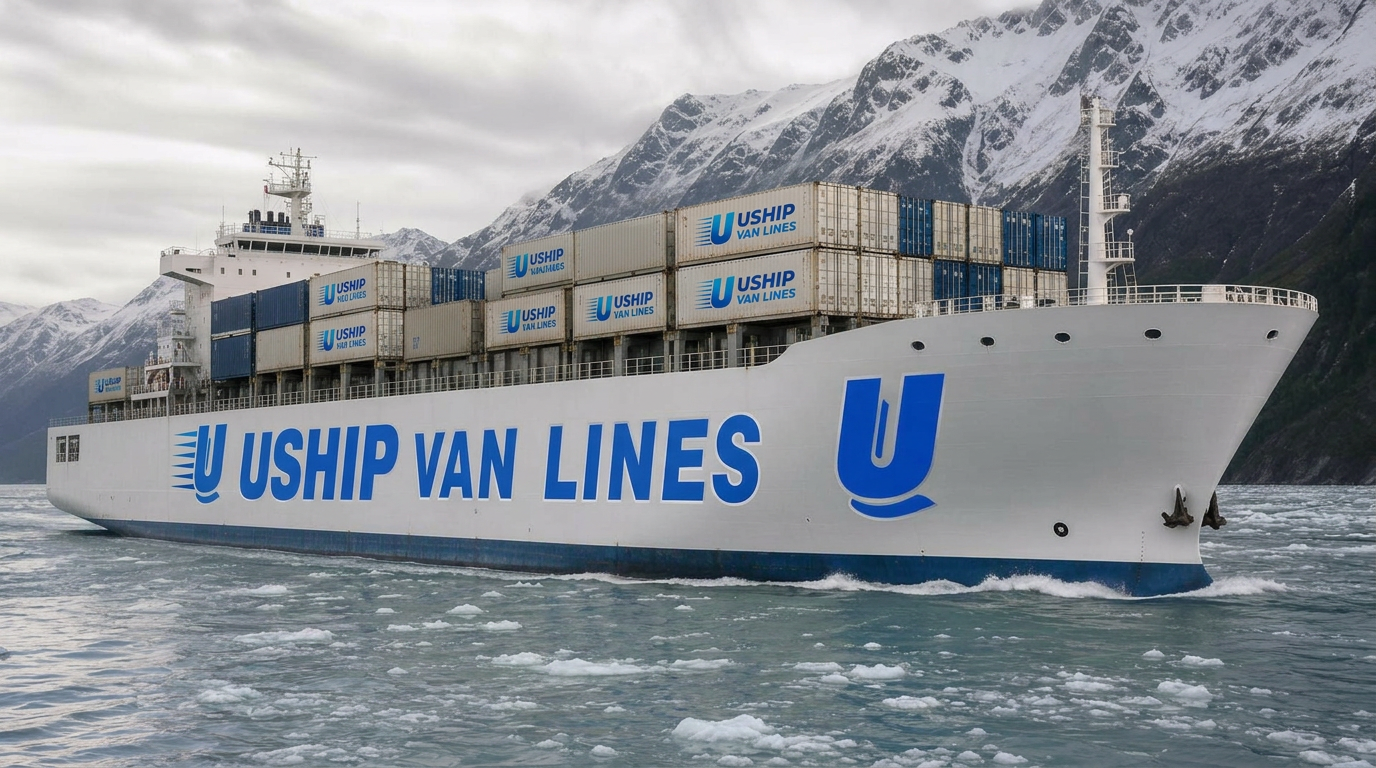
Moving from Raleigh, NC to Alaska
Moving from Raleigh, North Carolina to Alaska represents one of the most logistically complex relocations in North America. You'll be trading the piedmont climate and Atlantic coast proximity for frontier living, midnight sun summers, and a transportation network that relies heavily on maritime shipping.
Best Alaska & Hawaii Movers, powered by UShip Van Lines, specializes in cross-continental moves to Alaska. We coordinate the entire journey—ground transport from Raleigh to Pacific Northwest ports, container barge shipping to Anchorage, and last-mile delivery throughout Alaska's road system and beyond. Request a free quote to start planning your move with logistics experts who understand Alaska's unique requirements.
Route overview
The Raleigh-to-Alaska Moving Route
Your household goods will travel approximately 3,600 miles from Raleigh to Anchorage—but the distance tells only part of the story. From North Carolina's Research Triangle, your belongings move overland across the continental United States to major Pacific Northwest ports (typically Tacoma or Seattle). There they're loaded into marine containers and shipped via weekly barge service to the Port of Anchorage.
This route requires precise coordination between ground carriers, port operations, and Alaskan delivery networks. Transit involves crossing multiple climate zones, navigating strict agricultural inspection protocols, and timing shipments around Alaska Marine Lines' published sailing schedules. The final leg—delivery from the port to your new home in Anchorage, Fairbanks, the Matanuska-Susitna Valley, Kenai Peninsula, or bush communities—adds another layer of planning.
Unlike moves within the Lower 48, Alaska relocations operate on maritime schedules with less flexibility. Barges sail weekly during peak season but may reduce frequency in winter. Your moving timeline depends on coordination between land transport (5–7 days Raleigh to Seattle/Tacoma), port dwell time, ocean transit (typically 5–8 days to Anchorage), and Alaska ground delivery.
How the moving process works
How Your Raleigh-to-Alaska Move Works
-
Initial Survey & Planning – A moving coordinator assesses your inventory (in-home, virtual, or detailed list), discusses Alaska-specific restrictions (plants, certain foods, ammunition limitations), and provides a binding or binding-not-to-exceed estimate. You'll declare items requiring special handling and confirm your final Alaska destination.
-
Scheduling & Documentation – We coordinate your pack/load date in Raleigh with barge sailing schedules from Tacoma. You'll receive a detailed timeline, bill of lading, and guidance on required paperwork. Vehicle shipping (if applicable) is scheduled separately, as autos typically ship roll-on/roll-off rather than in household goods containers.
-
Packing & Loading in Raleigh – Professional movers pack and load your belongings into a 20-foot or 40-foot marine container (or as part of a consolidated shipment). Electronics, artwork, and temperature-sensitive items receive climate-appropriate protection. The loaded container is sealed and transported overland to the Pacific Northwest.
-
Cross-Country Ground Transport – Your container travels via truck or intermodal rail to Tacoma or Seattle. This leg typically takes 5–7 days, depending on routing and weather. The container arrives at the port terminal and enters the staging queue for the next available Alaska-bound sailing.
-
Barge Transit to Alaska – Your container boards an Alaska Marine Lines or similar carrier barge for the journey to the Port of Anchorage. Ocean transit takes 5–8 days under normal conditions. Sailing frequency is weekly during summer, potentially less frequent in winter months when weather impacts Gulf of Alaska routes.
-
Alaska Port Operations & Customs Clearance – Upon arrival in Anchorage, your container clears agricultural inspection and customs (if applicable). This typically adds 1–3 business days. Containers are unloaded and staged for final delivery or temporary storage if your new residence isn't ready.
-
Last-Mile Delivery in Alaska – A local Alaska carrier delivers your belongings to your final address. For Anchorage, Wasilla, Palmer, or Eagle River, this is straightforward. Fairbanks adds 6–8 hours overland. Kenai Peninsula, Homer, or Seward require additional ferry or truck combinations. Remote bush locations may need air freight for the final leg, arranged separately from the main shipment.
Estimated moving costs
What a Raleigh-to-Alaska Move Costs
A typical 2–3 bedroom household moving from Raleigh to Anchorage generally ranges from $8,500 to $16,000 for full-service door-to-door moving. Studio or 1-bedroom relocations may fall between $5,000–$8,500, while 4+ bedroom homes or loads exceeding 10,000 pounds can reach $18,000–$25,000 or more.
Key cost factors include:
-
Volume and weight – Marine container space is priced by cubic footage and total weight. A 20-foot container holds roughly 1,100–1,200 cubic feet; a 40-foot container holds about 2,200–2,400 cubic feet. Heavier items (appliances, furniture, shop equipment) increase costs.
-
Packing services – Full professional packing in Raleigh typically adds $1,200–$2,500 depending on inventory. Partial packing (fragiles only) costs $400–$900. Self-packing reduces costs but increases risk of damage claims.
-
Final destination within Alaska – Anchorage delivery is standard. Fairbanks, Mat-Su Valley, or Kenai Peninsula destinations add $800–$2,000. Remote bush locations requiring air freight or winter ice-road delivery can add $3,000+ for that final segment.
-
Seasonal timing – Peak summer moving season (May–August) commands premium rates as demand exceeds capacity on both ground and maritime legs. Off-season moves (October–March) may save 15–20% but face weather delays and reduced sailing frequency.
-
Vehicle shipping – If you're shipping a vehicle separately, add $2,200–$3,500 per standard car or truck from Seattle/Tacoma to Anchorage via roll-on/roll-off service.
-
Storage – If your Alaska residence isn't ready, temporary storage in Anchorage costs $150–$300 per month for typical household volumes. Storage at origin (Raleigh) or in-transit (Tacoma) runs similar rates.
These are estimates based on industry averages for this lane. Actual costs depend on your specific inventory, service level, and timing. Best Alaska & Hawaii Movers provides detailed written estimates with no hidden fees—request your personalized quote to get accurate pricing for your move.
Estimated transit times
How Long the Journey Takes
Door-to-door transit from Raleigh to Anchorage typically requires 18–28 days under normal conditions. Breaking down the timeline:
- Packing and loading in Raleigh: 1–2 days for a typical household
- Ground transport Raleigh to Tacoma/Seattle: 5–7 days via truck or intermodal rail
- Port staging and container loading: 2–5 days, depending on next available sailing
- Ocean transit to Port of Anchorage: 5–8 days at sea
- Alaska port clearance and unloading: 1–3 business days
- Final delivery within Alaska: Same day for Anchorage metro; add 1–3 days for Fairbanks, Mat-Su, or Kenai Peninsula
Remote bush destinations can add significant time—Bethel, Nome, Kotzebue, Dillingham, or Southeast Alaska communities may require an additional 1–3 weeks for air freight or seasonal barge connections.
Weather can impact every leg. Winter storms may delay cross-country trucking. Gulf of Alaska weather occasionally delays barge arrivals. Spring breakup makes some Alaska roads impassable. Summer is the most reliable season for predictable timelines, though it's also peak season with the tightest capacity.
For time-sensitive moves, build in buffer. If you need occupancy by a specific date, schedule your pack-out 4–5 weeks in advance. Critical items (documents, medications, work essentials, immediate clothing) should travel with you via air, not in the shipment.
Regional logistics
Alaska-Specific Moving Logistics
Port Operations and Container Handling: Your shipment typically routes through the Port of Tacoma (most common for Alaska freight) or Seattle. Containers are loaded onto Alaska Marine Lines barges or similar carriers serving the Port of Anchorage. These are roll-on/roll-off (RoRo) vessels or container ships specifically configured for Alaska service. Once in Anchorage, containers clear the Alaska Department of Natural Resources agricultural inspection before release.
Agricultural Inspection and Restricted Items: Alaska enforces strict biosecurity to protect its ecosystems from invasive species and plant diseases. Inspectors examine shipments for prohibited items including most houseplants, fresh produce, uncertified lumber or firewood, soil, and certain seeds. Firearms and ammunition can be shipped but require declaration and compliance with federal/state regulations. Declare all questionable items upfront—failure to disclose can result in fines, shipment delays, or confiscation.
Vehicle Shipping: If you're driving the Alaska Highway, you'll have a 3,500+ mile journey from Raleigh through Canada—doable but demanding. Many people fly and ship their vehicles separately via ocean carrier. Vehicle shipping from Tacoma to Anchorage costs $2,200–$3,500 per standard passenger vehicle and takes about 7–12 days port-to-port. Vehicles must be clean (undercarriage wash required to prevent soil/seed transport), contain no personal items (carriers won't insure contents), and have less than 1/4 tank of fuel.
Last-Mile Delivery Considerations: Anchorage and the surrounding Mat-Su Valley (Wasilla, Palmer) have straightforward road access year-round. Fairbanks is accessible via the Parks Highway—a well-maintained 6–8 hour drive. The Kenai Peninsula (Soldotna, Kenai, Homer, Seward) requires crossing the Turnagain Arm and adds 2–4 hours. Southeast Alaska communities (Juneau, Ketchikan, Sitka) are not connected to the road system—shipments require separate barge service from Bellingham, WA or Prince Rupert, BC, significantly extending timelines and costs.
Remote and Bush Locations: Communities like Bethel, Nome, Kotzebue, Barrow (Utqiaġvik), Dillingham, Kodiak, and hundreds of smaller villages have no road connections. These require air freight (extremely expensive for household goods—often $1–$3 per pound), seasonal barge service (once or twice per year), or winter ice road/snow machine delivery. If you're moving to a bush location, consult with Best Alaska & Hawaii Movers early—logistics are complex and may require creative solutions like shipping only essentials and purchasing bulk items locally.
Storage Options: If your Alaska housing isn't ready when your shipment arrives, short-term storage in Anchorage is readily available. Climate-controlled units are recommended for electronics, wood furniture, and sensitive items given Alaska's temperature extremes. Most movers offer 30–90 days of storage as part of coordinated delivery timing.
Insurance and Valuation: Standard carrier liability is minimal (typically $0.60 per pound). For a Raleigh-to-Alaska move, purchase full-value replacement coverage or third-party moving insurance. The multiple handoffs (ground carrier, port operations, ocean carrier, Alaska delivery) create more claim points than a single-carrier domestic move. Expect insurance to cost 1–2% of your declared shipment value.
Seasonal considerations
Timing Your Move: Seasonal Planning for Alaska
Summer (May–August) is peak moving season to Alaska. Barge sailings run weekly, weather is most predictable, and all road systems are fully accessible. Daylight hours maximize delivery flexibility. However, demand is highest—book 6–8 weeks in advance and expect premium pricing. This is ideal timing if you have school-age children (arrive before the academic year) or need to establish residency for employment.
Fall (September–October) offers a sweet spot: reduced demand means better pricing (10–15% lower than summer), weather is still generally cooperative, and barge schedules remain frequent. Early October is the last reliable window before winter complications begin. By late October, snow may impact Alaska interior deliveries, and sailing schedules start thinning.
Winter (November–March) presents the most challenging conditions. Barge frequency drops—some weeks have no southbound or northbound sailings. Gulf of Alaska storms can delay ships by days. Alaska road conditions may make deliveries to Fairbanks or remote areas impossible until spring. However, costs can be 20–25% lower than summer, and if you have storage flexibility, this works for budget-conscious movers. Expect 25–35+ day transit times with higher delay risk.
Spring (April–early May) sees increasing barge frequency as maritime operations ramp up for summer. Weather is improving but still variable. "Breakup" season makes some Alaska roads muddy and difficult—interior and rural deliveries may face short delays. Pricing begins climbing toward summer peaks. This is a good compromise season if you're flexible on exact delivery dates.
For any season, Alaska's agricultural inspection requirements remain constant. Prohibited items (most plants, certain fruits/vegetables, uncertified firewood, soil) will be confiscated at entry points. Best Alaska & Hawaii Movers provides a detailed prohibited items list during your planning consultation to avoid surprises and delays.
Why choose Best Alaska & Hawaii Movers
Why Choose Best Alaska & Hawaii Movers for Your Raleigh-to-Alaska Relocation
-
Alaska-Specialized Logistics Network – We coordinate Alaska moves daily, with established relationships across ground carriers, Pacific Northwest ports, Alaska Marine Lines sailing schedules, and last-mile delivery throughout Alaska's road system and beyond. You're not an experiment—you're working with teams who know this lane.
-
Single-Point Coordination – Rather than managing separate contracts with a Raleigh moving company, a cross-country trucker, a freight forwarder, and an Alaska delivery service, you have one point of contact. We orchestrate all handoffs, track your shipment across every leg, and troubleshoot issues before they become your problems.
-
Transparent, All-Inclusive Pricing – Our quotes include ground transport from Raleigh, marine container shipping, ocean freight, Alaska port fees, agricultural inspection coordination, and delivery to your final Alaska address. No surprise "port charges" or "Alaska surcharges" that appear later. You'll know your total cost upfront.
-
Realistic Timelines & Proactive Communication – We provide honest transit estimates based on actual barge schedules and seasonal conditions, not marketing promises. You'll receive sailing confirmations, arrival notifications, and delivery windows. If weather or port delays occur, you'll know immediately, not after days of silence.
-
Powered by UShip Van Lines – Our partnership with UShip Van Lines gives you access to vetted, licensed interstate carriers and comprehensive shipment tracking technology. You get the personalized service of Alaska specialists backed by national moving infrastructure and accountability.