
Moving from Franklin, TN to Alaska
Relocating from Franklin, Tennessee to America's Last Frontier is an exciting adventure, but it requires specialized logistics that go far beyond a typical interstate move. Unlike standard long-distance relocations, your Franklin-to-Alaska move involves overland transport to the Pacific Northwest, ocean barge service through the Inside Passage or Gulf of Alaska, and final delivery across challenging terrain and weather conditions.
Best Alaska & Hawaii Movers, powered by UShip Van Lines, coordinates every step of this complex journey—from pickup at your Franklin home through truck transport to Tacoma, Washington, barge loading and ocean transit, and final delivery to Anchorage, Fairbanks, the Mat-Su Valley, Kenai Peninsula, or even remote bush communities. Ready to start planning your Tennessee-to-Alaska move? Request your personalized quote today and connect with Alaska moving specialists who understand this unique route.
Route overview
The Franklin, TN to Alaska Moving Route
Your belongings begin their northern journey with a 2,200-mile overland haul from Franklin to Tacoma, Washington—the primary departure point for Alaska-bound freight. This leg typically takes 5–7 days and follows I-40 West through Arkansas and Oklahoma, then I-25 North through Colorado and Wyoming, before crossing into the Pacific Northwest via I-90. Professional carriers familiar with mountain passes and seasonal weather patterns ensure your household goods arrive safely at the Tacoma consolidation facility.
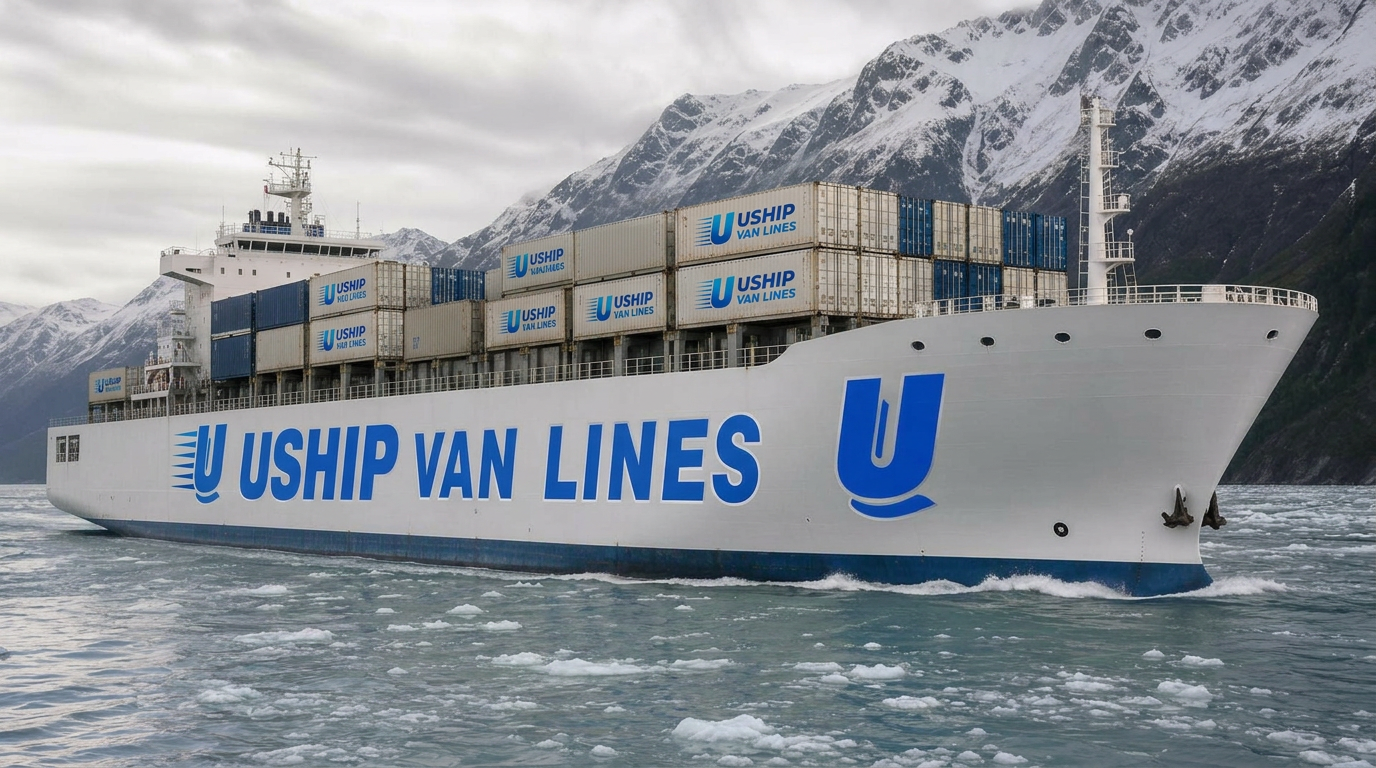
From Tacoma, your shipment boards a weekly barge service to the Port of Anchorage—a 1,500-nautical-mile voyage that takes 5–7 days depending on weather, sea conditions, and the shipping line's schedule. Most carriers use either direct Gulf of Alaska routes or the more sheltered Inside Passage, particularly during winter months when open ocean conditions can be severe. Once your container clears customs and port inspections in Anchorage, local Alaska carriers handle the final delivery leg to your destination city, whether that's downtown Anchorage (same-day), Fairbanks (1–2 additional days via the Parks Highway), Mat-Su communities like Wasilla or Palmer (next-day), or Kenai Peninsula towns like Soldotna (1–2 days via the Seward Highway).
This multi-modal journey requires precise coordination between over-the-road trucking companies, maritime freight specialists, port authorities, customs brokers, and Alaska-based delivery teams. Working with a single coordinator who manages all these moving parts eliminates the stress of juggling multiple vendors and ensures accountability from door to door.
How the moving process works
How Your Franklin to Alaska Move Works: Step-by-Step
-
Free Quote & Route Planning (Week 1) – Contact Best Alaska & Hawaii Movers for a detailed estimate based on your inventory, destination zip code in Alaska, and preferred moving dates. We'll discuss your specific needs—vehicle shipping, storage requirements, insurance coverage, and any special handling for items like firearms, hazardous materials, or high-value belongings that require Alaska-specific documentation.
-
Pre-Move Preparation (Weeks 2–4) – Receive your customized moving plan with packing guidelines, inventory sheets, and a timeline. If you're packing yourself, we'll provide Alaska-specific tips: reinforce boxes for ocean transit, use moisture barriers for electronics and fabrics, and prepare a "survival kit" of essentials to carry separately since your shipment may take 3–4 weeks door-to-door. Schedule your preferred pickup date, keeping in mind that barge schedules run weekly but fill quickly during peak season (May–August).
-
Franklin Pickup & Overland Transport (Days 1–7) – Professional movers arrive at your Franklin home, conduct a walkthrough inventory, and load your belongings into a dedicated truck or shared container. Your shipment travels 2,200 miles west to our Tacoma consolidation warehouse, where it's inspected, re-inventoried, and prepared for ocean transit. Items are secured in weatherproof containers designed for maritime shipping.
-
Barge Loading & Ocean Transit (Days 8–15) – Your container is loaded onto the weekly Alaska barge service departing Tacoma. The 1,500-nautical-mile voyage to Anchorage takes 5–7 days, with arrival days typically falling on Thursdays or Fridays. All shipments pass through customs and USDA agricultural inspections upon arrival—restricted items include certain plants, soil, untreated wood, and fresh produce.
-
Port Clearance & Alaska Delivery (Days 16–21) – Once cleared by port authorities, your shipment transfers to our Alaska delivery partners. Anchorage-area deliveries often occur within 24–48 hours of port arrival. Fairbanks deliveries add 1–2 days for the 360-mile drive north on the Parks Highway. Mat-Su Valley (Wasilla, Palmer, Big Lake) and Kenai Peninsula (Soldotna, Homer, Seward) destinations typically receive shipments within 2–3 days of Anchorage port arrival.
-
Unpacking & Setup – Delivery teams place furniture and boxes in designated rooms, reassemble items that were disassembled for transport, and remove packing debris. Inspect your inventory carefully and note any damage on the delivery receipt—Alaska's extreme climate and multi-modal transport can occasionally cause issues despite careful handling.
-
Post-Move Support – File any claims within 30 days of delivery. Our team remains available to address questions about storage, vehicle delivery (if shipped separately), or additional shipments if you're staging your move in phases.
Estimated moving costs
What Does a Franklin, TN to Alaska Move Cost?
A typical 2–3 bedroom household moving from Franklin to Alaska generally costs $8,500–$14,500 for full-service door-to-door delivery, though your actual price depends on several key factors. A 1,200-square-foot home with standard furnishings might fall toward the lower end ($8,500–$10,000), while a 2,000-square-foot home with heavy items like pianos, gun safes, or extensive garage equipment can easily reach $12,000–$14,500 or more.
Primary cost drivers include:
- Shipment weight and volume – Carriers price by cubic feet or weight, whichever yields higher revenue. A minimal 1-bedroom apartment might cost $5,000–$6,500, while a full 4-bedroom home can exceed $18,000.
- Alaska destination – Anchorage delivery is most economical. Fairbanks adds $800–$1,500 due to the additional 360-mile haul. Mat-Su Valley and Kenai Peninsula destinations add $400–$900. Remote bush communities accessible only by air or seasonal ice roads require custom quotes and can double or triple costs.
- Packing services – Professional packing typically adds $1,200–$2,800 depending on home size. Self-packing saves money but requires Alaska-specific preparation for moisture, temperature extremes, and ocean transit.
- Move timing – Peak summer season (May–August) commands premium rates as Alaska's short construction season drives high demand. Off-season moves (September–April) can save 15–25% but face longer transit times and weather delays.
- Vehicle shipping – Adding a vehicle costs $2,200–$3,800 via the same Tacoma-to-Anchorage barge. Most families ship one vehicle and drive another via the Alaska Highway.
- Insurance coverage – Basic carrier liability covers $0.60/pound. Full-value replacement protection typically costs 1–2% of declared shipment value and is strongly recommended for Alaska's challenging conditions.
- Storage – If your Alaska home isn't ready, Anchorage storage costs $150–$350/month for a typical household.
These are representative ranges based on current market conditions—your specific quote will reflect your exact inventory, services, and timing. Request a detailed estimate to understand your actual costs with no obligation.
Estimated transit times
How Long Does Franklin, TN to Alaska Take?
Door-to-door delivery from Franklin to Alaska typically requires 18–28 days under normal conditions, though this timeline varies by season, destination, and barge schedule alignment.
Timeline breakdown:
- Franklin to Tacoma overland (5–7 days) – Your shipment travels 2,200 miles across seven states. Winter weather in Wyoming or Montana can add 1–2 days. Summer moves often run faster with ideal road conditions.
- Tacoma consolidation (1–4 days) – Shipments arriving mid-week usually catch the next Friday/Saturday barge departure. Shipments arriving late Friday may wait until the following week's sailing.
- Ocean transit to Anchorage (5–7 days) – The 1,500-nautical-mile voyage runs year-round on a weekly schedule. Summer sailings (May–September) average 5–6 days with calm seas. Winter voyages (October–April) can extend to 7–8 days due to storms, fog, or ice near Alaskan waters.
- Port clearance & customs (1–2 days) – Anchorage port operations inspect all Alaska-bound freight. Agricultural inspections can add time if documentation is incomplete.
- Final Alaska delivery (1–5 days) – Anchorage metro deliveries occur within 24–48 hours. Fairbanks adds 1–2 days for the northbound haul. Mat-Su and Kenai add 1–3 days depending on driver schedules and weather.
Fastest possible scenario: A perfectly timed move with immediate barge connection and Anchorage delivery might complete in 16–18 days. Realistic planning window: Allow 21–25 days for most moves, with 28–35 days during winter or to remote destinations. Booking 6–8 weeks ahead during summer ensures you secure your preferred barge departure and avoid extended warehouse holds.
Regional logistics
Alaska-Specific Moving Logistics from Franklin
Barge Schedules & Port Operations – Nearly all Franklin-to-Alaska household moves route through the Port of Tacoma, where weekly barge services depart year-round for Anchorage. Summer months (May–September) sometimes offer twice-weekly sailings to handle peak demand. Barges also serve other Alaska ports (Kodiak, Dutch Harbor, Nome) but on less frequent schedules, often requiring transshipment in Anchorage. The Port of Anchorage operates specialized container terminals designed for Alaska freight, with customs and USDA inspection facilities on-site. Understanding barge sailing days (typically Friday/Saturday departures) helps you time your Franklin pickup to minimize warehouse storage fees in Tacoma.
Customs & Agricultural Restrictions – All Alaska-bound shipments from the Lower 48 pass through customs even though Alaska is a U.S. state, because maritime freight law treats the move as "coastwise shipping." USDA agricultural inspections prohibit or restrict certain items: most houseplants (some certified exceptions), soil, untreated firewood, fresh fruits and vegetables, and raw agricultural products. Firearms and ammunition are legal to ship but require specific documentation and cannot be packed in household goods containers—they typically ship separately via licensed dealers or checked airline baggage. Prescription medications should travel with you, not in your shipment.
Vehicle Shipping Considerations – Most families ship one vehicle on the same Tacoma-to-Anchorage barge ($2,200–$3,800 per standard vehicle) and drive a second via the Alaska Highway—a spectacular 2,250-mile journey from the Lower 48 through Canada. Barge-shipped vehicles must be clean (free of soil/seeds), operable, and under 1/4 tank of fuel. Full-size trucks, RVs, boats, and ATVs ship regularly but at higher rates based on size. Allow 2–3 weeks for vehicle delivery, similar to household goods. Many Alaska newcomers drive up in summer and ship their second vehicle, enjoying the scenic Alaska Highway as part of their relocation adventure.
Last-Mile Delivery in Alaska – The final leg from Anchorage port to your door varies dramatically by destination. Anchorage metro area (including Eagle River, Girdwood, and Joint Base Elmendorf-Richardson) sees same-day or next-day delivery once cargo clears port. Fairbanks and North Pole deliveries require the 360-mile Parks Highway haul, typically adding 1–2 days. Mat-Su Valley communities (Wasilla, Palmer, Big Lake) are 1–2 days via the Glenn Highway. Kenai Peninsula towns (Soldotna, Kenai, Homer, Seward) run 1–3 days via the Seward Highway depending on winter road conditions. Remote bush communities off the road system (Bethel, Barrow/Utqiaġvik, Kotzebue, Dillingham) require air freight transshipment at dramatically higher costs or seasonal ice road/barge delivery windows—always request custom quotes for these destinations.
Insurance & Damage Prevention – Alaska's multi-modal transport exposes shipments to more handling points than typical moves: initial loading, unloading at Tacoma, barge loading, ocean transit, barge unloading, Alaska warehouse transfer, and final delivery. Temperature swings from Tennessee humidity to Alaska's dry cold can affect wood furniture and electronics. Ocean salt air can corrode unprotected metal. Full-value replacement insurance (typically 1–2% of declared value) is strongly recommended. Photograph high-value items before packing, keep detailed inventory lists, and note pre-existing damage to avoid claim disputes. Quality packing materials—double-walled boxes, moisture barriers, extra cushioning for fragile items—prevent most transit damage.
Seasonal considerations
Best Time to Move from Franklin, TN to Alaska
Spring (March–May): The Smart Money Season – Late April and May offer the sweet spot for Alaska moves: barge schedules ramp up to weekly service, winter's worst weather passes, but peak summer pricing hasn't kicked in. Daylight rapidly increases in Alaska (18+ hours by late May), giving delivery crews maximum working time. Roads are generally clear, though late-season snowstorms can still affect mountain passes on the overland leg. Ice breakup can briefly disrupt some Alaska river communities in early May. Booking 6–8 weeks ahead is wise as demand builds.
Summer (June–August): Peak Season Premium – Alaska's brief construction and tourist season drives maximum moving demand and highest prices (often 20–30% above shoulder-season rates). Barge space fills quickly—book 8–12 weeks ahead or risk delays. The trade-off: 20+ hours of daylight, minimal weather delays, all Alaska roads accessible, and easiest integration into new communities as schools and activities run full tilt. If work or school dictates a summer move, the premium cost buys predictability and speed.
Fall (September–November): Value & Uncertainty – September offers excellent value—demand drops, prices fall 15–25%, and weather remains generally favorable. By October, darker days return (down to 10 hours in Anchorage by month's end, 5–6 in Fairbanks), early snowstorms can delay deliveries, and some rural Alaska roads become challenging. November moves risk Thanksgiving week delays and face serious winter conditions. If you're flexible and don't mind potential weather delays, fall saves money. Always build 7–10 extra days into your timeline.
Winter (December–February): Adventurous Budget Option – Winter Alaska moves cost 20–30% less but demand serious flexibility. Expect 21–35 day transit times due to storms, rough seas, shorter working hours (4–6 hours of daylight in Fairbanks), icy roads, and equipment challenges. Some bush destinations become inaccessible until spring thaw or require expensive fly-in service. However, if you're military with PCS orders, relocating for a January job start, or simply patient, winter moves can deliver significant savings. Many Alaskans prefer winter moves to avoid the summer chaos, happily trading time for cost.
Why choose Best Alaska & Hawaii Movers
Why Choose Best Alaska & Hawaii Movers for Your Franklin to Alaska Move
-
Alaska & Hawaii Specialists, Not Generalists – While most national moving companies treat Alaska as an afterthought, we've built our entire business around perfecting non-contiguous state relocations. We coordinate Alaska moves daily, maintain established relationships with Tacoma port facilities and Alaska delivery partners, and understand the unique documentation, timing, and logistics that make or break these complex moves.
-
Single-Point Coordination for Multi-Modal Moves – Your Franklin-to-Alaska move involves at least four handoffs: pickup crew, overland carrier, barge line, and Alaska delivery team. Instead of juggling multiple vendors and finger-pointing when problems arise, you get one dedicated move coordinator who manages every leg and serves as your single point of contact from quote through final delivery.
-
Transparent Pricing, Realistic Timelines – We provide detailed written estimates that break down costs by service (packing, loading, transport, barge, delivery, insurance) so you understand exactly what you're paying for. Our timeline estimates build in real-world variables—weather delays, barge schedules, port operations—rather than best-case scenarios that leave you frustrated when reality hits.
-
Powered by UShip Van Lines' Nationwide Network – Our partnership with UShip Van Lines gives you access to thoroughly vetted carriers, comprehensive insurance options, and logistics technology that tracks your shipment from Franklin to Alaska. You get boutique Alaska expertise backed by enterprise-level resources and accountability.
-
Flexible Service Levels to Match Your Budget – Choose full-service white-glove packing and setup, cost-saving hybrid options where you pack and we transport, or freight-only service if you're handling both ends yourself. We'll help you find the right balance of service and cost for your specific situation, not push you toward the highest-price option.