
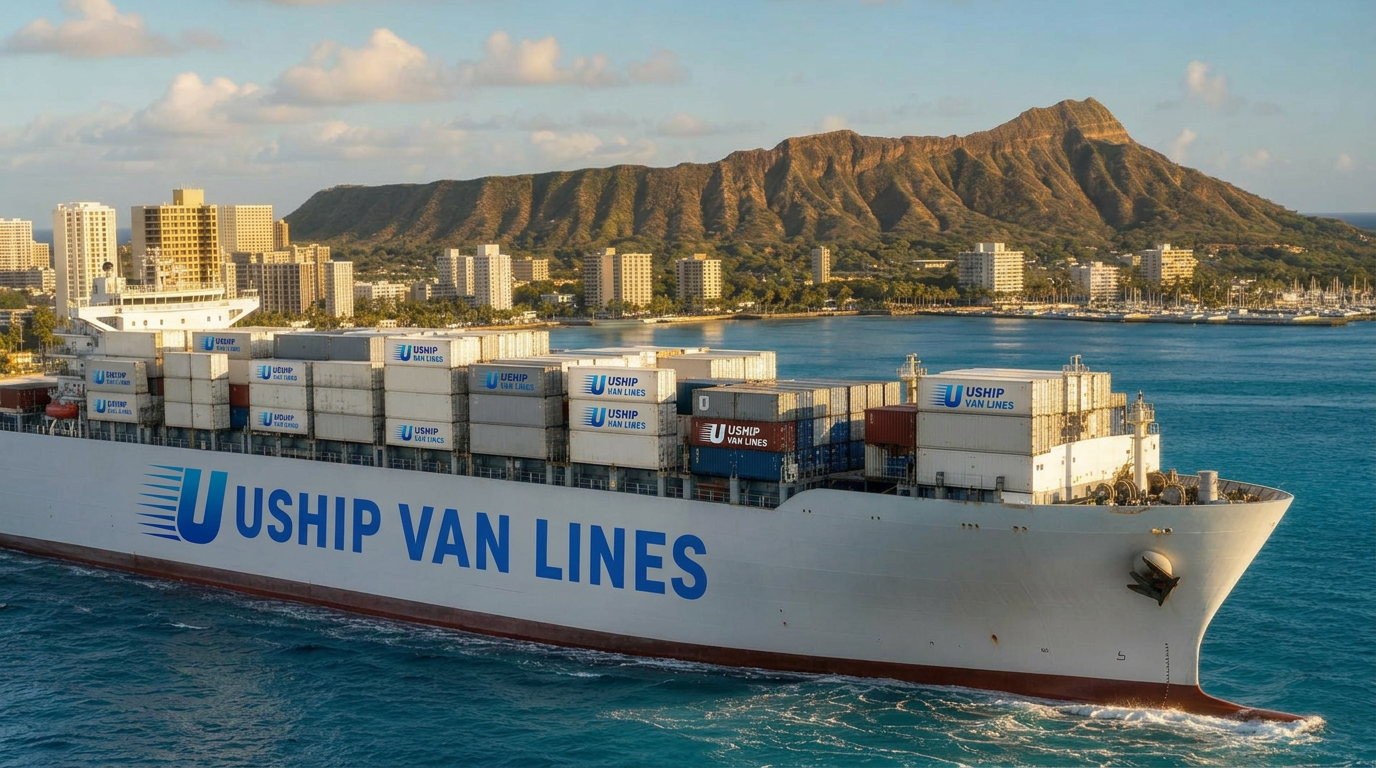
Moving from Raleigh, NC to Hawaii
Relocating from Raleigh's Research Triangle to the Hawaiian Islands represents one of the most ambitious domestic moves you can make. This cross-country and transoceanic journey involves coordinating ground transportation from North Carolina to West Coast ports, ocean container shipping across 2,400+ nautical miles, and final delivery to your island destination—whether Oahu, Maui, Kauai, or the Big Island.
Best Alaska & Hawaii Movers, powered by UShip Van Lines, specializes in these complex mainland-to-Hawaii relocations. We handle the entire logistics chain so you can focus on your new island life. Request your personalized quote today to receive a detailed breakdown of costs, timelines, and services tailored to your specific move from Raleigh to Hawaii.
Route overview
Route Overview: Raleigh to Hawaii
Your household goods will travel approximately 5,200 road miles from Raleigh to West Coast shipping ports (typically Long Beach or Oakland, California), then cross the Pacific Ocean via dedicated container vessel to Honolulu. From there, inter-island barge service reaches Maui, Kauai, Hilo, and Kona. The entire journey combines long-haul trucking across the continental United States, port handling at both departure and arrival terminals, and specialized ocean freight.
Most Raleigh-to-Hawaii moves use 20-foot or 40-foot ocean containers that remain sealed from your North Carolina pickup through Hawaii delivery. This containerized approach protects your belongings during the transcontinental truck journey, port transfers, ocean voyage, and final island delivery. The container becomes your moving unit, eliminating multiple load/unload cycles that increase damage risk.
Timing is critical: you'll coordinate your Raleigh departure date with container availability, vessel sailing schedules (typically weekly from California ports), and Hawaii port receiving windows. Peak summer months and holiday periods see higher demand and longer booking lead times, so advance planning—ideally 6–8 weeks—ensures smooth coordination across all logistics partners.
How the moving process works
The Moving Process: Step-by-Step
-
Initial consultation and survey – We assess your inventory volume, special items (vehicles, fragile antiques, electronics), and preferred Hawaii destination island. You'll receive a detailed quote covering ground transport, ocean freight, port fees, and island delivery. Book early, especially for May–September peak season moves.
-
Pre-move preparation and documentation – Complete Hawaii's required agricultural inspection forms (HDOA 201 and related paperwork). Dispose of or consume all plants, soil, certain foods, and restricted items—Hawaii has strict biosecurity laws. If shipping a vehicle separately, obtain title, registration, and complete state safety inspection paperwork.
-
Raleigh pickup and cross-country transport – Professional movers load your container at your Raleigh residence or pack your household goods for container loading at our facility. The sealed container travels via truck across I-40 or I-10 routes to Long Beach or Oakland, typically requiring 5–7 days of ground transit depending on routing and weather.
-
Port staging and vessel loading – Your container arrives at the California port terminal, clears customs documentation, and awaits the next scheduled Matson or Pasha Hawaii sailing. Containers are loaded onto the vessel using specialized port cranes. Sailing schedules run weekly, but your specific departure depends on booking timing and space availability.
-
Pacific Ocean crossing – The container ship voyage from California to Honolulu takes 5–7 days depending on vessel speed, weather conditions, and port call sequences. Your shipment remains secure in the sealed container throughout the ocean transit, protected from salt air and wave action.
-
Hawaii port arrival and inter-island transfer – After clearing Honolulu customs and agricultural inspection (typically 1–2 days), containers destined for neighbor islands transfer to inter-island barges. Maui, Kauai, and Big Island destinations add 3–5 additional days for barge scheduling and transit.
-
Final delivery to your Hawaii home – Local island movers transport your container to your new residence, unload your belongings, and place items in designated rooms. You'll conduct a final inventory check and sign off on delivery completion. We coordinate directly with trusted Hawaii delivery partners to ensure professional, careful handling of your possessions.
Estimated moving costs
Cost Estimate: What to Budget
A typical 2–3 bedroom household move from Raleigh to Hawaii ranges from $7,500 to $14,000, with most families spending $9,000–$11,500 for full-service door-to-door relocation. Your final cost depends on shipment volume (cubic feet or container size), service level (full-service packing vs. self-pack), destination island, and timing.
Primary cost drivers include:
-
Container size and volume – A 20-foot container (approximately 1,100 cubic feet) suits most 2-bedroom apartments and costs less than a 40-foot container (2,200+ cubic feet) needed for larger 3–4 bedroom homes. Consolidated partial-container shipments (sharing container space) offer savings for smaller moves but add scheduling complexity.
-
Cross-country ground transport – The 2,600+ mile truck haul from Raleigh to California ports represents 30–40% of your total cost. Fuel surcharges, seasonal demand, and routing all affect pricing.
-
Ocean freight and port fees – Vessel space, terminal handling charges (THC), port security fees, and documentation processing add $2,500–$4,500 to your move. Matson and Pasha Hawaii control most container capacity and set market rates.
-
Destination island and accessibility – Oahu delivery costs less than neighbor island destinations due to direct port access. Maui, Kauai, and Big Island moves add $800–$1,500 for inter-island barge service and local delivery logistics. Remote or difficult-access properties may incur additional shuttle fees.
-
Packing and special handling – Full-service professional packing adds $800–$2,000 but ensures proper protection for the long journey. Specialty items (pianos, artwork, hot tubs) require custom crating. Vehicle shipping to Hawaii costs an additional $1,200–$1,800 per car via roll-on/roll-off vessel service.
We provide transparent, itemized quotes with no hidden fees. Request your personalized estimate to see exact costs for your specific inventory and services. Prices fluctuate seasonally, so booking during shoulder months (April, October, November) often yields better rates than peak summer demand.
Estimated transit times
Transit Time: Door-to-Door Timeline
Plan for 3–5 weeks total from your Raleigh pickup to final Hawaii delivery, broken down by logistics segment:
Raleigh to California port: 5–7 days – Long-haul truck transport across the continental U.S. Actual timing depends on weather, traffic, and carrier routing. Containers typically consolidate at West Coast terminals 2–3 days before vessel departure.
Port staging and vessel loading: 2–7 days – Your container waits at Long Beach or Oakland for the next available Hawaii sailing. Weekly departure schedules mean tight timing yields 1–2 day waits while less fortunate scheduling creates 5–7 day terminal holds. Peak season congestion extends this window.
Ocean crossing to Honolulu: 5–7 days – The transpacific voyage takes approximately one week under normal sea conditions. Storms or mechanical issues occasionally add 1–2 days, though carriers maintain reliable schedules.
Hawaii customs and ag inspection: 1–3 days – All mainland shipments undergo agricultural inspection to prevent invasive species introduction. Most containers clear within 24–48 hours, but random inspections or documentation issues extend the process. Arriving vessels typically offload containers within one day of docking.
Inter-island barge (neighbor islands only): 3–5 days – Maui, Kauai, and Big Island destinations require additional barge service from Oahu. Young Brothers operates most inter-island freight service on a fixed weekly schedule, adding roughly one week to total delivery time.
Final island delivery: 1–3 days – Local delivery teams schedule your unload within 2–3 days of container availability. Difficult access, unpaved roads, or narrow streets may require smaller shuttle vehicles, potentially adding a day to final placement.
Fastest possible timeline: 21–24 days with perfect scheduling alignment, direct Oahu delivery, and no weather delays. More realistic planning window: 28–35 days to account for normal scheduling gaps and logistics buffers. Peak season or neighbor island moves: 35–42 days accounts for summer congestion and inter-island scheduling. Always arrange temporary accommodations and pack essential items in your checked luggage or vehicle, as your household goods arrive 4–6 weeks after you do.
Regional logistics
Hawaii-Specific Logistics and Requirements
Port infrastructure and routing – Raleigh-to-Hawaii moves utilize Long Beach or Oakland as primary departure ports, chosen based on vessel schedules and container availability. Honolulu Harbor receives all mainland containers at Pier 51-53 terminal facilities. Neighbor island deliveries transship via Sand Island barge terminal to Kahului (Maui), Nawiliwili (Kauai), Hilo Harbor (Big Island east), and Kawaihae (Big Island west). Port selection and transshipment timing significantly impact your delivery date, which we optimize during move planning.
Agricultural inspection and prohibited items – Hawaii maintains America's strictest biosecurity protocols to protect unique island ecosystems. The Hawaii Department of Agriculture inspects all incoming shipments for invasive species, soil, plants, certain woods, and biological materials. Absolutely prohibited: potted plants, fresh flower leis, soil, sand, hay, straw, untreated wood pallets, certain tropical fruits, and items containing seeds. Pack commercially sealed food items separately and declare them on your customs forms. Violations result in confiscation, fines up to $25,000, and shipment delays. We provide a comprehensive prohibited items checklist during your consultation to ensure compliance and smooth customs clearance.
Vehicle shipping to Hawaii – If relocating your car, truck, or motorcycle, we coordinate separate roll-on/roll-off (RoRo) auto transport via Matson or Pasha. Vehicles ship from the same California ports on dedicated car carrier vessels, taking 7–10 days ocean transit to Honolulu. Hawaii requires safety inspections within 72 hours of arrival—your vehicle must pass emissions testing, have working lights/signals/wipers, and display valid registration. Out-of-state vehicles receive 30-day temporary permits while you complete Hawaii registration. Vehicle shipping costs $1,200–$1,800 per car and requires separate booking 4–6 weeks before your departure date. Remove all personal items from vehicles; carriers prohibit household goods in shipped cars due to agricultural inspection rules.
Last-mile delivery challenges – Hawaii's unique geography creates delivery complexities unknown on the mainland. Many residential areas feature narrow streets built before modern moving trucks existed, steep mountain roads (like Tantalus in Honolulu or Haleakala's upcountry slopes), unpaved private drives, and single-lane bridges. Condominiums enforce strict move-in reservation systems requiring 1–2 weeks advance booking, elevator holds, and specific time windows. Rural properties may require shuttle trucks or even helicopter delivery for truly remote locations. Gated communities need advance security clearance. We survey your destination address during booking and coordinate all access requirements, but delivery flexibility helps accommodate unforeseen logistics challenges that are common in island environments.
Container delivery options – For maximum flexibility, consider a container drop service where the shipping container parks at your Hawaii residence for 24–48 hours, allowing self-unloading at your own pace. This works well for single-family homes with driveway space and saves on hourly labor costs. Alternatively, standard full-service delivery includes professional unloading crews who place items room-by-room, unpack boxes, and remove packing materials—ideal for condos, apartments, or those who prefer hands-off service. Discuss your preference during quote consultation to customize your service level and pricing.
Seasonal considerations
Seasonal Considerations for Your Raleigh-Hawaii Move
Summer (June–August): Peak season challenges – This is the busiest moving period due to school schedules and optimal Hawaii weather. Container space books 8–10 weeks in advance, prices run 15–25% higher, and port congestion extends timelines by 5–7 days. West Coast terminal yards operate at capacity, and Hawaii delivery crews face scheduling backlogs. If summer timing is unavoidable, book your move by early April and remain flexible on exact delivery dates.
Hurricane season (June–November): Weather monitoring – The Central Pacific hurricane season peaks August–September, though major storms remain statistically rare (average 4–5 named storms annually, with few making direct Hawaii impacts). Vessel routes may divert around tropical systems, adding 1–3 days to ocean transit. Carriers maintain insurance and rarely cancel sailings entirely, but departure delays of 24–48 hours occur during active weather. Your shipment remains safe in the sealed container—ocean freight vessels are built for rough seas.
Fall (September–November): Optimal value window – Post-Labor Day through Thanksgiving offers excellent booking availability, moderate weather, and pricing 10–15% below summer peaks. Ocean conditions remain favorable, port congestion eases, and scheduling proves more predictable. September still carries some hurricane monitoring, but October–November represents the "sweet spot" for cost-conscious moves with reliable timing.
Winter (December–February): Holiday and weather variables – Thanksgiving through New Year's sees moderate demand spikes around specific holiday weeks, but January–February offers the year's lowest prices and best availability. Winter storms across I-40 and I-80 routes occasionally delay cross-country truck segments by 1–2 days. North Pacific storm systems create rougher ocean crossings (impacting transit comfort but not cargo safety), and Hawaii's rainy season brings more precipitation to windward coasts, though delivery operations continue uninterrupted.
Spring (March–May): Rising demand – The season transitions from winter lows to summer peaks. March and early April still offer good pricing and availability. By late April and throughout May, military PCS moves (permanent change of station) flood the Hawaii market as service members relocate for summer assignments, tightening container availability and raising prices. Book no later than early March for May–June moves to secure preferred dates and competitive rates.
Why choose Best Alaska & Hawaii Movers
Why Choose Best Alaska & Hawaii Movers for Your Raleigh-to-Hawaii Move
-
Specialized Hawaii expertise – We focus exclusively on Alaska and Hawaii relocations, giving us deep knowledge of Pacific maritime logistics, island-specific regulations, and neighbor island delivery challenges that general moving companies lack. Our established relationships with Matson, Pasha Hawaii, and inter-island carriers ensure priority booking and reliable schedules.
-
End-to-end coordination – You work with a single point of contact who manages every logistics segment: Raleigh pickup, cross-country trucking, port transfers, ocean freight booking, customs clearance, agricultural inspection, and final island delivery. No handoffs between disconnected vendors—we own the entire customer experience and accountability.
-
Transparent pricing with no surprises – Our detailed quotes itemize every cost component: ground transport, ocean freight, port fees, fuel surcharges, delivery charges, and optional services. We explain what drives your specific pricing and identify opportunities to optimize costs through timing, container sharing, or service level adjustments. You'll never encounter unexpected charges at delivery.
-
Powered by UShip Van Lines' technology and network – We combine local Hawaii moving expertise with UShip Van Lines' nationwide carrier network and logistics technology platform. This partnership provides competitive pricing through carrier bidding, real-time shipment tracking, comprehensive insurance options, and quality assurance across all service providers touching your move.
-
Proactive communication throughout the journey – Expect regular updates as your shipment progresses through each stage: departure confirmation, port arrival, vessel sailing notification, Honolulu customs clearance, and delivery scheduling. We monitor your container's location and proactively address any delays or issues before they impact your timeline. You're never left wondering where your belongings are or when they'll arrive.
-
Island delivery excellence – Our Hawaii delivery partners are experienced island movers who understand local geography, building regulations, and community norms. They navigate narrow Maui roads, Honolulu condo move-in procedures, Kauai's rural addresses, and Big Island's varied terrain with professional expertise. Your belongings arrive safely and are placed exactly where you want them in your new island home.