
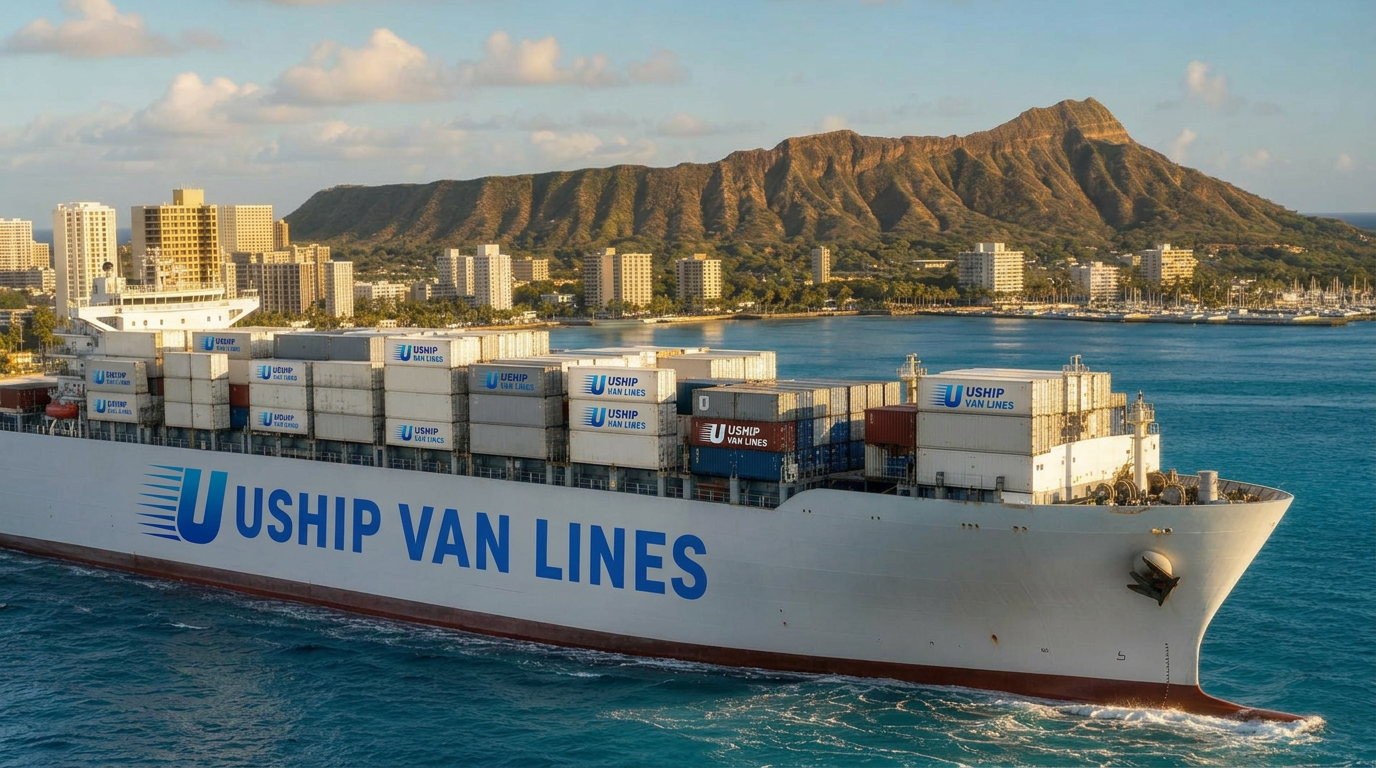
Moving from Detroit, MI to Hawaii
Moving from Detroit to Hawaii represents one of the most dramatic relocations you can make—trading Motor City's four seasons for year-round island life. This cross-country and transoceanic move requires careful planning, specialized logistics, and experienced partners who understand both mainland long-haul transport and Pacific ocean shipping.
Best Alaska & Hawaii Movers, powered by UShip Van Lines, coordinates the entire journey from your Detroit doorstep to your new Hawaiian home. Whether you're relocating to Oahu, Maui, the Big Island, or Kauai, we handle the complex logistics of ground transport to the West Coast and ocean container shipping across the Pacific. Request a detailed quote to start planning your island move today.
Route overview
Understanding the Detroit to Hawaii Moving Route
Your belongings travel approximately 4,400 miles from Detroit to Honolulu, combining overland trucking across the continental U.S. with ocean freight across the Pacific. The journey begins with a long-haul truck carrying your household goods from Michigan to a consolidation point, then to port facilities in Long Beach or Oakland, California.
From the West Coast, your items ship via ocean container on Matson Navigation or Pasha Hawaii vessels—the primary carriers serving the Hawaii route. These cargo ships make regular sailings to Honolulu, typically 1–2 departures per week depending on season. If you're moving to a neighbor island (Maui, Kauai, Big Island), your container continues via inter-island barge service, adding several days to the total timeline.
The complexity of this route requires coordination between ground carriers, port operations, ocean shipping lines, and Hawaiian destination services. Working with a company that manages the entire chain—rather than piecing together multiple vendors—reduces risk of delays, damage, and miscommunication.
How the moving process works
How Your Detroit to Hawaii Move Works: Step-by-Step
-
Initial survey and quote – A moving coordinator evaluates your inventory (virtually or in-home) and provides a detailed estimate covering ground transport, ocean freight, port fees, and Hawaiian delivery. Book 8–12 weeks ahead for best scheduling and rates.
-
Packing and loading in Detroit – Professional movers pack your belongings (or you self-pack) and load everything into a truck. Items are inventoried and labeled for container loading. Expect 1–2 days for a typical household.
-
Overland transit to West Coast port – Your shipment travels 2,300+ miles to Long Beach or Oakland, typically taking 5–7 days. Items may pause at a consolidation warehouse where multiple shipments are organized for container loading.
-
Container loading and port processing – Your household goods are loaded into a 20-foot or 40-foot ocean container, secured, and sealed. The container goes through customs paperwork, agricultural inspections, and port security. Allow 3–5 days for port operations.
-
Ocean voyage to Honolulu – Matson or Pasha vessels sail from California to Honolulu in 5–7 days under normal conditions. Your container remains sealed aboard ship throughout the Pacific crossing.
-
Hawaiian port clearance – Upon arrival in Honolulu, containers undergo USDA agricultural inspection and customs clearance. Hawaii has strict biosecurity protocols. This process typically takes 1–3 days.
-
Final delivery to your island home – If you're on Oahu, delivery happens directly from the port. For neighbor islands, your container transfers to inter-island barge (2–5 additional days), then to local delivery trucks. Movers unload and place items in your new home.
Estimated moving costs
What Does a Detroit to Hawaii Move Cost?
Moving a 2–3 bedroom household from Detroit to Hawaii typically costs $8,500–$16,000, depending on volume, services, and destination island. This range reflects the complexity of combining transcontinental ground transport with transoceanic shipping.
Key cost drivers include:
- Shipment volume – Charged by cubic feet or container size (20-foot vs. 40-foot). A typical 3-bedroom home fills about 1,000–1,500 cubic feet.
- Packing services – Professional packing adds $800–$2,000 but ensures items survive the long journey and multiple handling points.
- Destination island – Oahu moves cost less than neighbor island deliveries, which require inter-island barge fees ($800–$1,500 additional).
- Timing – Summer and early fall see higher demand and prices. Winter moves (November–March) often offer better rates.
- Vehicle shipping – Cars ship separately via dedicated vehicle carriers ($1,200–$1,800 per vehicle to Honolulu).
- Storage – If your Hawaii home isn't ready, warehouse storage in Honolulu costs $150–$300 per month.
Best Alaska & Hawaii Movers provides transparent, itemized quotes with no hidden fees. Prices are estimates based on your specific inventory and services—request a personalized quote for exact costs.
Estimated transit times
How Long Does Detroit to Hawaii Moving Take?
Door-to-door delivery from Detroit to Hawaii typically takes 3–5 weeks, broken down as follows:
- Detroit pickup to West Coast port: 5–7 days overland trucking plus 3–5 days for container loading and port processing
- Ocean transit: 5–7 days sailing time from California to Honolulu
- Hawaiian port clearance: 1–3 days for agricultural inspection and customs
- Final delivery on Oahu: 1–3 days from port clearance
- Neighbor island delivery: Add 2–5 days for inter-island barge and local delivery
Total timeline for Oahu destinations: 15–25 days. For Maui, Kauai, or Big Island: 20–30 days.
Factors that can extend timelines include port congestion (especially in summer), weather delays crossing the Pacific, customs holds for documentation issues, and inter-island barge scheduling. Agricultural inspection delays are rare but possible if items require additional cleaning or fumigation.
Plan your move with buffer time—don't schedule tight overlaps between your Detroit lease ending and Hawaii occupancy. Most movers recommend allowing 4–6 weeks total to accommodate unexpected delays.
Regional logistics
Hawaii-Specific Moving Logistics from Detroit
Ocean shipping ports: Your container ships from either Long Beach or Oakland, California—the two primary ports serving Hawaii routes. Oakland typically sees less congestion; Long Beach offers more frequent sailings. Your moving company selects based on scheduling and consolidation logistics.
Container options: Most households use shared container service (your items consolidated with other shipments) for cost efficiency. Exclusive-use 20-foot or 40-foot containers are available for larger homes or those requiring dedicated space, costing significantly more.
Agricultural restrictions: Hawaii enforces strict biosecurity to protect its ecosystem. Prohibited items include soil, plants in soil, certain seeds, fresh produce, and some wooden furniture showing pest damage. All items undergo USDA inspection upon arrival. Clean everything thoroughly—dirty gardening tools, sports equipment with soil, or camping gear can trigger holds.
Vehicle shipping: Cars ship separately via Matson or Pasha vehicle carriers from the same California ports. Vehicles must be clean (exterior and interior), operable, and less than 1/4 tank of fuel. Shipping takes 7–14 days port-to-port. You cannot pack household items inside your car for ocean transport.
Required documentation: You'll complete a detailed inventory list, customs declaration, and agricultural questionnaire. Hawaii residents receive exemptions from certain duties, but you must establish residency status. Keep copies of all paperwork—originals travel with your shipment.
Last-mile delivery challenges: Neighbor island addresses in remote areas (Hana on Maui, North Shore Kauai) may require smaller trucks or additional shuttle fees. Narrow roads, low-clearance bridges, and steep driveways can complicate delivery. Discuss your specific address with movers during quoting.
Storage solutions: If your Hawaii home isn't ready, secure warehouse storage in Honolulu is available. This is preferable to mainland storage, as it keeps your container in Hawaii and ready for delivery when needed.
Seasonal considerations
Best Times to Move from Detroit to Hawaii
Winter (November–March): Offers the best rates and most availability, as fewer people relocate to Hawaii during these months. Ocean conditions can be rougher, occasionally adding 1–2 days to sailing time, but modern container ships handle winter Pacific crossings routinely. Avoid scheduling around Thanksgiving and Christmas when port operations slow.
Spring (April–May): Moderate demand with reasonable pricing. Weather is excellent in both Detroit (for loading) and Hawaii (for delivery). Good balance of cost and conditions. Book 8–10 weeks ahead for preferred dates.
Summer (June–August): Peak moving season with highest prices and tightest capacity. Families relocate before school starts. Book 10–12 weeks in advance. Port congestion increases, potentially adding days to the timeline. Hurricane season begins in June but rarely impacts Hawaii shipping routes.
Fall (September–October): Peak hurricane season in the Pacific (though Hawaii direct hits are rare). Occasional tropical storms can delay sailings by 2–5 days. Demand begins dropping in October, with better pricing than summer. September sees some port volume from end-of-summer moves.
The Hawaii Agriculture Department maintains year-round inspection protocols, so there's no seasonal advantage for customs clearance. Your biggest variable is weather crossing the Great Plains and Rockies during Detroit pickup—winter ice storms or summer heat can affect ground transport scheduling.
Why choose Best Alaska & Hawaii Movers
Why Choose Best Alaska & Hawaii Movers for Your Detroit to Hawaii Relocation
-
Specialized Pacific expertise – We focus exclusively on Alaska and Hawaii moves, coordinating with Matson and Pasha shipping lines and managing the complex port logistics that general movers avoid.
-
Single-point accountability – From Detroit pickup through Hawaiian delivery, one coordinator manages your entire move, eliminating the finger-pointing that happens when multiple companies handle different legs.
-
Transparent pricing – Detailed, itemized quotes with all fees disclosed upfront—no surprise charges at delivery. We explain exactly what you're paying for at each stage.
-
Agricultural compliance support – We guide you through Hawaii's strict biosecurity requirements, helping you avoid common mistakes that trigger inspection delays and additional fees.
-
Flexible scheduling and storage – We work around your timeline, offering mainland and Hawaiian warehouse storage when your move-in dates don't align perfectly with shipping schedules.
-
Powered by UShip Van Lines network – Access to nationwide moving resources combined with Hawaii shipping specialization, giving you both breadth and depth of service.