
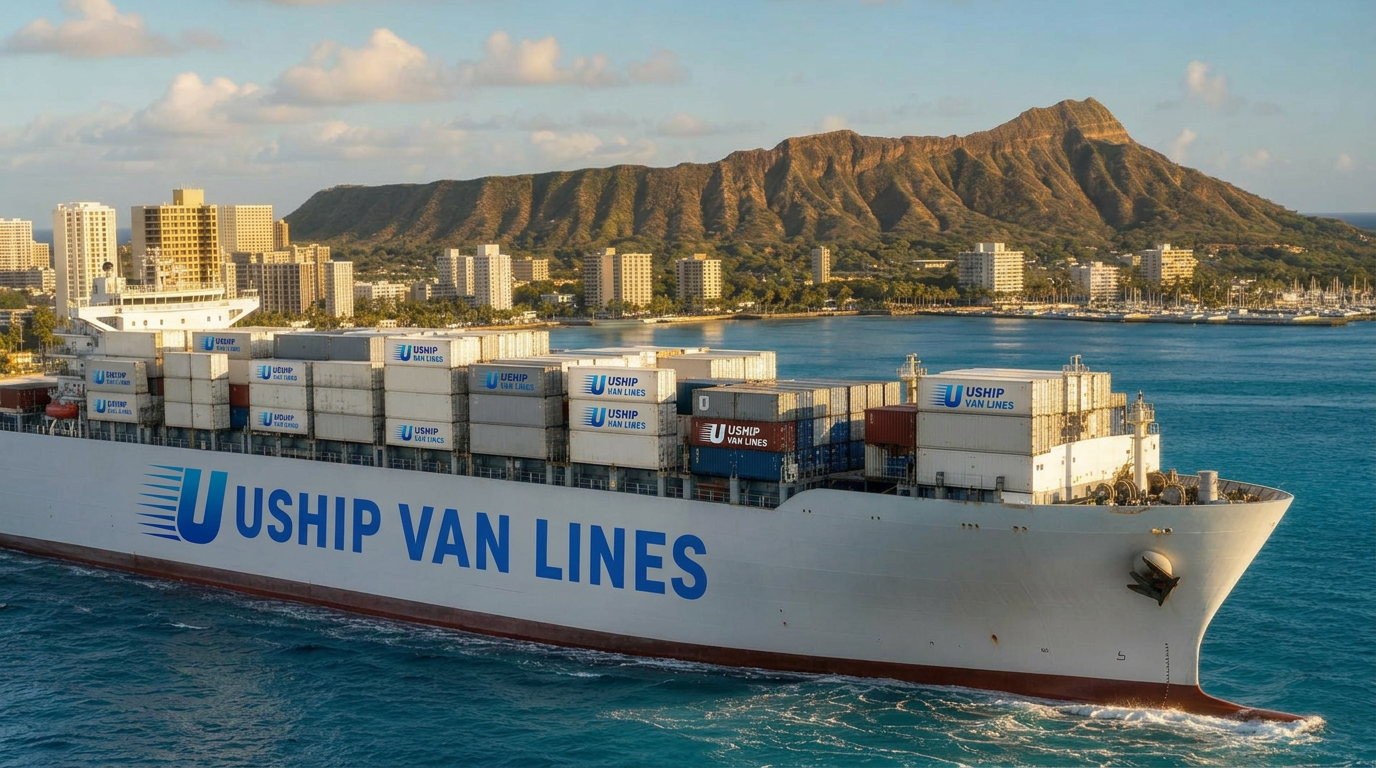
Moving from Minneapolis, MN to Hawaii
Moving from Minneapolis, Minnesota to Hawaii means trading snow-lined lakes for palm-fringed beaches—and navigating one of the most logistically complex moves in the United States. Your household goods will travel by truck across the Great Plains and Mountain West, transfer to ocean containers at Long Beach or Oakland, then sail across the Pacific to Honolulu or your chosen island.
Best Alaska & Hawaii Movers, powered by UShip Van Lines, specializes in coordinated mainland-to-Hawaii relocations. We manage every handoff—ground transport, port staging, container loading, ocean freight, and final island delivery—so you experience a single point of contact instead of chasing multiple vendors. Request a free quote to see exact pricing for your inventory and timeline.
Route overview
Route Overview: Minneapolis, MN → Hawaii
Your belongings begin their 4,500-mile journey on I-94 West or I-90, crossing Minnesota, South Dakota, Wyoming, and into either Northern California (Oakland) or Southern California (Long Beach). Ground transit from Minneapolis to West Coast ports typically takes 3–5 days, depending on weather and carrier schedules. Once at the port, goods are staged in a bonded warehouse, loaded into 20-foot or 40-foot ocean containers, and prepared for shipment on Matson Navigation or Pasha Hawaii vessels.
From Long Beach or Oakland, container ships sail weekly to Honolulu, with transit times of 5–7 days. If your destination is Maui, Kauai, or the Big Island, an additional inter-island barge or container transfer adds 3–7 days. Unlike air freight, ocean shipping accommodates full household moves—furniture, appliances, vehicles, and personal effects—at a fraction of the cost.
Total door-to-door timelines range from 14 to 28 days, influenced by container availability, port congestion, and island-specific scheduling. Booking early and shipping during shoulder seasons (April–May, September–October) often yields faster turnarounds and lower costs.
How the moving process works
The Moving Process: Minneapolis to Hawaii, Step by Step
-
Free Quote & Inventory Survey
Share your complete household inventory—furniture, appliances, boxes, specialty items. We provide a binding estimate based on cubic feet, origin/destination zip codes, and service level (door-to-door vs. port-to-door). -
Pre-Move Planning & Prohibited Items
Hawaii enforces strict agricultural and biosecurity rules. No soil, certain plants, live animals (except pets meeting quarantine requirements), or untreated wood. We provide a compliance checklist and coordinate vehicle shipping separately if needed. -
Ground Transport from Minneapolis
A vetted long-haul carrier loads your goods in Minneapolis and drives to Long Beach or Oakland. You receive tracking updates; transit takes 3–5 days in normal weather. -
Port Staging & Container Loading
At the West Coast port, your shipment is unloaded, inventoried, and packed into a shared (LCL) or exclusive (FCL) ocean container. Containers are sealed, inspected, and manifested for USDA and Hawaii Department of Agriculture clearance. -
Ocean Voyage to Honolulu (or Neighbor Islands)
Matson or Pasha vessels depart weekly, arriving in Honolulu 5–7 days later. If shipping to Maui, Kauai, or Big Island, your container transfers to an inter-island barge, adding 3–7 days. -
Customs & Agricultural Inspection
All containers undergo USDA inspection for invasive species. Delays are rare if paperwork is complete and no prohibited items are present. -
Final Delivery to Your Hawaii Address
Our island partner unloads your container, delivers to your new home, and unpacks if you've selected full-service. You inspect, sign, and settle in—ready to enjoy island life.
Estimated moving costs
Cost Estimate: What to Budget for a Minneapolis–Hawaii Move
A typical 2–3 bedroom household (1,000–1,500 cubic feet) moving from Minneapolis to Honolulu costs $6,500–$11,000 door-to-door. Neighbor island destinations (Maui, Kauai, Big Island) add $800–$1,800 for inter-island transfer and additional handling.
Key cost drivers include:
- Volume and weight – Ocean freight is priced per cubic foot or container share; heavier items (pianos, safes) incur surcharges.
- Service level – Door-to-door with packing, loading, and unpacking costs more than port-to-port self-pack.
- Container type – Exclusive 20-foot or 40-foot containers (FCL) offer faster transit and less handling but cost more than shared (LCL) space.
- Season – Summer peak (June–August) and holiday weeks see premium pricing and tighter container availability.
- Vehicle shipping – Cars, motorcycles, and boats ship separately; add $1,200–$2,000 per vehicle from the West Coast.
- Insurance – Full-value protection typically costs 1–2% of declared shipment value.
We never guarantee final prices in marketing materials; every estimate is customized after a detailed inventory review. Request a quote to lock in your rate and avoid surprises.
Estimated transit times
Transit Time: Minneapolis to Hawaii Door-to-Door
Plan for 14–28 days total transit, broken down by leg:
- Minneapolis to West Coast port (Long Beach/Oakland): 3–5 days ground transport.
- Port staging and container loading: 2–5 days (faster during off-peak, slower in summer).
- Ocean voyage to Honolulu: 5–7 days.
- Inter-island transfer (if Maui, Kauai, Big Island): 3–7 additional days.
- Island delivery and unload: 1–2 days after port arrival.
Winter weather in the Midwest and Rockies can delay ground transport by 1–3 days. Pacific storms are rare but may postpone sailings. Hurricane season (June–November) occasionally disrupts port operations in Hawaii, though major delays are uncommon with advance planning.
Booking 4–6 weeks ahead ensures container space and preferred sailing dates. Last-minute moves (under 2 weeks) often face premium pricing and longer waits.
Regional logistics
Hawaii-Specific Logistics: Ports, Paperwork & Last-Mile Delivery
Ports of Entry
Most mainland shipments land in Honolulu (Oahu), the state's primary deep-water port. From there, inter-island barges serve Kahului (Maui), Nawiliwili (Kauai), and Hilo or Kawaihae (Big Island). Direct sailings to neighbor islands are less frequent; plan for transshipment time.
USDA & Agricultural Inspections
All containers undergo mandatory inspection for invasive pests, soil, and prohibited plants. Required documents include a detailed packing list and shipper's declaration. Missing paperwork can delay release by days. We complete forms on your behalf and liaise with inspectors.
Vehicle Shipping
Cars and motorcycles ship separately via roll-on/roll-off (RoRo) vessels from Long Beach, Oakland, or San Diego. Transit is 7–10 days to Honolulu. Vehicles must be clean (no soil), operable, and under ¼ tank of fuel. We coordinate vehicle transport through our network, but it's a separate contract and cost.
Apartment & Condo Access
Many Hawaii buildings have narrow stairwells, no elevators, or strict delivery windows. Notify us of access restrictions (gate codes, reserved elevators, parking permits) at booking so island crews arrive prepared.
Storage Options
If your new home isn't ready, we offer short-term warehouse storage in Honolulu or on neighbor islands. Storage is climate-controlled and billed monthly; rates start around $150/month for 200 cubic feet.
Prohibited & Restricted Items
Hawaii bans importation of soil, certain tropical plants (ti, palm seeds), snakes, and many live animals. Pets (dogs, cats) require advance rabies vaccinations and a 5 Day Or Less program application. We provide a full prohibited-items checklist during quoting.
Seasonal considerations
Seasonal Considerations: Timing Your Minneapolis–Hawaii Move
Winter (December–February)
Minneapolis snow, ice, and sub-zero temperatures can delay pickup or require heated storage. West Coast ports operate normally; ocean crossings are smooth. Lower demand often means better pricing, but plan extra ground-transit buffer days.
Spring (March–May)
Ideal shoulder season. Minneapolis thaws, highways clear, and container availability is good. Ocean freight rates are moderate. April and May are popular for families relocating before the school year ends—book early.
Summer (June–August)
Peak moving season. High demand drives up prices and reduces container availability. Hurricane season begins in June (though major storms are rare before August). Expect 2–3 week lead times for preferred sailing dates. Benefits: dry Midwest roads, minimal weather delays.
Fall (September–November)
Another excellent window. Kids are in school, demand softens, and rates drop. Hurricane season peaks in September but tapers by November. October is especially attractive for cost and speed.
Hurricane Season Notes (June–November)
Major hurricanes seldom strike Hawaii, but tropical storms can delay port operations 1–3 days. Matson and Pasha adjust schedules proactively. We monitor NOAA forecasts and communicate any changes immediately.
Why choose Best Alaska & Hawaii Movers
Why Choose Best Alaska & Hawaii Movers for Your Minneapolis–Hawaii Relocation
- Single-Source Coordination – One contract, one point of contact for ground transport, ocean freight, customs, and island delivery. No vendor juggling.
- Transparent Pricing – Binding estimates based on real inventory, with no hidden port fees or surprise surcharges.
- Hawaii Compliance Expertise – We navigate USDA inspections, agricultural restrictions, and island-specific regulations daily, ensuring smooth customs clearance.
- Trusted Carrier Network – Vetted long-haul truckers and established partnerships with Matson and Pasha Hawaii guarantee reliable scheduling and careful handling.
- Flexible Service Levels – Choose full-service packing and unpacking, or cost-saving port-to-port options. We tailor solutions to your budget and timeline.
- Powered by UShip Van Lines – Backed by a nationwide logistics platform with real-time tracking, dedicated support, and decades of specialty-move experience.