
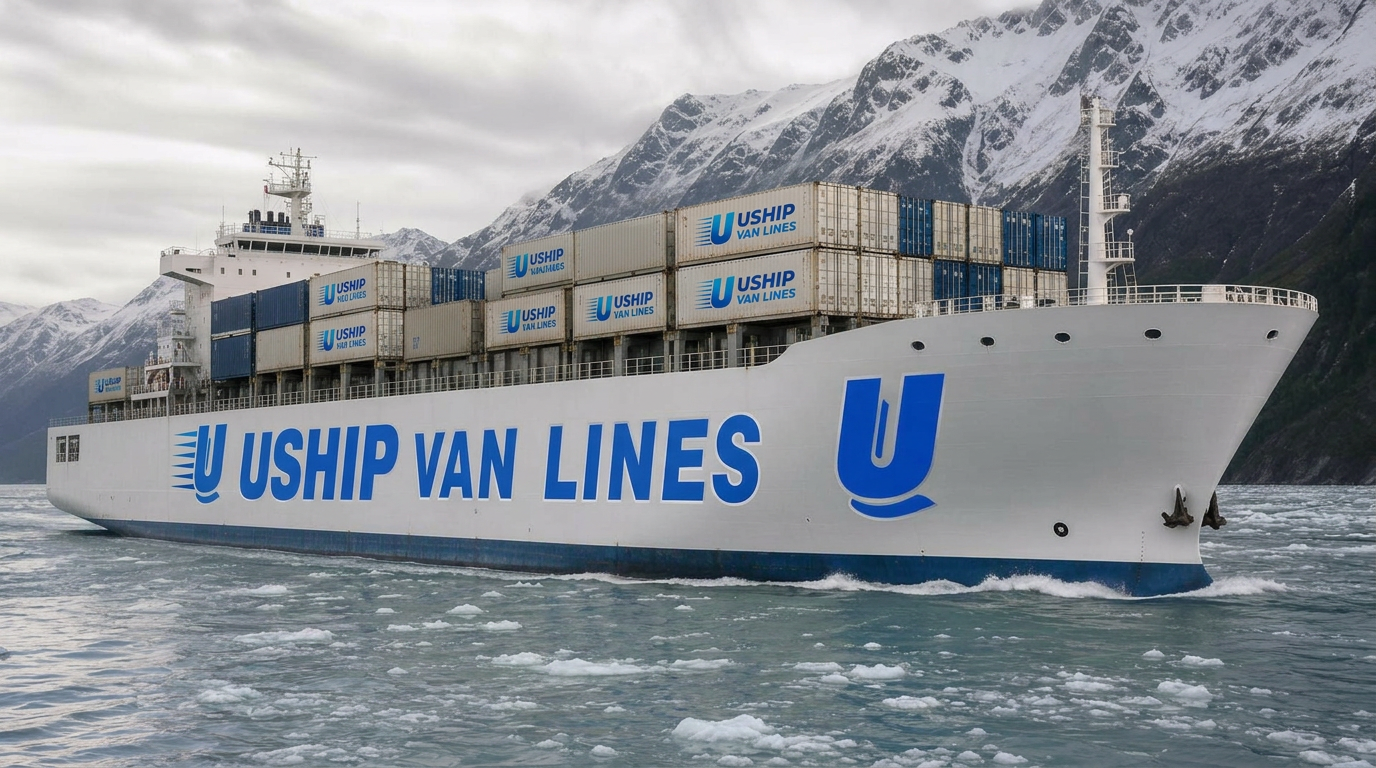
Moving from Minneapolis, MN to Alaska
Moving from Minneapolis to Alaska is more than a long-distance relocation—it's a journey across 2,500+ miles and multiple transportation modes. Your household goods will travel by truck from the Twin Cities to the Port of Tacoma, transfer to a barge bound for Anchorage, then complete the final leg to your Alaska destination. Understanding this multi-stage process helps you plan realistic timelines and budgets.
Best Alaska & Hawaii Movers, powered by UShip Van Lines, specializes in these complex Minneapolis-to-Alaska relocations. We coordinate every leg—from Minnesota pickup through Tacoma consolidation, ocean transport, port clearance, and last-mile delivery to Anchorage, Fairbanks, the Mat-Su Valley, Kenai Peninsula, or bush communities. Ready to start planning? Request a free, no-obligation quote today and speak with an Alaska moving specialist.
Route overview
How the Minneapolis to Alaska Route Works
Your move begins with a professional packing and loading crew in Minneapolis, securing your belongings into a climate-controlled truck or dedicated container. That truck drives approximately 1,700 miles west to the Port of Tacoma—typically a 3–4 day transit—where your shipment transfers to a barge terminal. Tacoma serves as the primary West Coast consolidation hub for Alaska-bound freight, with weekly sailings to Anchorage during peak season (May–September) and less frequent departures in winter.
The ocean leg from Tacoma to the Port of Anchorage covers roughly 1,500 nautical miles and takes 7–10 days depending on weather and routing through the Inside Passage or Gulf of Alaska. Upon arrival, your shipment clears port inspection, moves to a local warehouse, and schedules final delivery. Last-mile service reaches Anchorage and the Mat-Su Valley within 1–2 days; Fairbanks, Kenai, and Soldotna within 2–4 days; remote or bush destinations may require air freight or seasonal ice-road access, adding time and cost.
This multi-modal journey requires careful coordination between trucking companies, barge lines, port facilities, and Alaska delivery teams. A single point of contact—like Best Alaska & Hawaii Movers—eliminates gaps, tracks your shipment across every handoff, and ensures nothing gets lost in translation between the Lower 48 and the Last Frontier.
How the moving process works
Step-by-Step: Your Minneapolis to Alaska Move
-
Request a Quote (6–10 weeks before your move date)
Contact Best Alaska & Hawaii Movers with your inventory, pickup address in Minneapolis, and final Alaska destination. We'll provide a detailed estimate covering truck, barge, port fees, and last-mile delivery—no hidden surcharges. -
Schedule Your Pickup Window
Choose a pickup date that aligns with Tacoma barge sailings. Summer moves (May–September) offer weekly departures and faster transit; winter moves require more flexible timing due to reduced sailing frequency. -
Professional Packing & Loading in Minneapolis
Our crew arrives at your Minneapolis home, wraps furniture, boxes fragile items, and loads everything into a dedicated truck or container. We use blankets, straps, and climate protection to safeguard your belongings during the long overland haul. -
Overland Transit to Tacoma (3–4 days)
Your truck travels I-94 west through North Dakota and Montana, then follows I-90 into Washington. The driver coordinates arrival with the Tacoma barge terminal to meet your scheduled sailing. -
Barge Loading & Ocean Transit (7–10 days at sea)
Your container or palletized goods load onto a Tacoma–Anchorage barge. The vessel sails north through Puget Sound, up the Inside Passage, and across the Gulf of Alaska. GPS tracking provides real-time location updates. -
Port of Anchorage Arrival & Customs Clearance
Once docked, your shipment undergoes USDA and Alaska Department of Natural Resources inspection (primarily for plants, soil, and agricultural products). Clearance typically takes 1–2 business days. -
Last-Mile Delivery to Your Alaska Home
A local Alaska delivery team loads your goods onto a truck and completes the final leg to Anchorage, Fairbanks, Mat-Su, Kenai, or another destination. Bush and remote locations may require smaller vehicles, air freight, or seasonal ice-road access—your moving coordinator will confirm the best routing.
Throughout the process, Best Alaska & Hawaii Movers provides a single point of contact, tracking updates, and 24/7 support so you're never wondering where your belongings are or when they'll arrive.
Estimated moving costs
What a Minneapolis to Alaska Move Costs
A typical 2-bedroom household (approximately 5,000–7,000 lbs) moving from Minneapolis to Anchorage or the Mat-Su Valley generally costs $6,500–$10,500 door-to-door. A 3-bedroom home (8,000–12,000 lbs) often ranges $10,000–$16,000. These estimates include truck pickup in Minneapolis, overland transport to Tacoma, barge freight, port handling, and final delivery in Alaska. Costs vary based on volume, distance to your final destination, season, and accessorial services.
Key cost drivers:
- Shipment Weight & Volume: Barge freight is priced per cubic foot or per pound. Downsizing before your move directly reduces cost.
- Final Alaska Destination: Anchorage and Mat-Su deliveries are most economical. Fairbanks adds 300+ miles of interior trucking. Kenai, Soldotna, Homer, and Southeast Alaska communities incur ferry or additional barge legs. Bush destinations often require air freight, substantially increasing cost.
- Season: Summer (May–September) sees weekly barge sailings and competitive pricing due to higher capacity. Winter (October–April) means fewer sailings, longer lead times, and sometimes higher per-foot rates.
- Packing Services: Full-service packing in Minneapolis typically adds $800–$2,000 depending on home size and fragility of items.
- Vehicle Shipping: Adding a car or truck to your barge shipment costs approximately $1,200–$2,200 from Tacoma to Anchorage (vehicles must be driven or shipped separately to Tacoma first).
- Storage: If your Alaska home isn't ready, short-term storage in Anchorage costs $150–$300/month for a small load; longer-term or climate-controlled storage increases the rate.
Best Alaska & Hawaii Movers provides a transparent, line-item estimate with no hidden fees. Requesting a quote is free, and our specialists will walk you through every cost component so you can budget confidently.
Estimated transit times
How Long Does It Take?
Door-to-door transit from Minneapolis to Alaska typically takes 14–21 days during summer peak season, and 21–35 days in winter due to reduced barge frequency. Here's the breakdown:
- Minneapolis Pickup to Tacoma Arrival: 3–4 days by truck (approximately 1,700 miles via I-94 and I-90).
- Tacoma Terminal Processing: 1–3 days for container loading, documentation, and awaiting the next scheduled sailing.
- Barge Transit (Tacoma to Anchorage): 7–10 days at sea. Summer sailings (May–September) depart weekly; winter sailings may be every 10–14 days.
- Port of Anchorage Clearance: 1–2 business days for USDA inspection and offloading.
- Last-Mile Delivery: 1–2 days to Anchorage/Mat-Su; 2–4 days to Fairbanks or Kenai; remote or bush destinations add additional time depending on access (ice roads, seasonal ferry schedules, or air freight windows).
Pro tip: Book your move 6–10 weeks in advance to secure your preferred pickup date and align with optimal barge sailing schedules. Last-minute bookings (under 4 weeks) may miss ideal sailings, pushing your timeline into a slower period or forcing you to wait for the next available barge.
Best Alaska & Hawaii Movers provides milestone tracking so you know exactly when your goods leave Minneapolis, when they load onto the barge, when they arrive in Anchorage, and when to expect final delivery.
Regional logistics
Alaska-Specific Logistics You Need to Know
Ports & Barge Operations:
The Port of Anchorage handles the vast majority of Alaska-bound household goods from the Lower 48. It's a roll-on/roll-off (RoRo) and container terminal served by major barge lines. Your shipment will be containerized or palletized in Tacoma, loaded onto a barge, and offloaded in Anchorage. From there, local carriers handle last-mile delivery. Remote Southeast Alaska communities (Juneau, Ketchikan, Sitka) may route through different ports or require Alaska Marine Highway ferry connections.
Customs & Agricultural Inspections:
While Alaska is part of the United States, the USDA enforces strict agricultural rules to protect Alaska's ecosystems. Inspectors screen for plants, soil, untreated wood, and certain produce. If you're bringing houseplants, expect them to be inspected and possibly rejected. Treated firewood, potted plants with soil, and fresh produce are high-risk items. Best Alaska & Hawaii Movers will guide you on what's allowed and help you prepare documentation to speed clearance.
Vehicle Shipping:
If you're driving to Alaska via the Alaska Highway (ALCAN), allow 7–10 days for the 2,300-mile journey from Minnesota through Canada. Alternatively, ship your vehicle on the same barge as your household goods. Vehicles must be delivered to Tacoma (drive it yourself or hire an auto transport), where they load onto the barge. Anchorage arrival takes 7–10 days; you pick up your vehicle at the port or arrange delivery. Cost: approximately $1,200–$2,200 per vehicle.
Last-Mile Challenges:
Anchorage, Eagle River, Wasilla, Palmer, and other road-accessible Mat-Su Valley communities are straightforward. Fairbanks requires an additional 360-mile truck haul (approximately 6 hours). Kenai Peninsula towns (Soldotna, Kenai, Homer) add 150–200 miles south of Anchorage. Bush communities—locations off the road system—may require small planes, seasonal ice roads, or barge-to-barge transfers, significantly increasing cost and time. Discuss your exact destination with your moving coordinator early.
Storage Options:
If your Alaska home isn't ready, Best Alaska & Hawaii Movers offers short-term and long-term storage in Anchorage. Climate-controlled units protect furniture and electronics from extreme cold. Typical costs: $150–$300/month for a small load, more for larger volumes or extended storage.
Communication & Tracking:
Cell and internet service in rural Alaska can be spotty. Make sure your moving coordinator has multiple contact methods (phone, email, text) and confirm your delivery address is accurate. GPS tracking works during the truck and barge legs; last-mile delivery scheduling happens once your shipment clears the port.
Seasonal considerations
Best Times to Move from Minneapolis to Alaska
Spring/Summer (May–September): Peak moving season. Weekly Tacoma–Anchorage barge sailings, fastest transit times (14–18 days door-to-door), and easier road access in Alaska (no ice, extended daylight). This is the most popular window, so book early—especially for July and August moves coinciding with school-year transitions. Rates are competitive due to high barge capacity, but demand can fill containers quickly.
Fall (October–November): Barge frequency begins to decrease (sailings every 10–14 days). Weather in the Gulf of Alaska becomes less predictable, occasionally adding 1–2 days to ocean transit. Road conditions in Alaska are still good through October, but early snow can arrive in Fairbanks and interior regions by late November. A solid shoulder season if you have flexible timing.
Winter (December–April): Off-peak season. Barge sailings are less frequent (sometimes every 2–3 weeks), and winter storms in the Gulf of Alaska can delay departures or extend transit. Snow and ice in Alaska complicate last-mile deliveries to Fairbanks, rural areas, and bush communities—some locations become accessible only by seasonal ice roads (January–March) or require air freight. On the plus side, you may find lower rates and more flexible scheduling with movers. If you're moving in winter, plan for a 21–35 day timeline and maintain open communication with your moving coordinator.
Holiday Considerations: Avoid booking moves around Thanksgiving, Christmas, and New Year's unless absolutely necessary. Port operations, trucking crews, and barge schedules all experience delays during these holidays, extending your timeline.
No matter the season, Best Alaska & Hawaii Movers monitors weather, barge schedules, and Alaska road conditions to route your shipment efficiently and keep you informed every step of the way.
Why choose Best Alaska & Hawaii Movers
Why Best Alaska & Hawaii Movers for Your Minneapolis to Alaska Move
- Single-Source Coordination: We manage every leg—Minneapolis pickup, Tacoma consolidation, barge booking, port clearance, and Alaska delivery—so you deal with one team, one estimate, and one point of accountability.
- Alaska Expertise: Powered by UShip Van Lines, we've handled hundreds of Lower 48–Alaska moves. We understand barge schedules, USDA inspections, remote-delivery logistics, and seasonal challenges that generic long-distance movers miss.
- Transparent Pricing: Line-item estimates with no hidden fees. You'll know exactly what you're paying for truck, barge, port handling, and last-mile delivery before you commit.
- Real-Time Tracking: GPS updates during truck transit, barge sailing notifications, and delivery scheduling once your goods arrive in Anchorage. You're never left wondering where your belongings are.
- Flexible Service Levels: Choose full-service packing and white-glove delivery, or save money with self-pack and terminal pickup options. We tailor the service to your budget and timeline.
- Trusted Network: We partner with licensed, insured carriers and Alaska-based delivery teams who know the terrain, weather, and logistics of the Last Frontier.
Request your free quote today and experience the difference of working with Alaska moving specialists who've been there, done that, and will get your belongings safely from Minneapolis to your new Alaska home.