
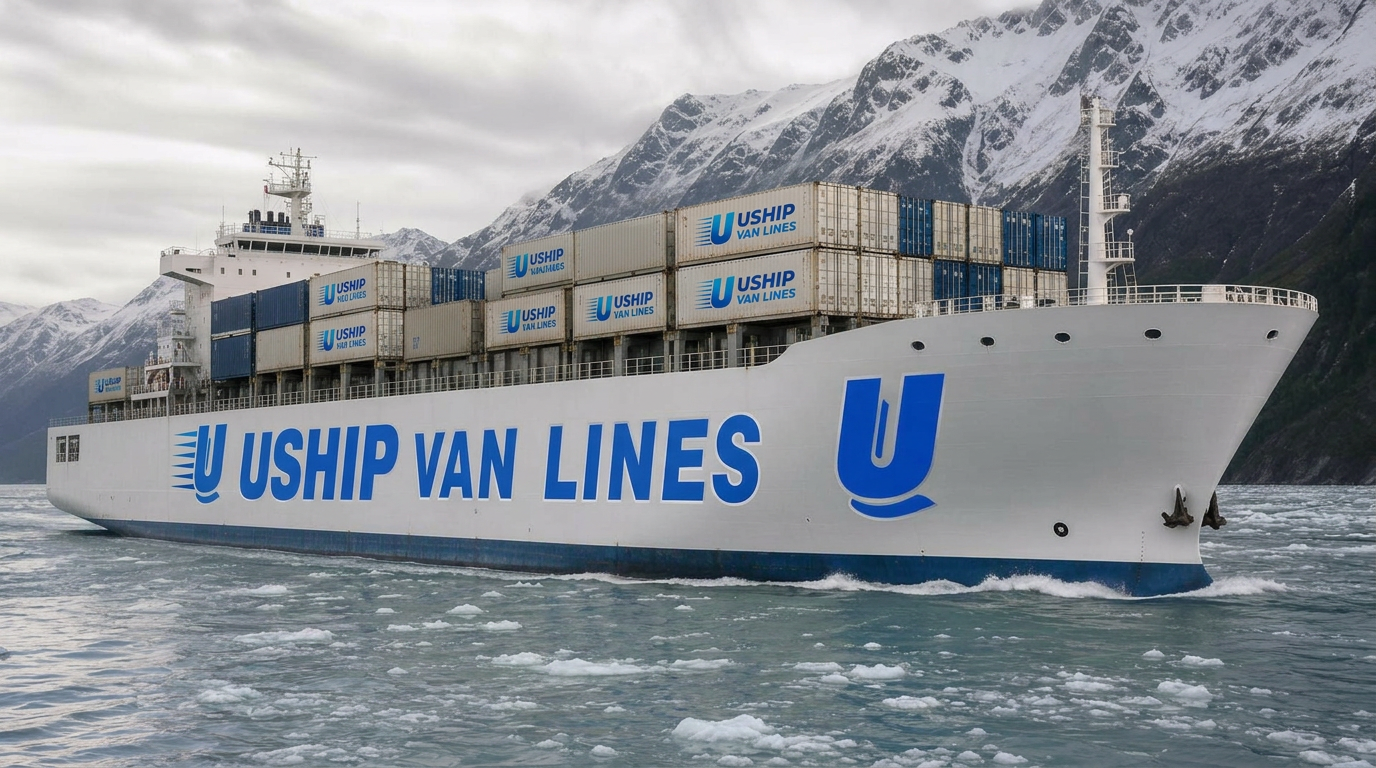
Moving from Washington, DC to Alaska
Relocating from the nation's capital to America's Last Frontier is one of the most dramatic moves you can make—trading monuments and metro lines for mountains and midnight sun. Whether you're heading to Anchorage for a federal position, joining family in Fairbanks, or starting fresh in the Mat-Su Valley, moving from Washington, DC to Alaska requires specialized logistics that most national van lines simply don't handle.
Best Alaska & Hawaii Movers, powered by UShip Van Lines, orchestrates every phase of your cross-continental journey: professional packing in DC, overland transport to Tacoma, barge sailing to the Port of Anchorage, and final delivery to your new Alaska home. Ready to get started? Request your free, no-obligation quote and speak with our Alaska moving specialists today.
Route overview
The Washington, DC to Alaska Moving Route
Your belongings travel approximately 3,400 miles from Washington, DC to Anchorage—a journey that combines over-the-road trucking with oceangoing barge service. The route begins with pickup at your DC-area residence (whether you're in Capitol Hill, Arlington, Bethesda, or Alexandria), followed by cross-country transport to our consolidation point in Tacoma, Washington. There, your household goods are loaded into marine containers and placed aboard a northbound barge operated by carriers like Totem Ocean Trailer Express or Alaska Marine Lines.
The barge sails through the Inside Passage and Gulf of Alaska to the Port of Anchorage, where containers are offloaded and transferred to local delivery trucks. If your final destination is Fairbanks, the Mat-Su Valley, Kenai Peninsula, or even remote bush communities, we coordinate the last-mile delivery via ground transport or, when necessary, smaller aircraft for truly off-grid locations. This multi-modal approach is the only practical way to move a full household to Alaska, and proper coordination is essential to avoid delays and damage.
How the moving process works
How Your DC-to-Alaska Move Works: Step by Step
-
Free In-Home or Virtual Survey: Our estimator reviews your inventory via video call or in-person visit in the Washington, DC metro area, noting any high-value items, bulky furniture, or items restricted from Alaska (see our FAQ below).
-
Booking and Pre-Move Planning: Once you accept your quote, we reserve your barge space (critical during peak summer months) and schedule your pack-and-load window. We'll provide a detailed timeline and checklist for vehicle shipping, change-of-address filing, and utility transfers.
-
Professional Packing and Loading in DC: Our crew arrives at your home, wraps and boxes your belongings using marine-grade materials (extra protection for the ocean leg), and loads everything into our truck. High-value items like artwork or electronics receive custom crating if needed.
-
Overland Transport to Tacoma, WA: Your shipment travels by truck across the United States—typically 5–7 days depending on weather and routing—to our Tacoma consolidation hub, where it's staged for the next available barge sailing.
-
Marine Container Loading and Barge Departure: Goods are loaded into 20' or 40' ocean containers, secured to prevent shifting at sea, and placed aboard the barge. Sailings typically run weekly in summer, every 10–14 days in winter.
-
Ocean Transit via Inside Passage: The barge sails north through protected waters and open ocean, arriving at the Port of Anchorage 7–10 days later. Weather, tides, and port congestion can affect exact arrival times.
-
Customs Clearance, Offload, and Final Delivery: Containers are offloaded, cleared through any necessary inspections, and transferred to local delivery trucks. Our Alaska-based team delivers to your new address in Anchorage, Fairbanks, Wasilla, or beyond, unpacking and placing items as requested.
Estimated moving costs
What Does It Cost to Move from Washington, DC to Alaska?
A typical 2–3 bedroom household move from Washington, DC to Anchorage ranges between $8,500 and $14,000, depending on total weight, service level, and time of year. A studio or 1-bedroom move may run $5,000–$7,500, while a large 4+ bedroom home can exceed $18,000.
Key cost drivers include:
- Volume and weight: Alaska movers charge primarily by cubic footage or weight. The average 3-bedroom home is 7,000–10,000 pounds.
- Packing services: Full-service packing in DC (recommended for the barge journey) adds $1,200–$2,500.
- Barge and handling fees: Marine container loading, ocean freight, and port fees are significant line items—expect $3,000–$5,000 for this leg alone.
- Distance from Anchorage: Delivery to Fairbanks (358 miles north) or remote areas incurs additional trucking or air freight charges, potentially adding $1,500–$4,000.
- Seasonal demand: Summer moves (May–September) cost 15–25% more due to high demand and frequent barge sailings. Off-season moves offer savings but require more patience with schedules.
- Insurance and valuation: Basic coverage (60¢/lb) is included; full-value replacement insurance costs extra but is highly recommended for Alaska's multi-leg journey.
We never guarantee prices without a detailed survey. Request your personalized quote to get an accurate estimate based on your specific inventory and destination.
Estimated transit times
How Long Does a Washington, DC to Alaska Move Take?
Expect a total door-to-door transit time of 3–5 weeks for most Washington, DC to Anchorage moves, broken down as follows:
- Packing and loading in DC: 1–2 days, depending on home size and service level.
- Overland truck transport to Tacoma: 5–7 days for the 2,800-mile drive across the continental U.S.
- Staging and container loading: 2–7 days, depending on barge schedule and consolidation timing.
- Barge sailing from Tacoma to Anchorage: 7–10 days via the Inside Passage and Gulf of Alaska.
- Port offload and final delivery: 2–5 days, depending on customs, port congestion, and your delivery address.
In peak summer months (June–August), sailings are frequent and the process can compress to 3 weeks. During winter (November–March), barge departures are less frequent, and weather delays can stretch the timeline to 5–6 weeks. If you're moving to Fairbanks or rural Alaska, add 3–7 days for the final overland leg.
Pro tip: Book at least 4–6 weeks before your desired delivery window, especially for summer moves, to secure barge space and avoid rush fees.
Regional logistics
Alaska-Specific Moving Logistics from Washington, DC
Ports and Marine Transit: Your shipment departs Tacoma, WA (the primary West Coast hub for Alaska-bound freight) and arrives at the Port of Anchorage. If you're moving to Southeast Alaska (Juneau, Sitka, Ketchikan), shipments may route through different barge lines with different schedules—coordinate early.
Vehicle Shipping: Most DC-to-Alaska movers ship vehicles separately via the same barge route. Your car is driven onto a roll-on/roll-off (RoRo) vessel or placed in a container. Cost: $1,800–$3,500 for a sedan; $2,500–$4,500 for an SUV or truck. Must be nearly empty (under 1/4 tank of gas, no personal items except floor mats and spare tire). Allow 2–4 weeks.
Restricted and Prohibited Items: Alaska has strict agricultural and invasive-species rules. Prohibited: houseplants, soil, firewood, certain seeds, and untreated wooden furniture. Restricted: firearms (must be declared and properly packed), alcohol (limited quantities), and perishable foods. Hazardous materials (paint, propane, batteries) cannot travel on barges. Check the Alaska Department of Natural Resources guidelines before packing.
Last-Mile Delivery: Anchorage, Fairbanks, and Mat-Su Valley are accessible by paved highway year-round. Deliveries to the Kenai Peninsula, remote villages, or bush communities may require transfer to smaller trucks, ferries, or charter flights—adding significant cost and time. Discuss your exact address with your moving coordinator during booking.
Storage Options: If your new home isn't ready or your barge misses a sailing, we offer short-term storage in Tacoma (before sailing) or Anchorage (after arrival). Climate-controlled units available. Storage fees typically run $150–$400/month depending on volume.
Insurance and Documentation: Given the multi-leg journey and ocean exposure, we strongly recommend full-value replacement insurance (cost: typically 1–2% of declared value). You'll also need to provide a detailed inventory and sign off on container seals before barge departure. Keep digital photos of high-value items for your records.
Seasonal considerations
Best Time to Move from Washington, DC to Alaska
Summer (May–September): Peak moving season. Barge sailings are weekly, weather is favorable, and roads in Alaska are clear. Expect premium pricing (15–25% higher) and tighter scheduling. Ideal if you need to be settled before the school year or start a job in late summer. Book 6–8 weeks in advance.
Fall (October–November): Shoulder season with moderate demand. Barge schedules begin to thin (every 10–14 days), but costs drop slightly. Weather is increasingly unpredictable—early snow in Alaska and storms in the Gulf can cause delays. Good option if you have flexible timing and want to save 10–15%.
Winter (December–March): Off-season with the lowest rates (up to 25% off summer pricing). Barge sailings are infrequent, and ice/weather can disrupt schedules. Roads in Alaska may require winter tires or seasonal closures on remote routes. Best for budget-conscious movers with very flexible timelines—expect 5–6 weeks transit.
Spring (April–May): Transition period. Barge schedules ramp up, and pricing begins to climb. Weather is improving but still variable. A sweet spot for balancing cost and reliability if you can avoid the Memorial Day rush.
Vehicle shipping note: If you're shipping a car, summer sailings fill up fast. Winter sailings have more space but require winterization (antifreeze, battery disconnection) and may delay delivery if roads are impassable.
Why choose Best Alaska & Hawaii Movers
Why Choose Best Alaska & Hawaii Movers for Your DC-to-Alaska Relocation
- Alaska-Specific Expertise: We specialize exclusively in moves to and from Alaska and Hawaii—not a side service, but our core competency. Our team understands barge schedules, Alaska DOT regulations, and the unique challenges of Last Frontier logistics.
- Powered by UShip Van Lines: Our transportation network provides reliable overland service from Washington, DC to Tacoma, with decades of experience in cross-country household goods transport and cargo security.
- Single-Point Coordination: One company, one point of contact for the entire journey—from your DC doorstep to your Alaska driveway. No handoffs to unknown subcontractors; we manage the truck, barge, and final delivery.
- Transparent Pricing, No Hidden Fees: Our quotes include all major cost components—packing, loading, overland, barge, and delivery. No surprise "port fees" or "fuel surcharges" at the end. You'll know what you're paying before you commit.
- Flexible Scheduling and Storage: Whether you need expedited summer delivery or budget-friendly winter transport, we work with your timeline. Short-term storage available at both ends if your dates shift.
- Personalized Customer Service: Real humans answer your calls and emails. We provide regular shipment updates, from truck dispatch in DC to barge arrival in Anchorage, so you're never left wondering where your belongings are.