
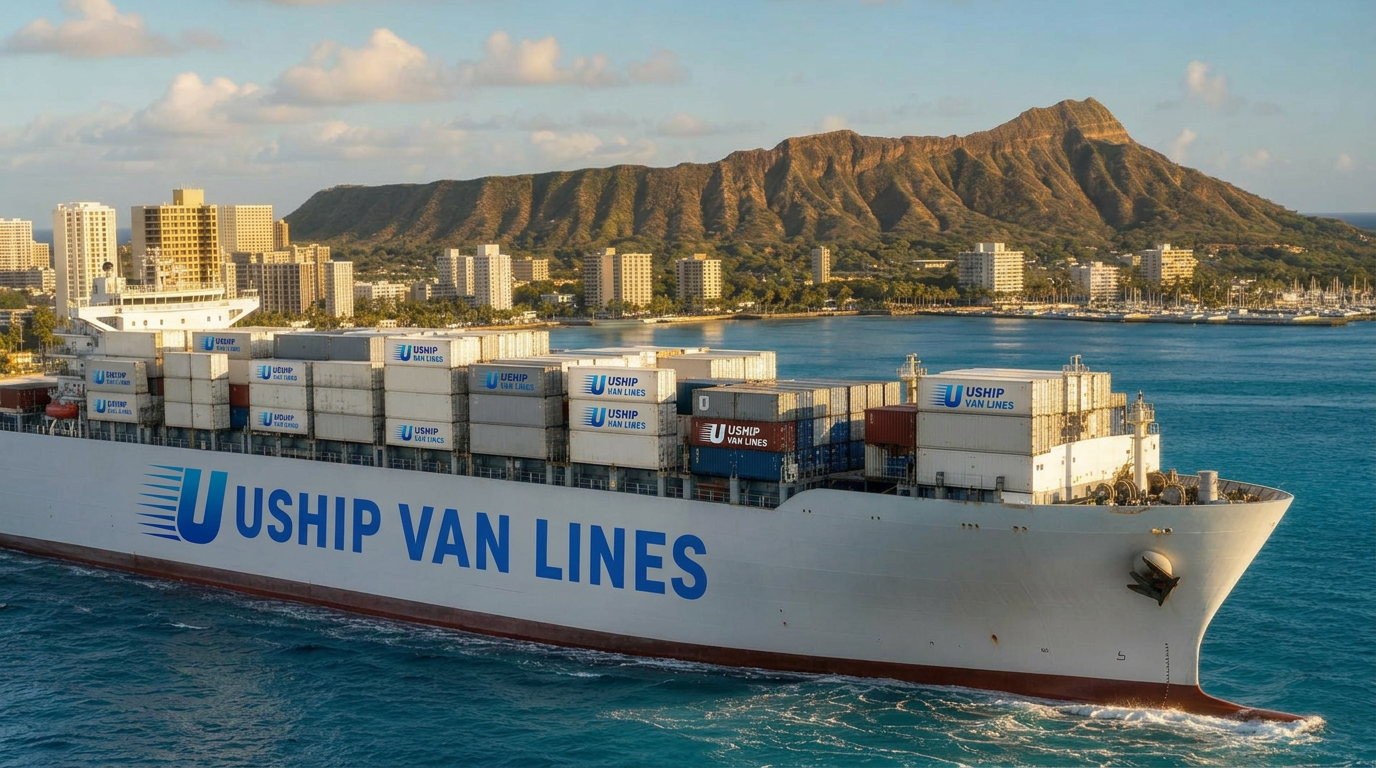
Moving from Washington, DC to Hawaii
Moving from Washington, DC to Hawaii means trading monuments and metro stops for beaches and volcanic landscapes—but first, you'll navigate one of the most complex residential relocations in the United States. Your household goods will travel roughly 5,000 miles across the continental U.S. and then across the Pacific Ocean, requiring careful coordination between overland trucking and ocean container shipping.
Best Alaska & Hawaii Movers, powered by UShip Van Lines, specializes in these cross-country-to-ocean moves. We handle the entire journey from your DC-area home to your new island address, coordinating ground transport to the West Coast and ocean freight to Honolulu, Maui, Kauai, or the Big Island. Request a free quote to start planning your DC-to-Hawaii transition with confidence.
Route overview
The Washington, DC to Hawaii Moving Route
Your move begins with ground transportation from the Washington, DC metropolitan area—whether you're in Georgetown, Capitol Hill, Arlington, Bethesda, or the surrounding suburbs. A long-haul truck carries your belongings approximately 2,800 miles west to either the Port of Long Beach or Port of Oakland in California, the two primary gateways for Hawaii-bound household goods.
At the port, your items are loaded into a 20-foot or 40-foot ocean container and shipped via Matson Navigation or Pasha Hawaii—the two carriers serving the Hawaii trade lane. The ocean voyage to Honolulu takes 8–12 days depending on vessel schedules and weather. If your final destination is a neighbor island (Maui, Kauai, Big Island), your container transfers to an inter-island barge for an additional 2–5 days before final delivery.
This cross-country-plus-ocean route requires precise timing and documentation. Unlike a standard domestic move, Hawaii shipments involve port cutoff dates, agricultural inspections, and potential storage on both the mainland and in the islands if timing doesn't align perfectly.
How the moving process works
How Your DC-to-Hawaii Move Works: Step by Step
-
Free Estimate & Planning (4–8 weeks before your move): Contact Best Alaska & Hawaii Movers for a detailed quote. We'll assess your inventory, discuss your target move dates, and explain the ground-plus-ocean timeline. Book early—Hawaii moves require more lead time than standard long-distance relocations.
-
Pre-Move Coordination (2–4 weeks out): We confirm your pickup date in DC and reserve space on an upcoming ocean vessel. You'll receive packing guidance and a list of restricted items (Hawaii prohibits certain plants, soil, wood items, and used furniture that may harbor pests). Decide whether you'll ship your vehicle separately or fly it via roll-on/roll-off service.
-
Ground Transport from DC (Days 1–5): Our crew loads your household goods in the Washington, DC area and begins the cross-country haul to California. Your belongings travel via semi-truck on Interstate 70 or Interstate 40, typically reaching the West Coast in 4–6 days depending on route and weather.
-
Port Staging & Container Loading (Days 6–8): At the Port of Long Beach or Oakland, your items are transferred to an ocean container. Goods are carefully secured to prevent shifting during the 2,400-mile ocean crossing. The container is sealed and placed in the vessel's staging queue.
-
Ocean Voyage to Honolulu (Days 9–20): Matson or Pasha vessels depart weekly on fixed schedules. The Pacific crossing takes 8–12 days. Your container clears customs and Hawaii Department of Agriculture inspection upon arrival—officials check for prohibited items and invasive species.
-
Inter-Island Transfer (if applicable, Days 21–25): If you're moving to Maui, Kauai, or the Big Island, your container boards a Young Brothers barge for the inter-island leg. This adds 2–5 days depending on the specific island and weather conditions.
-
Final Delivery & Unloading (Days 22–28): Our Hawaii-based team delivers your container to your new address and unloads your belongings. We'll place furniture, help with basic setup, and remove packing materials, completing your journey from the nation's capital to the Pacific.
Estimated moving costs
What Does a DC-to-Hawaii Move Cost?
For a typical 2–3 bedroom household (8,000–12,000 pounds), expect to pay $8,500–$14,500 for a full-service move from Washington, DC to Hawaii. This range covers ground transportation across the U.S., ocean container shipping, and final delivery in the islands. Smaller studio or 1-bedroom moves may run $5,500–$8,000, while larger 4-bedroom homes can exceed $18,000.
Key cost drivers include:
- Volume and weight: Ocean freight is priced by container space and weight. A 20-foot container holds roughly a 2-bedroom home; a 40-foot container accommodates 3–4 bedrooms.
- Final island destination: Oahu (Honolulu) delivery is least expensive. Neighbor island moves add $1,200–$2,500 for inter-island barge and extra handling.
- Packing services: Full professional packing adds $800–$1,800 depending on home size. Fragile-item crating (artwork, mirrors) costs extra.
- Vehicle shipping: Adding a car runs $1,400–$2,200 via roll-on/roll-off service from the West Coast to Hawaii (separate from household goods).
- Storage: If you need interim storage in California or Hawaii while awaiting housing, expect $150–$300 per month for a 10x10 climate-controlled unit.
- Season and timing: Summer (May–August) sees higher demand and sometimes premium pricing. Booking 6–8 weeks ahead often secures better rates.
We never guarantee prices without a detailed inventory assessment. Request your free, no-obligation quote to get an accurate estimate for your specific DC-to-Hawaii move.
Estimated transit times
How Long Does a DC-to-Hawaii Move Take?
Plan for 18–28 days door-to-door from your Washington, DC pickup to final delivery in Hawaii. This timeline breaks down as follows:
- Ground transport (DC to West Coast port): 4–6 days for the 2,800-mile truck haul.
- Port staging and container loading: 1–3 days while your goods await the next scheduled vessel departure.
- Ocean voyage to Honolulu: 8–12 days depending on the sailing schedule and weather. Vessels depart weekly but not daily.
- Customs and agricultural inspection: 1–2 days for clearance in Honolulu. Hawaii inspectors are thorough due to invasive species concerns.
- Inter-island barge (if needed): Add 2–5 days if your final destination is Maui, Kauai, or Big Island.
- Final delivery scheduling: 1–3 days to coordinate unloading at your new home (island delivery windows can be less flexible than mainland).
Faster options exist but cost significantly more. Expedited ground transport and priority vessel booking can shave 4–7 days off the timeline for an additional $1,500–$3,000. Most customers find the standard 3–4 week window manageable if they plan housing and travel accordingly.
Keep in mind that this is a firm-date timeline—your goods will be on specific vessel sailings. Unlike flexible mainland moves, missing a port cutoff can delay your shipment by a full week until the next departure.
Regional logistics
Hawaii-Specific Moving Logistics from DC
Ports and routing: Your goods travel to either Long Beach (more common) or Oakland for loading. Both ports have weekly Matson and Pasha sailings to Honolulu. From Honolulu, Young Brothers barges serve Kahului (Maui), Nawiliwili (Kauai), and Hilo/Kawaihae (Big Island). We select routing based on vessel schedules and your delivery timeline.
Hawaii agricultural restrictions: The state prohibits or restricts many items to prevent invasive species. Banned items include most live plants, soil, certain seeds, used outdoor furniture, untreated wood, and items stored in barns or garages with pest exposure. Hawaii inspectors will examine your shipment—prohibited items are confiscated and destroyed at your expense. We provide a detailed restriction checklist during planning.
Vehicle shipping: Shipping your car from DC requires ground transport to a West Coast port (typically Long Beach) and then roll-on/roll-off ocean service to Honolulu. Total cost: $1,800–$2,500. Transit time: 14–21 days. Hawaii requires current registration, safety inspection within 72 hours of arrival, and emission testing. We can coordinate vehicle shipping or you can use a specialized auto transport service—either way, it's separate from household goods.
Documentation: You'll need a detailed inventory list for customs and agricultural inspection. Hawaii doesn't require special residency permits for your belongings, but military members should provide PCS orders. Keep important documents, valuables, and medications in your personal luggage—never in the moving container.
Delivery access in Hawaii: Many Hawaii homes have narrow streets, steep driveways, or unpaved access roads. Older Honolulu neighborhoods and rural Big Island properties can be challenging. Inform us of any access issues (low-hanging trees, weight-restricted bridges, gated communities) so we can arrange shuttle trucks or special equipment. Neighbor island deliveries sometimes require scheduling around barge arrivals—your delivery window may be a 2–3 day range rather than a specific date.
Storage options: If your new housing isn't ready when your container arrives, we offer short-term storage in Hawaii. Containers can remain at the port facility (least expensive, $15–$25/day) or be moved to a warehouse ($150–$250/month). Climate-controlled storage is recommended for electronics and upholstered furniture in Hawaii's humid environment.
Seasonal considerations
Best Times to Move from DC to Hawaii
Spring (March–May): Ideal moving season. DC weather is mild for loading, and you'll arrive before Hawaii's summer tourism peak. Ocean conditions are generally calm. Book 6–8 weeks ahead as demand increases toward summer.
Summer (June–August): Peak season for Hawaii moves, driven by families relocating before the school year. Expect higher prices and fuller vessel bookings. Hurricane season officially begins June 1, though direct Hawaii impacts are rare. Heat and humidity in DC can make packing more strenuous. Reserve your move 8–10 weeks in advance.
Fall (September–November): Excellent value period. Demand drops after school starts, and carriers offer better pricing. Hurricane season continues through November, but statistically most Pacific storms stay south of Hawaii. This is prime time for military PCS moves to Joint Base Pearl Harbor-Hickam. Book 4–6 weeks out.
Winter (December–February): Lowest prices and best availability. DC winter weather (snow, ice) can occasionally delay pickups by 1–3 days—build buffer time into your schedule. Pacific storms are more common, potentially adding 1–2 days to ocean crossings. Holiday weeks (Christmas, New Year's) see reduced vessel sailings. Great season if you're flexible and want to escape DC's cold for island warmth.
Hurricane and weather note: While Hawaii's hurricane season (June–November) exists, direct strikes are infrequent. Vessels occasionally delay departures or rerout around storms, adding 1–3 days. Winter swells affect inter-island barge schedules more than transpacific crossings. We monitor weather closely and keep you updated on any delays.
Why choose Best Alaska & Hawaii Movers
Why Choose Best Alaska & Hawaii Movers for Your DC-to-Hawaii Relocation
-
Cross-country-to-ocean specialists: We coordinate the entire journey—ground transport from Washington, DC, West Coast port logistics, ocean container shipping, and Hawaii last-mile delivery—under one contract with transparent pricing. No handoffs between multiple companies.
-
Hawaii expertise and island partnerships: Our Hawaii-based delivery teams know island roads, access challenges, and local regulations. We work with Matson, Pasha, and Young Brothers to secure reliable vessel space and competitive ocean freight rates.
-
Proactive communication: You'll receive updates at every major milestone—DC pickup, West Coast arrival, vessel departure, Honolulu clearance, and delivery scheduling. Our team monitors your shipment from the Capital Beltway to the Hawaiian Islands.
-
Flexible service levels: Choose full-service packing and unpacking, or opt for container-only shipping if you prefer to pack yourself. We offer partial-load consolidation for smaller moves, reducing costs when you don't need a full container.
-
Powered by UShip Van Lines: Our national network provides the equipment, insurance, and logistics backbone for complex DC-to-Hawaii moves, while our specialized team focuses exclusively on Alaska and Hawaii expertise.