
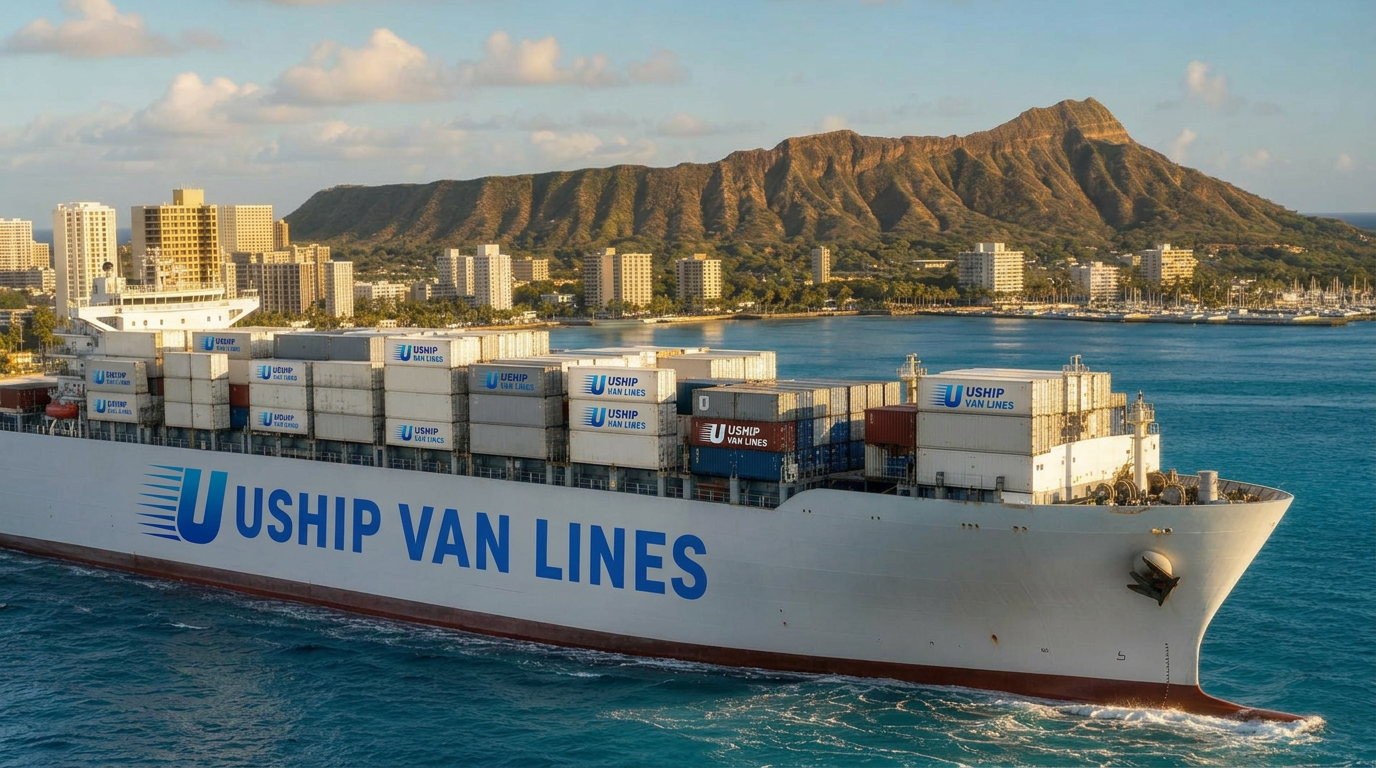
Moving from Hawaii to Minneapolis, MN
Relocating from Hawaii to Minneapolis means trading island beaches for vibrant urban living and four distinct seasons. This cross-Pacific move requires ocean freight from Hawaii to the mainland West Coast, then overland transport across 1,600+ miles to Minnesota's Twin Cities metro area.
Best Alaska & Hawaii Movers (powered by UShip Van Lines) specializes in these complex multi-modal moves, coordinating container shipping, customs clearance, and final delivery. Request a free quote to see how we make your Hawaii-to-Minneapolis transition seamless.
Route overview
Understanding the Hawaii to Minneapolis Moving Route
Your belongings travel 4,400+ nautical miles from Hawaiian ports (Honolulu, Hilo, Kahului, Nawiliwili) to West Coast terminals in Long Beach, Oakland, or Seattle. Matson Navigation and Pasha Hawaii operate weekly container service with 10–14 day ocean transit. Once your container clears the mainland port, it's loaded onto flatbed trucks for the cross-country journey to Minneapolis.
Minneapolis sits at the crossroads of I-94 and I-35, making final delivery straightforward once your shipment reaches the Midwest. The Twin Cities metro's established moving infrastructure supports efficient last-mile delivery to neighborhoods from Uptown to Northeast, St. Paul to the western suburbs.
This route demands careful coordination between ocean carriers, port terminals, customs brokers, and overland trucking. Working with specialists who manage Hawaii moves daily eliminates the guesswork and ensures your timeline stays on track.
How the moving process works
How Your Hawaii to Minneapolis Move Works: Step-by-Step
-
Initial Survey and Quote: We assess your inventory via video call or in-person visit (Oahu, Maui, Big Island, Kauai). You receive a detailed estimate covering ocean freight, overland transport, and any storage needs.
-
Container Selection and Scheduling: Choose between exclusive-use 20ft or 40ft containers, or shared container space for smaller loads. We book your ocean sailing 3–6 weeks out and coordinate pickup dates.
-
Professional Packing and Loading: Our crews pack and load your container at your Hawaii residence. Furniture is padded, fragile items double-boxed, and everything inventoried. The sealed container is trucked to the port.
-
Ocean Transit to West Coast: Your container sails to Long Beach, Oakland, or Seattle (10–14 days). We track the vessel and notify you when it arrives at the mainland terminal.
-
Customs Clearance and Inspection: USDA may inspect for restricted agricultural items. We handle all paperwork and coordinate any required fumigation or re-packing.
-
Overland Transport to Minneapolis: The container is loaded onto a flatbed truck for the 4–6 day drive to Minnesota. Real-time tracking keeps you updated through every state.
-
Final Delivery and Unloading: Our Minneapolis delivery team brings your container to your new address, unloads, unpacks (if requested), and removes all debris. You inspect and sign off once satisfied.
Estimated moving costs
What Does It Cost to Move from Hawaii to Minneapolis?
A typical 2–3 bedroom household move from Hawaii to Minneapolis ranges $7,800–$14,500, depending on volume, season, and services selected. Studio or 1-bedroom moves start around $4,200–$6,800.
Key cost factors:
- Container size: Exclusive 20ft container ($5,500–$7,200 ocean freight + overland), 40ft container ($8,200–$11,000)
- Shared vs. exclusive: Sharing container space costs less but adds 5–10 days to your timeline
- Distance from port in Hawaii: Neighbor island pickups (Maui, Kauai, Big Island) add inter-island barge fees ($800–$1,400)
- Overland mileage: Minneapolis is 1,600–2,100 miles from West Coast ports; fuel surcharges apply
- Packing services: Full-service packing adds $1,200–$2,800; partial packing available
- Storage: Mainland storage at $150–$280/month if your Minneapolis home isn't ready
- Season: Summer and early fall see 15–25% higher rates due to peak demand
We never claim guaranteed prices without surveying your actual inventory. Request a detailed, binding quote to see your exact costs with no hidden fees.
Estimated transit times
How Long Does a Hawaii to Minneapolis Move Take?
Door-to-door transit typically requires 21–35 days from your Hawaii home to your Minneapolis address.
Timeline breakdown:
- Packing and port drop-off: 1–3 days (longer for neighbor islands requiring barge to Honolulu)
- Port dwell time: 2–4 days while your container is staged for vessel loading
- Ocean voyage: 10–14 days to Long Beach/Oakland/Seattle
- Mainland port clearance: 2–5 days for customs, USDA inspection, and drayage to trucking terminal
- Cross-country overland transport: 4–6 days via I-80/I-90/I-35 route to Minneapolis
- Final delivery window: 1–2 days for scheduling and unloading
Plan for 4–5 weeks total to account for potential weather delays, port congestion (especially Long Beach), or inspection hold-ups. Book 6–8 weeks in advance during summer peak season (June–September). Winter moves may take an extra 3–5 days due to Midwest weather impacting final delivery, but ocean transit runs year-round.
Regional logistics
Hawaii-Specific Moving Logistics You Need to Know
Port Access: Honolulu's Sand Island terminal is the primary departure point. Neighbor island pickups require barge service to Oahu (Maui, Big Island, Kauai) adding 3–6 days and $800–$1,400. Direct container service from Kahului (Maui) and Hilo exists but is less frequent.
Restricted Items: USDA prohibits moving soil, plants, fresh produce, and certain woods out of Hawaii. Opened food containers and outdoor furniture must be thoroughly cleaned. Non-compliance means costly delays and re-inspections at mainland ports.
Vehicle Shipping: Cars ship separately via roll-on/roll-off vessels ($1,100–$1,600 Hawaii to West Coast). Vehicle sailings are more frequent than household goods, so your car may arrive before or after your container. We coordinate timing to match your Minneapolis arrival.
Insurance Requirements: Ocean freight requires marine cargo insurance. We provide valuation coverage options from basic (60¢/lb) to full replacement value. Document high-value items with photos and receipts before packing.
Delivery Access in Minneapolis: Confirm your Minneapolis address can accommodate a 53ft tractor-trailer. Older Minneapolis neighborhoods (Whittier, Longfellow, parts of St. Paul) have narrow streets or mature tree canopies requiring smaller shuttle trucks. We assess this during your quote survey to avoid surprises.
Storage Solutions: If closing dates don't align, we offer secure storage at mainland West Coast facilities ($180–$250/month) or Minneapolis-area warehouses ($150–$220/month). Climate-controlled storage protects furniture during Minnesota's temperature extremes.
Seasonal considerations
Best Time to Move from Hawaii to Minneapolis
Summer (June–August): Peak season brings highest rates and tightest capacity. Book 8+ weeks ahead. Ocean carriers run full schedules, but port congestion in Long Beach can add delays. Minneapolis weather is ideal for move-in, but demand from military and university moves drives up costs.
Fall (September–November): Excellent window with moderate pricing and reliable weather. Hurricane season (June–November) occasionally disrupts Hawaii sailings in September, but impacts are rare. Minneapolis autumn weather is pleasant for unloading before winter arrives.
Winter (December–February): Lowest rates and best availability. Ocean transit runs on schedule, but Minneapolis delivery may face snow/ice delays requiring flexible delivery windows. If moving into Minneapolis in January–February, confirm your new home's driveway and street will be plowed and accessible.
Spring (March–May): Rates begin climbing as demand picks up. Weather is improving in Minneapolis, making this a popular booking window. Ocean service is reliable, and overland transit faces minimal weather delays. Book by mid-March to secure your preferred dates before summer rush begins.
Why choose Best Alaska & Hawaii Movers
Why Choose Best Alaska & Hawaii Movers for Your Minneapolis Move
-
Hawaii-Mainland Specialists: We coordinate ocean freight, customs clearance, and overland transport daily—not once-a-year projects like typical moving companies handle
-
Transparent, Binding Quotes: Your written estimate includes all costs: ocean freight, port fees, overland mileage, fuel surcharges, and delivery. No hidden charges or surprises at delivery
-
Proven Carrier Network: Powered by UShip Van Lines, we partner with licensed, insured carriers who meet rigorous performance standards. Your container is tracked at every checkpoint from Honolulu to Minneapolis
-
White-Glove Minneapolis Delivery: Our Minnesota crews understand local neighborhoods, building restrictions, and winter access challenges. We schedule deliveries around your needs and treat your belongings with care
-
Real-Time Communication: You receive tracking updates via text/email as your shipment moves through each phase. Questions answered within 4 business hours, not days
Moving from Hawaii to Minneapolis, MN: A Complete 2026 Guide
Relocating from Hawaii to Minneapolis, MN is one of the more logistics-heavy interstate moves on the calendar, and the carrier you pick shapes almost every part of the experience.
This corridor combines a roughly 3,203-mile linehaul with an ocean leg, which means you're hiring a carrier who can manage both the cross-country trucking and the barge or container handoff without dropping the ball at either end.
What follows is a route-specific breakdown: real cost ranges by home size, an honest delivery-window estimate, the friction points unique to this corridor, and the comparison checklist that exposes inflated quotes before you sign anything.
How Much Does Moving from Hawaii to Minneapolis, MN Cost?
Real pricing for moving from Hawaii to Minneapolis, MN comes down to weight × distance × seasonality — every other line item is a modifier on those three. The route is roughly 3,203 miles of land travel plus the ocean leg, so quotes break into linehaul + ocean container + port handling rather than a single per-mile rate.
Studios and one-bedrooms typically run $6,200–$10,000, two-bedrooms land between $11,300–$18,200, three-bedrooms are usually $17,500–$28,200, and four-bedroom homes range $24,200–$39,100. Ocean freight, port handling, and final-mile delivery in Alaska or Hawaii add a structural premium of roughly 30–45% over a comparable lower-48 long-haul. Avoiding the May–August peak alone can knock 15–25% off your final invoice.
How Long Does the Hawaii to Minneapolis, MN Move Take?
From the moment the crew loads in Hawaii to the moment they unload in Minneapolis, MN, expect a 18–30 business days window.
On Alaska and Hawaii lanes, the timing is anchored by the weekly barge or steamship schedule. Miss the cutoff at the port of origin and your shipment waits a full week for the next sailing — which is why the carriers who run this corridor frequently are worth a small premium. Drivers cap legal hours at 11 per day, and the ocean carrier needs containers staged at the port 24–48 hours before sailing, so the published transit window already accounts for both legs plus port dwell. If you need a guaranteed delivery date, ask for "expedited" or "exclusive use" pricing — it's 30–60% more, but the truck goes straight to your destination.
Cost Factors Explained
Quotes for this route swing wildly because of a handful of pricing levers — knowing them lets you negotiate honestly.
Shipment weight. Carriers charge by the pound on long hauls. A 4,000-lb load vs a 6,500-lb load is the single biggest swing factor in your final bill.
Distance and routing. Linehaul mileage is fixed, but routes that detour through hub cities for consolidation can add 100–200 miles of billable distance.
Packing services. Full-pack runs $600–$2,200 on top of the move; partial-pack (kitchen + breakables only) is usually $200–$700.
Season and date. Summer and end-of-month dates carry a 15–35% premium over off-peak windows.
Specialty items. Pianos, gun safes, pool tables, and large appliances typically add $200–$700 each.
Access. Long carries (>75 ft from truck), stairs without elevator, and shuttle requirements at either end add $150–$1,200 in real-world charges.
Tips Specific to the Hawaii to Minneapolis, MN Route
After thousands of moves on this corridor, a few patterns repeat for the customers who pay the least and have the smoothest delivery.
Book 6–10 weeks ahead. Ocean carriers have fixed weekly sailings and consolidated container space fills up — last-minute bookings either pay an exclusive-use premium or wait a week. Mid-September through May offers the lowest pricing window for this corridor. Push for binding (not non-binding) estimates. Binding pricing locks the carrier in; non-binding lets them re-weigh on delivery day and bill more. Reduce shipment weight aggressively. Every 1,000 lbs you cut typically trims $400–$900 off this route's final cost. Sell, donate, or trash anything you don't truly want at the destination.
Why Mover Quotes Vary So Much on This Route
If you've gathered three quotes for this move and they look wildly different, it's because each carrier prices it through a different lens.
Carrier vs broker. Brokers post your move to a load board and the cheapest carrier accepts — you get whoever's available, not whoever's best. Asset-based carriers own their trucks and crews and price for direct accountability.
Trailer fill on this route. Carriers running regular freight on the Hawaii-to-Minneapolis, MN corridor will quote lower because they're filling trailer space they're already paying to move.
Estimate type. Non-binding quotes are intentionally low to win the booking, then re-weighed and re-priced at pickup. Binding quotes are firm.
Insurance and valuation. Released-value coverage (60¢/lb) is included free; full-value protection adds 1–2% of declared value. Quotes that don't itemize valuation are hiding the upsell.
When comparing quotes, ask each company how often they actually run trucks on this route. The answer separates carriers who price it as a normal lane from those who price it as a one-off.
How to Compare Movers for the Hawaii to Minneapolis, MN Route
The customers who get the best deals on this route do one thing: they compare quotes on the same data.
1. Send the same inventory. Use a single inventory list (room-by-room) and send it to every carrier you contact.
2. Demand a binding estimate. Ask explicitly: "Is this binding or non-binding?" Anything non-binding can be revised on pickup day after the truck weighs your shipment.
3. Verify FMCSA registration. Look up the USDOT and MC numbers on the FMCSA SAFER database. You're checking for active operating authority and a complaint history.
4. Compare line items. Linehaul, packing, valuation, fuel, and accessorials should each appear as a separate line. A flat lump-sum quote hides where the markup is.
5. Read deposit terms. A reputable carrier asks for 0–25% down and never demands cash. Anyone asking for 50%+ upfront or wire transfer only is a red flag.