
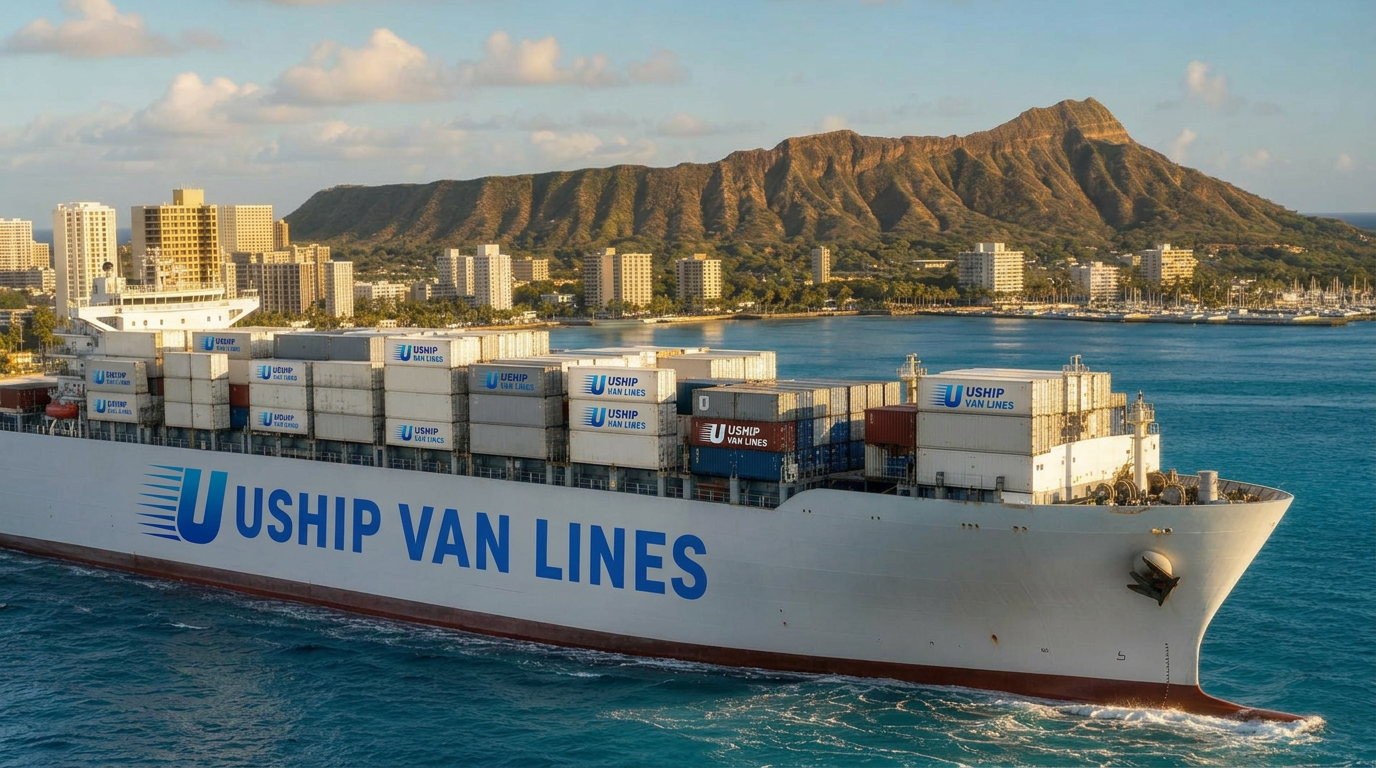
Moving from Milwaukee, WI to Hawaii
Moving from Milwaukee to Hawaii is one of the most logistically complex relocations in the United States, requiring coordination across 4,000+ miles of land and ocean transportation. Your household goods will travel by truck from Wisconsin to a West Coast port (typically Long Beach or Oakland), then cross the Pacific via ocean container to Honolulu, with optional inter-island shipping to Maui, Kauai, or the Big Island.
Best Alaska & Hawaii Movers, powered by UShip Van Lines, specializes in these multi-modal moves and handles every leg—from Milwaukee pickup through final delivery to your island home. Request a free quote today to get a detailed timeline and cost breakdown tailored to your specific inventory and destination island.
Route overview
Milwaukee to Hawaii: A True Cross-Country and Cross-Ocean Journey
The Milwaukee-to-Hawaii corridor combines Midwest-to-West-Coast trucking (approximately 2,000 miles to California) with transpacific ocean freight. Your belongings depart Milwaukee via 53-foot semi-trailer, travel I-90 or I-80 west through Illinois, Iowa, Nebraska, Wyoming, and into California or directly to the Port of Oakland. Once consolidated at the port, your goods are loaded into 20-foot or 40-foot ocean containers and shipped via Matson Navigation or Pasha Hawaii—the two dominant carriers serving the Hawaii trade lane.
Transit from Wisconsin to California typically takes 3–5 days by truck. Ocean crossing from the West Coast to Honolulu adds 5–14 days depending on vessel schedule, weather, and port congestion. If your final destination is a neighbor island (Maui, Kauai, Hilo, Kona), add another 3–7 days for inter-island barge service. Total door-to-door timeline from Milwaukee to Honolulu usually runs 14–21 days; to neighbor islands, expect 18–28 days.
This route is less common than California or Washington origins, so you'll benefit from working with a carrier that understands both Midwest logistics (winter weather, Illinois toll roads, Wisconsin weight restrictions) and Hawaii's unique import requirements (USDA plant inspections, Hawaii Department of Agriculture rules, port documentation).
How the moving process works
How Your Milwaukee-to-Hawaii Move Works: Step by Step
-
Free In-Home or Virtual Survey – We assess your inventory (furniture, appliances, boxes, vehicles) and discuss your timeline, destination island, and any special items (pianos, antiques, fragile electronics). You'll receive a detailed written estimate with itemized costs.
-
Pickup in Milwaukee – Our crew arrives at your Wisconsin home with a 53-foot trailer, pads and wraps furniture, loads everything securely, and completes a detailed inventory list. Pickup windows are typically 1–3 days to accommodate scheduling.
-
Cross-Country Truck Transport to California – Your shipment travels 2,000+ miles west via I-90 or I-80, reaching the Port of Long Beach or Oakland in 3–5 business days. Goods are transferred to our secure port warehouse for container staging.
-
Container Loading and Ocean Export Documentation – We pack your household goods into a shared (LCL) or exclusive (FCL) ocean container, complete Hawaii USDA and customs paperwork, and book space on the next available Matson or Pasha vessel.
-
Transpacific Ocean Voyage – The container sails from California to Honolulu, typically 5–7 days at sea. Vessels depart multiple times per week, but schedules vary seasonally. Weather and port congestion can extend transit by a few days.
-
Honolulu Port Clearance and Delivery Coordination – Once the vessel docks, your container is unloaded, cleared through USDA agriculture inspection, and released from the port. If you're moving to Oahu, final delivery occurs within 2–5 days. For neighbor islands, goods transfer to inter-island barge.
-
Final Delivery to Your Hawaii Home – Our island partner delivers to your address, unloads, places furniture in rooms, and completes a final inventory check. You inspect for any damage and sign off on delivery.
Estimated moving costs
What Does It Cost to Move from Milwaukee to Hawaii?
A typical 2–3 bedroom household moving from Milwaukee to Honolulu ranges from $6,500 to $11,000, depending on volume, packing services, and timing. Neighbor island destinations (Maui, Kauai, Big Island) add $800–$1,800 for inter-island barge and last-mile delivery. These are estimates only; actual pricing depends on your specific inventory and service level.
Key cost drivers include:
- Volume and weight – Hawaii pricing is usually quoted per cubic foot or by container share (LCL vs. full container FCL). A typical 2-bedroom apartment fills 400–600 cubic feet; a 3-bedroom home with garage may reach 1,000+ cubic feet.
- Packing services – Full-service packing (we pack everything) adds $800–$2,000. Fragile-only packing is a middle option. Self-packing saves money but increases your liability for damage.
- Milwaukee pickup logistics – Multi-story homes, long carries, or narrow streets may incur additional labor fees. Winter ice and snow can complicate loading.
- Destination island – Oahu is the least expensive endpoint. Maui, Kauai, Hilo, and Kona require inter-island barge, adding time and cost.
- Vehicle shipping – Cars and trucks ship separately via roll-on/roll-off (RORO) vessels. Expect $1,200–$1,600 per standard sedan from the West Coast to Honolulu. Drive-away to California or shipping from Milwaukee adds $600–$1,200.
- Season and demand – Summer (June–August) is peak moving season to Hawaii; book 4–6 weeks ahead. Winter and spring offer more schedule flexibility and sometimes lower rates.
We never guarantee prices without a detailed survey. Request your free quote to get an accurate, binding estimate based on your actual belongings and move date.
Estimated transit times
How Long Does a Milwaukee-to-Hawaii Move Take?
Total door-to-door timeline: 14–28 days, broken down by leg:
- Milwaukee pickup to West Coast port arrival: 3–5 days by truck (I-90 or I-80 route, 2,000 miles)
- Port staging and container loading: 1–3 days (depends on vessel schedule and warehouse workflow)
- Ocean transit California to Honolulu: 5–7 days at sea (Matson and Pasha operate multiple weekly sailings)
- Honolulu port clearance and delivery (Oahu): 2–5 days (USDA inspection, port release, local delivery scheduling)
- Inter-island barge to neighbor islands: +3–7 days (Maui, Kauai, Big Island)
- Final delivery on neighbor islands: +1–3 days after barge arrival
Example timelines:
- Milwaukee to Honolulu (Oahu): 14–21 days
- Milwaukee to Kahului (Maui): 18–25 days
- Milwaukee to Lihue (Kauai) or Kona (Big Island): 20–28 days
Factors that extend timelines include winter weather in the Midwest (snow delays), peak season congestion at California ports (June–August), hurricane season port closures (August–October), and holiday shipping pauses (Thanksgiving, Christmas, New Year's). Always build in a 5–7 day buffer before your absolute need-by date.
If you have a hard deadline (job start date, lease beginning), let us know during your quote—we can explore expedited LTL trucking to the coast and priority vessel booking, though these options increase cost.
Regional logistics
Hawaii-Specific Logistics You Must Know
Ports and ocean carriers: Your shipment will likely sail from the Port of Long Beach (San Pedro) or Port of Oakland. Matson Navigation and Pasha Hawaii dominate the Hawaii trade lane with multiple weekly sailings. Matson is generally faster; Pasha sometimes offers better rates for partial loads.
USDA and agriculture inspections: Hawaii has the strictest agriculture import rules in the U.S. to protect its ecosystem. All shipments undergo mandatory USDA inspection upon arrival in Honolulu. Prohibited items include most plants, soil, certain seeds, fresh produce, and untreated wood. Inspectors may open boxes; expect 1–2 day clearance. We provide guidance on what you can and cannot bring, but it's your responsibility to comply.
Vehicles: Cars and trucks ship separately via RORO vessels (Matson, Pasha). You can drive your vehicle to the West Coast and drop it at a port terminal, or arrange pickup from Milwaukee (adds $600–$1,200). Vehicle shipping from California to Honolulu runs $1,200–$1,600 and takes 7–14 days port-to-port. Vehicles must be clean (exterior and interior) and operable. Remove all personal items except a spare tire, jack, and car seats.
Container types: Most Milwaukee-to-Hawaii moves use LCL (Less than Container Load) or shared container service, where your goods occupy part of a 20-foot or 40-foot container. If you have 800+ cubic feet (large 3–4 BR home), a FCL (Full Container Load) may be more cost-effective and offers exclusive use, reducing handling and damage risk.
Delivery on neighbor islands: Maui, Kauai, and Big Island deliveries require inter-island barge from Honolulu (Young Brothers Limited is the primary carrier). Barge schedules run 2–3 times per week to each island. Final delivery depends on your address—some remote areas (Hana, North Shore Kauai, South Point) may require shuttle trucks or have restricted access.
Storage options: If your Hawaii home isn't ready, we offer short-term storage in Honolulu (30–90 days). Storage is climate-controlled and secure, charged monthly based on volume.
Insurance: Basic carrier liability is $0.60 per pound, which is insufficient for most household goods. We strongly recommend full replacement value insurance (typically 1.5–2.5% of declared value). Your homeowner's or renter's policy may cover in-transit goods—check with your insurer.
Milwaukee-specific pickup notes: Winter pickups require clear driveways and walkways (ice/snow removal is your responsibility). If you live in a multi-story building without elevator or freight access, expect stair-carry fees. Historic Milwaukee homes with narrow staircases or tight corners may require furniture disassembly.
Seasonal considerations
Best and Worst Times to Move from Milwaukee to Hawaii
Spring (March–May): Excellent window for Milwaukee departures. Wisconsin weather is improving (less snow/ice risk), and Hawaii arrivals occur before peak tourist/moving season. Port and vessel capacity is good, and pricing is moderate. Book 3–4 weeks ahead.
Summer (June–August): Peak season for Hawaii moves. Families relocate before the school year, military PCS orders surge, and tourist traffic is high. Expect higher rates, tighter schedules, and potential port congestion. Hurricane season begins in June but peaks later. Book 5–6 weeks in advance.
Fall (September–November): Hurricane season peaks in August–October, and while direct strikes on Honolulu are rare, tropical storms can delay vessel sailings and port operations by 2–5 days. November is calmer and offers good availability. Milwaukee fall weather is pleasant for loading. Rates drop slightly post-Labor Day.
Winter (December–February): Off-peak for Hawaii moves but challenging in Milwaukee. Snow, ice, and freezing temperatures complicate truck loading and highway travel. However, you'll find the best pricing, most flexible schedules, and fastest ocean transits (fewer shipments = less port congestion). If you can manage a winter Milwaukee departure, you'll save money and time on the Hawaii end.
Pro tip: Avoid moving during Thanksgiving week, Christmas/New Year's (December 20–January 5), or around major Milwaukee events (Summerfest, State Fair) when truck and labor availability tightens.
Why choose Best Alaska & Hawaii Movers
Why Choose Best Alaska & Hawaii Movers for Your Milwaukee-to-Hawaii Move
- Single-source accountability across 4,000+ miles – One contract, one point of contact, one company responsible from Milwaukee pickup through Hawaii delivery. No hand-offs to unknown subcontractors.
- Deep Hawaii expertise – We handle 500+ moves to/from Alaska and Hawaii annually and understand USDA regulations, inter-island logistics, and neighbor island delivery challenges that generic long-distance carriers overlook.
- Transparent, all-inclusive quotes – Your estimate covers truck transport, ocean freight, port fees, USDA documentation, and island delivery. No surprise charges at destination.
- Flexible service levels – Choose full-service packing, fragile-only packing, or self-pack. Mix and match to fit your budget and timeline.
- Powered by UShip Van Lines' nationwide network – We leverage UShip's technology platform and carrier partnerships to optimize routing, consolidate loads, and deliver competitive pricing without sacrificing service quality.
- Dedicated move coordinators – Your coordinator tracks your shipment in real time, provides ocean vessel updates, and is available by phone/email throughout the process.